

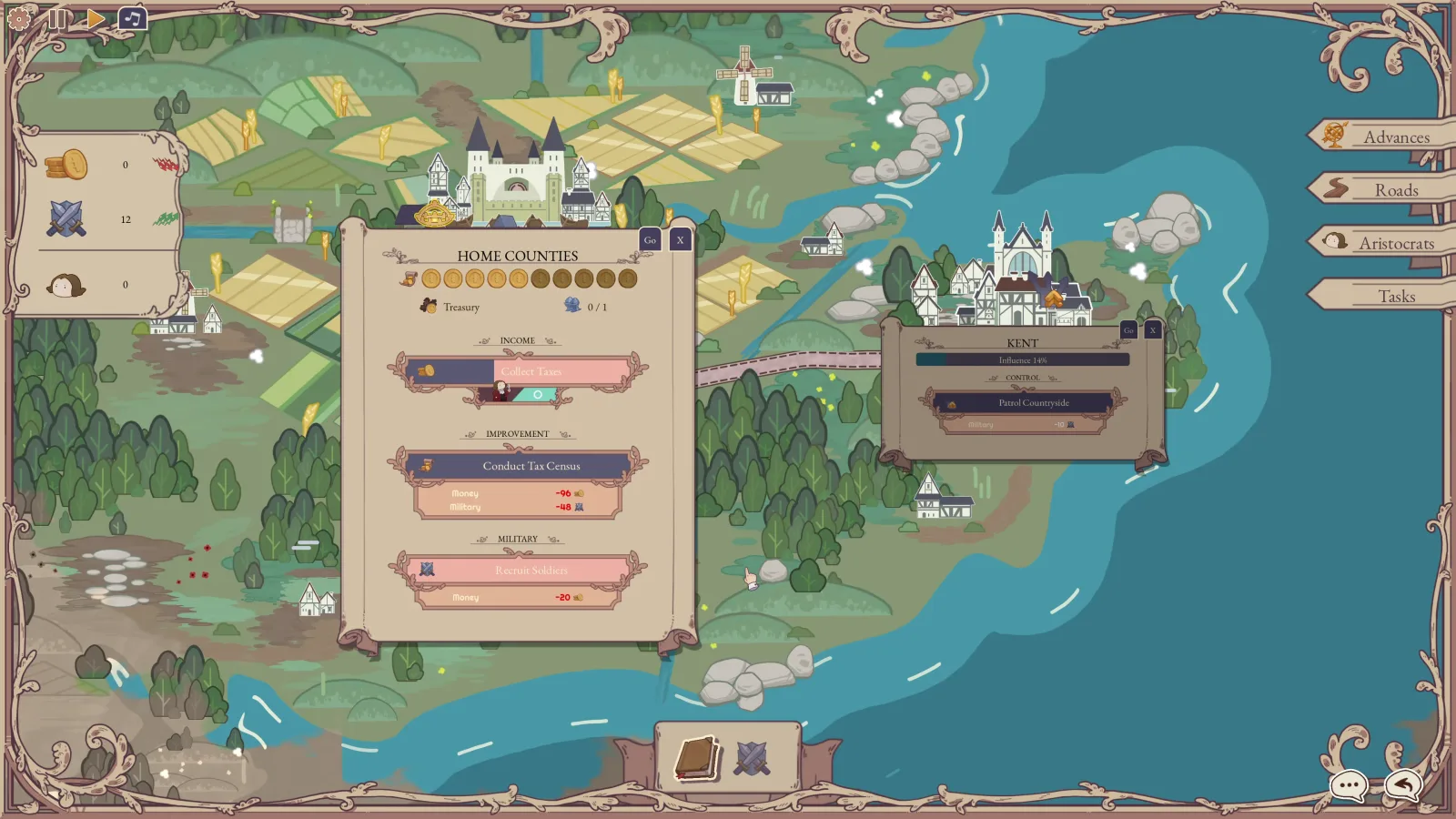
How Empires Work, the forthcoming incremental grand strategy game from developer Crow Cottage, will launch on Steam on November 3, 2026. A playable demo is available now, giving strategy fans an early opportunity to explore its unusual mix of click-driven progression, state management, expansion, and automation. A new release-date trailer has also been revealed alongside the announcement.
The game is built around the idea that an empire is more than a map filled with borders and armies. It is a machinery of systems: taxation, commerce, labor, bureaucracy, diplomacy, logistics, conquest, and colonial growth. How Empires Work asks players to establish those systems, expand them, and eventually transform repetitive manual work into institutions that can continue operating across long stretches of history.
That structure places it at an interesting intersection. It has the escalating numerical progression and automation associated with incremental games, while its subject matter and tools draw from grand strategy. Rather than beginning with a fully developed nation equipped with sprawling menus and established powers, players begin at a much smaller scale and grow outward from there.
From simple actions to self-running institutions
How Empires Work starts with straightforward clicks, but those early interactions are intended to become the foundation of a much bigger political and economic structure. As a player's state develops, automation becomes increasingly important. The objective is not simply to perform the same action faster or more often; it is to establish systems capable of handling that work independently.
For useful background on this topic, read The Apothecary Diaries: The False Imperial Brother Launches March 18, 2027.
In practical terms, that means the management of a growing empire should change as the empire itself changes. A local lordship has immediate needs and limited reach. A global power faces larger, more interconnected concerns, including resource movement, the administration of distant lands, military organization, internal tensions, and competition from rival states.
The progression is therefore framed as a journey through centuries. Actions that may initially be performed directly can become formal structures, allowing the player to concentrate on the next layer of challenges. The game's premise recognizes that expansion creates new problems as well as new opportunities. A stronger state may possess greater wealth and influence, but it must also keep increasingly complex systems working together.
This automation-focused approach could distinguish How Empires Work from more conventional historical strategy games. Many grand strategy titles place the player in the role of a ruler, cabinet, or nation from the outset. Crow Cottage's game instead emphasizes the construction of the governing apparatus itself, asking players to make the mechanisms of expansion and administration function before those mechanisms can carry an empire forward on their own.
For another perspective on this story, read How Empires Work Marches to Steam on November 3, 2026.
Managing the foundations of an empire
Players will oversee a range of connected systems while building their states. Taxation, trade, colonization, labor, armies, and bureaucracy all form part of the management layer. Each represents a different piece of the broader imperial machine, and the game's long-term progression depends on turning those pieces into durable institutions.
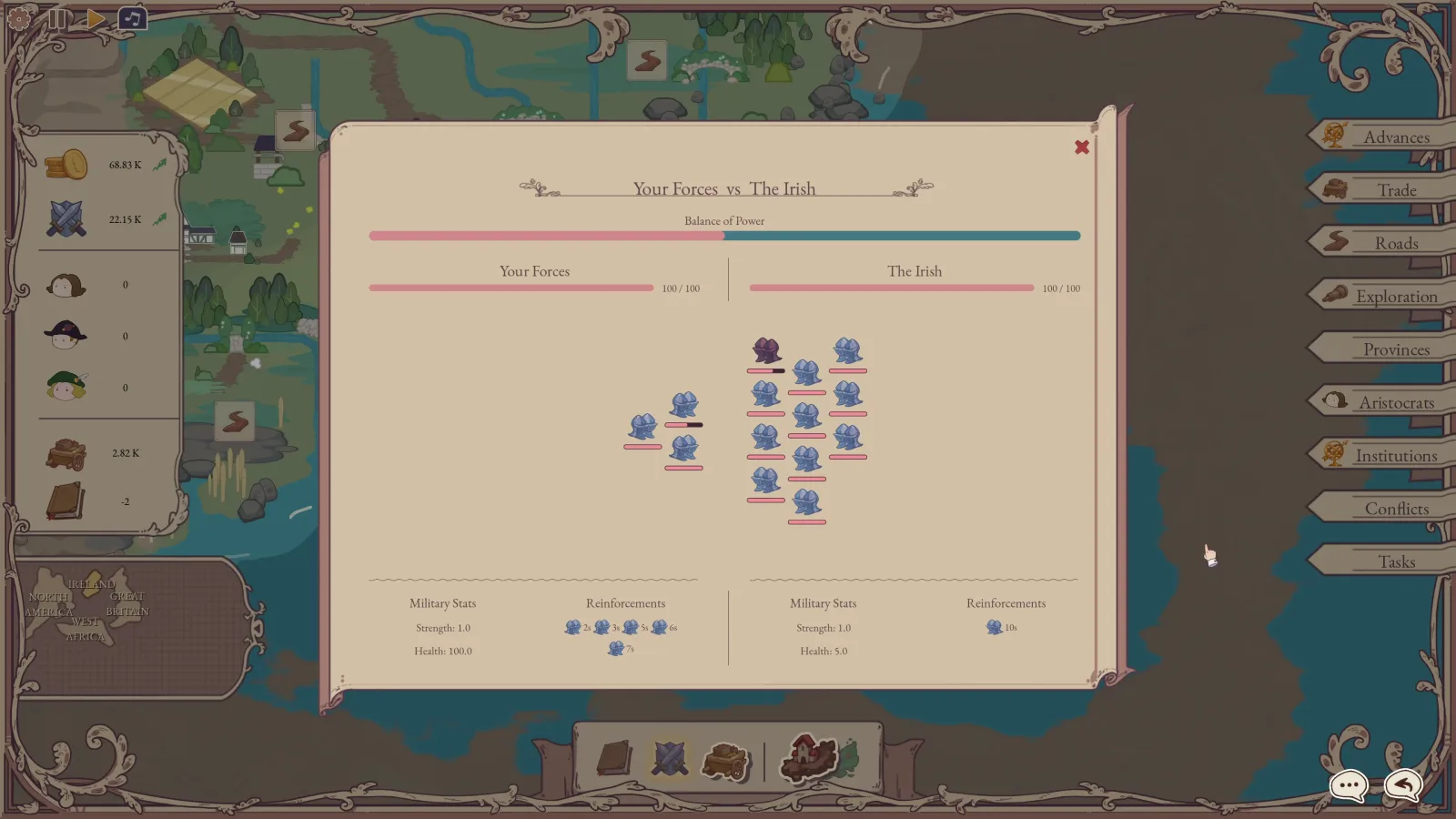
Taxation and labor point toward the domestic side of ruling, where revenue and productive capacity support the state's wider ambitions. Trade offers an economic route to growth, while colonization and conquest present avenues for extending influence beyond existing borders. Armies provide the power needed to defend territory or challenge opponents, whereas bureaucracy is positioned as the structure that enables a much larger realm to remain organized.
None of these elements exist in isolation. An empire's military potential relies on labor, resources, administration, and infrastructure. Trade can bring wealth and commodities, but it also makes routes and territories important. Colonization can extend a state's reach while creating further obligations. By placing these concepts inside an incremental framework, How Empires Work aims to make the process of scaling a country feel central to play rather than merely an abstract backdrop.
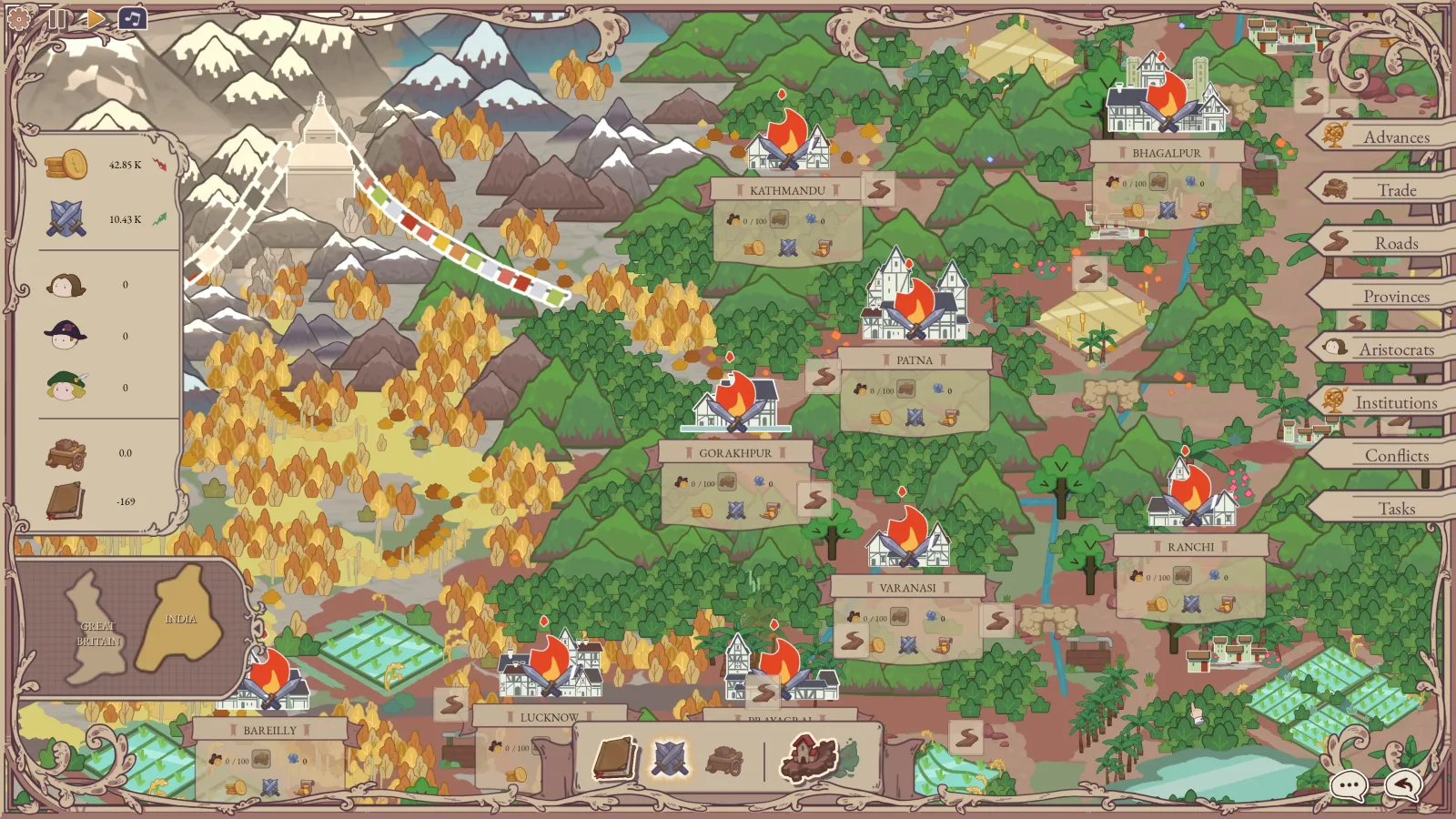
The game also includes province management, giving players a territorial layer to consider as they expand. Provinces are not simply places to acquire; they are part of the network that supports the state. Decisions involving development, control, roads, commerce, and military movement can all feed into the wider project of sustaining growth.
Roads, trade, conquest, and diplomacy
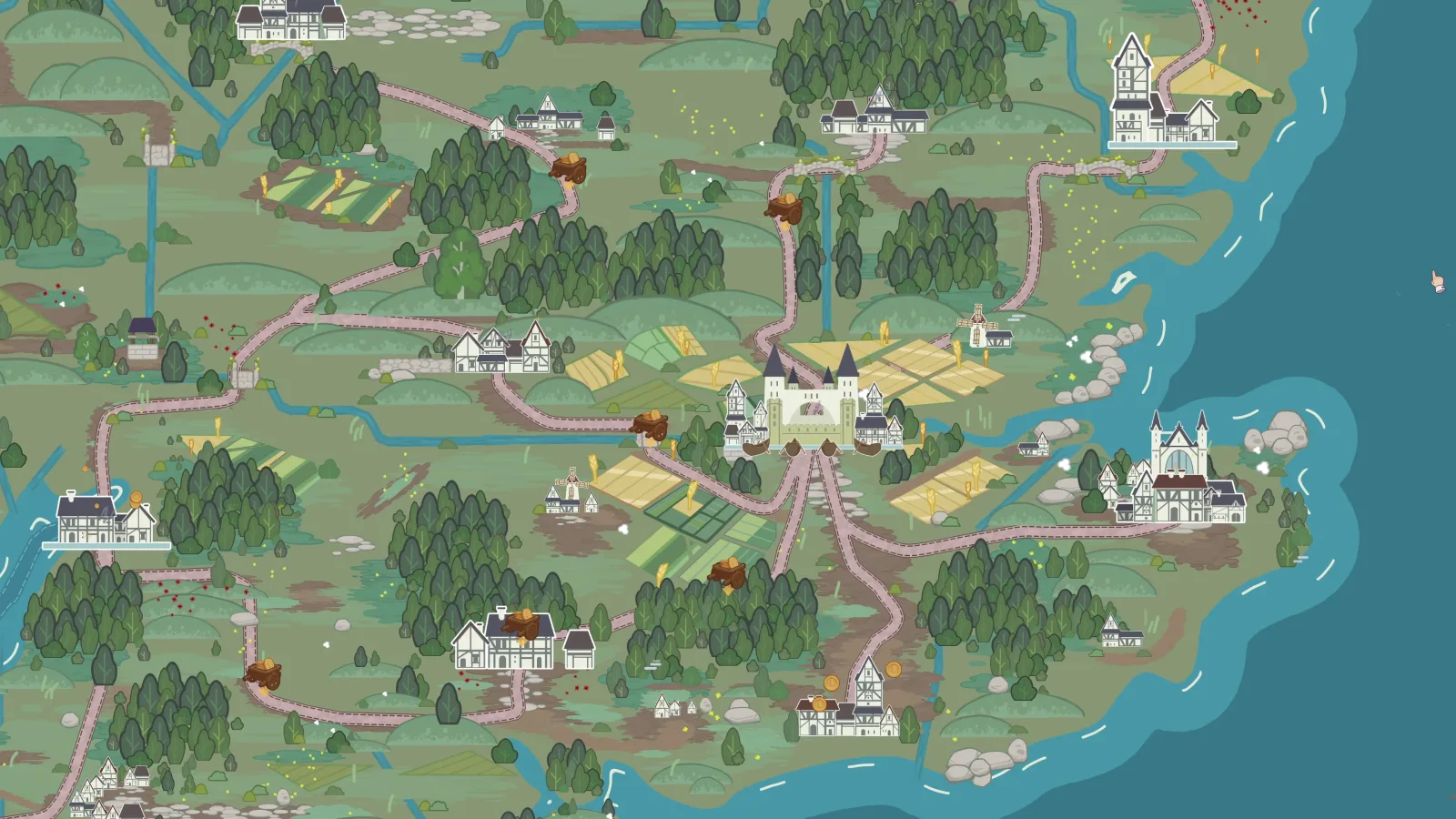
Infrastructure will be one of the tools available to players. Road building is specifically listed among the game's features, fitting closely with its focus on the systems that allow an empire to function at scale. Roads can be understood as more than visual additions to a map: they represent the links needed to move people, goods, capital, and forces through an increasingly expansive realm.
Trade and conquest sit alongside one another as key parts of the experience. Players can pursue economic development through commerce while also taking territory through military means. The presence of diplomatic options suggests that relationships with other powers will not be limited to direct conflict, even as rival states remain an important source of pressure.
As the empire develops, its systems and challenges are expected to evolve. This is a crucial part of the game's stated design. The solution to an early local problem may not be adequate once the player is responsible for a much wider domain. Internal troubles will require new responses, and external rivals will continue to test the player's position.
That changing set of pressures could make expansion feel less like a linear path toward a single optimal build. A state that becomes more powerful also becomes more difficult to coordinate. How Empires Work's central question appears to be whether players can build institutions robust enough to handle that complexity while still adapting to the next historical stage.
A hand-painted view of imperial systems
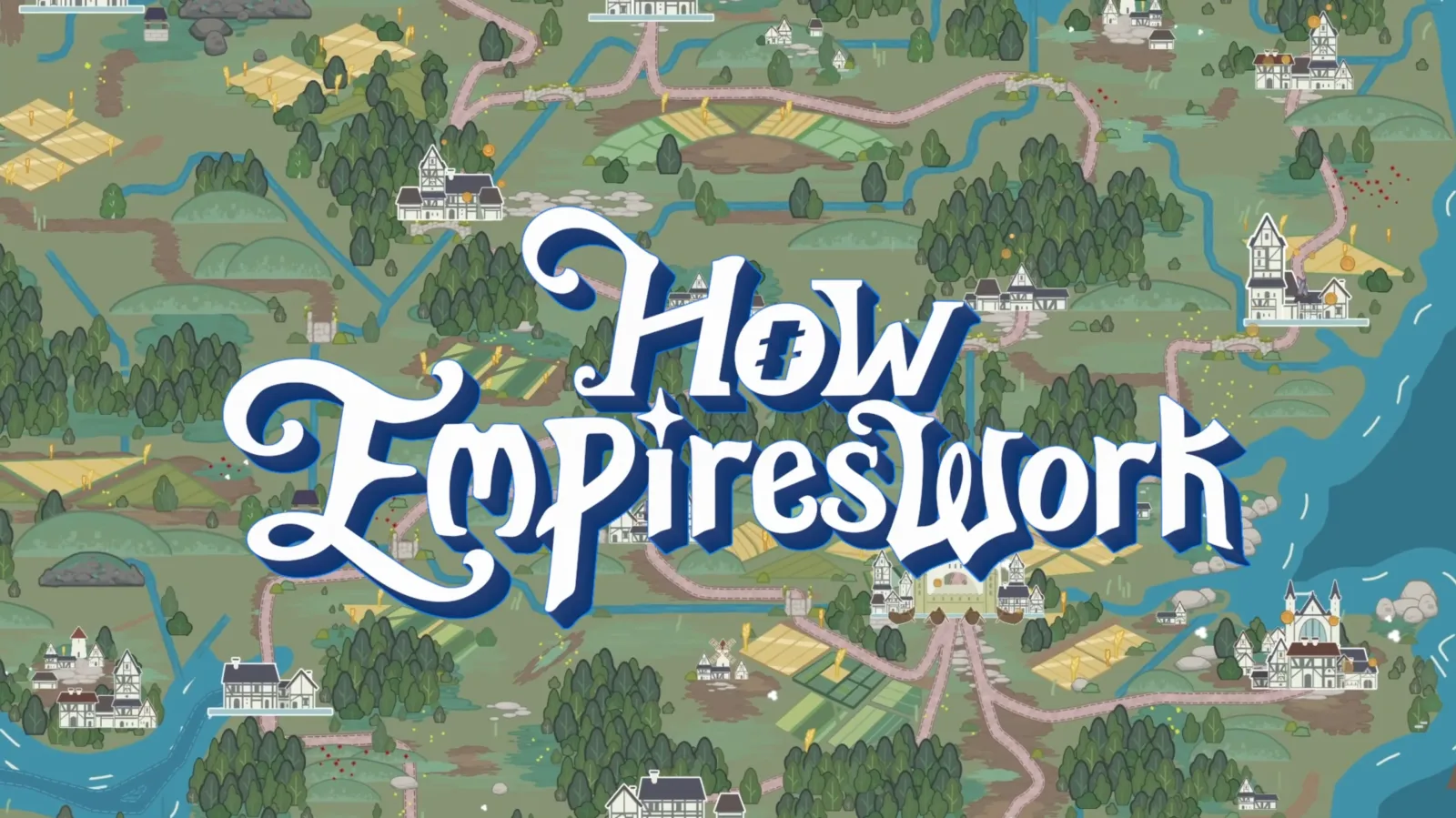
Visually, How Empires Work uses a hand-painted world map. The map is designed to show more than territory alone, visualizing the movement of capital, commodities, and armies. That emphasis is in keeping with the game's wider theme: the important story is not just which color controls a province, but how resources and power flow through the systems connecting those provinces.
Showing those flows could help make the game's growing machinery easier to read as the player's decisions compound. As trade networks develop, armies move, and economic resources circulate, the world is intended to present an active picture of the empire at work. For a game concerned with automation and administration, that visual feedback may be especially valuable.
The hand-painted presentation also gives the project an identity separate from the highly technical interfaces commonly associated with the grand strategy genre. How Empires Work still deals with extensive political and economic concepts, but it frames them through an evolving, illustrated world rather than positioning the experience solely around spreadsheets and dense menus.
Demo available ahead of launch
Steam users do not need to wait until November to see the game's core direction. A demo is currently available on the platform, offering an early look at the progression from direct player actions toward automated institutions. It is an opportunity to test the blend of incremental systems and grand-strategy decision-making before the full release arrives.
The demo is particularly useful for a concept that combines genres with different expectations. Incremental-game players may be interested in the promise of unlocking automation and building increasingly efficient processes. Grand strategy players may be drawn to the management of provinces, trade, roads, diplomacy, conquest, and rival powers. The available build gives both groups a way to see how Crow Cottage connects those ideas.
How Empires Work is currently confirmed for Steam, with its full release scheduled for November 3, 2026. Crow Cottage has not announced additional platforms in the release information. Until launch, the demo and newly released trailer provide the clearest look at a strategy game where the long-term goal is not merely to rule an empire, but to build the institutions that make one possible.
Community
Discussion
Start the conversation.
No comments have been posted yet.