

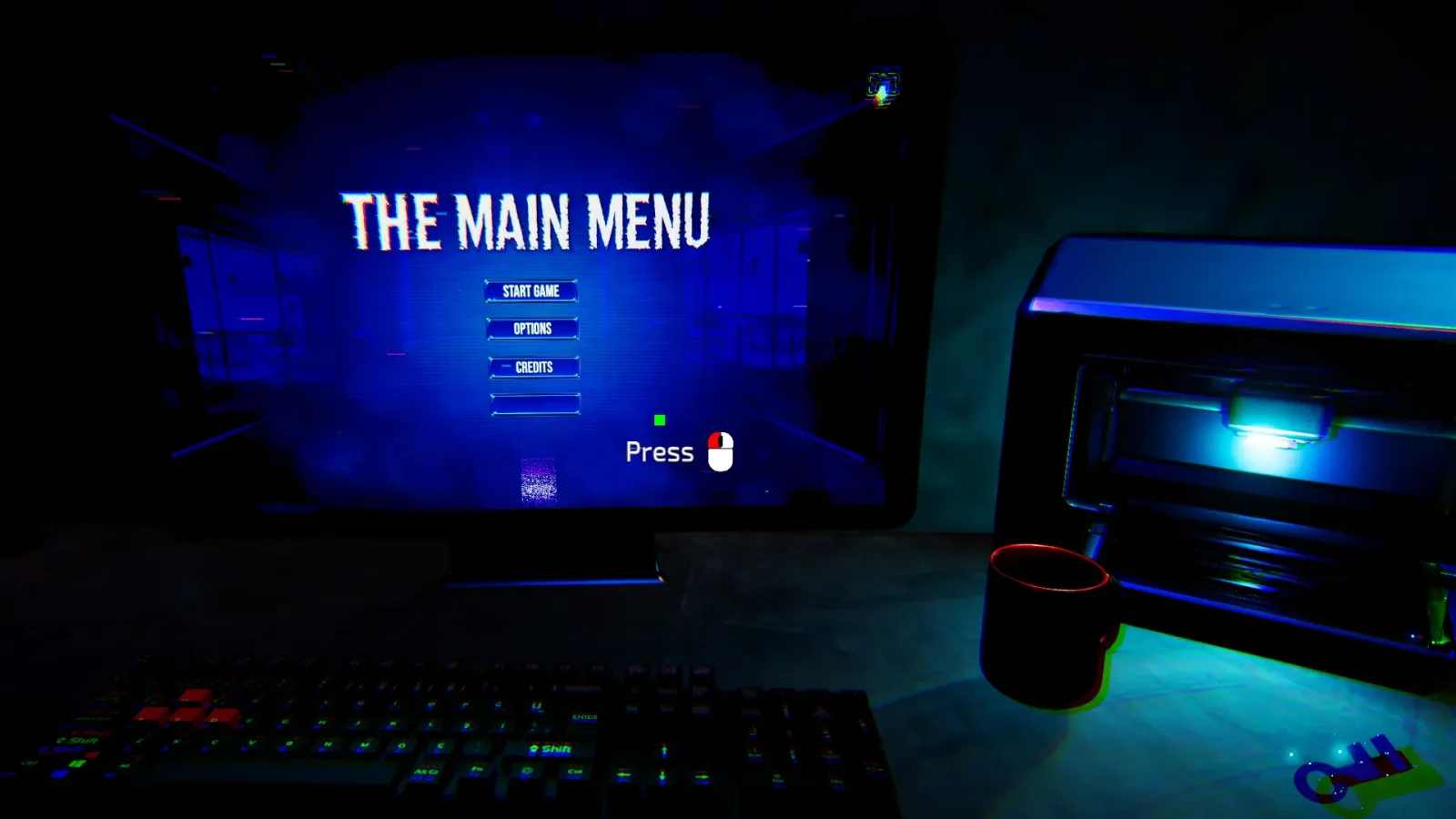
The Main Menu has released a playable demo on Steam, inviting PC players into a psychological horror puzzle adventure built around one of gaming's most routine sights: the main menu. Rather than serving as a simple screen used to start, pause, or configure a game, the interface is the central object of the experience--and apparently the only route out of the room where the player wakes up trapped.
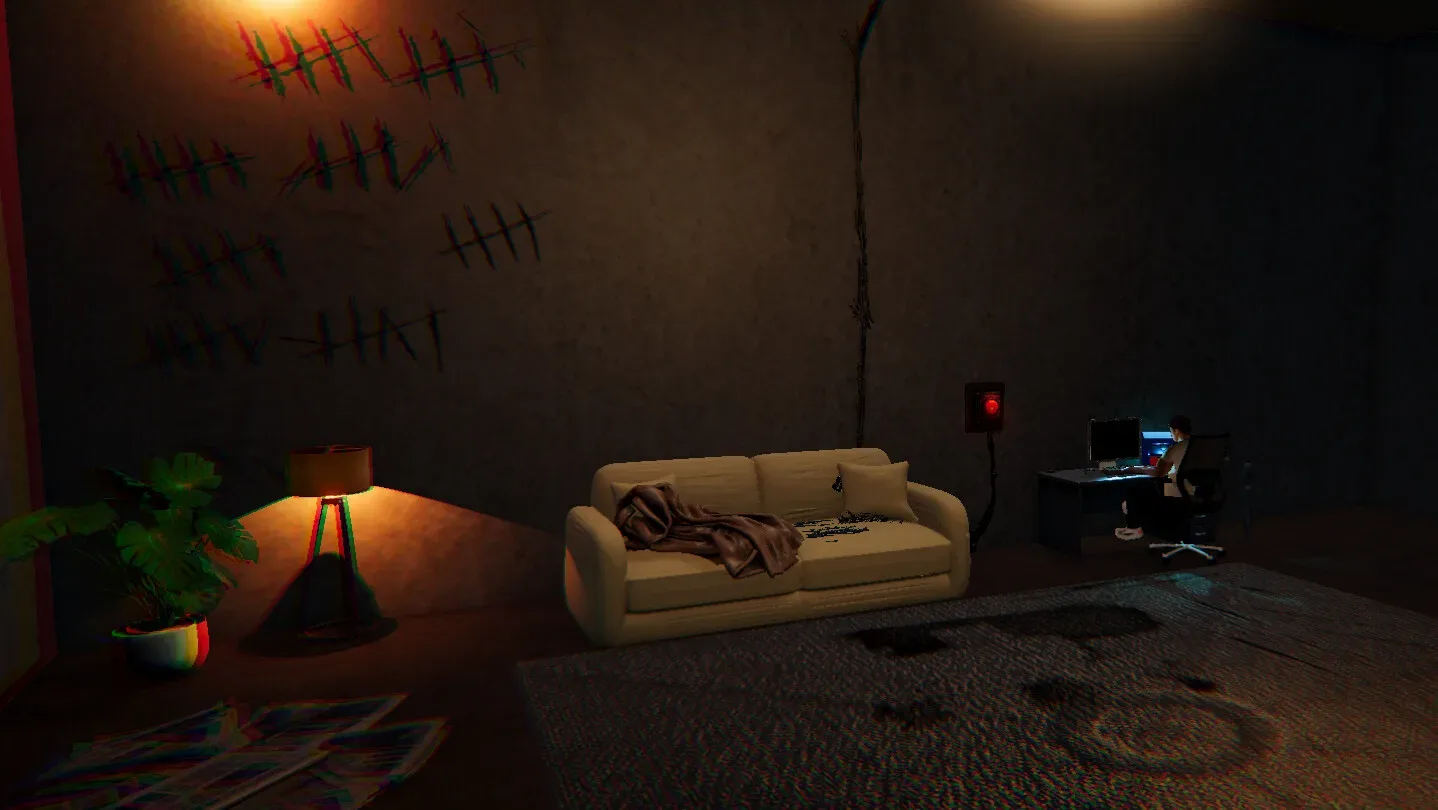
The premise is intentionally disorienting. Players find themselves in a room alongside a corrupted main menu, then gradually discover that changes made to the two-dimensional interface have direct physical consequences in the three-dimensional environment. The menu is not merely displaying options or information. It is altering the space, creating the basis for a puzzle-driven escape-room mystery with a surreal horror tone.
A mysterious Entity also watches the player's efforts and interferes with their progress. As the relationship between the interface and the room becomes clearer, new obstacles emerge, while the situation raises further questions about who--or what--is actually in control of the game.
A menu that is part of the world
Video game menus are usually designed to be invisible in a practical sense. Players learn where the settings are, select a new game, adjust a control option, and move on. Even when an interface is stylish, its conventional role is functional: it sits outside the game world and helps the player interact with it.
For useful background on this topic, read How Empires Work Sets Steam Release for November 3, 2026.
The Main Menu reverses that expectation. Its central idea is that the user interface is not separate from the room. It belongs to the puzzle space. Clicking, changing, or otherwise manipulating menu elements can physically transform the environment around the player. That creates a deliberate overlap between actions normally performed at a screen and actions normally performed inside a first-person escape room.
This structure gives the game its most intriguing question: what counts as an object that can be interacted with? A conventional puzzle adventure teaches players to inspect drawers, switches, notes, locks, symbols, and doors. Here, the same suspicious attention may need to be directed at menu buttons, visual labels, and other pieces of interface design that players would typically treat as background utility.
The intended sensation is the moment of realization captured by the game's design focus: wait... can I click that? It is a simple thought, but it can be especially effective in horror. Once a game establishes that familiar UI elements can change reality, routine interactions stop feeling routine. Every visible option could potentially be a clue, a trap, a route forward, or a sign that the player is misunderstanding the rules.
For another perspective on this story, read The Main Menu Demo Is Now Available on Steam, Turning UI Into a Horror Escape Room.
Psychological horror through uncertainty
The Main Menu is described as psychological horror, and its concept is well suited to that approach. Psychological horror often draws tension from doubt and instability rather than relying solely on direct threats. A room that responds to menu changes can make players question which parts of the experience are safe, fixed, or even real.
In an ordinary escape room, the basic objective is clear: understand the environment, solve the locks, and leave. The main menu concept complicates the process. The player must first understand the relationship between two different layers of the game--the visible room and the interface that affects it. Learning that connection is itself part of the mystery, not just a control scheme to master before the puzzles begin.
The Entity's involvement adds another layer of uncertainty. It is presented as a presence that observes and impedes progress, introducing obstacles as the player begins to comprehend the room's systems. That means advancement may not be a straightforward matter of solving one puzzle after another. The game's unseen force appears positioned to challenge the player's assumptions and make the process of escape feel contested.
There are no additional details yet on the Entity's identity or motives, and that ambiguity is central to the setup. The game asks what is controlling the experience while also making the game's most recognizable control surface--the menu--untrustworthy. For horror fans, that premise has the potential to create unease from the act of interacting with the game itself rather than only from what may be waiting inside the room.
How the puzzle concept could change player habits
The demo's core mechanic centers on 2D UI actions producing 3D consequences. That phrasing highlights a useful distinction: this is not simply a menu-themed backdrop for standard environmental puzzles. The interface is meant to be an active mechanism with consequences in the physical room.
Players approaching the demo may therefore need to discard some well-established instincts. Normally, opening a menu is a temporary interruption. It might pause the game, reveal a map, or provide access to settings without changing the fictional world. In The Main Menu, the interface is part of the fiction and part of the problem-solving process. The decision to alter something on-screen may be as meaningful as operating a lever in the room.
That setup can encourage close observation. Small changes in a menu's layout, state, appearance, or available options may matter. Meanwhile, players will likely need to watch the room for corresponding shifts after experimenting with the UI. The appeal is not just finding a solution, but recognizing that the game has quietly taught the player to look in a place they normally ignore.
It also creates a natural opportunity for misdirection. A main menu carries deeply ingrained expectations: buttons often have obvious purposes, labels are normally literal, and settings are presumed to be technical rather than narrative. A corrupted version of that interface can exploit those assumptions. The more players believe they know what a menu should do, the more impactful it can be when its actions produce unfamiliar results.
An escape-room mystery with a meta-game twist
Escape-room games thrive on bounded spaces and comprehensible rules. Even when the puzzles are strange, players can generally trust that careful exploration and logical connections will expose a path onward. The Main Menu retains that trapped-room framework while adding a more meta-oriented twist: the rules may be located in the game's framing devices as much as in its walls and objects.
The result is a concept that sits between a puzzle adventure and a game about the language of games. Menus, overlays, and interface prompts are often treated as neutral tools. By putting them inside the horror scenario, the game makes their usual familiarity part of the tension. It turns the player's relationship with software conventions into an ingredient of the escape-room mystery.
That does not mean the demo is positioned as a purely abstract experiment. Its stated goal remains escape. The player begins in a room, encounters puzzles and obstacles, and must figure out how to get out. The UI-driven concept gives that objective a distinctive structure rather than replacing it. The mystery is grounded in a physical setting, even if the solution requires interacting with elements that seem to exist outside that setting.
For players who enjoy compact horror experiences, this kind of premise can be particularly appealing because it establishes its hook immediately. There is no need for a long explanation of a fictional technology, distant location, or elaborate mythology before the central uncertainty takes hold. A corrupted main menu is instantly recognizable, and making it dangerous or consequential is enough to reframe a familiar act.
The demo is available now on Steam
The playable demo for The Main Menu is available now through Steam. The release gives players a chance to test the game's central puzzle language firsthand: investigating a room, interacting with an abnormal menu, and learning how menu changes reshape the environment.
As a demo, it also offers the clearest current look at how the project balances its different ideas. The game combines psychological horror, escape-room progression, UI experimentation, and the interference of an unknown Entity. The key question for players will be whether they can learn the logic connecting the menu and the room before the obstacles placed in their way become too much to untangle.
For anyone drawn to horror games that play with presentation and perspective, The Main Menu offers a direct invitation to inspect the elements that are usually taken for granted. In this case, the button that looks like a harmless option may not be an option at all. It may be the next move in an escape attempt--or the reason the room changes when it does.
Community
Discussion
Start the conversation.
No comments have been posted yet.