

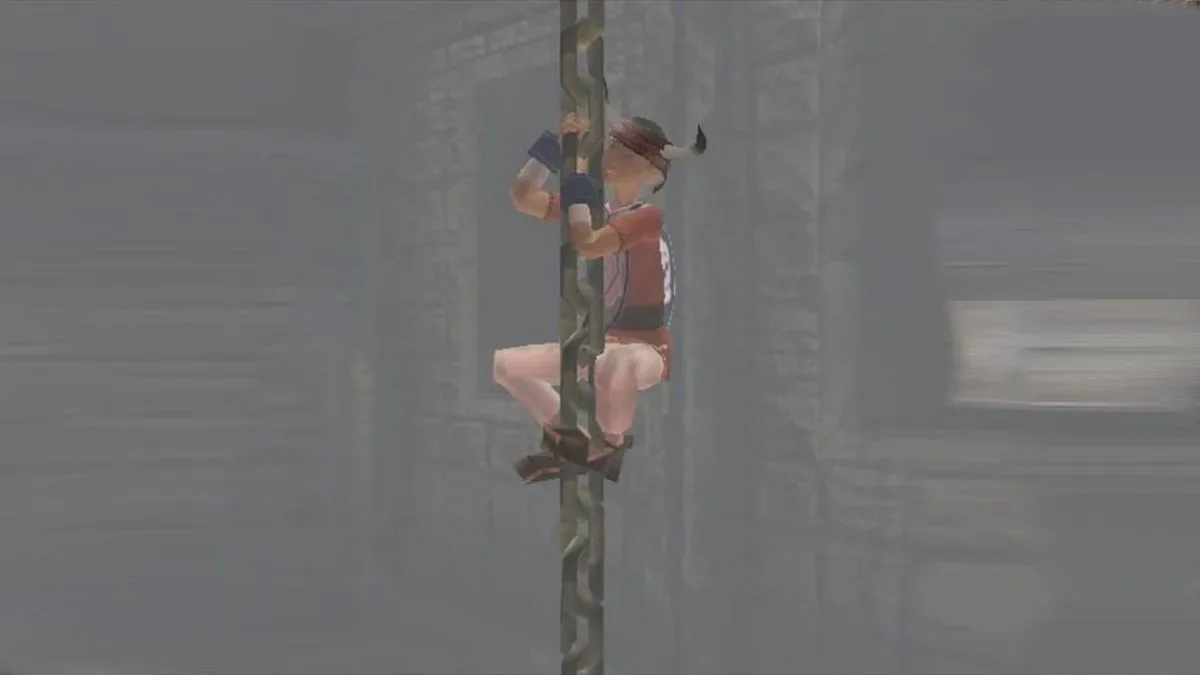
ICO, the influential PlayStation 2 adventure from Team ICO, is being adapted for Sega Dreamcast in a fan-led porting project. The work is being handled by developer Esppiral V, and while it remains at an early stage, the project has already become a notable technical curiosity for fans of both consoles. It is an especially unexpected pairing because ICO arrived around the same period that Dreamcast's commercial run came to an end.
The prospect of seeing ICO on Dreamcast is compelling for more than nostalgia. The game is closely associated with PlayStation 2's early identity and with the distinctive design sensibilities of director Fumito Ueda. Its enormous, lonely architecture, minimal dialogue, environmental puzzles, and close partnership between its two central characters helped establish a style that would influence adventure games for years to come. Bringing that experience to Sega's final home console would give the Dreamcast homebrew and modding community another ambitious showcase.
A PlayStation 2 landmark heads toward Sega hardware
ICO was released for PlayStation 2 in 2001, though release timing differed by region and extended into 2002. It was designed by Fumito Ueda and produced by Kenji Kaido. The game follows a young boy born with horns, a trait viewed as a bad omen by the people around him. He is taken to a vast castle to be sacrificed, but escapes his confinement before meeting Yorda, a mysterious girl with magical abilities.
Yorda's powers allow the pair to access areas of the castle that would otherwise remain sealed. From there, ICO becomes a story of escape and cooperation. Players guide Ico through the castle's intimidating spaces, solve environmental obstacles, protect Yorda from shadowy enemies, and work with her to reach new paths. The core relationship is central to the experience: Yorda is not simply a character who follows behind the player, but an active part of nearly every challenge.
For useful background on this topic, read DigiBitPlay V6 Brings Free Dual-Screen Support to Android Handhelds and Windows.
That focus on companionship, communicated with relatively little conventional exposition, made the game stand apart even in an era packed with major platform and action releases. ICO does not depend on a huge cast, lengthy combat systems, or an expansive checklist of missions. Instead, it creates tension and emotion through movement, spaces, sound, and the repeated act of taking Yorda by the hand and leading her forward.
For many players, it remains one of the defining games from PlayStation 2's early years. It also helped set the creative direction for Team ICO's later work, including Shadow of the Colossus. The two games are often discussed together because of their atmosphere, visual identity, and willingness to leave much of their fiction open to interpretation.
An ambitious fit for Dreamcast
The Dreamcast is frequently placed alongside PlayStation 2, GameCube, and Xbox in the sixth console generation, even though Sega's machine was discontinued much earlier than those systems. That short commercial lifespan has often shaped perceptions of the hardware, particularly when comparisons focus on the better-selling consoles that followed it.
Projects such as this one offer a different way to look at the Dreamcast's capabilities. A successful adaptation of ICO would not erase the technical differences between the systems, nor should an unfinished fan port be treated as evidence that the two machines are identical. But it would be a meaningful demonstration of what dedicated developers can attempt on aging hardware when they understand the platform and are prepared to rework a game for it.
Porting is also different from simply running an original release through emulation. A Dreamcast version must account for the host machine's specific hardware, memory limits, rendering behavior, storage format, and controller setup. For a game such as ICO, that means preserving the essentials of its world and interactions while making the necessary technical adjustments for Dreamcast. The result, if completed, would be a version built specifically to operate on Sega's console rather than a PlayStation 2 disc running elsewhere.
ICO presents an interesting challenge in that respect. Its appeal is closely tied to the scale and mood of its ruined castle, the presentation of distant scenery, and the way the player and Yorda navigate physical spaces together. The game's environments need to feel imposing without becoming unreadable, while Yorda's behavior and the hand-holding mechanic need to remain dependable enough for puzzle solving to work. Those elements matter as much as visual output alone.
Why ICO remains an important game
ICO's original development began with plans for PlayStation in 1997. The project eventually moved to PlayStation 2, with the limitations of the earlier hardware contributing to that shift. That history makes the current Dreamcast effort particularly fascinating. A game once redirected away from one earlier console generation is now being explored on another machine from that same broad transitional period.
The finished game is not especially long by modern standards. A playthrough can take roughly six to 10 hours, depending on progress and familiarity with its puzzles. Its legacy, however, has little to do with sheer length. ICO is remembered for how deliberately it uses those hours. The castle feels like a place with history, even as the game provides only fragments of explanation. The sparse dialogue encourages players to observe body language, animation, architecture, and sound.
The design also makes vulnerability a key part of the journey. Ico has a weapon and can fend off threats, but the objective is rarely just to defeat enemies. Players must keep Yorda safe and bring her onward. The emotional stakes of that arrangement arise from play rather than from long cinematics. When Yorda is separated from Ico or pulled away by shadows, the player has an immediate practical reason to react.
That combination of restraint and player-driven connection influenced how many later games approached environmental storytelling, escort mechanics, and quiet exploration. Not every game that followed copied ICO directly, but its importance is widely felt in projects that prioritize atmosphere and relationships over constant instruction.
Early progress means expectations should stay measured
Esppiral V's Dreamcast port is still in early development, and there is more work ahead before it could be considered finished. Early demonstrations of retro ports can be exciting, but they are only one step in a lengthy process. Gameplay systems, performance, compatibility, audiovisual details, bugs, and the full scope of the game all need to be addressed before a project can be judged as a complete alternative version.
There is also no reason to assume a release date, final distribution method, or level of hardware compatibility while the effort remains in progress. Fan projects can change direction, encounter difficult technical barriers, or take substantial time to reach a stable form. The most useful way to view the project at this point is as promising work in development rather than a completed Dreamcast release.
Even so, the undertaking has significance beyond the possibility of one more way to play ICO. Dreamcast remains supported by a passionate community of developers, collectors, and players who continue to explore what Sega's hardware can do decades after its original run. New games, ports, tools, and technical experiments regularly renew interest in the platform. Each successful project adds to the system's afterlife and challenges assumptions about where its practical limits lie.
A milestone worth watching
If Esppiral V can carry the work through to completion, an ICO port would be a remarkable addition to Dreamcast's unofficial library. It would connect two important pieces of early-2000s console history: Sega's ambitious final hardware platform and one of PlayStation 2's most artistically celebrated adventures.
For now, the project's early state is part of the story. It is a reminder that classic games can continue to inspire technical experimentation long after their first release, and that discontinued consoles can still become sites of new development. ICO began as a game pushed beyond PlayStation's limits and ultimately released on PlayStation 2. Its potential arrival on Dreamcast adds another unexpected chapter to that history.
Whether the port ultimately reaches a finished public form will depend on the work still ahead. But the concept alone has already captured attention: a dreamlike PlayStation 2 classic, rebuilt for the console many assumed had already left the generation behind.
Community
Discussion
Start the conversation.
No comments have been posted yet.