

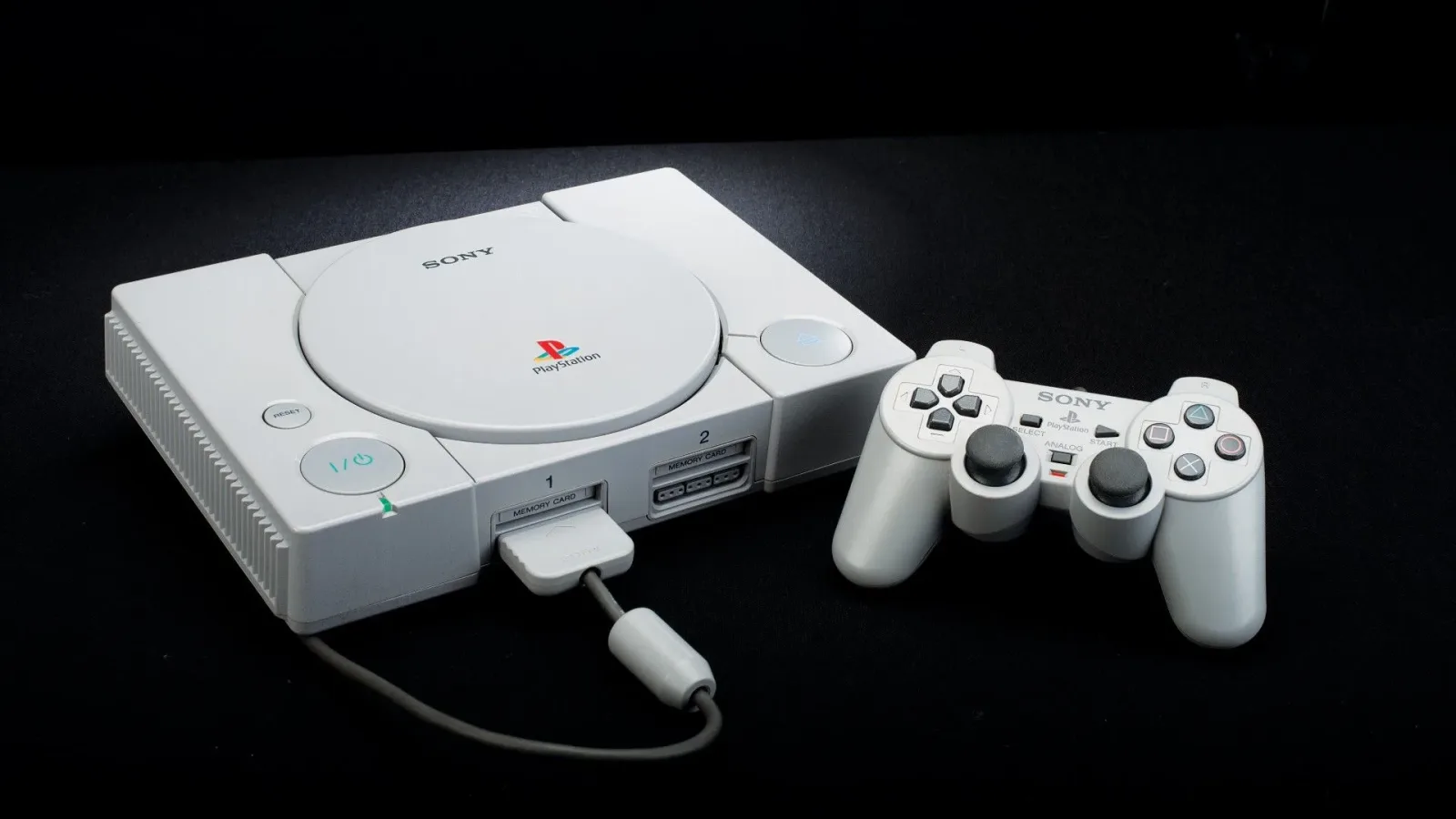
One of gaming's most frequently repeated origin stories has a simple, dramatic shape: Nintendo and Sony's planned CD-based Super Nintendo project collapsed, Sony felt betrayed, and the company answered by creating the PlayStation to defeat its former partner. It is an irresistible piece of industry folklore, especially because the outcome was so seismic. Sony went on to become a console powerhouse, while Nintendo faced a new and extraordinarily well-funded competitor.
Ken Kutaragi, the former Sony Computer Entertainment CEO widely regarded as the architect of the original PlayStation, sees that history rather differently. In a recent interview, Kutaragi said plainly that he still has affection for Nintendo and disputed the notion that the PlayStation project was driven by retaliation.
"I love Nintendo," Kutaragi said, adding that the two companies were not enemies. "We are all friends."
That perspective adds useful context to a formative chapter in video game history. The end of the Sony-Nintendo agreement undeniably helped create the circumstances that led to PlayStation, but Kutaragi's recollections present the split less as a personal feud and more as a turning point in a long professional relationship. Before Sony launched its own machine, he had spent years working closely with Nintendo and its hardware plans.
For useful background on this topic, read Veteran Artist Says GTA 6's Visual Detail Feels Like Seeing a Skyscraper From the 1800s.
Before PlayStation, Kutaragi Was Deeply Connected to Nintendo
Kutaragi's relationship with Nintendo went beyond the famous Super Nintendo CD project. He recalled approaching Nintendo with an idea for a disk-based format during the Nintendo Entertainment System era. Later, he became closely involved in the Super Nintendo Entertainment System, developing the console's audio chip.
The SNES sound hardware remains a notable part of the machine's technical identity. Its music and effects helped define countless games from the 16-bit era, and Kutaragi's involvement gave Sony a meaningful foothold in the game business years before it released a console under its own name.
He described making regular trips to Nintendo headquarters by bullet train, at times visiting frequently enough that one person at Nintendo apparently assumed he worked there. Kutaragi said he had a very close relationship with the company and maintained weekly contact with Nintendo personnel. One of his counterparts, he said, was his closest business friend.
Those details complicate the popular revenge narrative. They do not erase the fact that Nintendo's decision to pursue a separate arrangement changed Sony's course. However, they suggest that Kutaragi did not view the companies' relationship through the simplified lens of permanent corporate hostility. The people involved had worked together for years, and the technical ambitions behind the partnership existed before its abrupt public collapse.
The Deal That Became Gaming Legend
In the late 1980s and early 1990s, Nintendo was interested in expanding the Super Nintendo through CD technology, much as Sega had pursued CD media with the Sega CD. Sony and Nintendo's collaboration was known as the Play Station, with a space between the words. The envisioned hardware would have given Nintendo a route into optical media while putting Sony's technology and manufacturing strength behind an add-on for one of the era's leading consoles.
The partnership became famous not simply because it ended, but because of how visibly it ended. Sony publicly unveiled the collaboration, only for Nintendo to announce a partnership with Philips the following day for an SNES CD initiative. The Nintendo-Philips arrangement would later be associated with a small set of unusual licensed games on the Philips CD-i, while the Sony-Nintendo machine never reached consumers as a retail product.
For Sony, though, the failed arrangement did not mean the end of its console ambitions. The company instead moved toward producing its own hardware, with Kutaragi at the center of that effort. The eventual PlayStation launched Sony into a market it had not previously led, and it did so at a moment when the industry was preparing for the transition from cartridges to 3D-focused, disc-based systems.
It is easy to understand why the revenge interpretation endured. The initial PlayStation arrived in the same generation as Nintendo 64 and ultimately sold more than three times as many units. The commercial contrast looked like a decisive answer to the abandoned partnership. But a compelling retrospective story is not necessarily a complete description of the motivations held by the people doing the work at the time.
Kutaragi rejected the idea that Sony had set out to settle a score. His comments do not deny the disappointment and disruption surrounding the breakdown of the original agreement. Instead, they push back on framing PlayStation as an act of vengeance, emphasizing the respect and friendships that remained alongside the business consequences.
PlayStation Changed the Shape of the Console Market
The original PlayStation's success was enormous, establishing Sony as a first-party platform holder almost immediately. Its CD format offered developers greater storage capacity than cartridges, while its positioning attracted a broad range of publishers and players. Franchises across racing, role-playing games, survival horror, fighting games, platformers, sports titles, and experimental new genres found audiences on the system.
The impact was not limited to one generation. Sony followed the first PlayStation with the PlayStation 2, which became the best-selling console ever. The company's home-console record has remained remarkable even through highly competitive generations: every Sony home console other than the PlayStation 3 has surpassed 100 million units sold.
That record makes the abandoned Nintendo partnership feel even more consequential in hindsight. A proposed Super Nintendo accessory became the first step toward a standalone platform business that would produce multiple console generations, a worldwide development ecosystem, and some of the most recognizable hardware brands in entertainment.
None of that means Nintendo disappeared into Sony's shadow. The Nintendo 64 and GameCube did not approach PlayStation's sales totals, prompting Nintendo to rethink how it competed in the home-console space. Its response was not to mimic Sony directly, but to emphasize distinct hardware ideas. The Wii embraced motion controls and reached audiences far beyond traditional console buyers, while the Nintendo Switch combined home and portable play in a design that became one of the company's defining successes.
Seen from that angle, the PlayStation era helped sharpen Nintendo's identity as much as it strengthened Sony's. Both companies continued to pursue different technical and creative priorities, and both remained central to the medium's growth.
A Rivalry Can Be Real Without Being Personal
Gaming history often turns corporate competition into a clean story of heroes, villains, betrayals, and payback. It is understandable: the Sony-Nintendo split has all the ingredients of a dramatic tale, and the PlayStation's later performance gave it a spectacular ending. Yet Kutaragi's comments are a reminder that companies can compete fiercely while individual engineers, executives, and creative teams retain admiration for one another's work.
Nintendo's influence on Kutaragi's career is difficult to overstate. His work on the SNES audio chip and the many trips he made to Nintendo created direct experience with console development before Sony committed to building its own platform. Nintendo, meanwhile, helped establish the market conditions and technical conversations that made a CD-based future seem worth pursuing.
The resulting split redirected the industry in ways nobody involved could likely have predicted. Sega, already under pressure as hardware competition intensified, would eventually leave the console-manufacturing business after the Dreamcast. Sony became a permanent pillar of the industry. Nintendo adapted, experimented, and continued to thrive through a strategy built around distinctive experiences and proprietary software.
For players, the most lasting legacy is the extraordinary variety that followed. The competition between PlayStation and Nintendo produced generations of different machines, different design philosophies, and different libraries. The fact that its roots include a failed collaboration makes that legacy more interesting, but Kutaragi's account suggests it should not be reduced to bitterness.
His message is straightforward: the PlayStation's birth may have followed a painful business break, but he does not regard Nintendo as an adversary deserving revenge. He remembers a close working relationship, regular contact, valued colleagues, and a genuine affection for Nintendo games. That is a less sensational version of the story, perhaps, but it is also a valuable reminder that gaming's biggest rivalries have often been built on shared history as much as competition.
Community
Discussion
Start the conversation.
No comments have been posted yet.