

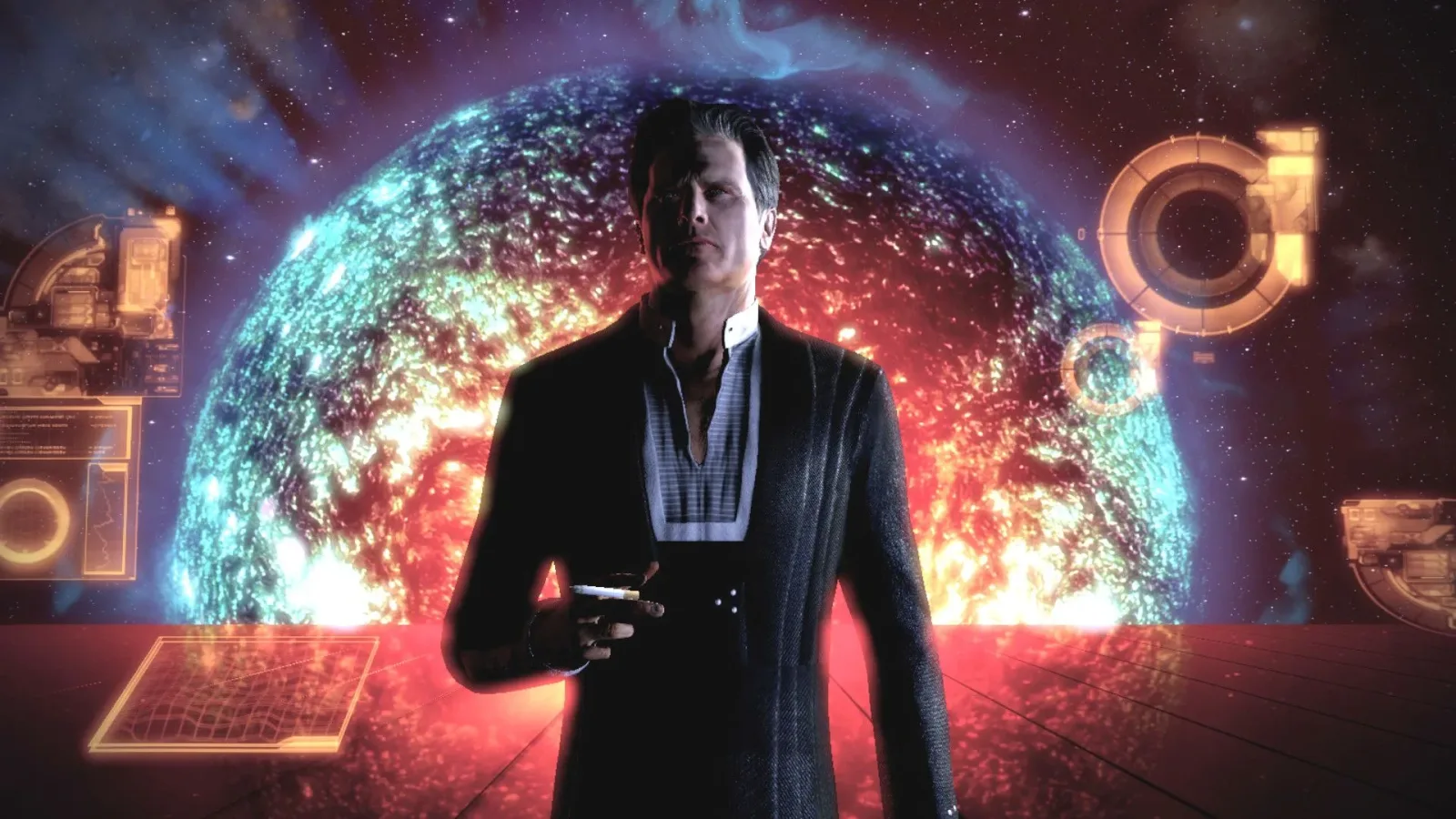
It is difficult to imagine a major, story-heavy RPG sequel being developed in 18 months today. Modern blockbuster games can spend five, seven, or even more years in production, with players watching long gaps open between entries in established series. Yet Mass Effect 2, which arrived in 2010 only 26 months after the first Mass Effect, was built on an especially compressed schedule.
Former Mass Effect 2 lead designer Christina Norman has outlined why that schedule was achievable, and her explanation is less about a single technological breakthrough than it is about production discipline. The sequel had a stable core team, a clear deadline understood from the beginning, hard limits on ambition, and direct lessons drawn from both the first game's development struggles and player reaction to it.
Norman's recollection is timely because it cuts against the common assumption that longer development is automatically necessary for better games. Mass Effect 2 was not without compromises or critics, and the debate over whether it is the strongest game in the trilogy remains lively. Still, it is widely regarded as one of the defining RPGs of its era. Its development offers a useful example of how a team can move quickly without simply throwing people at a project or allowing the project to expand indefinitely.
Embedded X/Twitter post
A sequel made by a team that stayed together
The first major factor Norman identified was remarkably straightforward: much of the same team that finished Mass Effect continued on to Mass Effect 2. That continuity matters because game development is filled with knowledge that is hard to write down in a document. Teams learn where a tool is fragile, which production steps create bottlenecks, what a particular engine can realistically support, and how departments communicate under pressure.
For useful background on this topic, read The Witcher 4 Wins Golden Joystick Most Wanted Game as CD Projekt Red Acknowledges the Pressure Ahead.
When those people remain in place for a sequel, they do not have to rediscover the project's foundations while building the next game. They already understand the setting, the codebase, the design language, the pipeline and the practical limits of the technology. They also know one another's working habits. That is a substantial advantage when the deadline is tight.
Norman contrasted that experience with the turnover that can affect development teams. Staffing changes are normal in the industry, but a project loses momentum whenever institutional knowledge leaves with experienced contributors. A sequel might inherit a recognizable brand and a familiar engine, yet still need to spend valuable time rebuilding shared understanding among the people making it.
For Mass Effect 2, retaining the core team meant that the sequel was not a cold start. The developers had already shipped a game together and could immediately focus on deciding what the next game needed to become. In an industry where studios often face reorganizations, layoffs, contractor cycles and shifting priorities, that kind of continuity can be as important as any feature list.
Experience with Unreal removed a costly learning curve
Norman also pointed to the team's growing familiarity with Unreal. Mass Effect was a major undertaking for BioWare, and the developers made what she described as many mistakes while learning to build the game in the engine. Those mistakes were not wasted if the team could carry the lessons into the sequel.
By the beginning of Mass Effect 2's production, the developers had a better understanding of how to create content within the technology. That meant fewer unknowns and a more reliable sense of what was feasible. The team knew how to build for its tools rather than spending extensive time learning the tools during full production.
This is one reason direct sequels can sometimes arrive more quickly than new franchises. A new universe requires foundational work across every discipline: technical systems, world rules, art direction, gameplay conventions, writing frameworks and production methods. A sequel can reuse knowledge even when it substantially changes its approach. Mass Effect 2 famously evolved from its predecessor in several ways, but it did not need to reinvent every part of its development process.
There is an important distinction here. Reusing a foundation is not the same as refusing to improve it. The Mass Effect 2 team was able to make changes because it knew where the first game's processes and systems had caused trouble. Familiarity gave the developers room to concentrate on revisions that would have the greatest effect rather than pursuing change for its own sake.
Scope was cut early, not after months of work
The most striking part of Norman's explanation may be the team's approach to scope. She said the original Mass Effect had been a much larger-scope game and that roughly half of it had to be cut in order to ship. Late cuts are a painful but familiar part of game development. They can mean that significant work is left unseen, teams have to scramble to reshape connected content, and morale takes a hit as contributors watch completed material disappear.
BioWare's response on Mass Effect 2 was to reduce the plan aggressively at the start. Norman described the team as being ruthless about limiting scope, cutting it down early so that work would not be wasted later. It is a principle that sounds simple but is difficult to follow, especially on a high-profile sequel where the temptation is to make every system larger, every world more expansive and every feature more elaborate.
Early restraint gives a team something invaluable: confidence that the work being produced has a genuine path into the final game. It helps artists, designers, programmers and writers prioritize the material that best supports the project's core experience. It also prevents a game from becoming overloaded with ideas that compete for resources without making the final product clearer or stronger.
Mass Effect 2's shape reflects those choices. Rather than trying to reproduce every element of the first game at a greater scale, the sequel placed a strong emphasis on its squad, loyalty missions, cinematic presentation and a focused central objective. Players may disagree about every design tradeoff, particularly changes to RPG systems and exploration, but the game's identity is unusually clear. That clarity is often what emerges when a team decides what it is willing to leave out.
Player feedback helped define what changed
Scope control was not merely a matter of reducing content at random. Norman said the developers listened to feedback from Mass Effect players and used it to determine what should be removed, retained and improved. That gave the team a practical framework for decision-making during a short production period.
A sequel cannot respond to every request from its audience. Different players value different aspects of an RPG, and feedback can conflict sharply. Some players want more mechanical complexity; others want smoother pacing. Some favor broad exploration; others prefer carefully authored missions. The value of feedback is not that it produces a universal answer, but that it reveals which problems are felt most consistently and which strengths are worth protecting.
For Mass Effect 2, player response to the first game helped BioWare decide where to direct its limited time. The result was a sequel that aimed to refine its moment-to-moment experience and place more attention on character-driven missions. That did not make it perfect, as Norman herself acknowledged, but perfection was not the stated goal. The goal was a realistic, achievable game that could be completed within the available schedule.
That distinction may be the broader lesson. A team can have ambitious creative standards while still recognizing the limits of time, staff and technology. Trying to solve every problem, satisfy every audience and implement every promising concept often makes a project less predictable, not more complete.
A difficult comparison with today's AAA environment
Mass Effect 2's development should not be treated as a universal template. The industry has changed since 2010, and contemporary AAA games often involve vastly larger asset counts, more elaborate performance capture, live-service infrastructure, accessibility work, global localization, platform certification demands and expectations for post-launch support. A project's scale cannot be reduced to the number of months it spent in development.
Even so, Norman's points remain relevant because they concern choices that still affect projects of every size. Stable teams retain knowledge. Familiar tools reduce risk. Early scope decisions prevent expensive rework. Player feedback can help developers focus their effort. None of those principles depends on a particular engine or console generation.
They also highlight why the industry's increasingly lengthy development cycles can feel frustrating to players and exhausting to developers. More time does not always mean more certainty. When goals keep changing or scope expands faster than a team can support it, years of effort can be consumed by rework. Conversely, a tightly defined project with an experienced team may reach the finish line more efficiently even if its schedule initially appears daunting.
The legacy of a focused sequel
Mass Effect 2's reputation has endured in part because it feels purposeful. Its characters, squad dynamics and high-stakes final stretch have remained central to discussion of the series long after release. There is no full consensus that it is the best Mass Effect game, but its place near the top of those conversations is difficult to dispute.
The context around the series is now more somber following EA's cancellation of Mass Effect 5 and the shutdown of BioWare. On N7 Day, the original Mass Effect director expressed optimism that the franchise could eventually return, while reflecting on the stories that remain untold. For fans, that leaves the future uncertain.
What is clear is that Mass Effect 2 remains a valuable production case study as well as a beloved RPG. Its 18-month development was supported by people who had already learned hard lessons together, a willingness to set limits before those limits were forced upon the team, and an effort to understand what players most wanted from a sequel. In an era of ever-growing budgets and timelines, those lessons have only become more relevant.
Community
Discussion
Start the conversation.
No comments have been posted yet.