

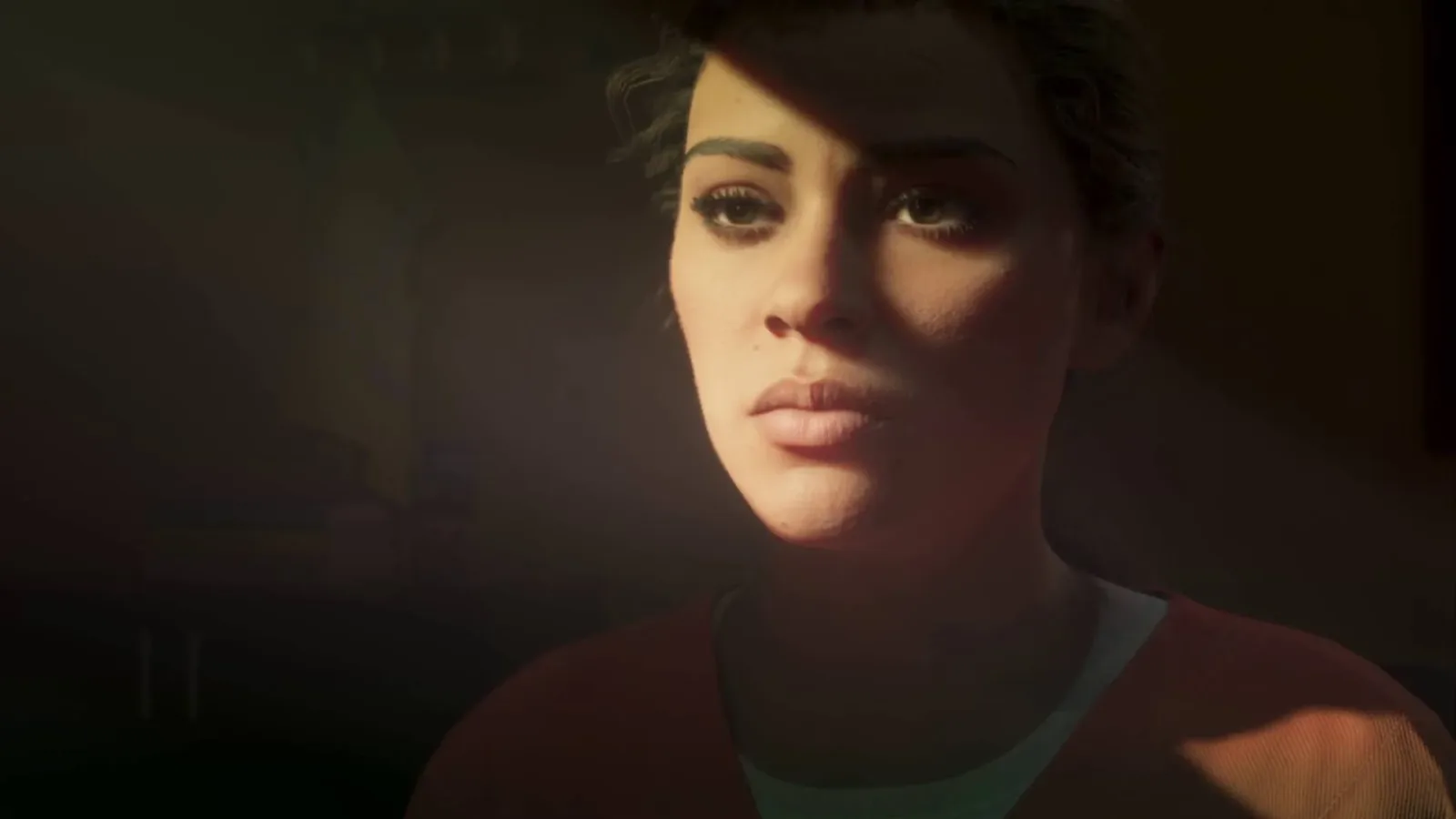
Grand Theft Auto 6 has prompted plenty of conversation about its scale, its setting of Leonida, and the relationship between protagonists Jason and Lucia. But one of the more revealing discussions surrounding Rockstar's new crime epic has focused on something less explosive: the game's apparent willingness to let players perform small, considerate acts for people around them.
Michael "Cromwelp" Douse, director of publishing at Baldur's Gate 3 developer Larian Studios, has highlighted that aspect as one of GTA 6's most impressive accomplishments. In comments shared on X, Douse described the game as having a "near-organic morality system," one built not simply around conspicuous hero-or-villain decisions, but around how players choose to engage with a community.
It is a notable perspective coming from a senior figure at a studio whose own role-playing game earned major acclaim for reactive storytelling, memorable companions, and decisions that could reshape both quests and relationships. Douse's point is not that GTA 6 has become a traditional role-playing game. Instead, he sees Rockstar using its immense production scale, detailed world, and writing to make even relatively modest interactions feel like part of a larger social fabric.
Embedded X/Twitter post
A morality system rooted in everyday interactions
Douse's assessment centers on the idea that GTA 6 lets players develop trust through errands, favors, and gestures that reveal more about supporting characters. In this view, the game's morality is not limited to a visible meter or a series of broad, binary choices. It grows from the player's moment-to-moment conduct and their willingness to notice the people who populate Leonida.
For useful background on this topic, read Miyazaki's Old Zelda Comments Show Why Dark Souls Never Chased the Same Path.
Examples cited by Douse include tipping an older bar owner while she smiles and dances to a veteran house band during a gathering at a dive bar. Another involves picking up a particular rum for an alcoholic character as a gesture of goodwill. Neither example necessarily sounds world-changing on paper. Their importance lies in what they communicate: these are characters with routines, preferences, histories, and vulnerabilities.
That approach can make a fictional open world feel more lived in than one built exclusively around shootouts, car chases, and mission markers. Rockstar's games have long been populated by eccentric side characters and social satire, but the suggestion here is that GTA 6 further develops the emotional texture of those encounters. The people in its world can remain exaggerated, strange, and distinctly Rockstar-esque while still being treated as individuals rather than disposable jokes.
Douse argued that the scale of GTA 6 applies not only to technical presentation and visual detail, but to its relationships as well. Bigger cities and denser environments do not automatically create stronger immersion. What matters is whether the player believes that people in those spaces have lives that continue beyond a single quest or punchline. By connecting optional acts of kindness to trust and characterization, the game appears to be asking players to pay attention.
The debate around Jason and Lucia
Some online discussion has focused on Jason's concern for Lucia, with critics framing his behavior through the reductive language of "simping." Douse directly addressed that line of criticism, rejecting the notion that a game showing its lead character caring for another person is somehow trying to diminish the player.
His argument is that GTA 6 is challenging players to see the people in its world as human beings. That includes Jason and Lucia, whose relationship has been positioned as one of the game's central dramatic threads, but it also extends to the smaller figures encountered across Leonida. A protagonist expressing concern for a partner, or a player choosing to help a local character with something meaningful to them, can be part Of the World's dramatic foundation rather than a departure from Grand Theft Auto's identity.
The criticism also reveals a broader tension in how some players discuss player freedom. Open-world games are often praised for allowing chaos, selfishness, and spectacle. Those possibilities remain an important part of the Grand Theft Auto formula. Douse specifically noted that players can still act badly toward people outside their circle or neighborhood. The difference is that GTA 6 may attach more emotional weight to the alternative.
Freedom does not have to mean that every action is equally empty. A player may choose to be cruel, indifferent, generous, protective, or loyal, and a convincing fictional world should be capable of registering those choices in some fashion. Even when the game does not impose a severe mechanical punishment, the writing and performances can make the player understand what a decision says about their version of a character.
That kind of context is especially relevant for Jason. If he is written only as an untouchable criminal power fantasy, his relationship with Lucia has limited room to develop. If he can be anxious, protective, flawed, selfish, affectionate, or conflicted, then the story has a stronger chance of giving its criminal partnership real tension. The same applies to Lucia, whose own agency and perspective are essential to ensuring the relationship feels like a two-person story rather than a device for motivating one protagonist.
Rockstar's caricatures can still have emotional weight
Grand Theft Auto has always operated in a world of heightened personalities. Its cities are full of loud radio hosts, delusional criminals, wealthy opportunists, conspiracy theorists, hustlers, and figures designed to parody modern American life. Douse's comments do not suggest GTA 6 abandons that tradition. Rather, he describes an expansion of it: the caricatures can be funny, excessive, or unpleasant, while still possessing recognizable needs and feelings.
That balance is difficult to achieve. Satire can become shallow when every character exists only to be mocked, while earnestness can feel out of place if it erases a series' sharp comic edge. GTA 6's apparent ambition is to preserve the absurdity but create room for players to form more grounded impressions of individual residents.
Small favors are particularly useful in that respect because they make the player participate in another character's daily reality. Buying a favorite drink or showing generosity to a business owner is not a grand speech about morality. It is a mundane action. Mundane acts can often reveal personality more effectively than dramatic cutscenes, especially when they are embedded in the player's exploration rather than presented as mandatory story beats.
There is also an interesting contrast between the criminal fantasy at GTA's core and the ordinary human interactions Douse describes. The series has traditionally invited players into worlds where wealth, status, violence, and spectacle are always within reach. Grounding that fantasy with errands, relationships, and neighborhood-level trust does not remove the edge of the premise. It potentially gives the high-stakes moments more impact, because they occur among people and places the player has been encouraged to understand.
Why this matters for open-world storytelling
Many large open-world games struggle with a familiar problem: their maps are filled with activity, but their people can feel interchangeable. There may be hundreds of icons, collectibles, encounters, and tasks, yet very little sense that the player's presence has a personal or social dimension. A more organic morality framework can help address that issue, provided the interactions are thoughtfully written and supported by meaningful consequences or strong characterization.
GTA 6's technical ambition could make that effect more convincing. Higher-fidelity animation, more natural performances, dense environmental detail, and responsive scripting all contribute to whether a player perceives a character as a person with a life rather than an object standing beside a quest prompt. Douse specifically connected the game's technical strengths with its ability to make that humanizing challenge land.
The important word is "organic." A morality system can feel artificial when it is loudly announced every time the player gains or loses points. A world that reacts through dialogue, access, body language, changing attitudes, and the gradual building or breaking of trust may create a subtler effect. Players can recognize that they are shaping their social surroundings without feeling as though they are merely optimizing a score.
Of course, the full scope of GTA 6's systems will ultimately be judged by players spending time in Leonida themselves. The examples discussed by Douse point to a promising direction, but the lasting question is how often those details emerge, how much reactivity they carry, and whether the main story supports the same degree of nuance. Rockstar's games are known for carefully authored missions, and a richer web of character interactions could make those missions feel more connected to the world beyond them.
A broader definition of player fantasy
Douse's comments offer a useful counterpoint to the assumption that games must make the player feel dominant at all times. Power fantasy is one valid form of entertainment, and Grand Theft Auto has built much of its appeal on giving players extraordinary freedom. Yet a compelling player fantasy can also involve belonging somewhere, earning someone's confidence, protecting a relationship, or choosing decency when selfishness would be easier.
Those ideas do not make a protagonist weak, nor do they contradict a story about crime and survival. They can make characters more credible. A Jason who cares about Lucia, and a player who can recognize the value of a small kindness toward a stranger or neighbor, may create a version of GTA that is not less cutting or dangerous, but more emotionally dimensional.
As discussion around GTA 6 continues, the game's violence, satire, vehicles, and blockbuster scale will understandably attract enormous attention. Douse's observations point toward another reason Leonida may stand apart: Rockstar appears interested in asking whether players can look past the noise and see the people caught inside its sprawling world.

Community
Discussion
Start the conversation.
No comments have been posted yet.