

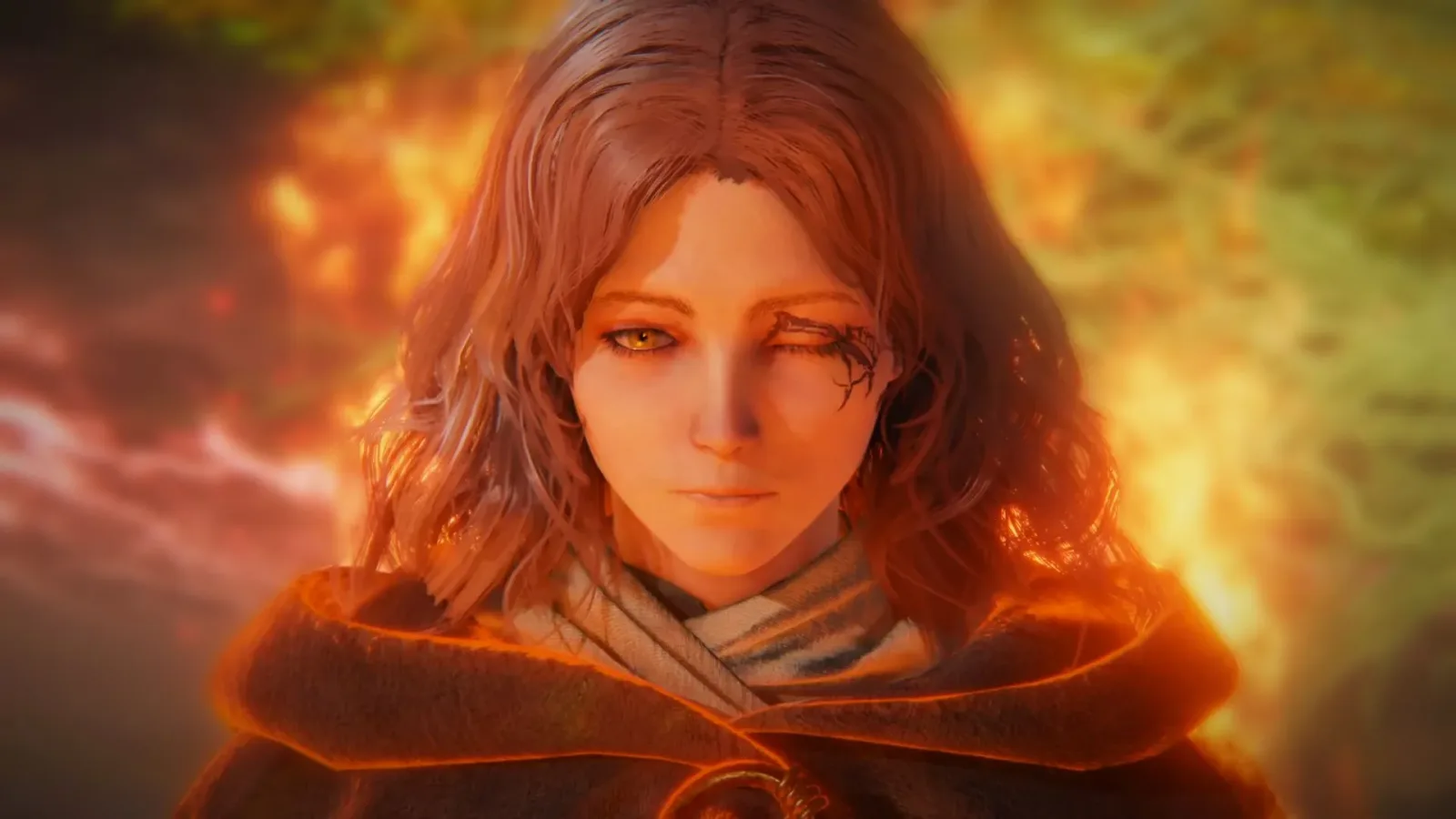
It is easy to see why players have spent years putting Dark Souls, Bloodborne, and eventually Elden Ring in conversation with The Legend of Zelda. All of them ask players to venture into dangerous fantasy worlds, develop an understanding of space and systems, uncover secrets beyond the obvious route, and turn uncertainty into progress. Yet Hidetaka Miyazaki, the FromSoftware president and director closely associated with the Souls series, once made clear that he did not see Dark Souls as a successor to Zelda's design legacy.
In a 2016 interview, Miyazaki was asked about the frequent claim that the Souls games and Bloodborne represented what The Legend of Zelda might have become. His answer was both humble and precise. Zelda had been enormously important to him as a student, he said, and that personal history made him feel "deeply unworthy" of the comparison.
That reaction was not a rejection of Zelda's importance. Instead, it recognized the scale of the series' influence while also drawing a line between inspiration and imitation. Miyazaki argued that Zelda and Dark Souls belonged to separate genres, followed different game-design concepts, and did not need to strive for identical goals. It is a useful distinction, especially now that Elden Ring has made comparisons between the two franchises even more common.
Embedded X/Twitter post
Ocarina of Time as a foundational 3D action lesson
Miyazaki specifically identified The Legend of Zelda: Ocarina of Time as an essential point of reference for 3D action games. Rather than suggesting that Dark Souls borrowed one isolated feature or attempted to recreate a particular Zelda structure, he described Zelda as a kind of textbook for the entire field. That is a broader observation about how influential Nintendo's landmark adventure was in teaching developers and players how 3D spaces could work.
For useful background on this topic, read Vampire Therapist Arrives on iOS and Android With Couples Therapy DLC Included.
Ocarina of Time helped establish an enduring vocabulary for navigating 3D worlds: reading landmarks, assessing enemy movement, using camera-aware combat, approaching dungeons as spatial puzzles, and treating an adventure landscape as a place with routes, obstacles, and discoveries. Plenty of games built after it carry some part of that inheritance, whether they resemble Zelda on the surface or not.
FromSoftware's work clearly approaches those fundamentals from another direction. Dark Souls is not interested in reproducing Zelda's tone, pacing, or progression rhythms. Its worlds are oppressive and fragmented rather than storybook-like; its combat emphasizes stamina management, deliberation, risk, and repeated practice; and its storytelling often asks players to assemble meaning from item descriptions, environments, and incomplete character encounters. A player can find a hidden shortcut in either Zelda or Dark Souls, but the emotional effect and wider purpose of that discovery can be very different.
That is the core of Miyazaki's point. Similarities in broad adventure-game language do not erase differences in intent. One series need not be judged as an unfinished version of the other simply because both reward curiosity and spatial awareness.
Why the comparison persisted
The comparison did not appear from nowhere. Dark Souls is filled with moments that make its world feel like a three-dimensional puzzle box. Doors circle back to bonfires, elevators reveal startlingly efficient connections, distant towers become reachable destinations, and a location initially viewed as scenery may later become the next stretch of a difficult journey. That careful interconnection gives exploration a sense of revelation that many players also associate with Zelda.
Both series also encourage attention rather than pure momentum. Players who rush forward without looking at their surroundings can miss valuable paths, tools, NPCs, and context. In both cases, knowledge is a major form of power. Understanding a region's layout, anticipating an enemy, remembering an earlier obstacle, or noticing an unusual landmark can matter as much as raw character strength.
But Dark Souls makes that learning process intentionally harsher. Failure is not merely a possible interruption; it is part of the structure through which players learn. The loss-and-recovery loop tied to souls, the danger of returning through repopulated areas, and the demanding boss encounters all create a pressure distinct from Zelda's generally more guided heroic adventures. Dark Souls turns persistence into a central theme as well as a mechanical expectation.
Bloodborne, meanwhile, carries some of the same exploratory DNA into a faster, more aggressive combat framework and a different horror-inflected setting. It may share a family resemblance with Dark Souls, but it further underlines why treating FromSoftware's catalog as a simple alternate evolution of Zelda misses what those games are trying to accomplish.
Breath of the Wild changed the conversation
The landscape shifted dramatically after Miyazaki made those 2016 comments. The Legend of Zelda: Breath of the Wild arrived months later and reinvented its own series around a vast open world driven by player curiosity. Instead of relying as heavily on a traditional sequence of gated dungeons and tools, it placed extraordinary emphasis on systemic experimentation, freedom of approach, distant visual prompts, and the pleasure of traveling toward something that simply looks interesting.
Breath of the Wild became one of the most celebrated games of its era, demonstrating that Zelda could radically alter its established formula without losing its identity. It also made the shared territory between Zelda and FromSoftware's design philosophies more visible. Both could create worlds where a player forms stories through self-directed journeys: a strange ruin on a horizon, an unexpectedly dangerous detour, an encounter with a formidable enemy long before feeling ready, or a route discovered through observation rather than a flashing instruction.
Yet Breath of the Wild's freedom remained distinctly Zelda-like. Its systems encouraged playful experimentation, while its tone left room for wonder, quiet beauty, and improvisation. The challenge could be substantial, but the world's logic often invited players to test possibilities and find inventive solutions. This was not Dark Souls with a larger map, nor was it trying to be.
Elden Ring and influence without imitation
Five years after Breath of the Wild, Miyazaki directed Elden Ring, a game that would become FromSoftware's most successful release. Miyazaki has discussed taking inspiration from Breath of the Wild in relation to Elden Ring's open-world direction, an acknowledgement that adds an interesting later chapter to his earlier thoughts about Zelda.
That influence is meaningful, but it does not turn Elden Ring into a Zelda clone or validate the old idea that Souls was always trying to become Zelda. Instead, it shows how major games can inspire other creators at the level of approach. Elden Ring's Lands Between gives players space to ride in almost any direction, stumble across caves and catacombs, encounter threats that may be better handled later, and use the landscape itself as an invitation. Its structure makes room for wandering and discovery on a scale that earlier Souls games could not.
At the same time, Elden Ring remains firmly built on FromSoftware's own traditions. Its hostile combat, cryptic lore, character builds, punishing encounters, and foreboding atmosphere distinguish it from Breath of the Wild. A player may be drawn across the map by a silhouette on the horizon, but the destination might be a dragon, a trap-filled tomb, a terrifying field boss, or a legacy dungeon designed to test every lesson learned along the way.
The result is less a merger of two franchises than an example of creative influence being absorbed into an established identity. Zelda's modern open-world breakthrough offered a powerful demonstration of how exploration could be shaped. Elden Ring applied lessons from that breakthrough to a very different set of priorities.
Different ideals can still meet in discovery
Miyazaki's 2016 response remains notable because it resists an easy hierarchy. Calling Dark Souls what Zelda "should have" become assumes that one design tradition must replace another. His response argues the opposite: different games can pursue different ideals, and that difference is valuable.
Zelda's history includes continual reinvention, from the 3D action-adventure blueprint of Ocarina of Time to the open-air philosophy of Breath of the Wild. FromSoftware's games have evolved as well, moving from tightly interlocked dark-fantasy spaces to the enormous and flexible structure of Elden Ring. Their paths have crossed through shared ideas about exploration, world design, and player curiosity, but they have not become the same path.
For players, that distinction is ultimately good news. There is room for the inventive adventure of Zelda and the severe mystery of Dark Souls. There is room for Breath of the Wild's systemic freedom and Elden Ring's perilous, build-driven expedition. The games can inform one another, influence the wider industry, and still preserve the individual design principles that made them memorable in the first place.
Community
Discussion
Start the conversation.
No comments have been posted yet.