

The Nintendo Wii is now 20 years old, and a newly shared look at its all-time US software rankings is a potent reminder that the console's commercial identity was very different from the one remembered by many dedicated players. Nintendo's motion-control machine hosted beloved adventures, major sequels, party games, and plenty of experimental releases. Yet its biggest retail successes were often products aimed at families, newcomers, and people buying accessories for the living room.
That context makes one particular Zelda result easier to understand, even if it still feels startling at first glance. Link's Crossbow Training was the best-selling The Legend of Zelda game on Wii in the United States by unit sales. It placed 11th among the Wii's 20 top-selling non-bundled games, ahead of Mario Party 8, Super Mario Galaxy 2, and Donkey Kong Country Returns. It also surpassed The Legend of Zelda: Twilight Princess, despite the latter being one of the most prominent launch-window games on the platform.
Even more surprising, The Legend of Zelda: Skyward Sword did not make the top 20 at all. The numbers, shared by Circana video game industry analyst Mat Piscatella from Circana Retail Tracking Service data, illustrate just how dramatically Wii software sales were shaped by peripherals, accessible concepts, and an enormous casual audience.
A Wii sales chart defined by mass-market hits
The Wii's top 10 US games are dominated by titles that were designed around the system's broad appeal. Wii Play, Wii Fit, Wii Fit Plus, Wii Sports Resort, Just Dance 2, and Just Dance 3 all appear within that upper tier. Mario games and Mario-adjacent releases occupy the remaining places, with Super Mario Galaxy standing out as the only single-player game in the top 10.
For useful background on this topic, read GTA 6's Mandy Becomes an Early Viral Talking Point as Reggie Fils-Aimé Joins the Conversation.
Importantly, the figures exclude bundled software. That means the original Wii Sports, which arrived packed in with the console in the US, is not part of this ranking. Its absence does not diminish its cultural reach, but it does make the list a clearer picture of what consumers separately chose to buy at retail.
Wii Play taking the top spot is a classic example of how the platform worked. The collection of simple motion-controlled activities was also a practical way to acquire another Wii Remote, making it a natural purchase for households that wanted to play multiplayer games. On a console where extra controllers, balance boards, steering wheels, and plastic accessories were central to the experience, the line between software purchase and hardware purchase could be remarkably thin.
That is the environment in which Link's Crossbow Training flourished. It was not positioned as the next giant Zelda quest. It was a compact, score-focused shooting game built around familiar locations, enemies, and assets from Twilight Princess. But it had an advantage that mattered tremendously in Wii-era stores: it introduced the Wii Zapper.
The Wii Zapper made the difference
Link's Crossbow Training launched as part of a package with the Wii Zapper, a plastic shell designed to hold a Wii Remote and Nunchuk in a two-handed, light-gun-like configuration. The software showed off the attachment through target shooting, defensive sequences, and rail-shooter-style stages, all wrapped in Zelda imagery that gave the bundle an immediately recognizable identity.
That package proposition explains much of its sales power. Rather than asking players to spend full price on a modest spin-off, it offered a lower-cost entry point attached to a tangible peripheral. For Wii owners who had embraced the system's physical novelty, a new controller setup could be as appealing as the game itself.
The Wii was full of products built around this mentality. Balance boards supported fitness software. Steering-wheel shells became common companions for racing games. Dance titles transformed a Wii Remote into a social activity. Players were encouraged to interact with the console in visibly different ways, and the retail aisle was filled with accessories that made those experiences feel more distinct.
Link's Crossbow Training benefited from being both a Zelda product and an accessory showcase. Its 11th-place finish should not be interpreted as proof that more players necessarily viewed it as a deeper or more important Zelda experience than Twilight Princess. Instead, it demonstrates that the Wii Zapper bundle met a specific purchasing need at exactly the right moment for the platform.
Why Twilight Princess was not the Wii Zelda champion
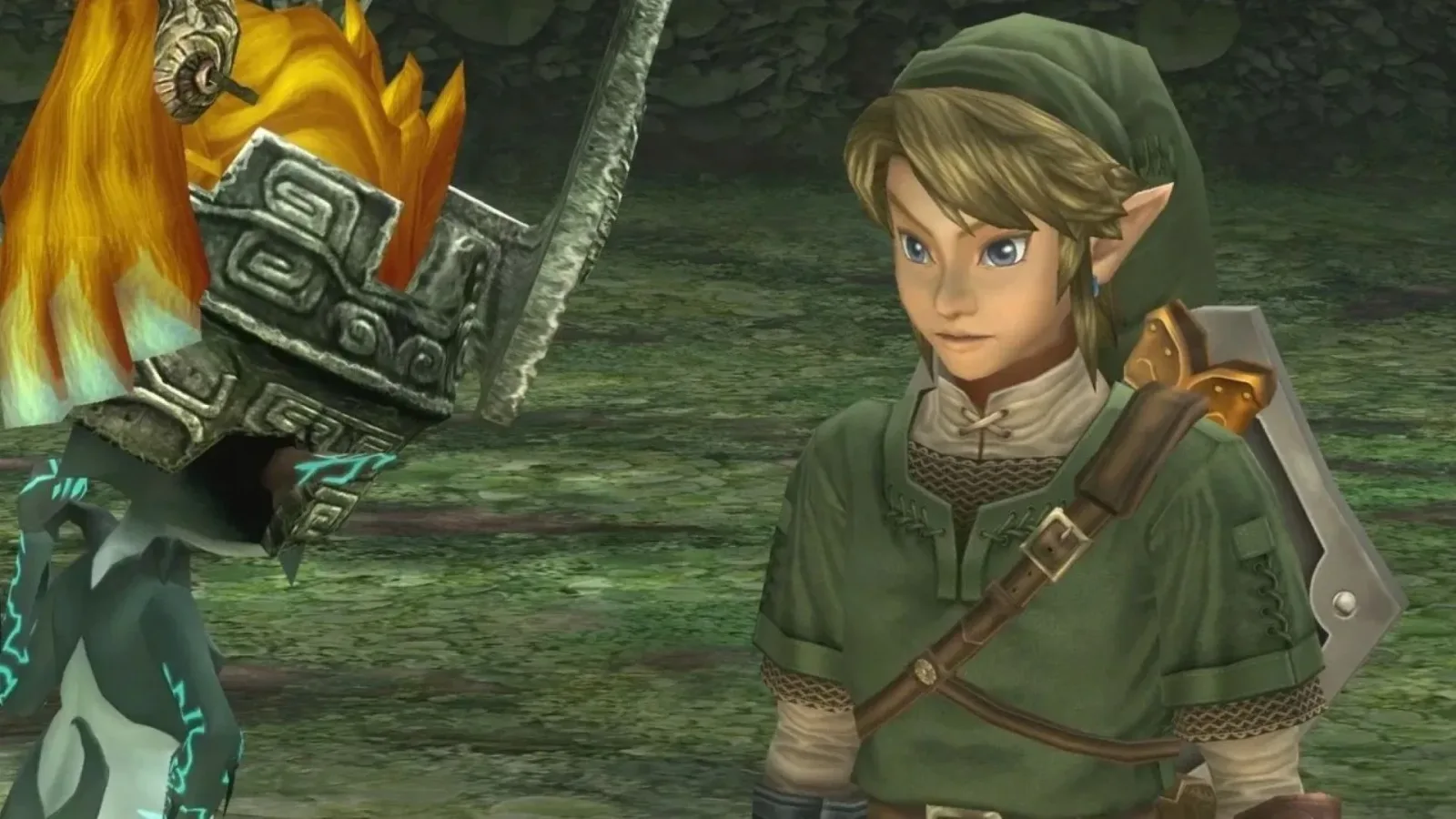
The Legend of Zelda: Twilight Princess had everything expected of a major system-selling adventure. It was available alongside the Wii's launch, gave Nintendo fans a massive new quest, and used motion controls for sword swings, aiming, fishing, and other interactions. It also remains a defining game of its era, remembered for its darker tone, sweeping scale, Midna's central role, and its unusual dual release across Wii and GameCube.
That dual-platform strategy is one crucial detail. Sales for the GameCube edition were separate from Wii retail sales, so the Wii version's total in this particular chart does not represent every copy of Twilight Princess sold in the US. The game could be enormously successful overall while still falling behind a Wii-specific accessory bundle on the system's unit-sales leaderboard.
There is also the matter of price and audience. Twilight Princess was a full-scale action-adventure built for players ready to commit dozens of hours to a sprawling fantasy world. Link's Crossbow Training was shorter, simpler to understand, cheaper, and positioned alongside an appealing piece of hardware. The latter was much easier to add to a family's growing collection of Wii accessories and party-friendly software.
This is not unusual for the Wii. The platform's commercial peaks often did not align neatly with the preferences of traditional enthusiasts. It sold on the strength of immediacy: swing the remote, try an activity, bring in another player, and let almost anyone understand the appeal in seconds. Long-form single-player games could thrive there, but they were competing in a marketplace increasingly driven by entirely different habits.
Skyward Sword's absence tells its own story
The absence of Skyward Sword from the top 20 is just as revealing. As a late-era Wii release, it arrived after the system had already spent years reaching an enormous audience. On paper, that installed base might seem like a major advantage over Twilight Princess, which launched when Wii ownership was only beginning to grow.
However, a large installed base does not guarantee that late releases will reach every owner. By that point, many Wii households had bought the machine primarily for fitness, dancing, sports, social games, or the occasional family-oriented release. The audience for a dedicated, motion-control-heavy Zelda adventure was only one part of that massive group.
Skyward Sword also required Wii MotionPlus functionality, putting its swordplay and precision aiming at the center of the experience. That was a creative fit for the game's design, but it added another consideration for buyers who did not already own a compatible controller or accessory. Meanwhile, the later Wii years saw attention begin to shift toward new hardware and other platforms.
None of this reduces the importance of Skyward Sword within the Zelda series. Its influence can be seen in how later entries approached lore, motion-driven interaction, and the relationship between Link, Zelda, and the Master Sword. But the US Wii retail chart underlines a simple historical reality: the Wii's largest audience did not necessarily buy the games that enthusiasts most associate with its final years.
A snapshot of an unusual gaming era
The Wii is often remembered as a major Nintendo success, but that description can be too broad to capture what made it exceptional. It was not merely a popular console. It changed who was buying games, where games were played, and what types of releases could become retail phenomena. Fitness programs, minigame collections, dance routines, and controller bundles were all capable of reaching sales heights that more conventional blockbuster games could not match.
The presence of Carnival Games at number 20 reinforces that point. A midway-themed minigame collection may not be a title that dominates modern conversations about Wii's legacy, yet it found enough buyers to land among the platform's biggest US sellers. In the same way, the performance of the Just Dance series shows how powerfully the Wii became associated with approachable social entertainment.
For Zelda fans, the result is a wonderful piece of trivia with a meaningful explanation. Link's Crossbow Training was not an accidental footnote that somehow wandered past two mainline adventures. It was a product tailored to the Wii ecosystem: recognizable characters, instantly legible motion-based action, a lower price point, and a new plastic attachment to put in the hands of curious players.
Twenty years later, the Wii's sales records remain a useful reminder that gaming history is shaped by more than critical reputation and franchise prestige. Sometimes the best-selling Zelda game on a console is the huge launch adventure. Sometimes it is the ambitious late-era follow-up. And sometimes it is a compact target-shooting game packaged with a crossbow-shaped controller accessory, arriving at the exact moment people could not get enough of the Wii's next new thing.
Community
Discussion
Start the conversation.
No comments have been posted yet.