

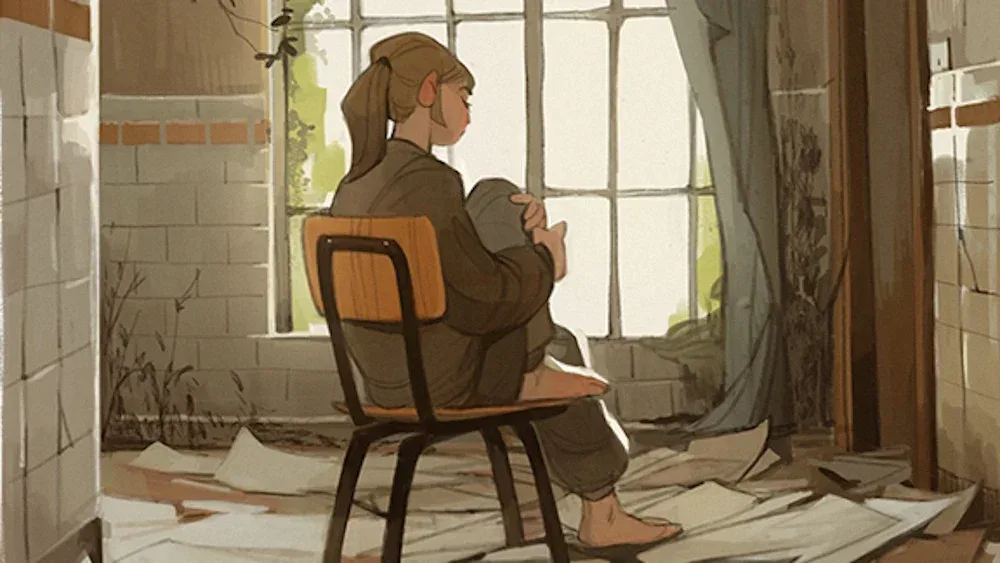
As generative AI imagery continues to flood social platforms and creative spaces, artists are facing a difficult double pressure: their work can be used to train or inform systems without meaningful consent, credit, or compensation, and they can also find themselves accused of using those same systems when people misread their own art.
Artist Lois van Baarle, better known as Loish, recently addressed that second problem after being accused on TikTok of using generative AI in a piece of her artwork. Her response was not simply a denial. Instead, she used the moment to explain why unsupported accusations can be harmful, and why viewers should make the effort to investigate an image before declaring that it was machine-generated.
It is an especially pointed situation for a veteran illustrator whose work has been visible online for decades. Loish has been posting art since 2003, has extensively shared her artistic development and process with her audience, and has contributed work associated with Horizon Zero Dawn. Her art is also part of a much larger online body of human-created material that has existed long before the current wave of image-generation tools.
Embedded Instagram post
That history matters. When an established artist with years of public process material can be casually labeled an AI user, it demonstrates how fast suspicion can overtake basic fact-checking in online creative communities.
For useful background on this topic, read Dan Houser Is Avoiding GTA 6 and Other Open-World Games While Building Absurd Ventures' Next Projects.
A documented process was already available
In her Instagram post, Loish discussed the accusation and pointed out that there were straightforward ways for people to establish that the contested artwork was made by her. She had already posted videos documenting the creation of that particular piece, including material showing that it was made in 2023, during the early period of the generative AI boom.
That evidence is important not because artists should be required to continually prove their humanity, but because it was readily available to anyone willing to look past a comment thread. Loish has long made process-sharing part of her public practice, offering viewers a window into how her sketches, color choices, rendering, revisions, and final illustrations come together.
For aspiring artists, that openness has educational value. Process videos, tutorials, and incremental work-in-progress posts can make digital painting feel less mysterious and show that polished results are reached through repeated choices and learned skills. In the current AI discourse, though, those same archives are also becoming evidence against false claims.
Loish argued that people should check an artist's profile, look for process material, and learn how to assess warning signs before concluding that an image comes from a generative system. The request is not an argument for ignoring AI-generated work or dismissing concerns around it. It is a call for scrutiny that is both serious and accurate.
Why false accusations carry real consequences
The fear surrounding generative AI did not appear in a vacuum. Many artists have understandable concerns about systems built on vast datasets of creative work, often gathered without a clear opt-in process. Creators also now compete for attention against rapidly produced AI images that can overwhelm feeds, confuse audiences, and reduce the visibility of people making art through conventional practice.
For artists whose work has informed online visual culture for years, the idea that their style may be imitated or absorbed by automated tools can be deeply frustrating. The situation becomes more painful when human-made work is then treated as suspicious because it resembles the visual language that AI systems have been trained to imitate.
Loish described the current environment as a rough one for artists. Her point was that the problem is not limited to generated images appearing alongside traditional artwork. Human creators can have their output fed into systems without consent and then watch algorithmic feeds reward automated content while their own work is buried under it.
False allegations add another layer of risk. A single comment may seem insignificant, but repeated claims can affect how an audience sees a creator. They can spark pile-ons, undermine trust, distract from the work itself, and potentially cause professional damage. For freelancers and independent artists, where reputation, visibility, commissions, and partnerships are closely connected, careless accusations can have material consequences.
There is also a clear emotional cost. Artists already working in an uncertain market may feel compelled to record every stage of every piece, retain more proof than usual, or respond publicly to strangers who have not taken time to review basic context. Documentation can be a valuable creative and teaching tool, but it should not become an exhausting burden creators must carry merely to be presumed legitimate.
Better AI literacy means checking more, not accusing faster
Conversations about generative AI often encourage people to look closely at images for irregular details, inconsistent forms, strange text, implausible lighting, or objects that do not quite make sense. Those habits can be useful, particularly as audiences try to understand what they are seeing in fast-moving social feeds.
But visual inspection alone has limits. Human artists can intentionally distort anatomy, simplify shapes, use surreal compositions, or create stylized details that do not adhere to literal realism. Meanwhile, generation tools continue to improve, meaning that images can no longer be judged reliably through one checklist or a quick glance.
That is why context is essential. Rather than treating an individual detail as conclusive proof, viewers can take a broader approach:
- Check whether the artist has a substantial history of work that predates the image in question.
- Look for sketches, timelapses, drafts, livestreams, or other process documentation.
- Review captions and dates instead of relying on reposts or cropped screenshots.
- Compare the piece with the artist's established body of work while recognizing that styles naturally evolve.
- Avoid amplifying a claim until there is meaningful evidence behind it.
None of these steps means audiences must act as forensic investigators every time they encounter artwork. It means pausing before publicly attaching a serious accusation to a person's name. In an environment built around instant reaction, even a small delay can prevent a great deal of harm.
It is also worth recognizing that creators do not all document their work in the same way. Some maintain extensive public archives, while others work privately, share only finished pieces, or cannot preserve every intermediate file. A lack of a timelapse is not proof that an artwork is AI-generated. Verification should be rooted in the evidence that does exist, not in demands that every artist follow one prescribed method of proving authorship.
The gaming connection: human craft remains visible
The issue resonates strongly in games because visual art is central to how players experience worlds, characters, marketing, interfaces, and promotional materials. Illustration, concept art, environmental design, character design, animation, and countless other disciplines shape a game long before players pick up a controller.
Loish's association with Horizon Zero Dawn is a reminder of the many individual creatives whose work contributes to major productions. Games may be discussed through studios, franchises, engines, or hardware, but they are made by people with distinct skills and artistic histories. Their work is not interchangeable background material.
As the games industry and its surrounding communities continue debating automation, responsible use of tools, training data, and creative labor, there is a need for two forms of vigilance. Players and observers can remain critical of companies that may use generative systems in ways that displace, exploit, or obscure human work. At the same time, they should not let legitimate concern become a reason to target artists without evidence.
That balance is difficult, especially when social media rewards certainty and outrage. Yet it is necessary. A community that wants to protect creative people has to protect them from both unauthorized appropriation and false public suspicion.
"Don't forget what makes us human"
Loish closed her message with a broader appeal for human connection and care. Her central point is that audiences need the skills to determine whether something is real and whether it was made by a living person, but those skills must be used responsibly. The goal should not be a culture of constant suspicion. It should be a culture that values artists enough to seek the truth before passing judgment.
That approach begins with curiosity. Click through to an artist's profile. Explore their older work. Watch how they describe their process. Consider whether the image has a history beyond a single viral post. In many cases, the context reveals a person who has spent years developing the techniques being casually questioned.
For Loish, that public record includes not only finished illustrations but also years of educational material, process sharing, and artistic growth. Her response turns an unfair accusation into a useful reminder: technology may be changing how images are made and distributed, but human attention, patience, and empathy still matter.
In the rush to identify AI-generated content, it is easy to forget that the people most affected by generative systems are often the same people who built the creative foundations those systems draw from. Supporting artists means listening to them, crediting them, respecting their work, and taking the time to verify claims before adding to the noise.
Community
Discussion
Start the conversation.
No comments have been posted yet.