

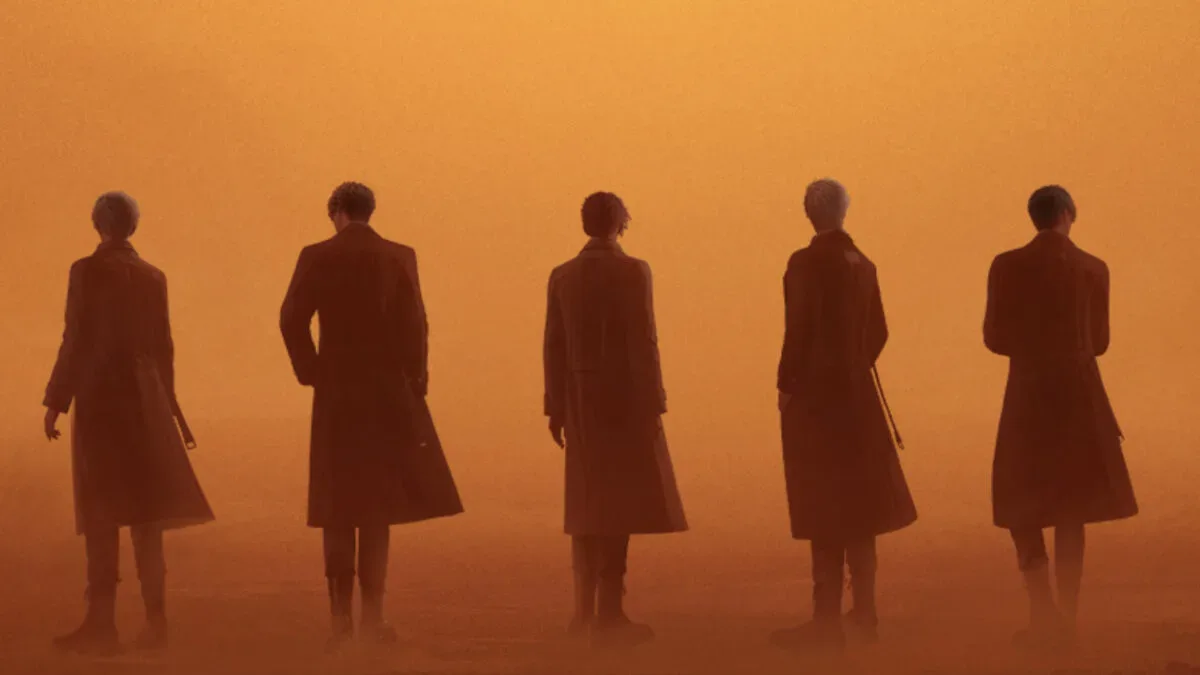
Love and Deepspace has launched a Blade Runner 2049 crossover event, bringing the mobile romance game into contact with one of modern science fiction's most recognizable visions of artificial companionship. On its face, the collaboration is a stylish fit: both properties have strong futuristic aesthetics, digital relationships, and emotional stories built around the line between a person and a manufactured fantasy.
For a significant part of Love and Deepspace's community, however, the crossover has arrived at an especially uncomfortable time. Players are still frustrated over the removal of Valko, the game's announced sixth love interest, and many have continued a spending boycott while waiting for any sign that the character could return. That makes a crossover built around Blade Runner 2049's most pointed imagery of commercialized digital romance feel less like a harmless promotion and more like a painful reminder of the dispute.
The reaction has turned what might otherwise have been a straightforward event into another flashpoint for a fanbase already debating the future of one of its missing virtual companions.
Embedded X/Twitter post
Embedded X/Twitter post
Embedded X/Twitter post
A crossover centered on a memorable Blade Runner 2049 image
The event offers daily rewards, including in-game currency, as well as a special photo background and an emote. Its presentation recreates imagery associated with the scene in Blade Runner 2049 in which Officer K, played by Ryan Gosling, encounters an enormous advertisement for Joi, a mass-market digital girlfriend product. K has a more personal connection with his own version of Joi, making that public advertising encounter particularly memorable in the film.
For useful background on this topic, read Clash Royale: The Grand Arena Smashes Kickstarter Goal Within an Hour.
It is an immediately recognizable choice for a game such as Love and Deepspace, where romantic interaction with fictional characters is the central appeal. The title has built its audience through intimate story content, collectible moments, elaborate character presentation, and the ongoing relationship players form with its cast of male leads. A Blade Runner 2049 tie-in therefore has an obvious visual and thematic overlap with the game's usual material.
Yet the specific scene being referenced carries baggage that extends beyond neon skylines and cyberpunk fashion. Joi's role in Blade Runner 2049 is inseparable from questions about whether an artificial lover can offer genuine affection, how much of that affection is shaped by a product's design, and what remains after that connection is suddenly taken away.
That last point is what has made the collaboration so contentious among Valko supporters.
Why Valko remains a major issue for players
Love and Deepspace already features five primary romance options, each designed to support a different kind of fantasy and relationship dynamic. Valko had been positioned as the sixth love interest, with an announcement that generated substantial enthusiasm among players. His distinctive wolf-like design and strong cyberpunk styling quickly attracted a loyal following.
But Valko was subsequently removed before players could fully experience him as part of the active romance roster. The decision prompted sustained anger from fans who had anticipated his release, and some of those players have said they will not spend money on the game unless he is restored.
That protest has persisted through later updates and events. Every major announcement has become an opportunity for players to ask whether Valko is coming back, whether plans have changed, or whether the developer intends to address his absence in a more meaningful way. No return was attached to the Blade Runner 2049 event, leaving supporters with the familiar disappointment of another update moving forward without him.
For these fans, the crossover's connection to a story involving the loss of a digital romantic partner is hard to ignore. They have drawn comparisons between Joi's fate in the film and the disappearance of a character they had expected to join Love and Deepspace's cast. The overlap is not exact, but it is close enough that many see the event's messaging as unintentionally cruel at best.
Fans see either bad timing or a strange joke
Community discussion has largely settled around two broad interpretations. The first is that the event is an extraordinary example of unfortunate timing. In this reading, the crossover was conceived without fully considering how its chosen Blade Runner 2049 material would land among players still upset by Valko's removal.
The second interpretation is considerably harsher: some fans suspect the decision comes across as a self-aware jab at players who continue to advocate for a character no longer available in the game. There is no indication that the event was designed to mock Valko supporters, but the coincidence has encouraged that theory to spread.
The event is particularly vulnerable to that reading because Love and Deepspace is not simply borrowing a generic sci-fi setting. It is drawing on an image from a film about an artificial companion whose existence is tied to consumer technology and whose relationship with K ends in loss. For a community built around attachment to fictional romantic characters, that is already emotionally charged territory. For a community simultaneously protesting the removal of one such character, it becomes much more pointed.
The discomfort is less about whether Blade Runner 2049 suits Love and Deepspace aesthetically, and more about whether this was the right scene to spotlight while Valko's fans remain unresolved about his absence.
Some players have also questioned why a crossover with a 2017 film is appearing now. Blade Runner 2049 is nearly a decade old, although the larger franchise remains culturally visible and has further projects connected to its universe. Regardless of the reason for the deal, the timing has ensured that discussion of the event is being dominated by Valko rather than by the rewards themselves.
The most plausible explanation may be a long-planned campaign
There is another explanation that fits the situation without requiring either deliberate mockery or total indifference: the crossover may have been arranged long before Valko's removal changed the tone of the community conversation.
Large licensed events typically involve approvals, marketing plans, art production, technical work, scheduling, and coordination that can begin far in advance of an in-game launch. Even a relatively compact event involving a themed background, emote, and daily reward structure may have been locked into a calendar well before the current controversy reached its present scale.
That possibility becomes more notable when considering Valko's design. His cyberpunk imagery appears highly compatible with the visual world of Blade Runner 2049. Players have repeatedly noted that he seems like the kind of character who would have fit naturally into a collaboration full of rain-soaked neon, towering advertisements, futuristic cityscapes, and artificial-intelligence themes.
If Valko had remained on the expected path toward release, the crossover could have served as a strong showcase for him. Instead, the event has arrived without the character many players believe would have been its most natural participant. From that perspective, the awkwardness may be the result of a marketing plan continuing after one of its potentially best-aligned characters was no longer part of the lineup.
That does not erase the frustration felt by fans. It does, however, offer a more mundane reason why an event can feel so bizarrely calibrated to an ongoing controversy. In game development and licensed promotion, plans often continue because assets, contracts, and campaign commitments have already been set.
A reminder of how live-service romance games build attachment
The backlash also illustrates why character removals can hit especially hard in romance-focused gacha games. Players are not only responding to combat mechanics, collectible rarity, or a missed chance to obtain a powerful unit. They are reacting to a relationship fantasy that the game itself encourages through stories, voice performances, messages, images, and limited-time events.
When a new love interest is announced, fans may begin imagining future scenes, relationship arcs, and the role that character will occupy within the wider cast. Removing that possibility can feel fundamentally different from delaying a weapon, costume, or gameplay feature. Valko's supporters did not merely lose access to planned content; many feel they lost a character connection before it had the chance to develop.
Blade Runner 2049, fittingly, is a film that examines the emotional consequences of treating companionship as a purchasable product. Love and Deepspace does not need to share the film's bleak outlook for players to recognize the overlap. The crossover has made the commercial and emotional sides of a character-driven gacha game unusually visible at the same time.
The event is unlikely to settle the argument
For players who enjoy both Love and Deepspace and Blade Runner 2049, the crossover still provides a novel visual collaboration and a set of themed rewards. The mood, imagery, and focus on digital intimacy are all compatible with the game's broader appeal.
But for the Valko community, it is unlikely to offer closure. If anything, the event has renewed attention on the absence of the sixth love interest and sharpened demands for clarity. The fact that the campaign appears so well suited to Valko only deepens the sense that something is missing.
Whether the crossover was planned far ahead, poorly timed, or simply unable to adapt to a rapidly changing community situation, its reception demonstrates how difficult it can be for a live-service game to move past a character controversy. In Love and Deepspace, the most important content is often the bond players form with its virtual leads. That makes the question of who gets to remain part of that world far more consequential than a typical event roster decision.
Community
Discussion
Start the conversation.
No comments have been posted yet.