

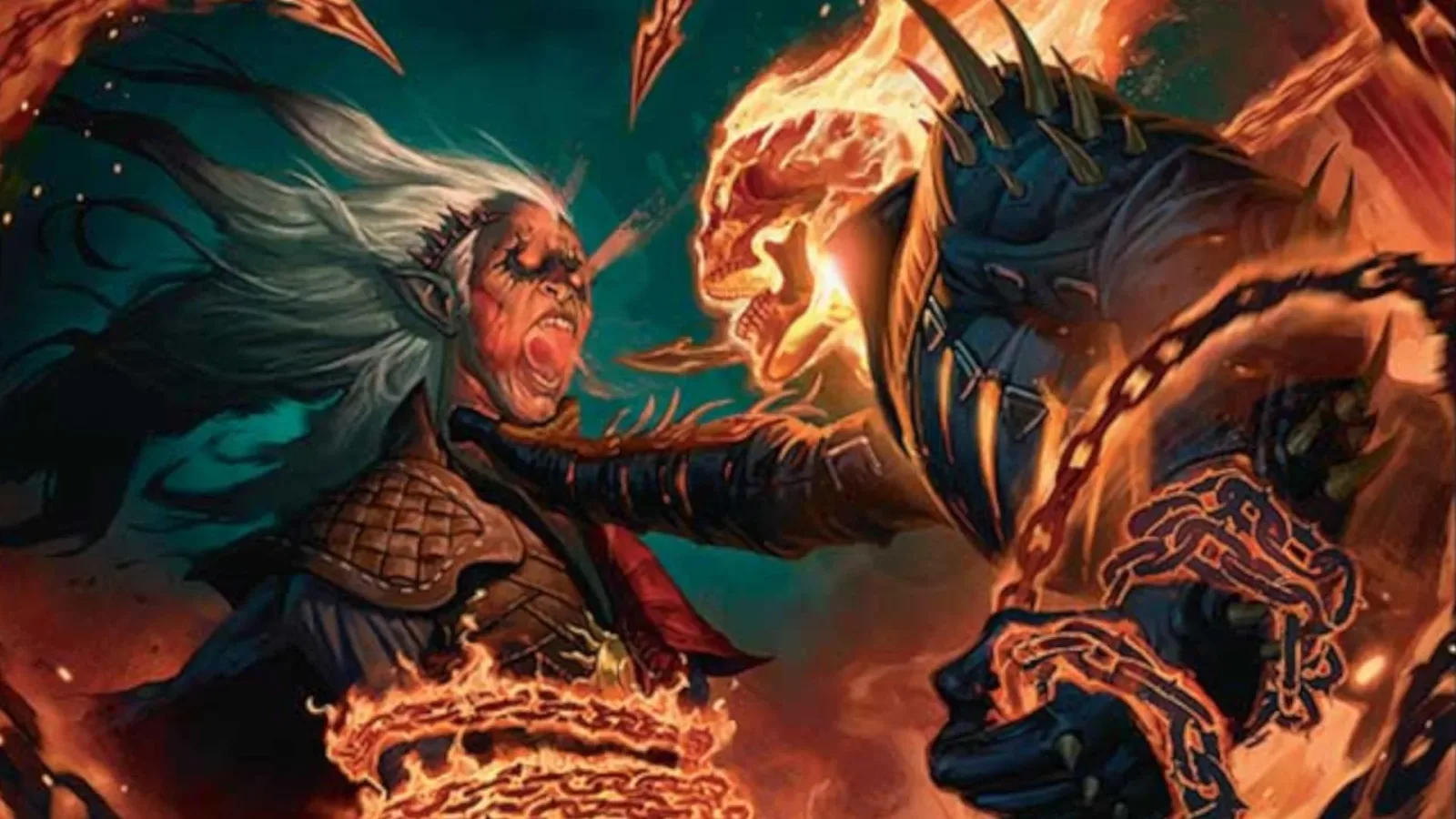
Magic: The Gathering's upcoming Marvel: Darkhold Destiny expansion is doing more than adapting famous heroes, villains, gods, and supernatural stories into cards. The Universes Beyond set will also introduce a completely original character to Marvel's wider universe, born from a creative challenge that neither side had fully solved on its own.
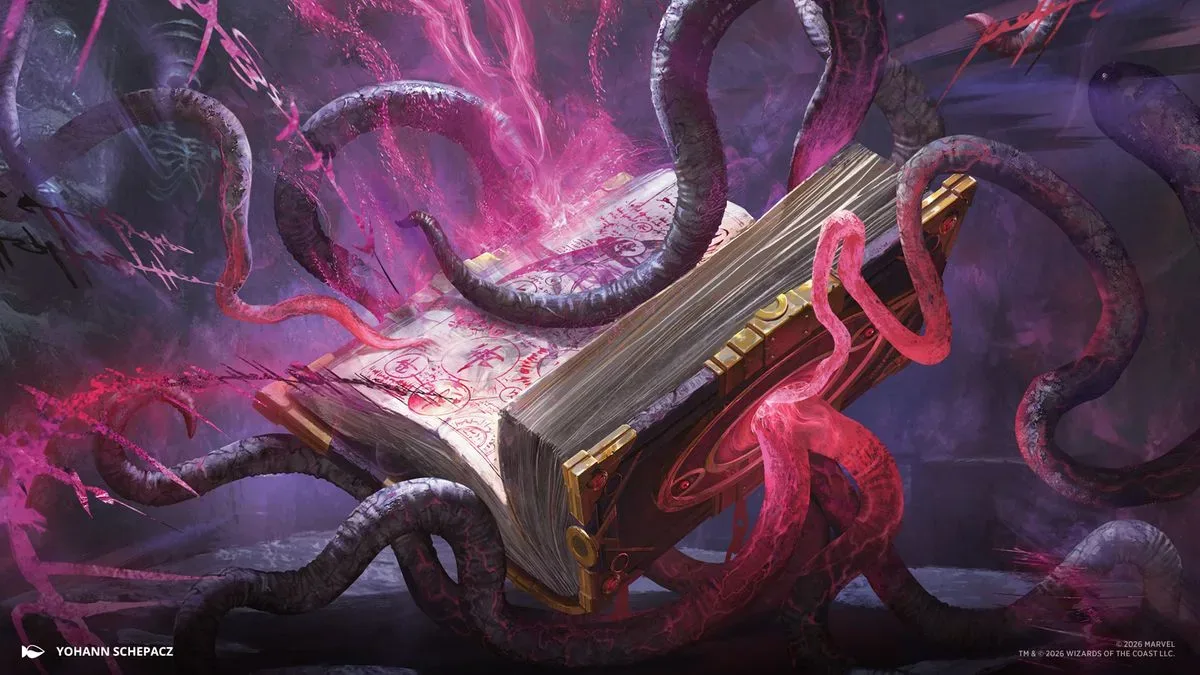
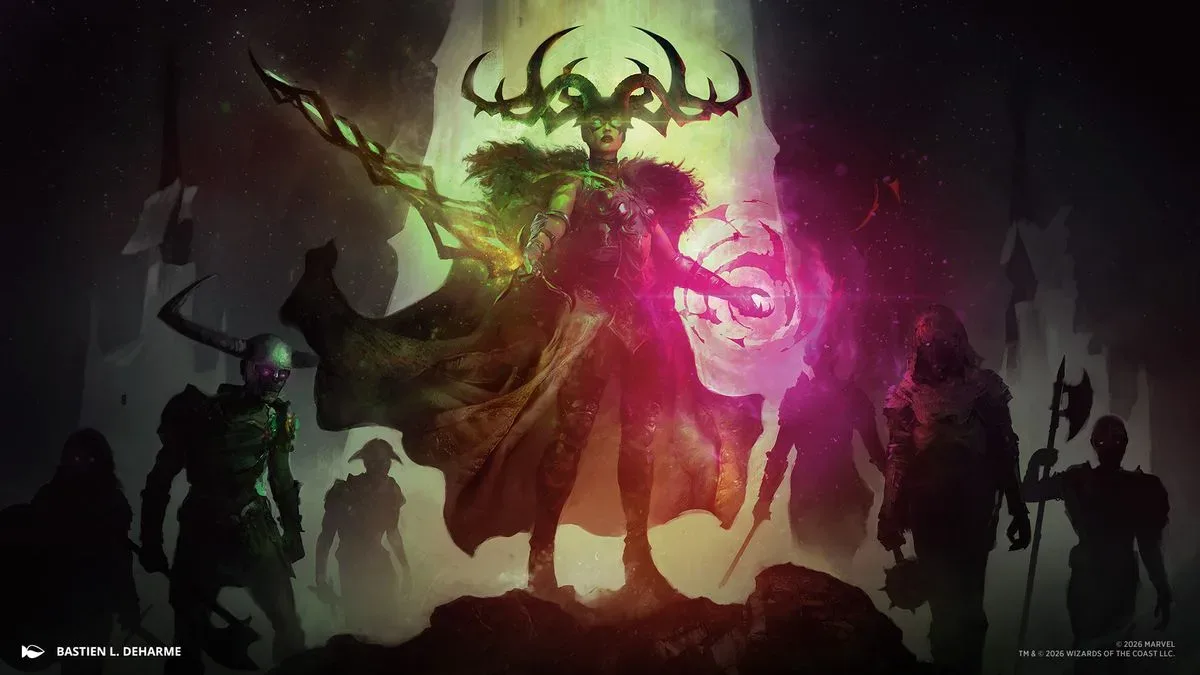
Darkhold Destiny is Magic's third Marvel crossover and is centered on the publisher's mystical, magical, and horror-adjacent corners. The set is expected to feature supernatural figures alongside team-ups involving a pantheon of gods, giving Wizards of the Coast a particularly broad and unusual part of Marvel continuity to draw from. Yet that abundance of material also created a problem: the design team needed a character who fit a very specific mechanical and narrative role, and existing options repeatedly fell just short of what the set required.
The unnamed character has not been fully revealed yet, but the circumstances of their creation offer an interesting glimpse into how a crossover set can move beyond simply translating established icons into a new game. Rather than treating Marvel's history as a fixed list of pieces to place on cards, the teams involved found a way to develop something intended to work within both Magic's gameplay language and Marvel's storytelling world.
A missing role in Darkhold Destiny
Principal game designer Dillon Deveney explained that the search began with what he called a recurring "narrative hole" in the set's creative structure. As the team explored potential characters, Deveney kept returning to a need that seemed to have no clean answer among Marvel's existing roster.
For useful background on this topic, read Vaesen: Death of Songs Brings a Society-Shaking Horror Campaign to 19th-Century Europe.
"I kept running into this narrative hole," Deveney said. "This creative space where I kept coming back to this one thing."
He considered whether various established characters could fill that role, but each attempt felt increasingly unnatural. The issue was not a lack of Marvel characters connected to dark magic; Marvel has no shortage of sorcerers, monsters, occult investigators, gods, and villains suited to a set titled Darkhold Destiny. Instead, the team needed somebody whose identity could naturally support the exact gameplay and creative space they were trying to build.
For Deveney, forcing a familiar character into a function that did not truly suit them would have been worse than admitting the function needed someone new. A Magic card needs to communicate a character swiftly, often through a compact package of rules text, mana costs, card types, art, names, and flavor. When a character already has a highly particular identity, trying to make them represent something else can weaken both the adaptation and the card.
That concern reflects a core difficulty of crossover design. Fans may want to see beloved names represented, but a famous character is not automatically the best answer for every mechanical job. Magic needs cards that play well, fit the set's themes, and remain readable at the table. Marvel needs its characters to retain recognizable personalities and defining visual traits. Darkhold Destiny's new addition emerged where those two requirements did not line up with any one pre-existing figure.
Why one defining idea matters in card design
Head designer Mark Rosewater described the issue from Magic's side: strong card design generally calls for identifying the single coolest or clearest thing about a character. Cards cannot express every power, relationship, costume variation, and plot development a comic-book character has accumulated over decades.
"From a card design standpoint, really what you want to figure out is what's the coolest thing about the character," Rosewater said. "Because you don't get to do infinite things. Like good card design is really about one major thing."
That philosophy is especially important with Marvel. A character may have an enormous publication history, multiple alternate versions, supporting casts, changing allegiances, and abilities that shift between eras. Magic's adaptation must distill all of that into a card that is exciting without becoming overloaded or mechanically confusing.
In the case of Darkhold Destiny, the team could have selected a recognizable Marvel name and attempted to bend that character around the desired design. But creating a new figure offered a more direct route. The character could be built around the set's needs from the beginning instead of asking the card design to compromise around pre-existing lore that did not quite fit.
Wizards of the Coast then brought that possibility to Marvel. The response was notably enthusiastic, because Marvel had apparently been considering a similar kind of character without reaching a version it felt fully satisfied with. What began as a solution to a Magic design problem became a shared opportunity.
"We've been trying to figure out a character that's kind of like this for a while," Deveney recalled Marvel's team saying. "We aren't really satisfied. We haven't found anything that really kind of makes sense. We would love to do this. We can help each other out."
From a broad idea to a Marvel character
The final character was not created in a single meeting. Deveney said the version players will eventually see represents one possibility among roughly a hundred ideas discussed during development. The team ultimately narrowed its work down to five pitches that were brought forward for the formal presentation.
That iterative process is significant because an original Marvel character carries more weight than an ordinary new Magic creature. This is someone who may eventually become part of Marvel's enormous cast, with the potential to be encountered by readers and fans outside the tabletop game. The new figure needs to feel suited to Darkhold Destiny, but also credible as a character who belongs alongside Marvel's established supernatural personalities.
Deveney characterized the wider collaboration as a continual "Yes, and" process. Rather than merely approving or rejecting concepts in a rigid way, Marvel contributed ideas and gave Wizards room to reshape material for Magic's purposes. Rosewater said the Magic team had initially been cautious about altering Marvel characters too much. Over time, however, it learned that the goal was not strict replication.
Marvel adaptations have always shifted depending on the medium. A comic, animated series, film, game, and collectible card set may each highlight different facets of the same hero. The aim for Darkhold Destiny is to create the best Magic version of Marvel characters, not to mechanically reproduce every detail of a particular comic run or screen portrayal.
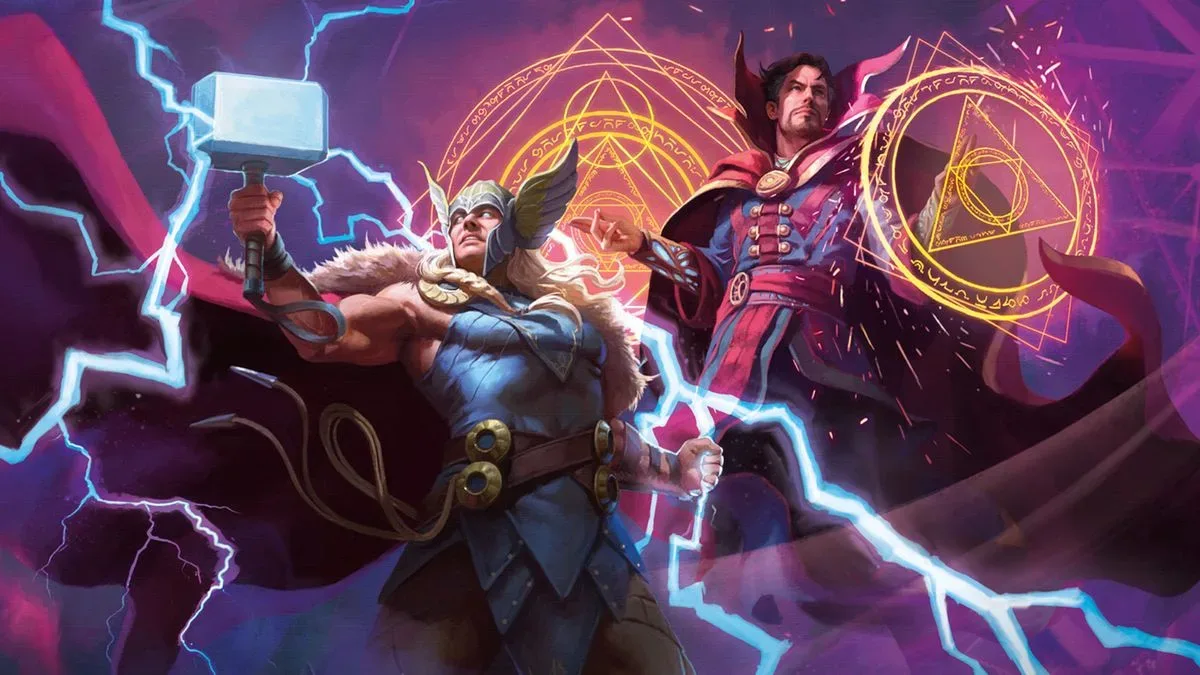
That flexibility does not mean there are no boundaries. Marvel still provides guidance on essential characteristics, particularly visual details that make a character immediately recognizable. Deveney pointed to Thor as an example: the shape and treatment of the wings on Thor's helmet matter to his silhouette, while other elements, such as how the cape is handled, offer more room for interpretation.
Art is part of the character translation
The artwork plays a major role in preserving that balance. Art director Meredith Mulroney emphasized the care given to character construction, noting that a new addition could become somebody's favorite character. That makes even small decisions meaningful, from posture and costume details to visual motifs and the way a design communicates personality.
For an original character, the responsibility is even more pronounced. There is no decades-old visual shorthand for players to recognize. The art must establish the character's appeal and identity immediately, while still making them feel at home in a Marvel setting and on a Magic card.
It also has to support gameplay. Magic art does not exist in isolation; it helps players absorb the tone and purpose of the card. A powerful, distinctive image can reinforce what the rules text is asking the player to do, while a visual that clashes with the mechanics can make even a functional design feel less cohesive. Darkhold Destiny's new character therefore sits at the intersection of story development, visual design, and game systems.
Making an entry point for new players
Darkhold Destiny will need to satisfy dedicated Marvel followers and longtime Magic players, but the teams are also aware that crossover sets can attract first-time customers. Deveney invoked the comic-book idea that every issue could be someone's first comic, applying the same thinking to Magic sets.
"Every set is someone's first Magic set," Deveney said. "So we're never trying to design something that completely alienates you if you've never played before."
That approach means Marvel references should enrich the experience rather than become a gatekeeping requirement. Fans with deep knowledge of Marvel lore may spot connections and appreciate how a card or image adapts a particular character. Players arriving because they enjoy fantasy card games, however, should still be able to understand the central themes and enjoy the cards without homework.
The wholly original character may be especially useful in that respect. Since nobody has years of required backstory with them, every player can meet the character through the same initial context: Darkhold Destiny itself. Their role can be explained through the set's world and mechanics before any later Marvel stories potentially expand on it.
What is known about the set
Magic: The Gathering--Marvel: Darkhold Destiny is scheduled to launch on April 9, 2027. Numerous cards remain unrevealed, including the new original Marvel character. The product lineup includes four Commander decks, Play Boosters, Collector Boosters, two Scene Boxes, bundles, and a Draft Night product.
While the character's name, appearance, abilities, and exact place in the set remain under wraps, their existence marks a notable step for the Marvel collaboration. Universes Beyond has often focused on bringing recognizable outside properties to Magic. Darkhold Destiny will also send something in the other direction: a character shaped by Magic's design requirements, developed collaboratively, and introduced as part of Marvel's universe.
For players, the eventual reveal should show whether that shared development produces a card with the kind of singular, memorable hook Rosewater described. For Marvel fans, it will reveal a new face created not as an afterthought, but as the answer to a specific storytelling and gameplay need. That is a rare origin story for a superhero universe character--and an especially fitting one for a crossover built on the idea that adaptation can create something new.
Community
Discussion
Start the conversation.
No comments have been posted yet.