

Magic: The Gathering's upcoming Star Trek crossover is shaping up to be one of the most ambitious Universes Beyond releases yet. Launching on November 13, the set is designed around Star Trek's 60th anniversary and reaches across a remarkable amount of the franchise's history. The Original Series, later television eras, major films, Strange New Worlds, and more all appear to be represented, while the gameplay side introduces several mechanics built specifically to evoke exploration, diplomacy, impossible decisions, starship crews, and Borg assimilation.
Pre-release events are set to begin on November 6, giving players an earlier chance to see how the set performs at the table. Its scale is apparent not only in the breadth of characters and visual treatments, but also in the number of systems being added to Magic's already dense rules engine. Some of those mechanics are intuitive thematic twists, while others bring back a relatively recent type of gameplay associated with enormous vehicles and the crews needed to operate them.
For longtime Trek viewers, perhaps the strongest early takeaway is that this is not a crossover built around just one captain and one famous ship. It aims to reflect the franchise's many eras, including alternate realities and different versions of recurring characters. For Magic players, the bigger question will be whether the set's many themes fit together cleanly in Limited games, Commander decks, and the wider formats where these cards are legal.
Beam Me Up Turns the Graveyard Into a Second Mission
One of the new keyword abilities is Beam Me Up. It gives players a way to return an instant or sorcery card from their graveyard to their hand by returning a creature to hand. The spell can then be cast from the graveyard for another use.
For useful background on this topic, read Marvel Rivals Is Bringing 50 Players Together for an Endgame-Inspired Thanos Battle.
Mechanically, that creates a potentially useful loop between creatures and spellcasting. Returning a creature may look like a cost, but it can also be an advantage: a player can replay that creature to trigger an enters-the-battlefield ability again, free it from an unwanted Aura, or simply protect it from a dangerous board state. The ability's flavor is especially direct. A crew member is pulled back from the field, while a previously spent tactical option or scientific solution becomes available once more.
As with many graveyard-focused mechanics, its ultimate strength will depend on mana costs and deck construction. Even so, it offers a clear identity for cards that want players to balance battlefield presence against the ability to recur key spells.
Facing a Dilemma Makes Modal Decisions Matter
Face a Dilemma is a new phrase for choosing one option from a bulleted list on a card. Modal spells are nothing new in Magic, but this wording turns the act of choosing into an event that other cards can recognize and reward.
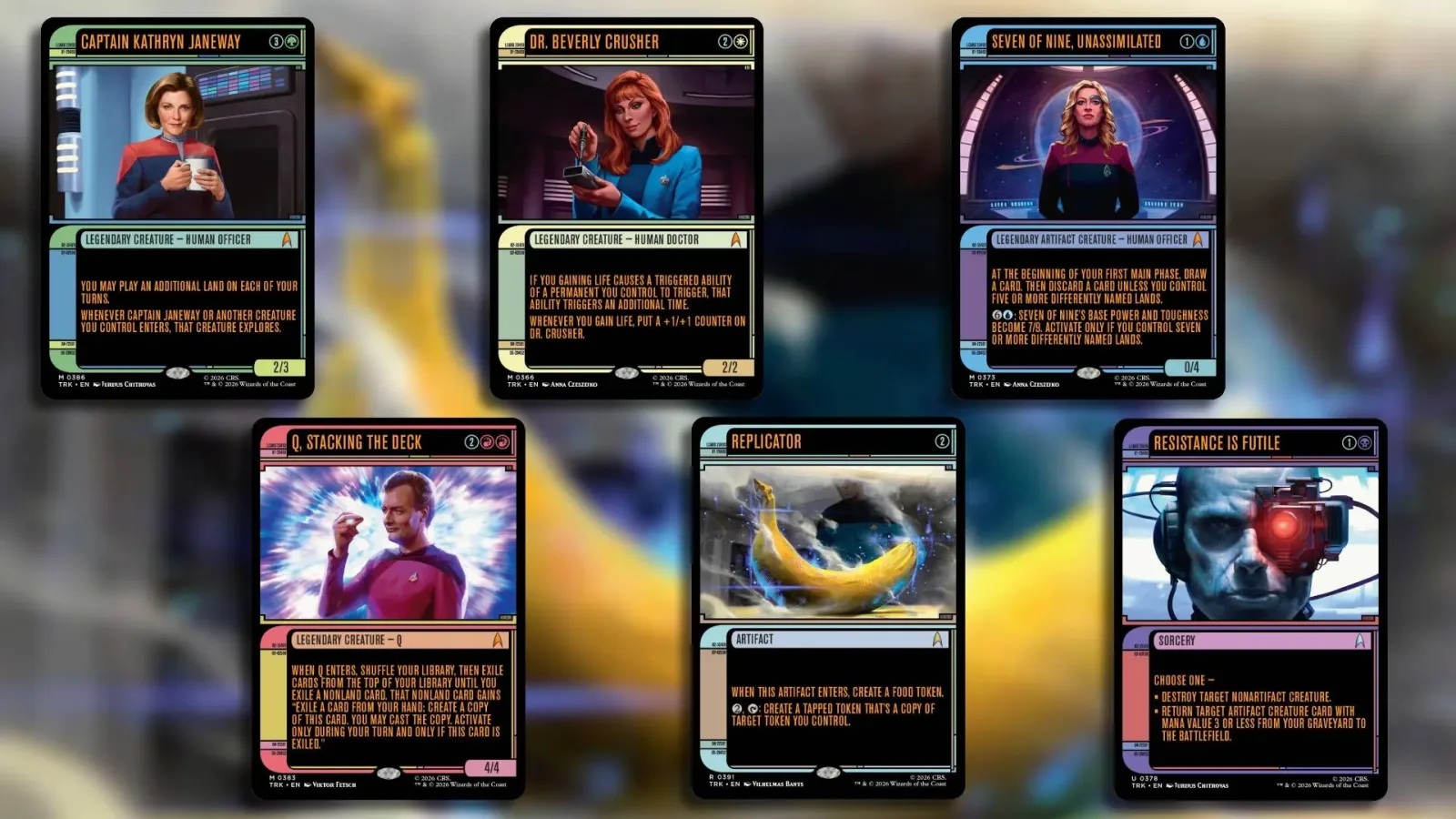
Seven of Nine is one example of a card that interacts with the mechanic, allowing its controller to draw an additional card whenever they select from modes or spells elsewhere. That creates a natural incentive to build a deck with choices embedded throughout it, rather than treating modal effects as isolated moments.
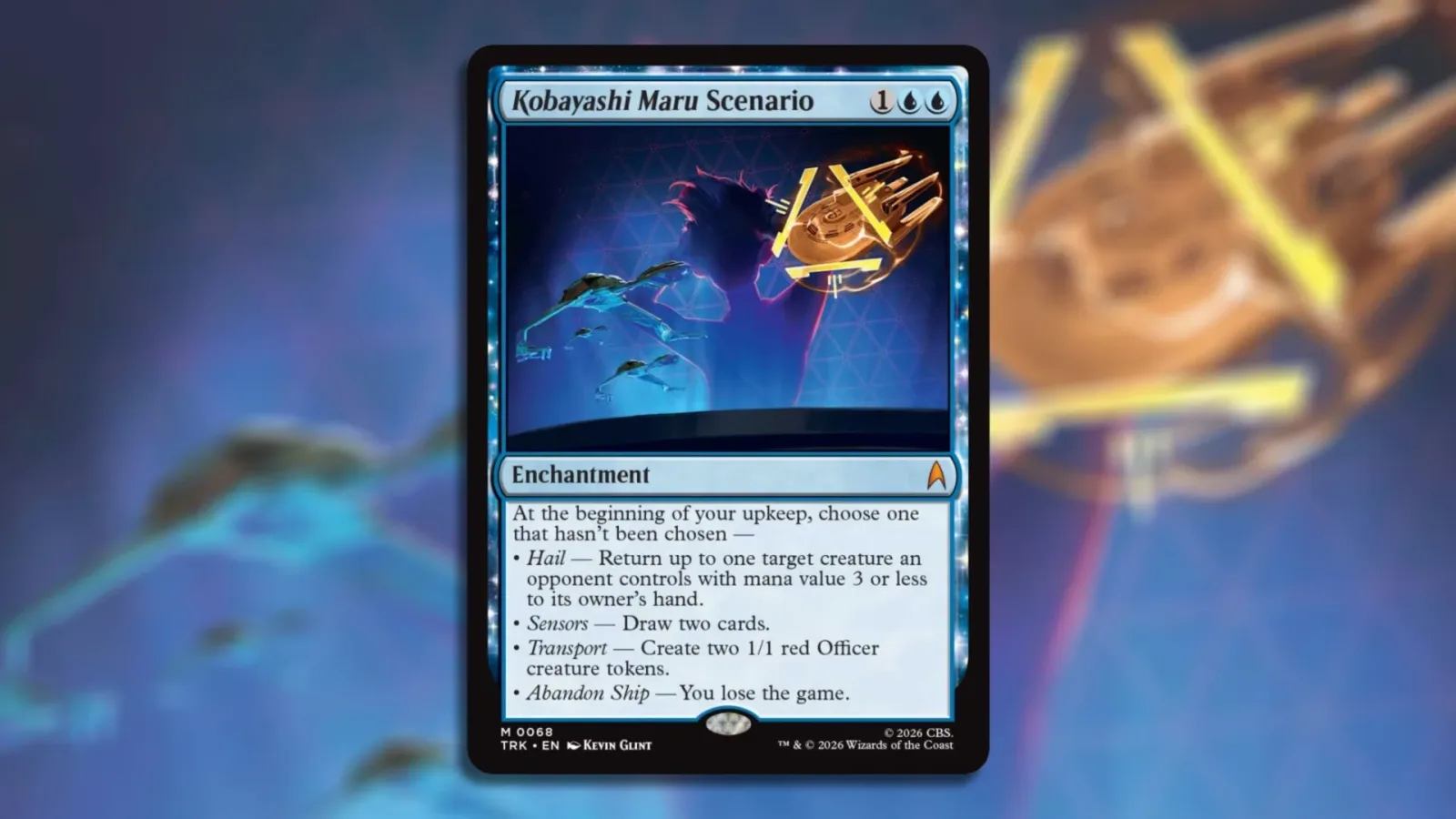
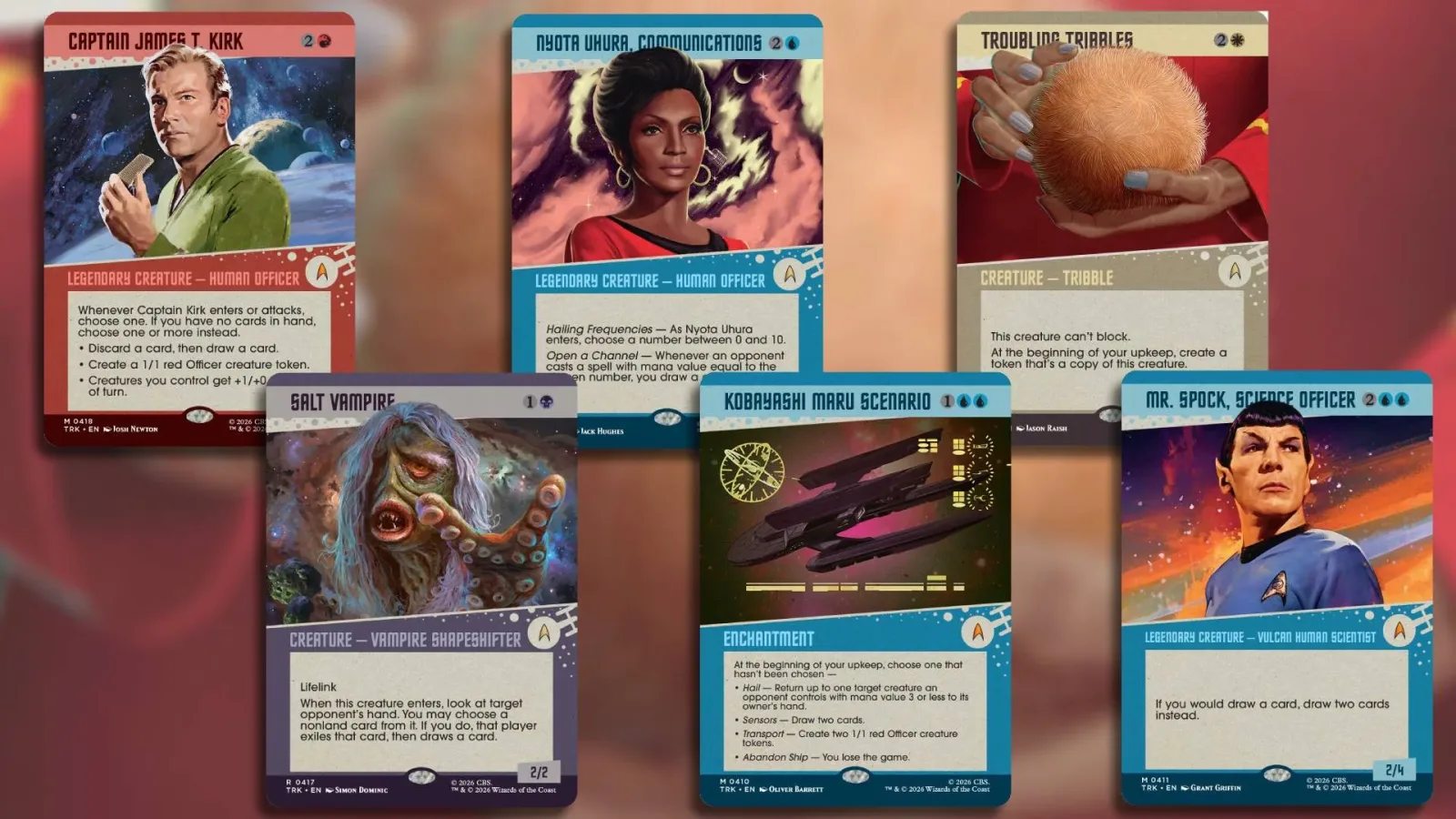
The wonderfully named Kobayashi Maru Scenario illustrates the concept in full. At the beginning of upkeep, its controller picks from four outcomes:
- Hail: Return up to one creature an opponent controls with mana value 3 or less to its owner's hand.
- Sensors: Draw two cards.
- Transport: Create two 1/1 red Officer creature tokens.
- Abandon Ship: Lose the game.
That final option is a very Trek-like joke about the no-win scenario. In practical play, it is unlikely to be chosen without an unusual plan to turn losing into an advantage. The other three choices give the enchantment flexibility from turn to turn: interaction, card flow, or a wider board. More importantly, every selection counts as facing a dilemma, potentially enabling the set's supporting cards.
Federation Rewards Diverse Crews
The Federation mechanic is about cooperation among different species, specifically rewarding a force made up of non-Borg creatures. Captain Jonathan Archer provides an early example. His Federation ability can give a creature +X/+X until end of turn, with X equal to the number of non-Borg creatures controlled.
That wording places an obvious restriction on decks that may otherwise want to combine every available tribal theme. Federation does not want the Borg included in its count, reinforcing the divide between collective assimilation and the franchise's more idealistic multi-species alliance. It also suggests that creature type and creature diversity could be more relevant in this set than simply collecting cards from a single show or crew.
Archer's inclusion is also a useful sign of the release's scope. The set is not stopping at the best-known characters from the 1960s series or The Next Generation. It is reaching into the full television lineage, with room for different captains, crews, and interpretations of the same larger universe.
Strange New Worlds Counts the Places You Have Explored
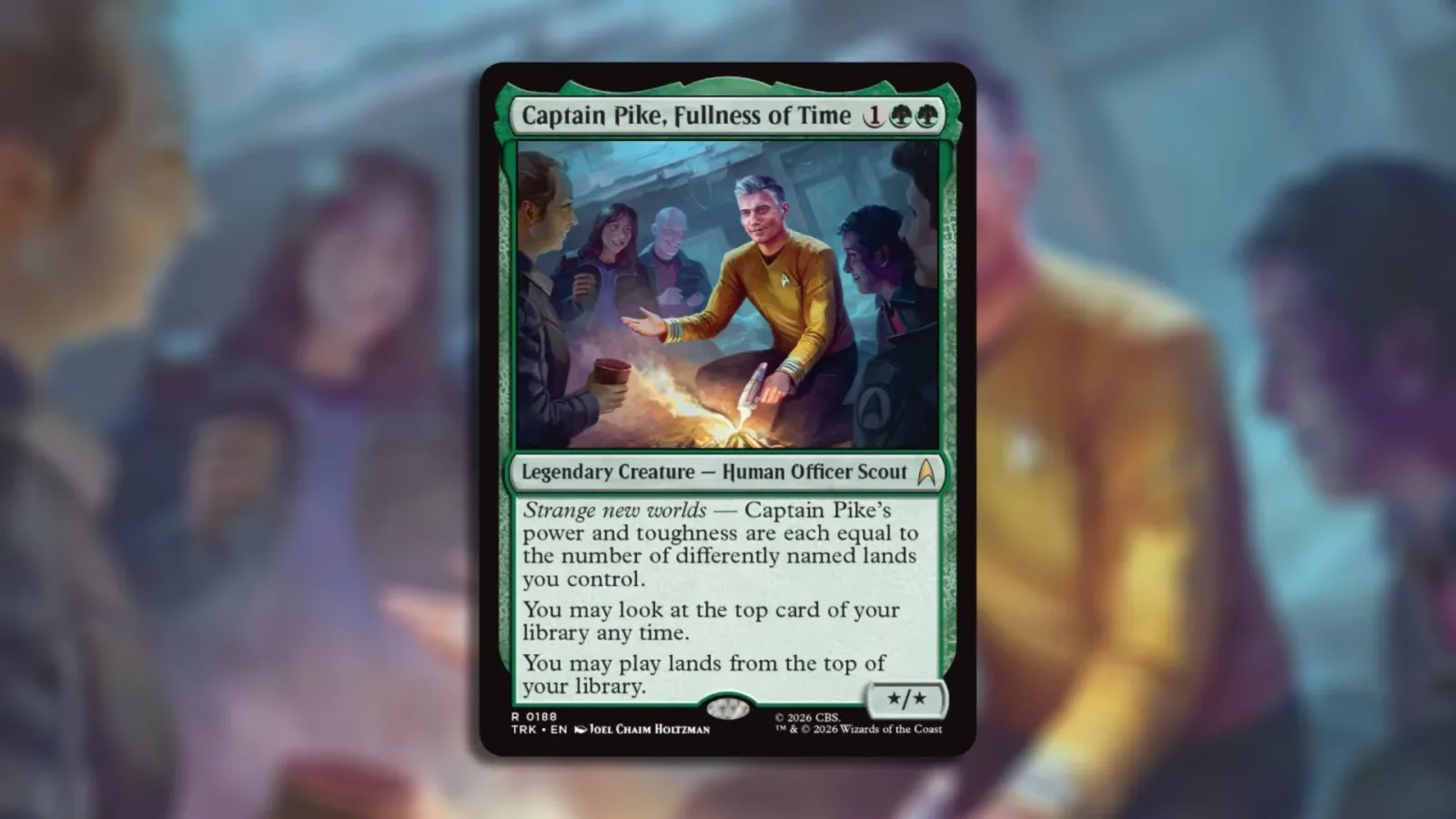
Strange New Worlds takes its name from one of Star Trek's most enduring ideas and converts it into a land-based mechanic. It cares about the number of differently named lands a player controls.
Captain Pike, Fullness of Time has power and toughness each equal to that total, marked as */*. A battlefield containing a Forest, Islands, Federation Outpost, and Quark's Bar would make Pike a 4/4 if those represent four different land names. Duplicate basic lands will not add further unique names, so the ability encourages players to seek variety rather than merely expand their mana base.
This could make the mechanic particularly appealing for Commander, a format where multicolor land packages already contain many distinct names. It also makes thematic sense: a captain's strength is tied to the range of worlds, ports, outposts, and strange destinations encountered along the way.
Spacecraft Require a Crew to Become Creatures
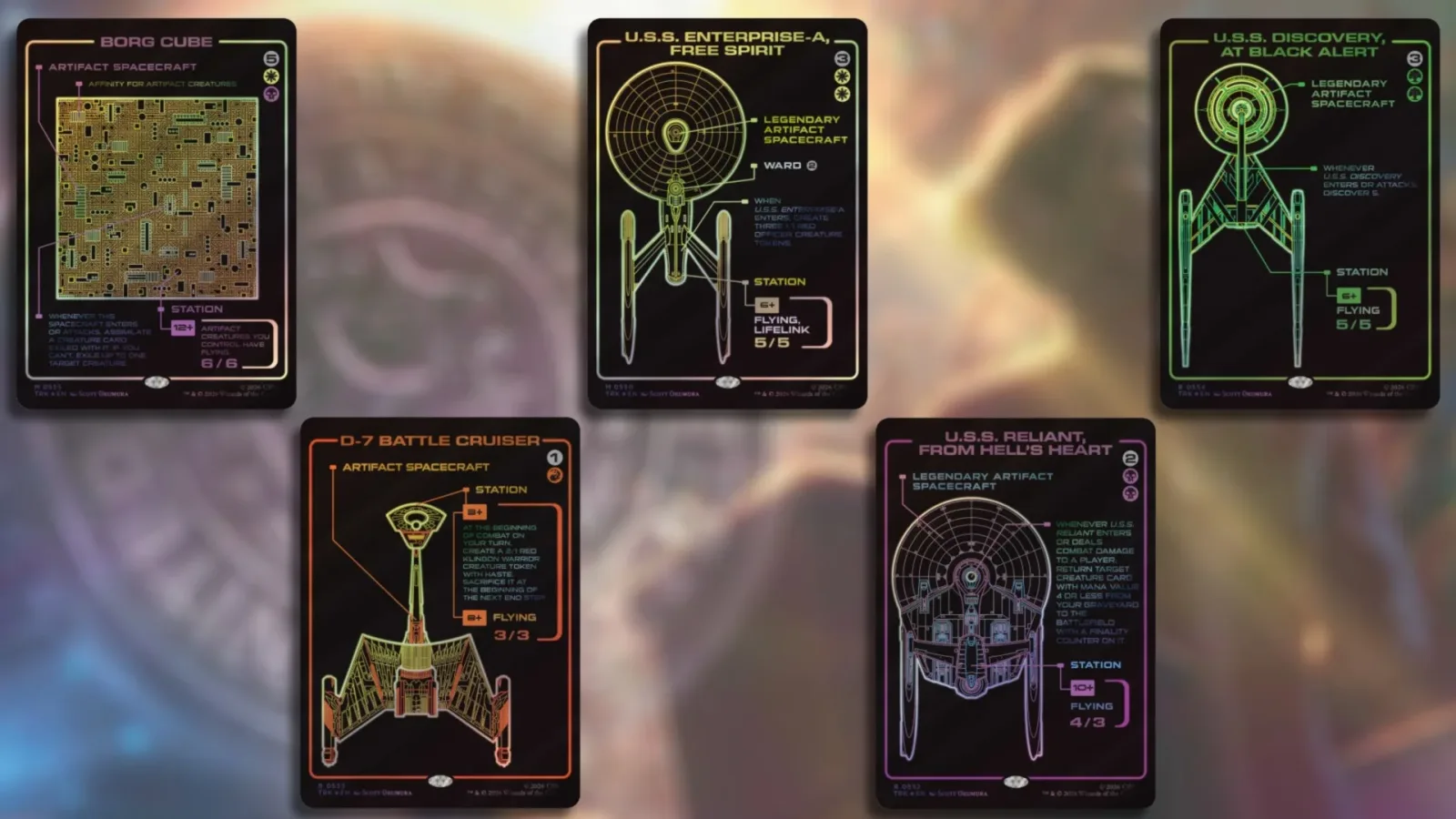
The set also uses Spacecraft and the related Station mechanic, previously seen in Edge of Eternities. Spacecraft begin as artifacts rather than artifact creatures. To bring them fully online, players station them by tapping untapped creatures and adding station counters equal to those creatures' power. Once the card reaches its listed threshold, it becomes an artifact creature and gains its active abilities.
It is a fitting framework for iconic ships, because the vessel does not simply become powerful by existing on the battlefield. It needs a crew. The process can also take multiple turns, allowing a player to gradually build toward activation rather than requiring a single massive commitment.
U.S.S. Discovery, at Black Alert becomes a 5/5 with flying at six or more station counters. A Borg Cube reaches its payoff at 12 or more counters, becoming a 6/6 while granting flying to other artifact creatures under its controller's command. The original Starship Enterprise asks for a towering 16 counters, then becomes a 4/6 that lets its controller draw cards equal to damage it deals.
Those thresholds underline the difference in scale between ships. A smaller vessel can be prepared quickly, while the Enterprise asks for a serious investment before delivering its potentially explosive card-draw reward.
The Borg Bring Assimilation to the Table
The Borg, excluded from the Federation theme by design, receive Assimilate. The mechanic involves taking an opposing creature, putting a +1/+1 counter on it, and gaining control of it. It is an appropriately unsettling expression of the Collective: the opponent's resource remains recognizable, but it now serves a new master and returns stronger.
Control-changing effects have long been among Magic's most dramatic interactions, and attaching them to a distinct faction gives Borg decks a clear gameplay fantasy. Players facing an Assimilate strategy may need to think carefully about when they deploy their most valuable creatures, especially if those creatures can immediately become threats on the other side of the table.
Special Treatments Cover Many Corners of Star Trek History
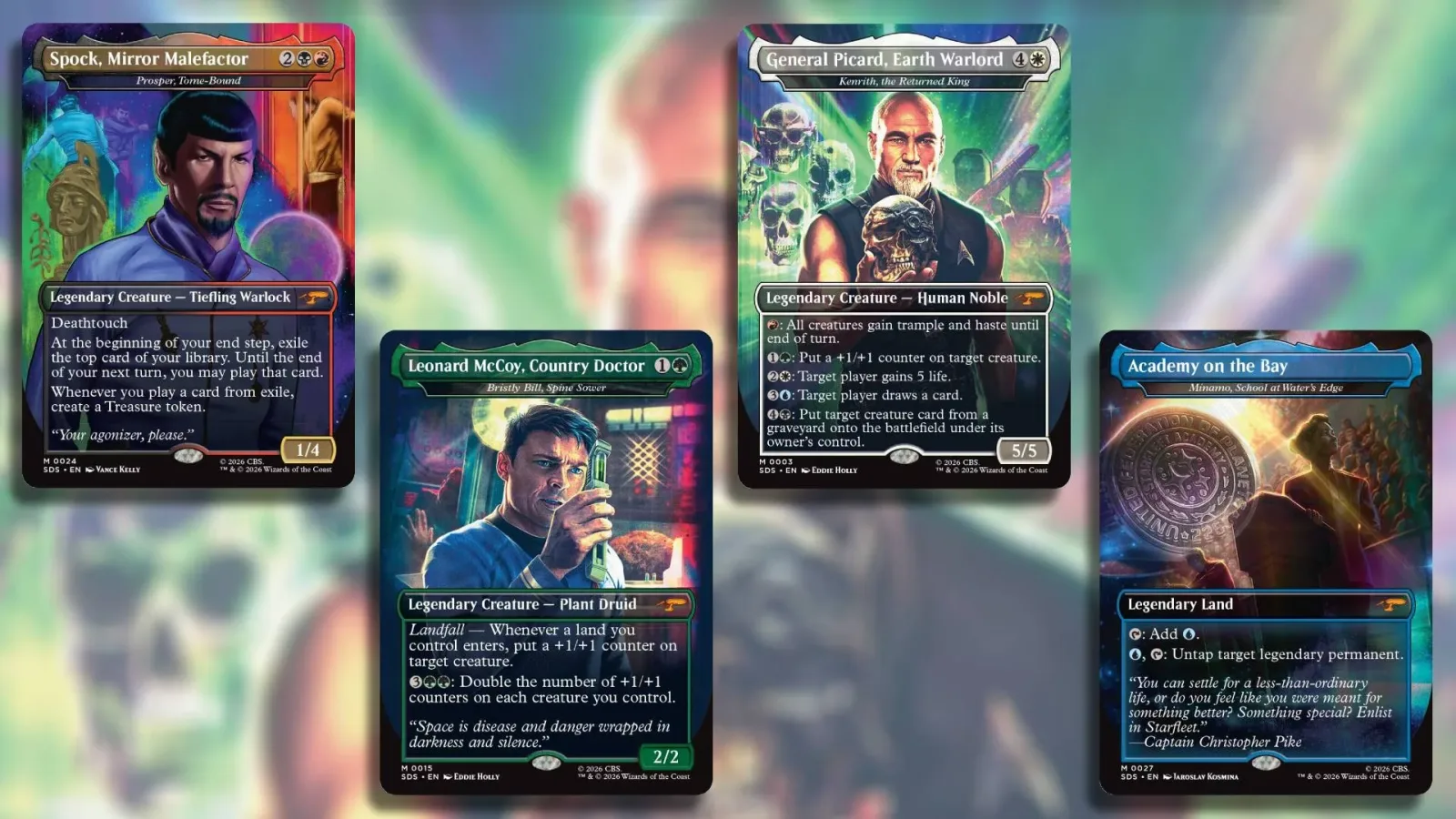
Beyond the main cards, the Star Trek set includes a wide range of alternate presentations. Borderless Stardate cards are intended to spotlight pivotal moments from the franchise's history, while LCARS Frame variants use the familiar computer-interface styling associated with Starfleet systems. The Replicator is among the cards receiving that treatment.
Classic Enterprise cards lean into retro visual design, including a Salt Vampire appearance that should appeal to fans of Star Trek's earliest episodes. Meanwhile, Schematics treatments focus on Spacecraft, rendering ships in technical-design styles suited to the hardware-heavy part of the set.
Players can also expect Borderless Lands, Extended Art cards, Klingon-themed designs, promotional cards, and Commander-focused cards. And, naturally, the release makes room for one of the franchise's most important feline contributors: Data's cat, Spot.
Signed Headliners Will Be Extremely Limited
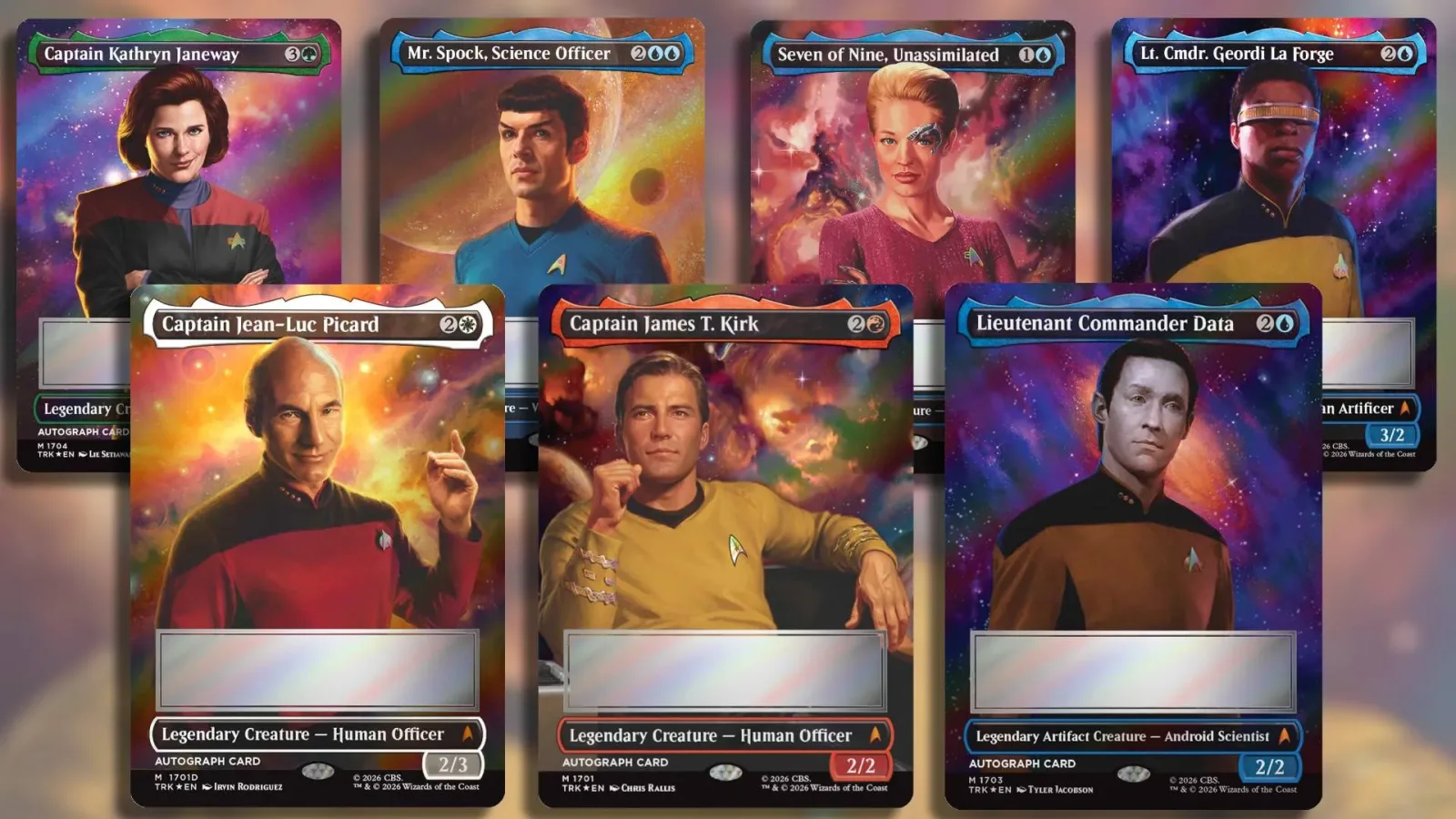
The most scarce showcase cards are the signed Headliners. Only 250 copies of each are being printed, and they are available exclusively in Collector Boosters. Each is hand-signed by the actor represented on the card.
That combination of a tiny print run, collector-only availability, actor signatures, and one of pop culture's largest science-fiction brands will make these cards exceptionally difficult to obtain. The exact market response remains to be seen, but they are plainly positioned as premium chase cards rather than ordinary versions intended for easy deckbuilding access.
Magic: The Gathering's Star Trek set arrives November 13, with pre-release play beginning November 6. Its success will hinge on card balance, supply, and how well its many mechanics coexist, but the early reveal makes one point clear: the set is trying to offer a home for nearly every kind of Star Trek fan, whether they want captains and crews, strange worlds, detailed starship schematics, Borg menace, or a card devoted to Spot.
Community
Discussion
Start the conversation.
No comments have been posted yet.