

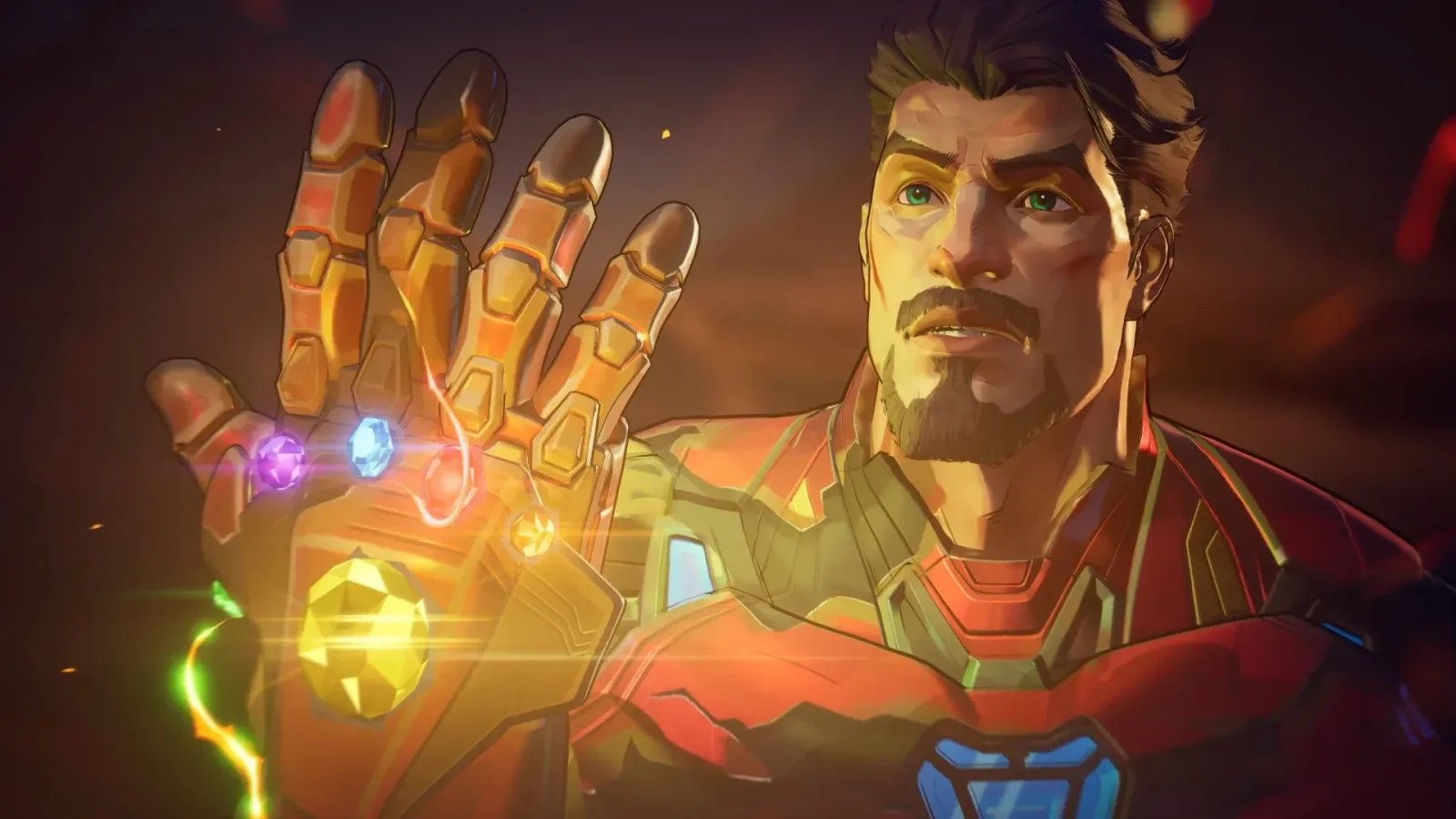
Marvel Rivals is preparing to scale its superhero action up considerably with a new event modeled after one of the Marvel Cinematic Universe's biggest battles. Beginning October 24, the Path to Doomsday - Avengers: Endgame event will place 50 players in a shared fight against a gigantic Thanos and a legion of alien enemies.
It is a major departure from the more familiar hero-shooter rhythm of compact teams trading objectives and abilities. Rather than asking players to outmaneuver another small squad, this Endgame-themed activity appears to frame Thanos as a colossal raid-style target: a single, powerful enemy built to withstand damage from an enormous group while unleashing attacks capable of punishing that group all at once.
The event is part of Marvel Rivals' broader lead-in to Avengers: Doomsday, using recognizable MCU moments as the foundation for in-game celebrations. For fans who have wanted to see the game push its comic-book cast into more spectacular, movie-scale scenarios, a 50-player clash with the Mad Titan is about as direct a statement of intent as possible.
A final battle built for a hero shooter crowd
The central attraction is unmistakable. Dozens of Marvel Rivals players will assemble on one battlefield, face Thanos, and attempt to break through both his durability and the supporting army around him. The scenario draws on the massive final confrontation from Avengers: Endgame, where Marvel heroes and their allies unite against Thanos' forces.
For useful background on this topic, read Fortnite's Nikki Freeman Skin Ignites Debate Over Horror, Consent, and Collaboration Culture.
Marvel Rivals is not simply using the battle as background decoration, however. The mode's structure seems designed around the practical challenge of letting 50 people engage one boss at the same time. Thanos has been enlarged beyond the scale of a typical playable hero, making him a target that can remain visible and reachable amid the chaos. That visual adjustment also supports the fantasy of an entire army of superheroes attacking a seemingly unstoppable opponent.
Size alone will not make the encounter easy. Thanos is shown with wide-area attacks that can strike large clusters of players. One showcased ability calls down an aerial bombardment from his ship, creating the kind of devastating battlefield threat that can wipe out numerous heroes if they are caught in the same area.
That matters because a 50-player activity naturally creates congestion. Even in a game filled with mobile characters, shields, healing abilities, leaps, flight, portals, and explosive attacks, a crowd of that size can turn any open space into a hazard. A boss with large AOE, or area-of-effect, attacks gives the event a way to challenge a team that might otherwise overwhelm a single target through sheer numbers.
Thanos looks less like a rival and more like a raid boss
In standard competitive matches, Marvel Rivals heroes are generally built around opposing players who can react, evade, counterpick, and coordinate in relatively small teams. The Endgame event seems to shift that dynamic. Thanos is positioned less as another combatant operating under the usual player-facing rules and more as a centerpiece encounter with oversized health, oversized attacks, and an army to divide the group's attention.
That raid-boss comparison raises some intriguing questions about how the match will play in practice. Fifty players do not necessarily need the precise communication expected of a high-level MMO raid for a battle to feel exciting. The visual appeal may be in the disorder: heroes firing from every direction, melee fighters rushing the front line, airborne characters trying to avoid bombardments, and alien enemies forcing scattered groups to defend themselves.
Still, coordination could make a meaningful difference. If Thanos' attacks hit broad zones, players may need to recognize dangerous areas quickly and avoid piling onto the same location. Teams with supportive heroes could help stabilize groups under pressure, while highly mobile damage dealers may be able to keep attacking during moments when slower characters need to retreat. The event may also reward players who focus on the alien army instead of treating Thanos as the only target on the field.
At the same time, the footage suggests that the enormous villain may absorb an extraordinary amount of punishment. That can be a fitting choice for a character who has repeatedly been portrayed as nearly insurmountable, but it will put the spotlight on pacing. A massive health pool can make a group victory feel hard-earned; too much endurance, on the other hand, can turn a cinematic battle into a lengthy exercise in firing at a target that rarely changes behavior.
The design challenge is therefore bigger than fitting 50 players into one session. The mode needs to make each player feel as though they are participating in the climactic fight, even when dozens of other heroes are also dealing damage to the same towering foe. Thanos' AOE pressure, the alien forces, and any unannounced objectives within the encounter could all be essential to preventing the battle from becoming a simple numbers game.
The Tony Stark moment is part of the payoff
Victory will apparently lead into an especially recognizable piece of MCU iconography. Players who defeat Thanos can expect a scene featuring Tony Stark wielding the Infinity Gauntlet and snapping Thanos out of existence, echoing the conclusion of Avengers: Endgame.
That ending is likely to be as important to the event's appeal as the 50-player format itself. The final battle in Endgame remains one of the defining blockbuster sequences of its era, and Tony Stark's sacrifice is inseparable from its emotional impact. Recreating that moment gives Marvel Rivals a clean narrative reward after the extended brawl, even though the players themselves are not controlling every beat of the film's climax.
It also demonstrates why MCU-based events can work especially well in a game with a broad Marvel roster. A hero shooter is already constructed around the pleasure of bringing characters with radically different powers into the same space. The Endgame battlefield magnifies that idea. Instead of merely imagining what it would be like for assorted Marvel heroes to cooperate, players can join a crowd large enough to resemble an actual super-powered army.
A test of spectacle, readability, and replay value
Large player counts are exciting on paper, but they can put considerable pressure on clarity. Marvel Rivals is a colorful, effects-heavy game even before 50 people begin using their abilities at once. The Endgame mode will need to communicate where Thanos is attacking, where his ship's strikes are landing, which enemies require attention, and when players should regroup or scatter.
That visual noise is not necessarily a weakness. A certain amount of chaos is appropriate for an event inspired by a battlefield packed with heroes, aliens, debris, and cosmic power. The best version of this mode would preserve that overwhelming scale without making players feel that they lost because they could not identify a danger through the particle effects.
Replay value is another open question. The premise is strong enough to draw in players for the first clear, especially those eager to see the Tony Stark finale. Whether it becomes a mode people revisit will depend on the variation within each battle. If Thanos has multiple attack patterns, if alien waves require different responses, or if the encounter encourages diverse hero choices, the 50-player format could feel like a substantial event rather than a one-time novelty.
For Marvel Rivals, the appeal is obvious: this is a chance to offer something that ordinary competitive rounds cannot. The game's usual matches ask, "Which team of heroes wins?" The Path to Doomsday - Avengers: Endgame event instead asks players to join an enormous on-screen Avengers-style assembly and survive a fight against one of Marvel's most famous villains.
When the Endgame event begins
The Path to Doomsday - Avengers: Endgame event starts on October 24. It will send 50 players against a giant Thanos, his alien army, and the wide-reaching attacks of his ship, before leading successful participants toward an Endgame-inspired Tony Stark conclusion.
There are still details to learn about the encounter's exact rules, the extent of its objectives, and how much organization a 50-player group will require. But the pitch is already easy to understand. Marvel Rivals is taking the "Avengers, assemble" fantasy literally, putting an unusually large crowd of players in front of Thanos and asking them to create their own version of the final battle.
Community
Discussion
Start the conversation.
No comments have been posted yet.