

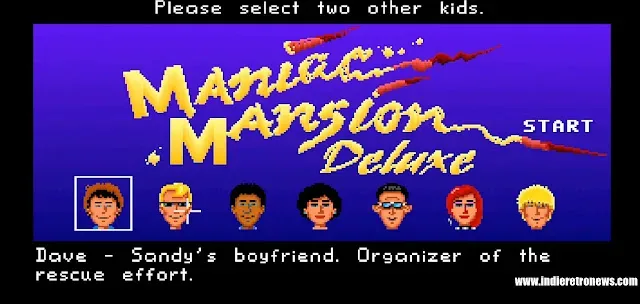
Maniac Mansion Deluxe AGA has reached its final 2.0 version, delivering a substantial native remake of the classic Lucasfilm Games point-and-click adventure for Amiga computers with AGA graphics. Developed by Tecniman, the project is not simply an attempt to run an existing PC release through compatibility tools. It is a fresh recreation built around a new engine, intended to reproduce the original adventure's rooms, puzzles, cinematic sequences, item interactions, and character behavior on classic Amiga hardware.
For retro adventure fans, that distinction is significant. Maniac Mansion is a landmark of the genre, remembered for its eccentric mansion, multiple playable characters, experimental puzzle solutions, and the foundations it helped establish for Lucasfilm Games' later adventures. Bringing that experience to an Amiga in a form designed specifically for the machine requires far more than moving art and dialogue files from one platform to another. The final Maniac Mansion Deluxe AGA release is the result of work across engine programming, memory handling, visual layering, sound playback, testing, and bug fixing.
A new engine for an old mansion
Tecniman based the remake on the assets and scripts found in the original PC installer, but created the underlying technology from scratch. The goal was to rebuild the adventure's substantial range of interactive content while preserving the feel and structure players expect: the rooms of the Edison mansion, object combinations, inventory-driven puzzle progression, cutscenes, and the distinct behaviors associated with the game's cast.
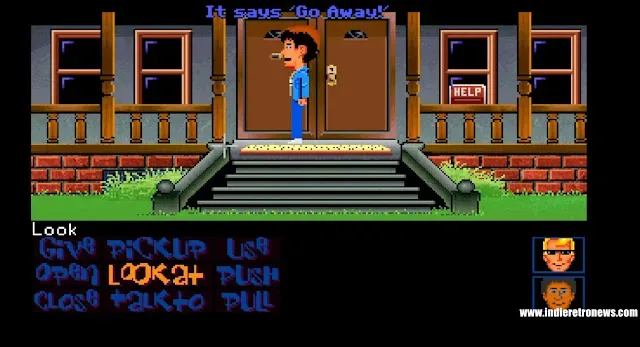
That approach makes Maniac Mansion Deluxe AGA especially notable as an Amiga-focused technical project. Classic adventure games may appear simple beside modern productions, but their systems are interconnected. A room must load correctly, its foreground and background art must be drawn in the proper order, characters must move and animate around scenery, interactive objects need to react as expected, and scripts must trigger the correct sequences without breaking player progress. Reproducing all of those elements accurately demands extensive comparison with the material being adapted.
For useful background on this topic, read Bug Blasts Back! Takes the Amstrad CPC Into a New Vertical Shooter Campaign.
AI tools were used during development to assist with analysis of the original game and with code reviews. However, the project still required a large amount of hands-on work. Manual testing, repeated bug fixing, and close verification against the source material were all necessary to make the remake function smoothly on its intended machines. The result is a version designed around the Amiga rather than a compromise that treats the platform as an afterthought.
Designed with a stock Amiga 1200 in mind
The primary target for the release is a stock Amiga 1200 with a 68020 processor and AGA graphics. That is an ambitious target because Maniac Mansion Deluxe AGA has to accommodate colorful room backdrops, object masks, character sprites, sound, music, and interactive scene logic within the limits of classic hardware. In particular, the machine's 2 MB of Chip RAM creates a strict ceiling for the visual data the game can retain at any given time.
To work within that constraint, the custom engine dynamically removes a room's data from memory after the player exits it, then loads the next room as required. This type of memory management is central to making a visually rich adventure viable on the base configuration. It allows the game to move through its many locations without attempting to keep every background, mask, and object resource resident in the Amiga's limited memory pool.
The development work also tackled challenges that are easy to overlook while playing a finished point-and-click adventure. One of those is correctly placing characters behind foreground scenery. In a mansion filled with furniture, doorways, stairs, walls, and decorative details, visual layering is essential for making scenes look convincing. Screen transitions also required careful attention, as these moments need to feel natural while the engine switches environments and manages its resources.
Audio has been implemented through ptplayer, with music modules and sound effects played through the Amiga's Paula sound chip. Rather than treating sound as a secondary feature, the remake includes a substantial audio package that helps preserve the personality of an adventure where comic timing, musical cues, and oddball effects are all part of the experience.
What version 2.0 includes
The final 2.0 edition offers a sizeable set of content for players exploring the mansion and its many secrets. The game contains 36 playable rooms and 41 scene sequences, reflecting the amount of structure required to recreate an adventure known for its branching character choices and memorable locations. Players can collect and use 67 inventory items, while the soundtrack includes 18 music tracks and the sound library contains 87 sound effects.
There are also four intro clips, reinforcing the effort that has gone into presenting the game as a complete adaptation rather than a stripped-down technical demonstration. Version 2.0 additionally introduces a new intro screen and localized graphics. These details may sound modest compared with a new engine, but presentation work matters in a game with such a recognizable identity. A strong opening establishes the tone before players begin choosing characters and investigating the mansion's increasingly strange rooms.
The final update addresses several remaining visual issues as well. Fixes specifically cover bugs involving the fence, the television advertisement, and graffiti in the dungeon. Polishing these details is important for a release that has been built around close comparison to its classic PC counterpart. Visual errors in prominent scenery can be distracting, particularly in an adventure game where players spend time examining screens, searching for clues, and trying unusual item combinations.
Core features at a glance
- A newly written native Amiga engine built around original PC assets and scripts.
- Support aimed at a stock Amiga 1200 with a 68020 processor and AGA graphics.
- Dynamic room-data unloading to operate within 2 MB of Chip RAM.
- 36 playable rooms and 41 scene sequences.
- 67 inventory items to find, combine, and use.
- 18 music tracks and 87 sound effects played through Paula using ptplayer.
- Four intro clips, a new intro screen, and localized graphics.
- Final 2.0 visual corrections for the fence, TV advertisement, and dungeon graffiti.
Tested across several Amiga setups
Although a standard A1200 is the principal hardware target, the remake has also been tested on a broad selection of real and modernized Amiga configurations. Those include an Amiga CD32 fitted with a hard drive, an accelerated Amiga 1200 using a 68030 processor, a PiStorm-based setup, and a Vampire V4. The range of testing is useful for a community project intended to reach users with both period-correct machines and enhanced systems.
Players are instructed to copy the game folder to Workbench while leaving the Data directory unchanged. From there, the standard executable can be launched. This normal version is described as being roughly half the size of the separate Test edition, which includes bug logging. That separation should be helpful for ordinary players who want the streamlined game, while retaining a version better suited to diagnosing problems during further community testing or configuration checks.
Vampire V4 users have one additional setting to keep in mind. If they encounter mask flickering, they can change the CPUFAST ToolType to YES. It is a practical compatibility option for a platform ecosystem where expanded hardware and alternative accelerators can behave differently from the baseline systems that define the project's core target.
An impressive preservation-minded remake
Maniac Mansion Deluxe AGA 2.0 stands out because it approaches retro revival as both preservation and platform-specific craftsmanship. The project seeks to retain the substance of a celebrated adventure while making it feel at home on Amiga hardware. Its technical decisions--dynamic memory loading, custom character masking, AGA-focused presentation, and Paula-driven audio--are not incidental details. They are the mechanisms that allow a complex, colorful adventure to work within the restrictions of the machine.
For players with an Amiga 1200, CD32 hard-drive setup, or one of the more modern Amiga-compatible configurations tested during development, the final release provides an opportunity to revisit a foundational adventure game through a distinctly Amiga-oriented version. For enthusiasts of retro programming, it is also a reminder that classic systems continue to inspire ambitious software projects long after their commercial era has ended.
With its version 2.0 update now described as final, Maniac Mansion Deluxe AGA arrives as a complete package: a carefully recreated mansion to explore, a deep inventory of items and interactions, audiovisual work tailored for the platform, and fixes intended to smooth out the remaining rough edges. It is an especially compelling release for anyone interested in the meeting point between Lucasfilm Games adventure design and the enduring technical creativity of the Amiga scene.
Community
Discussion
Start the conversation.
No comments have been posted yet.