

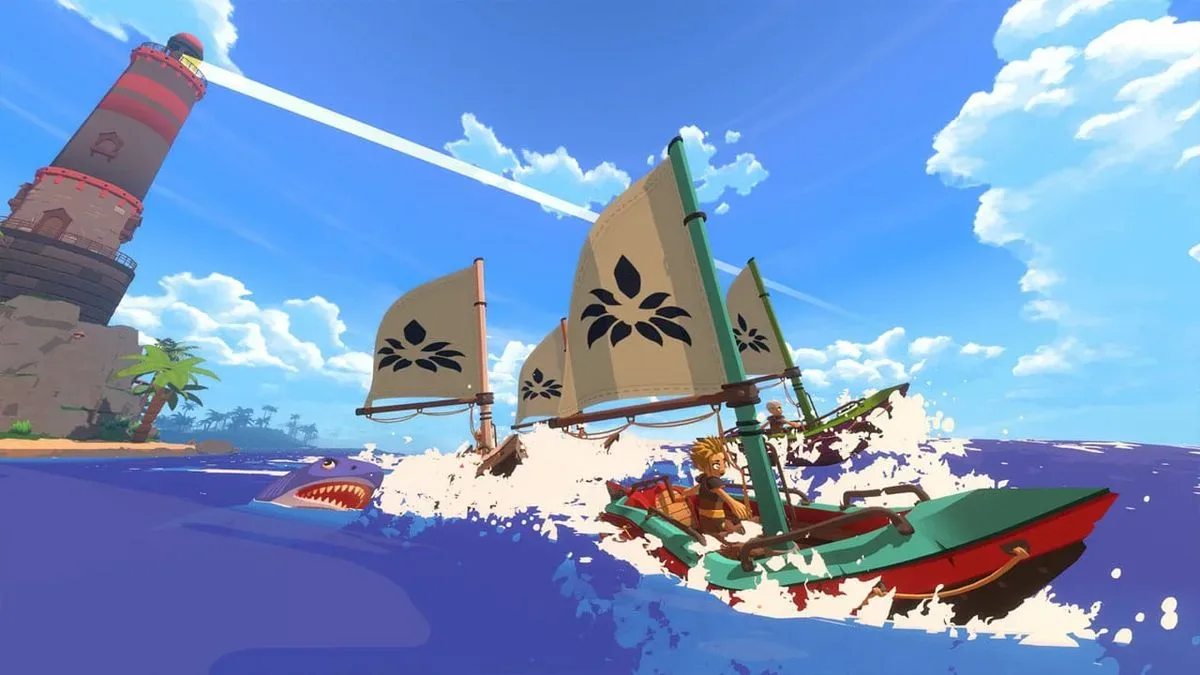
Tinker Islands, described as a cozy Caribbean sandbox built around ocean travel and island discovery, is scheduled to enter Steam Early Access on December 10, 2026. Its premise immediately invites comparisons with The Legend of Zelda: The Wind Waker: players cross a broad sea in cel-shaded surroundings, land on tropical islands, uncover secrets and make each voyage part of a larger personal adventure.
Those similarities are visual and structural rather than a confirmation of any direct connection. Still, the appeal is easy to understand for players who have long wanted another game that captures the inviting seafaring rhythm of Nintendo's GameCube-era adventure. Tinker Islands appears to pair that sense of free-roaming curiosity with systems more commonly associated with survival, crafting and sandbox games, including base construction, resource gathering, equipment progression and customizable combat roles.
A demo is also available through Steam ahead of the Early Access launch, giving interested players a chance to see how the project's sailing, exploration and building ideas come together before its December arrival.
An ocean made for wandering
The central promise of Tinker Islands is not simply reaching a destination, but enjoying the process of getting there. Players will sail between islands scattered across an open ocean, following their own interests as they encounter beaches, jungles and high cliffs. That setup places discovery at the heart of the experience. Rather than presenting one fixed route through a campaign, the game is positioned around choosing where to go, what to collect and where to establish a home.
For useful background on this topic, read Lilvo DS Micro Aims to Bring Dual-Screen DS Emulation to a Card-Sized Clamshell.
That is where the comparisons to The Wind Waker become especially natural. The distinctive cel-shaded presentation, boat-focused travel and island-to-island structure evoke an adventure format that remains beloved decades after its original release. Tinker Islands is not described as a Zelda game, however, and its focus seems notably broader in other directions. The game's island visits are expected to feed directly into long-term progression through materials, blueprints, construction and gear upgrades.
The Caribbean setting should also help distinguish the project's identity. Sandy coastlines and thick vegetation can support the relaxed atmosphere suggested by its "cozy" description, while cliffs, unexplored spaces and hostile threats give that calm setting an adventurous edge. The game seems designed to let a peaceful resource-gathering expedition become a more dangerous outing without abandoning the colorful tone of its world.
From a first shelter to a full settlement
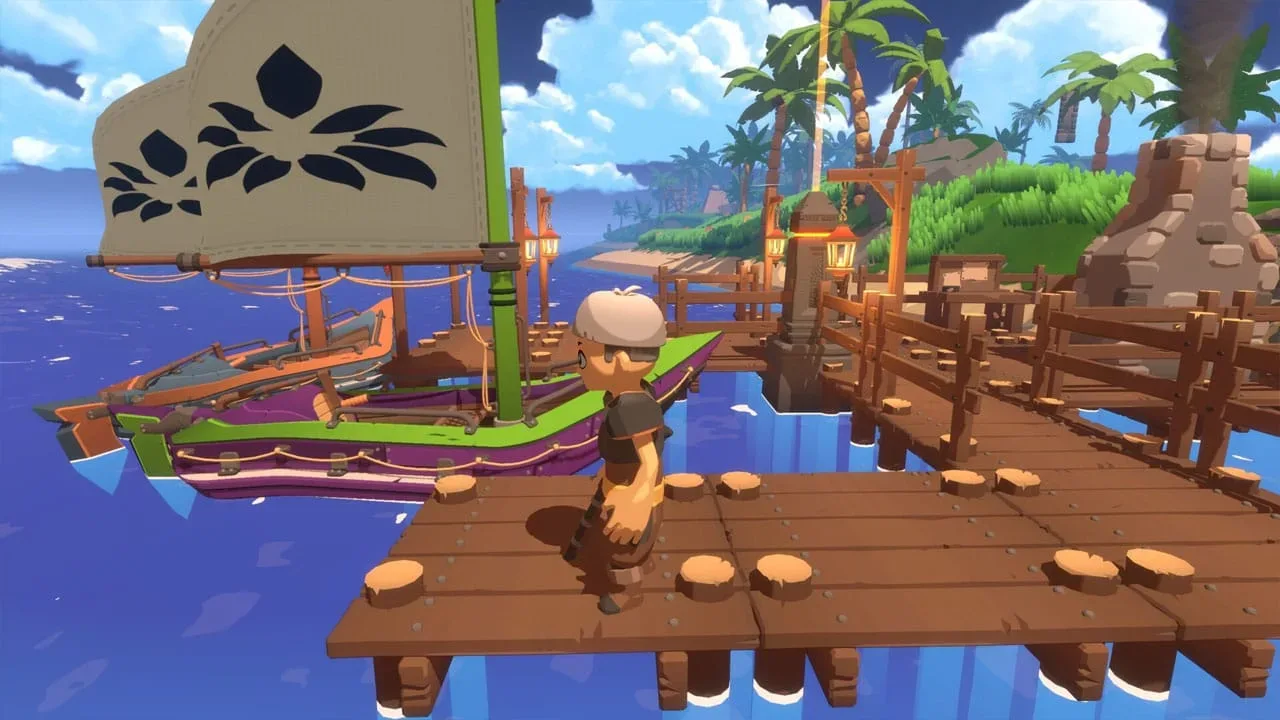
Building is one of Tinker Islands' major pillars. Players can select a location and develop it into an outpost, secluded hideout or a more comfortable township. This makes each island more than a temporary stop during a sailing trip. A promising beach or useful stretch of jungle could become the foundation for a lasting base, giving exploration a practical purpose beyond simply filling out a map.
Materials gathered across the world can be used to craft tools, weapons and equipment. Blueprints will play an important role as well, with powerful plans waiting to be found as players push farther into the world. The progression loop is therefore familiar but potentially satisfying: explore unfamiliar territory, bring resources home, create stronger gear, and use those improvements to take on new challenges and reach places that previously felt too risky.
There is an important distinction between a sandbox that merely lets players place structures and one that makes a chosen settlement feel meaningful. Tinker Islands has not yet detailed every building system or how much freedom players will have in designing towns, so expectations should remain measured while it is in Early Access. But the stated ability to make an outpost, hideout or township suggests that players will have room to shape a base around their own priorities, whether that means efficiency, defense or simply creating a scenic coastal retreat.
The project also says each world will be unique while including handcrafted elements. That combination could provide a useful middle ground. Procedural variation can make a new voyage feel less predictable, while deliberately made locations and dungeons can ensure that memorable discoveries do not get lost in purely random generation. How consistently those two approaches complement each other will be one of the more interesting things to watch once players begin exploring the Early Access build.
Three approaches to danger
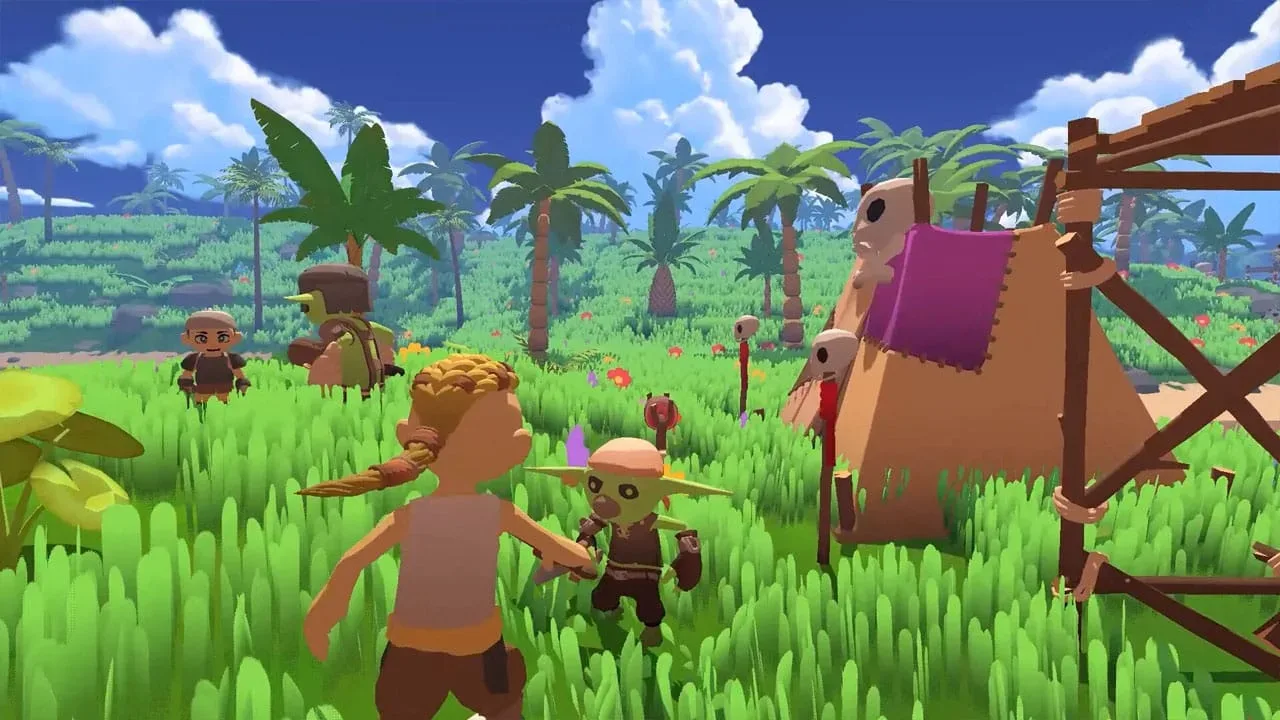
Tinker Islands will not be exclusively about tranquil sailing and construction. Players will need weapons, will face danger while collecting resources, and can pursue one of several character playstyles. The currently described options offer a clear spread of fantasy adventure archetypes: a Mage who throws fireballs, a sword-wielding fighter with swashbuckling abilities, and a Hunter armed with a powerful blunderbuss.
Those choices could substantially alter the feel of an expedition. A fighter may suit players who want to confront enemies up close and lean into the pirate-adventure flavor implied by sailing and swordplay. The Mage offers a more overtly magical route, while the Hunter's blunderbuss brings ranged combat into the mix. It is not yet clear whether players can freely combine these styles, switch between them later, or develop a single role in depth. Even so, offering distinct identities from the outset is a promising way to give co-op groups complementary strengths.
Animal riding is another feature expected to change how players move around larger islands. Mounts could make harvesting runs quicker and help explorers avoid threats while crossing difficult terrain. In a game where returning with resources matters, mobility is more than a cosmetic extra. It can affect how confidently players range away from a settlement, how efficiently they gather supplies and how they react when an otherwise routine trip becomes dangerous.
Hidden dungeons are planned as a further reason to venture beyond the shoreline. These spaces, along with upgradeable gear, suggest a more traditional adventure-game layer beneath the building systems. Players who are drawn in by the art style and open water may find dungeon delving to be the greater test of their chosen build, preparation and willingness to search off the obvious path.
Co-op potential and the Early Access question
Exploring tropical islands with friends is part of the game's pitch, and the co-op angle appears well suited to its collection of systems. One player could focus on combat while another gathers materials; a group could divide duties between searching for blueprints, building a settlement and preparing for a dungeon run. Shared exploration also fits naturally with a world that encourages spontaneous detours. Spotting an unfamiliar island on the horizon has more energy when a crew can decide together whether to sail onward or investigate immediately.
At the same time, Early Access is where the details matter most. Tinker Islands has a strong high-level concept, but players will be looking for a satisfying balance among sailing, combat, crafting, building and discovery. Ocean travel needs to feel engaging rather than like downtime between points of interest. Crafting should give resources a purpose without becoming needless busywork. Dungeons need rewards that make their risks worthwhile. And the cozy atmosphere has to coexist with combat and survival pressures without either side undermining the other.
Early Access provides an opportunity for those elements to evolve with player feedback. It also means prospective players should approach the December launch as the beginning of the game's public development journey rather than assume every system is already complete. The available demo is therefore especially useful: it can offer the clearest early indication of the project's current feel, even if individual features change as development continues.
A familiar inspiration, with room for its own identity
It is difficult to look at Tinker Islands' colorful sea, sailing focus and island exploration without thinking of The Wind Waker. That visual association is likely to be one of the project's biggest conversation starters. But the more important question will be whether its own mix of settlement building, crafting, class-based combat, animal mounts and shared exploration can give it a lasting personality beyond the comparison.
There is room for that to happen. Games inspired by a memorable classic often attract attention through the resemblance, but they earn their audience through the systems they add around that initial spark. Tinker Islands has the ingredients for an appealing routine: set sail with friends, find an island worth investigating, gather what the group needs, face whatever is guarding the best rewards, then return to a growing home base before the next expedition.
Steam players will be able to begin testing that loop when Tinker Islands enters Early Access on December 10, 2026. For fans of bright ocean adventures, cooperative sandbox building and the enduring allure of charting a course toward an unknown island, this is one voyage worth keeping on the horizon.
Community
Discussion
Start the conversation.
No comments have been posted yet.