

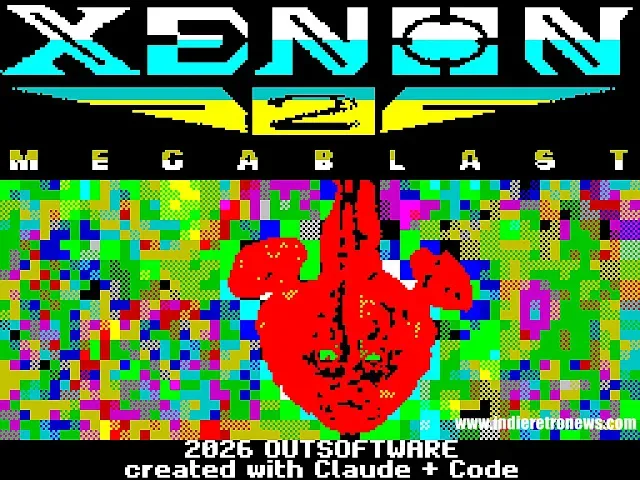
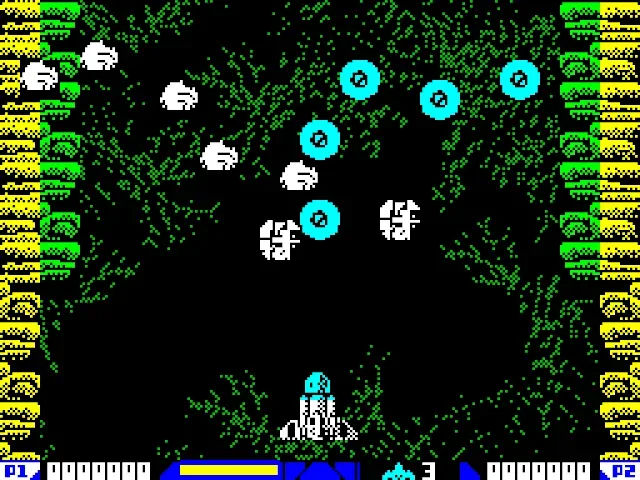
Xenon 2 Megablast, the celebrated shoot-'em-up associated with The Bitmap Brothers, has resurfaced in an unexpected form: an unofficial version for the ZX Spectrum 128K. Developed by Outsoftware, the new conversion arrives more than 30 years after a proposed Spectrum edition was abandoned before it could become a commercial release.
For retro players, the news is notable for more than the chance to experience another version of a well-known game. It closes the loop on a particularly intriguing piece of 8-bit history. A Spectrum adaptation was once actively pitched during the game's original era, complete with a technical demonstration and subsequent enhancements. Yet it did not earn publisher approval, leaving fans to wonder what might have been on Sinclair's classic hardware.
Outsoftware's release does not turn the lost 1991 project into an official historical product, and it should be viewed as an unofficial conversion. Even so, its existence gives the ZX Spectrum 128K a long-delayed encounter with a game that had appeared destined to remain absent from the machine's library.
A 1991 Spectrum pitch that went nowhere
The story begins in 1991, at a point when the industry's attention was increasingly moving toward 16-bit systems. Dave Spicer, a Commodore 64 coder and musician, created a technical demo intended to demonstrate that Xenon 2 Megablast could work on the ZX Spectrum.
For useful background on this topic, read Maniac Mansion Deluxe AGA 2.0 Brings a Full Classic Adventure Remake to Amiga.
Spicer's demonstration was ambitious for the platform. It used early, stripped-back graphics by Jason Brashill and reportedly ran in full screen at 25 frames per second. That performance made a persuasive technical statement: even with the Spectrum's clear limitations compared with the more powerful machines receiving major releases at the time, a fast and visually striking shooter could potentially be achieved.
The demo was built as a pitch rather than a completed retail game. Its purpose was to secure support for a proper Spectrum conversion. However, Mirrorsoft was not interested in financing additional 8-bit versions at that stage. The publisher rejected the proposal, reflecting a market climate in which older platforms were becoming less attractive to back commercially.
That decision prevented the project from advancing into an authorised release. For Spectrum owners, it meant that one of the better-known shoot-'em-ups of its period would remain a conspicuous omission from the system's catalogue.
An effort to make the case even stronger
Spicer did not immediately leave the idea behind after the initial lack of enthusiasm. He returned to the demo and developed a revised build featuring parallax scrolling. The extra visual movement was intended to bring the Spectrum presentation closer in spirit to the game's 16-bit counterparts, where scrolling effects helped reinforce the sense of speed and spectacle.
There was a cost. The parallax-enhanced version gave up a small amount of the speed seen in the standard build. Still, the trade-off demonstrated an attempt to balance performance with a more elaborate visual approach. Rather than simply proving that a Spectrum version could exist, the second version sought to show that it could chase some of the stylistic appeal associated with more technically capable hardware.
The plan was to submit both demos to Your Sinclair: the faster standard version and the newer parallax build. The hope was that magazine attention, combined with enthusiasm from readers, could generate enough pressure or interest to make Mirrorsoft reconsider its position.
That campaign never came together. The anticipated coverage did not materialise, and the project was quietly put aside. As a result, the Spectrum Xenon 2 Megablast pitch became one of those fascinating near-misses that occupy a special place in retro gaming history: work was done, technical promise was demonstrated, but the commercial pathway disappeared.
Why the lost conversion still matters
Cancelled ports can be compelling precisely because they reveal the decisions behind the games people did and did not receive. In this case, the abandoned Spectrum version was not merely a name on a wish list. Spicer had already produced working demonstrations, and those demos appear to have pushed the machine hard enough to make an impression decades later.
The original concept also highlights how quickly business priorities can overtake technical possibilities. By 1991, publishers were making choices around where to invest conversion budgets, marketing, manufacturing, and support. An 8-bit game could be feasible to create without necessarily being judged worthwhile to sell. For players, that distinction often mattered little: a potentially impressive version still remained unavailable.
Xenon 2 Megablast carries particular weight in this conversation because of its stature. The game is remembered as a major shoot-'em-up of its era, and the prospect of a Spectrum edition naturally invites questions about how its action, scrolling, visual identity, and overall feel could have translated to the platform. The early demo suggested there was room for a far more substantial result than many might have expected from the hardware.
Outsoftware's new work therefore has value beyond novelty. It provides a modern answer to a decades-old absence, while also drawing attention back to the developers and artists who tried to make the original pitch happen. It is a reminder that unreleased projects do not always vanish because the people making them lacked ambition or ability. Sometimes timing, publisher strategy, and market transition are enough to stop a project in its tracks.
An unofficial release with historical appeal
The new ZX Spectrum 128K conversion should not be confused with an official late release from the original publisher or rights holders. Its importance instead lies in its unofficial, preservation-minded character. It is an attempt to bring a famous game to a platform that missed out when it mattered commercially, made possible by a contemporary retro-development community willing to revisit old possibilities.
That distinction is important, but it does not lessen the appeal for fans of Sinclair hardware. Retro communities have long kept classic machines active through new games, conversions, technical experiments, and recovered projects. Releases such as this one demonstrate that the ZX Spectrum remains more than a museum piece: it is still a platform on which developers can engage with its strengths, constraints, and unfinished history.
The announcement also mentions the ZX Next 3 alongside the Spectrum 128K. However, the available details centre on the ZX Spectrum 128K conversion, and no further technical breakdown has been provided here regarding feature differences, separate editions, or specific compatibility arrangements. Players interested in running the game should therefore check the release materials for the exact hardware requirements and supported configurations.
A delayed meeting between game and machine
There is something fitting about Xenon 2 Megablast reaching the ZX Spectrum in this manner. The game's original absence was not caused by a lack of imagination. A creator had already prepared a speedy full-screen demo, then expanded it with parallax scrolling in an effort to make the proposition even harder to ignore. Yet the approval never arrived.
More than three decades later, Outsoftware's unofficial conversion gives that abandoned idea a new life. It cannot rewrite the publishing choices of 1991, nor can it make the cancelled port part of the system's original commercial history. What it can do is let modern Spectrum enthusiasts explore a version of Xenon 2 Megablast that previously existed only as a tantalising possibility.
For fans of 8-bit shooters, The Bitmap Brothers' legacy, and games that slipped through the cracks of their own era, that is reason enough to take notice. The ZX Spectrum 128K has finally gained an unofficial Xenon 2 Megablast conversion, turning a long-lost "what if" into something players can load up today.
Community
Discussion
Start the conversation.
No comments have been posted yet.