

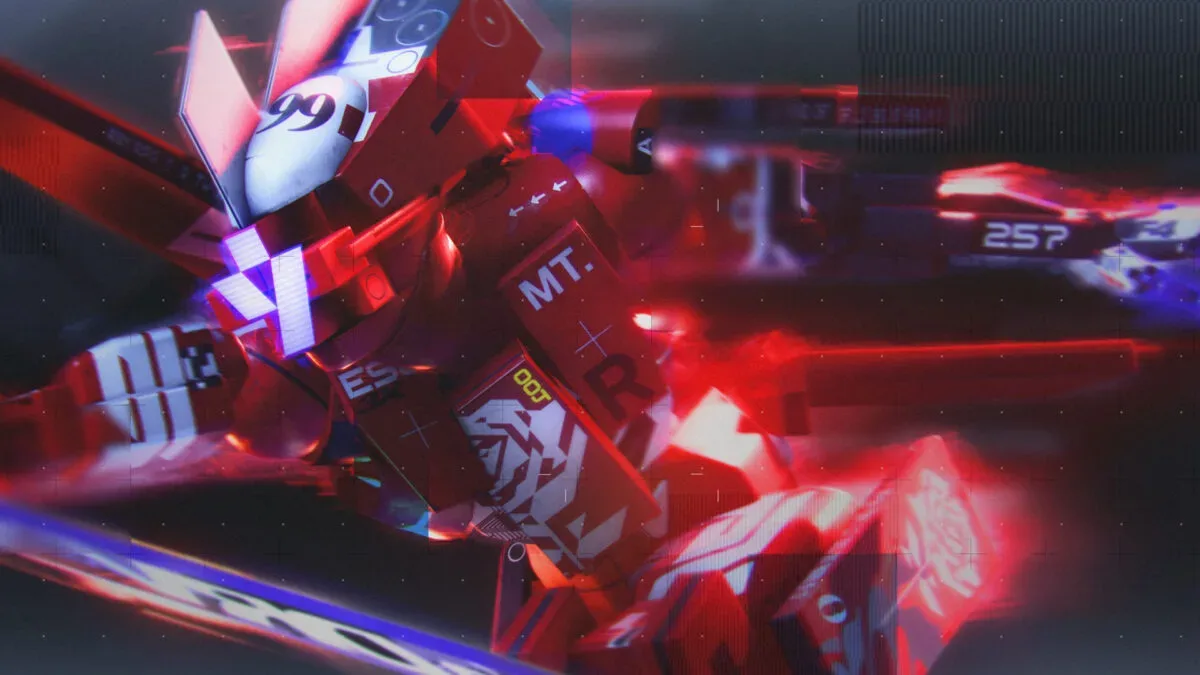
Marathon has introduced Bishop, a new character class arriving with its Symbiosis update on December 8, through another sharply stylized cinematic that puts the game's presentation front and center. The roughly 90-second video focuses on the class's aggression, speed, and unnerving physicality, but it also renews a familiar impression: Marathon's fiction often feels expansive enough to support far more than the competitive scavenging at its core.
Bishop is framed as a force built for the attack. The class carries a pump-action shotgun and moves with jet-assisted ankles, creating an image somewhere between a cyberpunk samurai and a relentless futuristic hunter. Its action is deliberately precise and brutally efficient. Rather than simply presenting another loadout or combat specialty, the cinematic treats Bishop as a personality--one defined by pursuit, violence, and a sense that its movements are not entirely human.
That approach has been one of Marathon's most consistent strengths. Even as the game has navigated its own changing circumstances and player discussion, its non-gameplay videos have maintained a confident aesthetic language. They are dense with mood, sharp editing, impactful sound, and details that imply a larger setting without stopping to explain every corner of it. Bishop's reveal fits that tradition, while leaning more heavily into close-quarters action than some earlier glimpses of the game.
Bishop arrives as an aggressive new presence
The new class is clearly intended to project offense. A shotgun is a straightforward statement of purpose, but the trailer's attention to Bishop's locomotion is just as important. The ankle-mounted jets turn short bursts of movement into something predatory. Bishop does not merely run toward a target or mechanically cross the environment; it lunges, closes space, and seems to pounce.
For useful background on this topic, read Mark Darrah Says Dragon Age: Origins Could Have Been Remastered Twice.
That physical character has stood out to viewers. One reaction shared beneath the video praised Bishop for feeling like a predator rather than merely a lethal combatant, noting that some of its motion appears almost animalistic and less conventionally human. It is an apt observation. The class's threat comes not only from its weapon or obvious mobility tools, but from the implication that it has a different relationship to space and danger than the people around it.
There is a recognizable action-film energy to the piece, with the kind of clean, focused violence associated with a Y2K-era spin on John Wick. But it is not a simple imitation of that style. Marathon's visual world remains stranger, more synthetic, and more abstract than a grounded gun-fu thriller. Bishop's hardware, silhouette, and abrupt movement all exist within a setting that favors technological mystery and graphic design as much as conventional military science fiction.
For a class reveal, that matters. Competitive multiplayer games frequently need to introduce roles quickly: here is what this new option does, here is its weapon, and here is why players should care. Marathon's Bishop trailer communicates those basics, yet it does so without reducing the class to a checklist. The cinematic sells an emotional fantasy first. Bishop is presented as the person--or perhaps the thing--players want to become when they decide that stealth, caution, and distance are no longer enough.
A cinematic style that remains distinctly Marathon
Some viewers have described Bishop's video as feeling different from Marathon's prior cinematics. The action is certainly more direct, and Bishop's physical presence gives the trailer a particularly immediate hook. Still, it belongs comfortably beside the game's earlier non-gameplay material. Its sound design, sleek visual composition, fragmented storytelling, and confidence in withholding information all feel like part of the same creative world.
That continuity is important because the cinematics have helped establish Marathon's identity beyond match mechanics. The game's central loop is built around PvP loot scavenging and extraction-shooter tension, but the trailers frequently look outward from that format. They offer fleeting encounters, suggest histories between characters, and hint at dangers that do not need to be fully understood to feel consequential. Each vignette makes the setting appear occupied by people with motives, rivalries, routines, and fears that continue whether or not a player is present.
Bishop's debut is another of those vignettes. It has a practical purpose--introducing a class tied to a major update--but it also functions as a short piece of genre storytelling. The viewer gets a clear sense of Bishop's disposition and capabilities without being handed a lengthy explanation. That economy is particularly effective in a game world that benefits from mystery. Marathon's best visual material knows that atmosphere can carry information of its own.
The result is a trailer that is easy to appreciate even for people who may not be following every system change or class addition. The clip works as a compact action scene, but it also communicates that Marathon is interested in character archetypes with texture. Bishop is not simply "the shotgun class." The imagery insists on a more evocative reading: a hunter equipped with advanced machinery, moving in ways that make other combatants look slow and vulnerable.
Why the world-building invites bigger story questions
Marathon's trailers have repeatedly prompted the same larger question: what might this universe look like with a full campaign built around it? The multiplayer format can support lore, environmental storytelling, and recurring personalities, of course. Extraction shooters are especially well positioned to make every run feel like a dangerous trip through a hostile place. But the cinematics suggest a world full of stories that could also benefit from sustained character focus and a more deliberate narrative arc.
Bishop is an especially convincing example because the class feels like it arrives with an implied history. The trailer does not need to spell out who Bishop was, who created it, what it wants, or how it fits into every wider conflict. Its design encourages those questions on its own. That is what compelling world-building does: it creates the sensation that the visible moment is only a small slice of something much larger.
There is a tension here that is productive, if occasionally frustrating. The same ambiguity that makes Marathon's cinematics stylish can leave audiences wanting more resolution. A PvP-focused game has different storytelling needs than a linear campaign, and it cannot always pause to deliver extended narrative context. Yet the recurring quality of these short films raises expectations. When the world looks this considered, players naturally wonder how much of it they might eventually get to explore beyond the pressure of gathering loot and escaping rivals.
That does not mean Marathon must become a traditional single-player experience for its presentation to matter. Instead, Bishop's reveal demonstrates how strong audiovisual direction can enrich the competitive experience itself. Players may enter matches for strategy, progression, and high-stakes encounters, but a distinct fantasy can make those systems more memorable. Choosing Bishop is more appealing when the class has been introduced as a terrifying, kinetic presence rather than as a set of statistical advantages.
Symbiosis has a compelling new focal point
With the Symbiosis update set for December 8, Bishop gives Marathon a striking focal point for its next phase. The cinematic establishes the class's intended identity before players encounter it in the game's competitive ecosystem, where its speed and close-range threat will presumably be judged in more practical terms. The trailer's job is not to answer every balance question. It is to make Bishop unforgettable, and on that front it succeeds.
It also reinforces a broader lesson from Marathon's promotional material: the game's audiovisual direction remains among its most persuasive assets. The presentation has consistently found a balance between sleekness and menace, creating imagery that looks cool without feeling empty. Bishop's shotgun, jet-assisted movement, and almost bestial body language form a memorable package because they are supported by a setting that feels coherent in its strangeness.
For players already invested in Marathon, the new cinematic offers an exciting look at an aggressive option entering the roster. For those more interested in the game's tone than its extraction-shooter structure, it is another reminder of the narrative potential sitting around the edges of every match. Bishop may be designed to push forward, hunt, and eliminate. But the trailer also pushes a different idea: Marathon's world is still compelling enough to make audiences want to know what happens when the action does not cut away after 90 seconds.
Community
Discussion
Start the conversation.
No comments have been posted yet.