

Dragon Age: Origins may be one of the most requested modern RPG remasters that has never materialized, and former BioWare leader Mark Darrah believes there was a substantial commercial opportunity in bringing it back. In recent comments, Darrah said the 2009 role-playing game could plausibly have received not one but two remastered releases by now, each potentially reaching a couple of million players.
It is a striking suggestion, particularly at a time when legacy RPGs are increasingly being revived, rebuilt, or made more accessible on current hardware. Dragon Age: Origins remains a foundational entry in BioWare's catalog: a party-based fantasy RPG known for its branching choices, distinct character origins, tactical combat options, and the world-building that established Thedas for the games that followed. Yet it has never received a dedicated remake or remaster for newer console generations.
Darrah, who spent more than two decades at BioWare and held senior leadership roles on the Dragon Age series, framed that absence as part of a broader reluctance within EA to revisit older releases. His view is not that every successful older game needs to be repeatedly reissued, but that Origins was especially well positioned for a modernized return.
"We Could Have Remastered Origins Probably Twice"
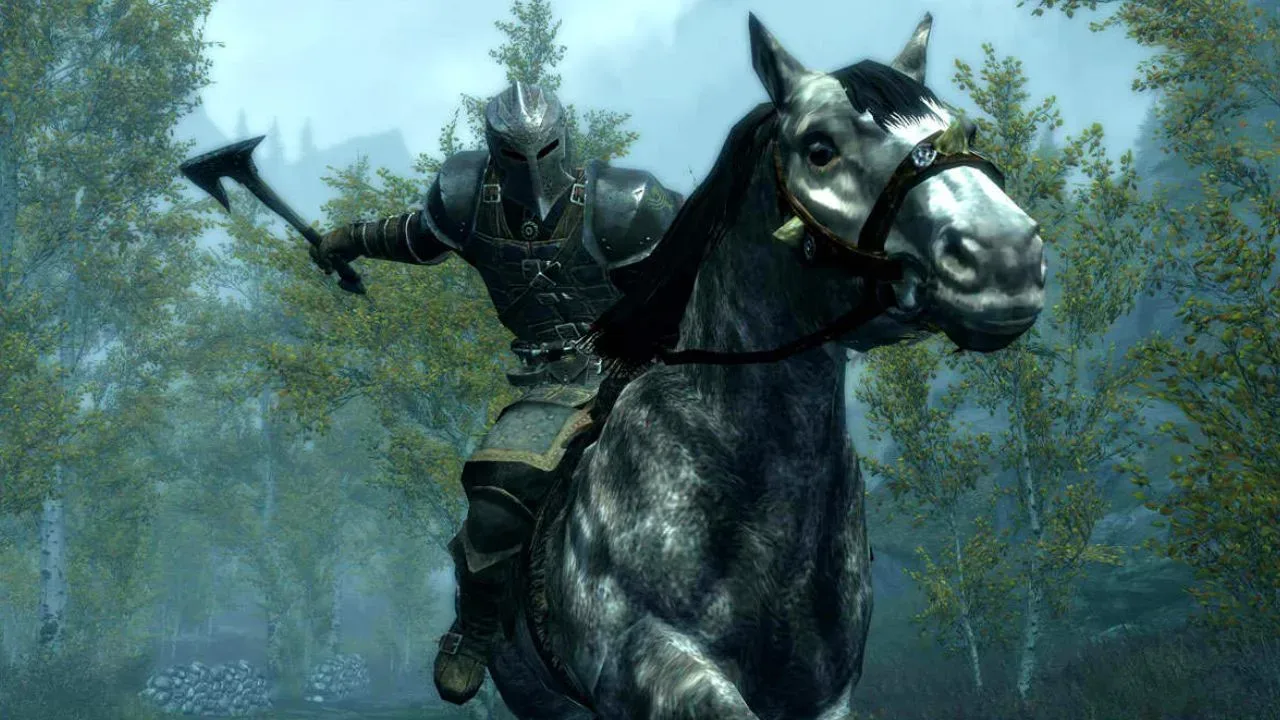
Discussing the subject with Pembridge TV, Darrah contrasted Dragon Age: Origins with Bethesda's famously persistent treatment of The Elder Scrolls V: Skyrim. Skyrim has appeared in numerous editions and on a remarkable range of hardware since its original 2011 release, becoming shorthand for the industry's tendency to extend the lifespan of a blockbuster through ports, upgrades, and rereleases.
For useful background on this topic, read GTA 6's Criminal Profile System Makes Restraint Part of the Open-World Fantasy.
"Honestly, yeah, I don't know that anyone other than Bethesda could get away with porting Skyrim to every single platform and selling a million copies every single time they do that," Darrah said. "But yes! We could have remastered Origins probably twice and sold a couple million copies each time."
The comparison matters because Darrah is not suggesting that Dragon Age: Origins could necessarily duplicate Skyrim's scale of rereleases. Skyrim is an exceptional case: an open-world RPG with a massive cultural footprint, a long-running modding scene on PC, and an unusual ability to reach new audiences across changing console generations. Bethesda's game has repeatedly returned in special, anniversary, VR, and platform-specific forms.
Instead, the former Dragon Age lead's argument is more measured. A remaster need not become an endless loop of ports to be worthwhile. Even two carefully timed releases, he believes, could have found a sizable audience. For a series with enduring recognition, a remastered Origins might have served both as an accessible starting point for newcomers and as a convenient way for longtime fans to revisit the first game without relying on aging systems or PC compatibility workarounds.
EA's Catalog May Have Shaped Its Attitude Toward Remasters
Darrah attributed some of EA's resistance to the makeup of its broader catalog. The publisher has long been associated with annual sports franchises, including hockey and football games that receive regular new installments. In those series, the logic of a 20-year anniversary remaster is less obvious because each brand has continued to receive contemporary entries.
"What are you gonna take NHL 2005 and do a 20th anniversary remaster? What? You have an NHL. NHL never went away. Madden never went away. Football Club never went away," Darrah said.
That explanation helps clarify why revisiting old games may not have become an automatic part of EA's publishing culture. Annualized sports titles are designed around continuity: new rosters, current leagues, evolving presentation, and yearly releases. A rerelease of a decades-old season does not fill the same role that a remaster can fill for a dormant single-player adventure.
But Dragon Age presents a different case. Its games are not annual products, and each installment reflects a distinct era of design, storytelling, and player choice. Origins is not simply an old version of a recurring sports game that was superseded the next year. It is a self-contained RPG with its own companions, decisions, mechanics, and tone. For fans, preserving that specific experience has value separate from whatever follows it.
Darrah acknowledged that the sports-game explanation does not fully answer why other notable EA-owned role-playing games have not seen more modern revivals. Mass Effect did receive the Legendary Edition, bundling remastered versions of the original trilogy, but Dragon Age has not received equivalent treatment. When addressing the wider discrepancy, Darrah's assessment of the decision-making was blunt: "they don't get it."
Why Origins Is a Particularly Complicated Candidate
The desire for a Dragon Age: Origins remaster is easy to understand, but such a project would not necessarily be simple. The game was built for PC, PlayStation 3, and Xbox 360, and it has systems that can feel notably different depending on the original platform. Its PC version leaned more heavily into tactical control and a classic computer-RPG interface, while console editions adapted the experience for controllers.
A modern remaster would need to make decisions about presentation, performance, controls, interface design, and the game's downloadable content. It could aim for a conservative approach, retaining the original systems while improving resolution, stability, texture quality, and usability. Or it could make more ambitious changes to combat feedback, camera behavior, accessibility, and controller support. The more extensive the changes, the more likely players would begin to view the project as a remake rather than a straightforward remaster.
There is also the question of continuity. Dragon Age: Origins allows choices that carry significance beyond its own campaign, and later games use player decisions as part of the series' larger narrative identity. Any re-release would need to consider how imported saves, choices, expansions, and companion stories are handled. That challenge does not make the project impossible, but it illustrates why an old RPG can require more planning than simply packaging a higher-resolution version of an existing game.
Still, those complexities are precisely why a polished reintroduction could have mattered. A well-supported remaster could consolidate the original game and its major content in one place, improve access on modern systems, and provide a clearer entry point into the franchise's history.
The Value of Keeping Older RPGs Available
The conversation around Dragon Age: Origins reaches beyond one game. It reflects a growing tension in the industry between preservation, commercial opportunity, and the practical cost of maintaining older software. As console generations move on, some major games become harder to purchase, harder to run, or harder to experience in their intended form.
For narrative-driven RPGs, that loss can be especially noticeable. These games often have devoted communities because they are built around choices, companions, and stories that encourage repeat playthroughs. Their fans may return years later to try another character origin, make different moral decisions, pursue different relationships, or revisit an era of a series that later entries approached differently.
Dragon Age: Origins has retained that kind of following. Its reputation has been sustained not just by nostalgia, but by the qualities players continue to associate with it: detailed party interaction, meaningful role-playing structure, and a fantasy campaign that changes in response to player choices. The game's age is visible in places, yet its standing among RPG fans has kept calls for a remaster alive.
A new version could also have introduced Origins to players whose first Dragon Age was a later installment. The franchise has changed direction several times over the years, with each entry experimenting with different combat rhythms, visual styles, and storytelling structures. Returning to the first game would give newer audiences a chance to see where many of the series' people, places, conflicts, and themes began.
No Dragon Age: Origins Remaster Has Been Announced
For now, Darrah's remarks should be understood as an experienced former developer's view of an opportunity that he believes was missed, not as evidence of a current remaster project. No new version of Dragon Age: Origins was announced alongside his comments, and there is no confirmed release plan to bring the game to modern PlayStation or Xbox hardware.
That leaves fans with a familiar combination of hope and uncertainty. Remasters can be an effective way to preserve an influential game and bring it to an audience that missed it the first time. They can also be difficult to scope, expensive to support, and complicated by technical or business realities that are invisible from outside a publisher.
Darrah's central point, however, is that Origins had room to succeed without becoming another Skyrim-sized rerelease phenomenon. In his view, EA did not need to put the game on every conceivable platform again and again. It simply needed to recognize that one of BioWare's defining RPGs could have supported more than one meaningful return.
Whether that possibility is permanently in the past remains unknown. But the continuing interest in Dragon Age: Origins shows why the idea still resonates: some games are not remembered merely as old releases, but as major chapters in the history of an entire genre.
Community
Discussion
Start the conversation.
No comments have been posted yet.