

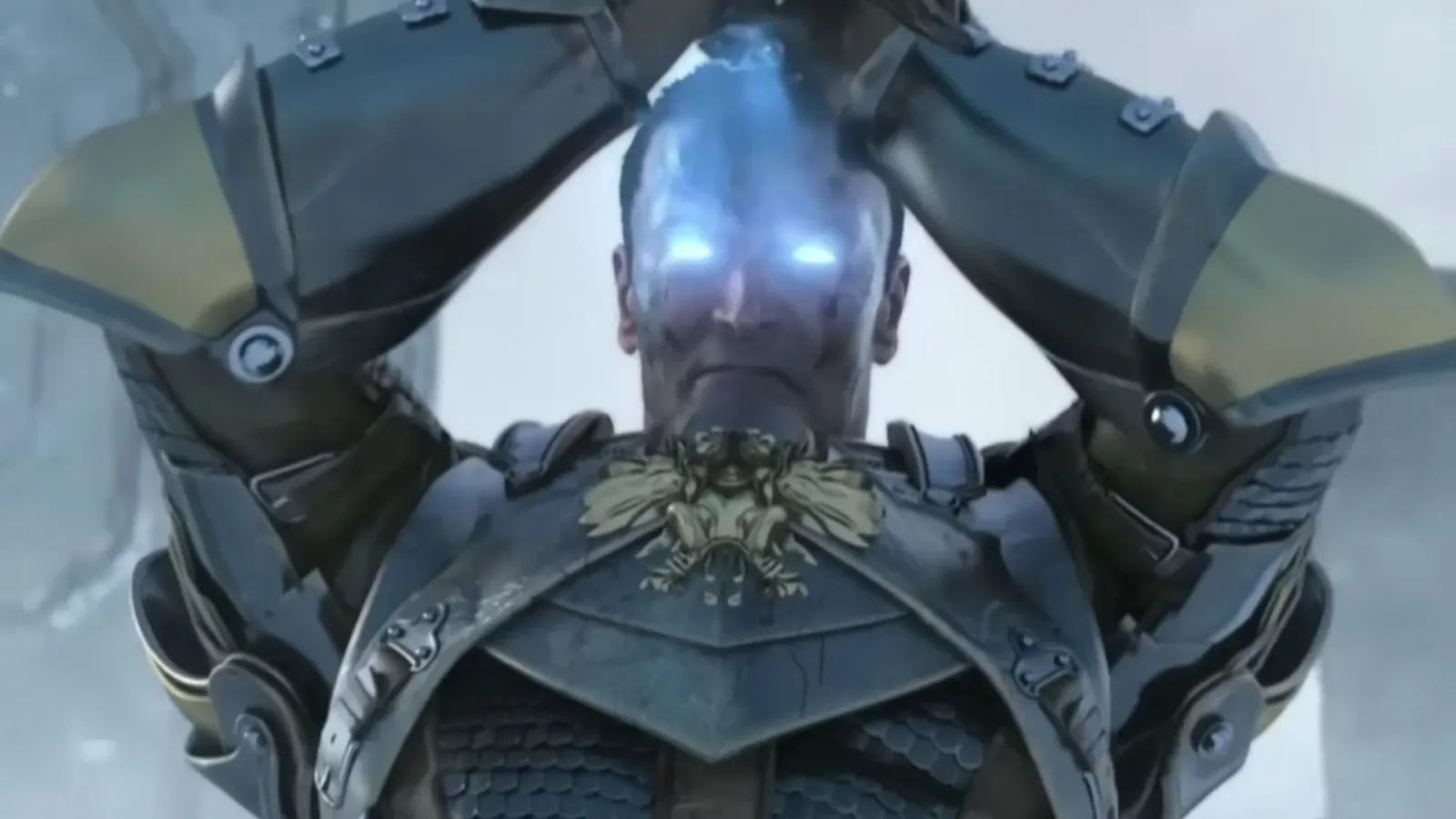
One of Dragon Age: Origins' longest-running debates has received a remarkably direct verdict from someone who helped lead the game's development. Mark Darrah, the former BioWare executive producer and co-director of the 2009 role-playing game, has said he would be inclined to remove or substantially shorten the Fade segment encountered during the Circle Tower storyline.
Responding in a TikTok video to a question about which feature he would remove from each Dragon Age game, Darrah singled out the dreamlike Mage Tower sequence in Origins. His assessment was blunt: he described it as content that has not aged especially well, called it "kind of filler," and said it was completed very quickly near the end of development.
For players who have spent years arguing that the Fade is one of the original game's weakest stretches, the comments are unusually validating. The sequence has remained divisive since launch because it pauses the party-driven adventure, shifts the game into an isolated surreal realm, and asks players to navigate a series of transformations, puzzle spaces, and demon-themed encounters before rejoining their companions.
At the same time, Darrah's remarks do not erase why the section exists or why some players still value it. The Fade gives the player character a direct introduction to a central part of Dragon Age lore: a metaphysical world of dreams, spirits, demons, and magic that influences nearly every major conflict in the series. It also creates an opportunity for character-focused nightmare scenarios and gives the Circle Tower quest a more otherworldly identity than a conventional dungeon crawl.
For useful background on this topic, read Erica Lindbeck Says Taking on Persona 5's Futaba Once Felt Like a "Make-or-Break" Moment.
A famous detour in a famously large RPG
The relevant portion of the game arrives during the quest at the Circle of Magi, commonly known as the Mage Tower. The Warden and their party enter the tower amid a crisis involving demons and abominations. Before the story can reach its conclusion, the player character is pulled into the Fade, separated from the rest of the group, and forced to work through a self-contained sequence built around collecting abilities and opening previously inaccessible paths.
Mechanically, the Fade works differently from much of Dragon Age: Origins. The player gains access to several shapeshifting forms, including forms suited to combat, stealthy movement, and traversal. Progress hinges on swapping between them and returning to earlier areas once a newly acquired power makes a route possible. It is a structure closer to a puzzle-focused adventure than the party-management and tactical combat loop that defines much of the rest of the game.
That departure is exactly what makes the section memorable for some fans. It is strange, tonally distinct, and deeply connected to the setting's supernatural concepts. It also lets the game explore the psychological vulnerability of the player character and companions in a way that ordinary conversations at camp cannot fully replicate.
But for many others, its length and repetition have long overshadowed those strengths. The maps are abstract by design, visual landmarks can feel limited, and the need to revisit spaces with different forms can make the sequence seem more like an interruption than an escalation. Players who came to Origins for companion banter, difficult tactical encounters, choices with political consequences, and the broader Ferelden journey often regarded the Fade as a mandatory obstacle standing between them and the more immediate events at the Circle.
Darrah's criticism focuses on scope and development reality
Darrah did not simply say that he personally disliked the Fade. He framed it as something he would be tempted to either cut altogether or dramatically reduce, specifically identifying the dream-sequence material in the Mage Tower. His comments point to two related concerns: the content's present-day quality and the circumstances under which it was produced.
Calling a section filler does not necessarily mean it contains no narrative purpose. The Fade has obvious lore value, and its existence supports the fantasy framework of the series. Rather, the criticism suggests the sequence may not deliver enough engaging play, story momentum, or character development to justify its size. In a lengthy RPG already filled with major locations, branching decisions, optional quests, and companion material, a weak extended section can stand out sharply.
The note that it was finished rapidly near the end of development is particularly revealing. Large role-playing games are commonly shaped by difficult production trade-offs. Teams must balance narrative ambition, world-building, combat encounters, technical constraints, level design, testing, and the inevitable pressure of deadlines. A late-developed chapter can be especially vulnerable to reduced iteration, even when its premise is strong.
The Fade's broad idea is not hard to understand. A surreal dimension where the protagonist is isolated from the party and must use magical transformations to escape is a fitting concept for Dragon Age. The harder question is whether the final version had the clarity, variety, pacing, and polish needed to make that concept compelling over its full duration. Darrah's answer is clear: in retrospect, he believes it did not.
Why the debate has endured for so long
The controversy around the Fade has lasted because Dragon Age: Origins itself has such a devoted audience. Players revisit the game for its origins, companion arcs, tactical systems, moral choices, and the way its decisions shape later entries. When a game inspires that kind of long-term attachment, individual quests become landmarks. Fans remember the sections they loved, the ones they dreaded, and the moments they believe could have been handled differently.
The Mage Tower is also a particularly conspicuous example because the player cannot simply avoid its main story path. Optional content can be left untouched by anyone who dislikes it. The Fade, by contrast, is embedded in a major questline and must be completed in the standard progression. Its reputation has therefore spread beyond players who engage with every side activity.
Its defenders are not necessarily arguing that every corridor or puzzle is perfect. Many appreciate the sequence for its atmosphere and unusual structure rather than its efficiency. In a genre where many locations are built around familiar combat arenas and quest objectives, the Fade is willing to be opaque, disorienting, and strange. That can be a welcome break for players who enjoy experimentation, especially in a game otherwise rooted in deliberately old-school role-playing traditions.
Yet the case against it has always been rooted in pacing. The wider Circle Tower story carries urgency: mages and templars are trapped in a dangerous situation, demons have taken hold, and allies need help. Being sent into a lengthy detached realm delays that resolution. The contrast between the stakes outside and the prolonged solo detour inside can make the quest feel as though it loses momentum just as it should be accelerating.
A useful lesson for future RPG design
Darrah's retrospective is notable not merely because it settles an old fan argument, but because it illustrates a broader design challenge. Big RPGs benefit from variety, yet variety is not automatically valuable when it interrupts the core experience for too long. A fresh mechanic, alternate visual style, or novel narrative premise still has to earn the time it asks from players.
The Fade offers a clear hypothetical solution: preserve the premise while reducing the footprint. A shorter dream sequence could still introduce the Fade's rules, convey the danger of demons, and deliver the character nightmare material without requiring an extended chain of transformations and revisited rooms. That is close to the alternative Darrah proposed when he said he would dramatically reduce it rather than necessarily remove every part of it.
There is also a distinction between memorable and enjoyable that games creators often have to navigate. The Fade is unquestionably memorable. More than 15 years after Dragon Age: Origins released, it remains one of the game's most frequently discussed areas. But enduring recognition does not always mean the experience is broadly loved. Sometimes a sequence becomes famous because it is ambitious, unusual, frustrating, or all three at once.
For now, there is no indication that the Mage Tower quest is being remade or revised. Darrah's comments are retrospective rather than an announcement of new content. Still, they provide candid insight into how a prominent developer involved with Origins views one of its most contentious design decisions.
Players will almost certainly continue to disagree about whether the Fade's atmosphere and lore justify its runtime. What has changed is that the criticism now carries an especially authoritative voice. Darrah's view is that the sequence was rushed, does not hold up particularly well, and would be a prime candidate for major cuts in a hypothetical revisit of Dragon Age: Origins.
Community
Discussion
Start the conversation.
No comments have been posted yet.