

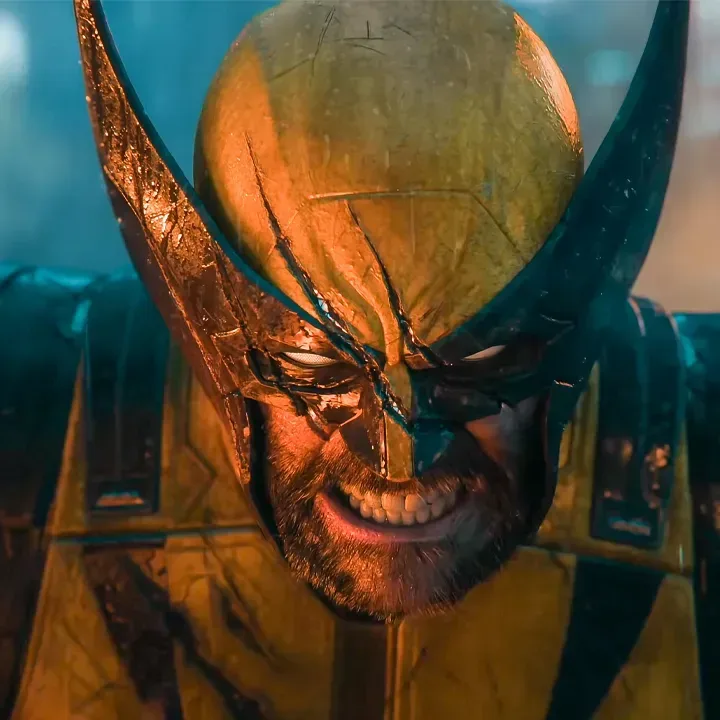
Marvel's Wolverine has become the center of another heated conversation among players, this time over a motorcycle pursuit that some fans say asks remarkably little of the person holding the controller. The sequence puts Logan on a bike racing along a twisting mountain highway, weaving through traffic as he attempts to catch captors transporting a group of mutants. It is staged as an urgent rescue, but player testing has led to a less dramatic discovery: in certain runs, leaving the controller alone can still result in Logan reaching the enemies.
The debate is not simply about whether a single scripted sequence is easy. It has expanded into a broader discussion about what action-game players expect from cinematic chase scenes, quick-time events, accessibility-minded design, fail states, and the difference between a sequence that is guided and one that is effectively on rails. Some players see the motorcycle segment as harmless connective tissue between more substantial combat encounters. Others see it as evidence that the game occasionally favors spectacle over meaningful interaction.
Hands-off tests put the chase under the microscope
The latest argument took off after players began experimenting with the motorcycle sequence rather than playing it conventionally. One especially widely shared test showed Logan left to his own devices after the controller was put down. Instead of immediately crashing or falling behind, he ricocheted off guard rails and continued down the road, eventually making it through the encounter. The image of Wolverine bouncing around the highway and still catching his target understandably drew plenty of jokes.
Embedded X/Twitter post
Embedded X/Twitter post
Embedded X/Twitter post
That does not mean the sequence is completely impossible to fail. Logan can die if he collides with oncoming traffic. In fact, the unusual wrinkle behind much of the discussion is that a player may be more likely to create a fatal collision by actively steering badly than by allowing the game's built-in movement and road guidance to carry the bike forward. The discovery has fueled contrasting interpretations of what the design is actually asking players to do.
For useful background on this topic, read Bungie Denies Rumor That Destiny and Marathon Will Be Combined.
For critics, the hands-off successes make the objective feel cosmetic. They argue that a chase framed around urgency should require consistent control, especially when the game visually emphasizes the danger of threading through vehicles at speed. If the pursuit can sometimes resolve successfully without steering, they contend, the scene risks becoming an extended cutscene with just enough interactivity to create the appearance of gameplay.
Others counter that occasional success without input is not the same as a guaranteed automatic completion. Since collision with traffic can still trigger death and a restart, these players argue that the rider has a genuine fail state and therefore retains a reason to steer. From that perspective, the sequence is a familiar guided action set piece: the game handles the broad progression while the player is expected to avoid the most obvious immediate hazards.
A disagreement over what counts as agency
The strongest reactions have focused on player agency. Brazilian influencer Eloohzinha criticized the sequence as a quick-time-style moment that seemingly does not require the expected button presses or meaningful bike handling. YouTuber ChicoFilo similarly characterized the apparent lack of required input as absurd. Their position reflects a common expectation in action games: if a challenge presents steering, dodging, or pursuit mechanics, players should be able to succeed or fail primarily through their decisions.
For another perspective on this story, read Marvel's Wolverine Motorcycle Chase Is Fueling a Player-Agency Debate as Fans Test the Hands-Off Route.
On the other side, YouTuber Mightykeef argued that the ability to die means the segment should not be described as autopilot. The argument is straightforward: a player can be hit, die, and have to repeat the section, so there is at least some functional reason to take control. Supporters of this view also point out that highly directed vehicle, chase, and escape sequences have appeared across action games for years. Not every scene is intended to be a full driving simulation or a mechanically demanding test.
Critics have responded that this misses the point. Their objection is not that death is literally impossible under every circumstance; it is that successful hands-off runs have been demonstrated, including on different difficulty settings. In their view, the question is whether a player's input materially determines the outcome often enough to support the drama the scene is trying to create. A theoretical failure state, they say, is less persuasive when the safest path can look like doing nothing.
Both readings can coexist because players value different things in these sequences. A cinematic action game may use a guided chase to maintain pacing, ensure camera readability, preserve animation quality, and prevent a story-critical mission from becoming a frustrating roadblock. But players who came expecting the pursuit to test reflexes and spatial awareness can understandably feel disappointed when the game appears to solve much of the problem for them.
The motorcycle sequence joins wider criticism and praise
The bike discussion has arrived amid an already mixed reception to Insomniac's superhero game. Even before release, early footage prompted debate over several design choices. Some viewers objected to the structure of a Sentinel boss encounter, while others questioned the voice direction. Logan's scent-based tracking was also criticized by some as overly guided, with detractors worrying that it would turn exploration and investigation into a series of obvious markers rather than player-led discovery.
Now that more players have spent time with the game, opinions have remained varied. Many fans are enjoying Wolverine's portrayal, its character-focused moments, and its brutal visual style. Others have been less impressed by the combat over longer sessions, while difficulty has become another recurring point of disagreement. Alongside the motorcycle chase, some players have raised concerns about quick-time events they believe are too forgiving or impossible to fail.
That split is important context for the chase controversy. To someone pleased with the game's character work and major action scenes, a brief highway passage may seem like a tiny issue inflated by social media clips. To someone already concerned that combat, navigation, and scripted events lack resistance, the same footage can reinforce a broader concern: that the game does not demand enough from the player outside selected fights.
Difficulty perceptions also vary enormously depending on where someone is in the campaign and how they approach combat. The Omega Red boss fight, for example, has challenged a number of players online, suggesting that the game is not uniformly passive. One guided chase that permits lenient outcomes does not necessarily establish the overall difficulty of the campaign. At the same time, individual moments matter. A high-profile set piece is likely to be judged more harshly when its presentation promises danger but its systems appear to reduce that danger.
Why guided set pieces are so divisive
There is a practical design reason developers often build safety nets into chases. Vehicle sequences can become frustrating very quickly if camera angles are dramatic, roads are narrow, traffic behavior is unpredictable, and failure forces a lengthy replay. A protagonist who subtly self-corrects, retains momentum after hitting barriers, or receives generous collision handling can keep the scene moving and protect its intended pacing.
For Wolverine in particular, a degree of resilience is thematically fitting. Logan is not an ordinary motorcyclist; he is a nearly indestructible mutant whose healing factor makes him an ideal lead for reckless, high-speed action. Yet the character fantasy does not entirely settle the mechanical issue. Players can accept Wolverine shrugging off impacts while still wanting their steering, evasive maneuvers, and route choices to matter.
The best guided sequences tend to make that balance clear. They can assist with broad movement while leaving distinct hazards, alternate lines, score goals, damage consequences, or timing decisions in the player's hands. When feedback is clear, players understand whether they are meant to enjoy a spectacle, master a challenge, or do both. Confusion grows when the visual language says "dangerous pursuit" but hands-off tests suggest the underlying systems are unusually forgiving.
There is also a difference between accessibility and absence of challenge. Generous assistance can allow more people to experience an important story scene without repeated failure, which is valuable. But accessibility features are most satisfying when players can understand and select the level of help they want. The current debate shows that some Wolverine players would prefer more transparent options: a cinematic setting for those who want a smooth ride, and a more demanding variant for those who want the bike sequence to require careful handling.
The argument will likely continue
For now, the motorcycle pursuit remains a compact but revealing flashpoint. It is possible for Logan to die after meeting oncoming vehicles, so descriptions of the entire scene as completely consequence-free leave out a key detail. It is also clear that some players have completed it while barely participating, which gives the criticism real weight. The disagreement is less about whether the clip exists than about what that outcome means for the quality of the encounter.
Players who are curious about the matter will ultimately need to judge the sequence in motion and in context with the rest of the campaign. Some will see a brisk, appropriately forgiving transition between larger fights. Others will see a missed opportunity for a tense chase worthy of Wolverine's frantic rescue mission. Either way, the viral controller-down experiments have ensured that one short stretch of mountain highway has become one of the game's most closely scrutinized moments.
Community
Discussion
Start the conversation.
No comments have been posted yet.