

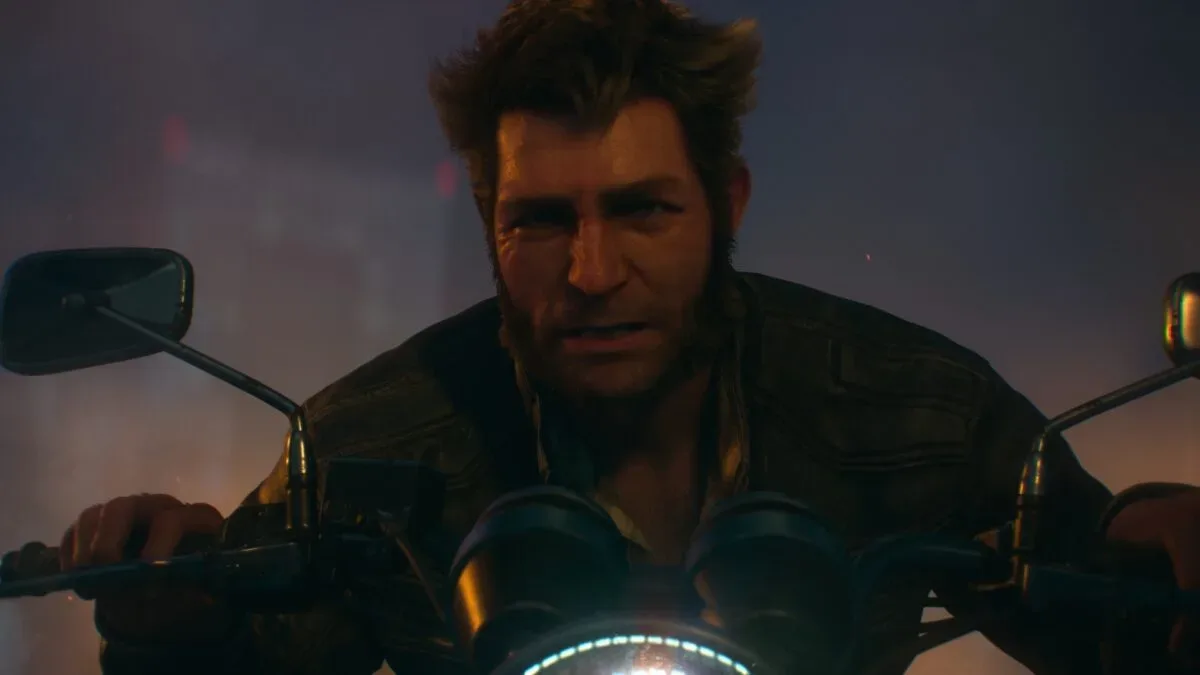
Marvel's Wolverine has only been available for a day, but one particular action sequence is already fueling a broad debate about player control. Footage circulating online shows Logan riding through a motorcycle pursuit while the player leaves the controller untouched. Rather than immediately crashing or stopping, Wolverine can apparently bounce off guardrails, correct his path, and eventually arrive at the sequence's endpoint on his own.
For players frustrated by that apparent lack of involvement, the clip has become a concise example of a larger criticism aimed at Insomniac's superhero action game: that parts of the experience can feel overly guided. The motorcycle segment is not the only point of contention. Players have also been discussing the game's quick-time events, many of which appear to continue successfully even when prompts are missed or incorrect buttons are pressed.
That does not mean every missed input is wholly consequence-free, nor does it mean Wolverine lacks demanding encounters. Its close-range hack-and-slash combat can become difficult when enemies surround Logan. But the viral chase has brought a familiar question back to the forefront: when an action game presents dramatic stunts, how much of the outcome should depend on the person holding the controller?
Embedded X/Twitter post
Embedded X/Twitter post
A chase sequence that can steer itself
The disputed moment comes during a motorcycle chase in which Logan pursues a truck carrying captive mutants. The intended interaction is straightforward: players can steer left or right around traffic and corners, while also receiving options to accelerate and brake. In a conventional chase sequence, failing to respond to hazards would presumably lead to a crash, lost time, or a reset.
For useful background on this topic, read Backrooms Level X PS5 Deluxe Edition Gets Physical Launch Date.
Players experimenting with the section have found that it can behave differently. If Logan collides with a guardrail, he can ricochet away from it and drift back toward the route. In clips now being shared widely, this behavior is enough for Wolverine to navigate the course and finish the pursuit without any active steering. He may sustain impacts along the way, but he does not necessarily encounter a failure state.
There is still a way to lose the sequence. A head-on collision can send players back to a checkpoint. Yet one irony repeatedly raised in the discussion is that manual control may make that outcome more likely. A player attempting to weave through hazards can steer directly into oncoming traffic, while a hands-off run may allow the automatic correction behavior to keep Logan broadly pointed in the right direction.
Damage also appears to carry limited long-term weight in this particular situation. Wolverine's healing factor activates during the level, helping him recover from many of the impacts he takes. That combination--route correction, forgiving collisions, and regeneration--has led some players to conclude that the chase is designed more as an animated spectacle than a meaningful driving challenge.
Quick-time events are under similar scrutiny
The motorcycle footage has landed after early concerns about Wolverine's overall level of guidance. Some players have objected to its linear progression and an objective-tracking scent trail that directly points Logan toward his destination. Those elements are not unusual in a modern action adventure, especially one focused on cinematic pacing, but they have made some players especially sensitive to moments where they feel the game reduces the need for engagement.
Quick-time events have become the most visible extension of that concern. Several of Wolverine's cinematic prompts ask players to press buttons while Logan performs attacks, escapes danger, or carries out flashy stunts. However, in a number of sequences, the scene can reportedly unfold much the same way if players fail to react in time--or choose not to press anything at all.
The distinction matters because quick-time events traditionally came with obvious fail states. Older action games often used them as high-pressure tests: miss a prompt, press the wrong command, and the character could fall, be captured, take heavy damage, or trigger an immediate game over. Wolverine appears to take a softer approach in portions of its campaign, preserving momentum and the broader cinematic scene even if the prompt is not completed.
There can be small differences. In an arm-wrestling scene involving Sabretooth, for example, ignoring prompts may prevent Logan from seeming to gain the upper hand. More importantly, missed QTEs are not always entirely irrelevant. In certain cases, Logan can take damage that would have been avoided with successful inputs. That lost health could matter later, particularly before a combat encounter where being worn down puts the player at a disadvantage.
So the criticism that every QTE has zero effect overstates the case. The more precise complaint is that many of them do not stop the action or substantially alter its direction when they are failed. For players who value the possibility of immediate failure, that can make the prompts feel cosmetic rather than interactive.
Autocomplete is not the whole explanation
Wolverine includes a QTE autocomplete feature among its accessibility settings, an option intended to let more people experience the game without being blocked by rapid reaction requirements. Such settings are an important part of modern game design, particularly for players with motor, timing, or other accessibility needs.
But the examples at the center of the current conversation are not solely the result of that setting. The behavior being highlighted can occur even when QTE autocomplete is not enabled. In other words, the issue for critics is not that an accessibility feature exists; it is that the base design of certain scenes may already be highly forgiving by default.
That distinction is essential. Accessibility options give individuals control over how they play. A sequence that resolves itself for every player, regardless of their selected settings or input, is a separate design decision. The two ideas can overlap in practice, but they should not be treated as identical.
Supporters of Wolverine's approach may argue that avoiding abrupt failures keeps the game's story and action moving. Not every player enjoys replaying a cinematic sequence because a button prompt was missed by a fraction of a second. Health damage, rather than an instant reset, can also create a more gradual consequence: an error during a set piece may not end the scene, but it can make the next fight harder.
Critics counter that this only works if the damage is substantial enough to create actual pressure. If regeneration rapidly erases the cost, or if the player can reach the ending while doing nothing, the scene risks becoming a cutscene wearing the clothing of gameplay. That perception is particularly difficult to overcome when the game visibly displays prompts that appear to demand attention but do not meaningfully require it.
Why the debate matters beyond one motorcycle ride
The reaction is ultimately about more than a single chase or a handful of button prompts. It reflects competing expectations for big-budget superhero games. Insomniac's earlier Spider-Man titles were known for traversal that placed players directly in control of swinging through a large city. Wolverine scales back that open-world style of movement in favor of a more linear structure, putting greater emphasis on set pieces, combat arenas, and story-driven progression.
For some players, that change is welcome. A focused campaign can support stronger pacing, more deliberate environments, and a clearer character arc. Logan is also a different kind of hero from Spider-Man; a grittier, more contained action game can be a natural fit for his violent close-quarters style.
For others, the motorcycle sequence represents the danger of leaning too far into cinematic presentation. The stakes of an action scene often come from the possibility that the player might fail. Dodging a car, nailing a prompt, or maintaining control through a difficult route can make success feel earned. If the game's systems ensure that the hero escapes danger regardless, players may still enjoy the animation, but they may not feel responsible for the outcome.
This is also part of a continuing conversation around PlayStation's prestige, movie-like storytelling style. Spectacular performances, elaborate animation, and carefully directed scenes are valued by many players. At the same time, a segment that appears to remove the player from the equation can draw sharp scrutiny from those who prioritize mechanics, challenge, and expressive control over presentation.
Combat remains the major counterpoint
It is worth keeping the criticism in perspective. The motorcycle ride and forgiving QTEs do not define every system in Marvel's Wolverine. The game's combat can put significant pressure on players, especially when Logan is overwhelmed by multiple opponents. In those fights, positioning, timing, aggression, and survival matter far more than simply watching an automated animation play out.
That contrast may explain why the disputed sequences stand out so strongly. When players are asked to actively manage a chaotic brawl, they expect the same agency from a high-speed chase or a life-or-death stunt. The more demanding the core combat feels, the more conspicuous a largely automated cinematic section can become.
Whether the motorcycle scene is seen as an accessibility-minded bit of spectacle or a disappointing loss of control will likely depend on what each player wants from Wolverine. The footage does demonstrate that at least some of its most dramatic moments can be completed with very little participation. What it does not prove is that the entire game lacks challenge or consequences.
Still, the reaction shows why even brief sequences matter. In an action game built around an iconic hero, players do not only want to see Logan survive impossible odds. Many want to be the reason he does.
Community
Discussion
Start the conversation.
No comments have been posted yet.