

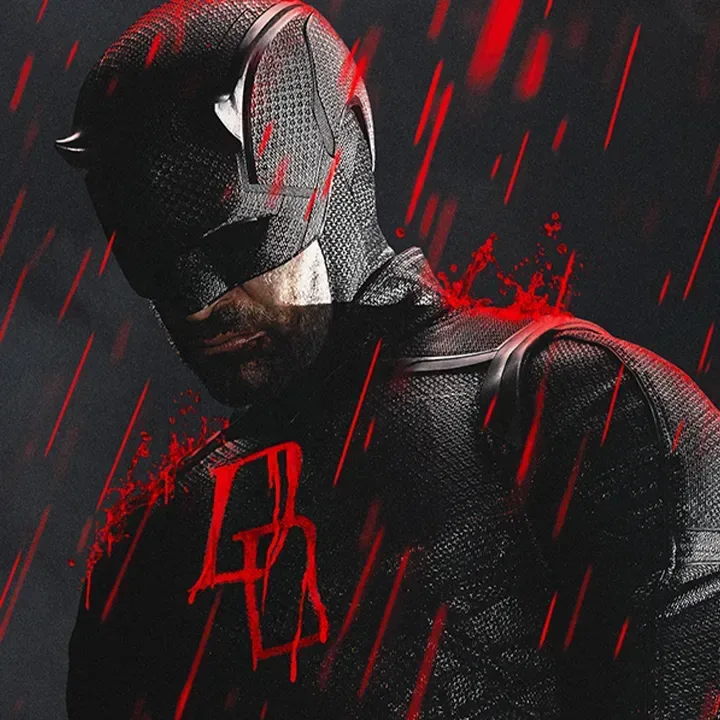
Daredevil: Born Again is set to conclude with its third season, and Marvel Television chief Brad Winderbaum has described that endpoint as part of the plan rather than an abrupt cancellation. The clarification arrives after the announcement that Season 3 would be the final season surprised many viewers, particularly because previous public comments had suggested a much longer future for the series.
Speaking on The Brandon Davis Show, Winderbaum said the intention had always been for the revived Daredevil story to reach its culmination in Season 3. He compared the structure of the revival to the earlier Netflix-era series, which also ran for three seasons. In his view, the two productions can be seen as matching sets of collected character stories: two separate three-volume runs that sit alongside one another before Marvel decides where Matt Murdock goes next.
That distinction matters for fans worried that the character is being removed from the Marvel Cinematic Universe entirely. A final season of Born Again does not necessarily mean a final appearance for Daredevil. Winderbaum's comments suggest Marvel intends to pause after the current arc, assess the next step, and then determine how the character may fit into future projects.
A planned ending, not necessarily an ending for Daredevil
Winderbaum's latest explanation presents Season 3 as a designed conclusion for this particular show. The language leaves room for a future project with Charlie Cox's Daredevil, whether that means another series, a guest role, a larger crossover, or a format that has not yet been announced.
For useful background on this topic, read Steven Ogg Is Warming to GTA 6 After Years of Keeping His Distance From GTA 5.
Marvel has increasingly treated its television projects as pieces of a wider franchise rather than self-contained programs that must continue indefinitely under the same title. That approach can give a character an ending while preserving the possibility of a new beginning elsewhere. For Daredevil, it is especially relevant: Matt Murdock has a long comic-book history, a strong supporting cast, connections to street-level Marvel heroes, and obvious potential within the larger MCU.
The three-season framing also gives Born Again a clearer identity. Rather than being viewed solely as an open-ended continuation of the Netflix show, it can be understood as a distinct chapter with its own beginning, middle, and conclusion. Winderbaum's comparison treats the original three seasons and the new three seasons as complementary runs, not as one uninterrupted six-season production.
That may reassure audiences who remember how the original Daredevil ended. Its Netflix cancellation came unexpectedly, catching both viewers and people involved with the production off guard. The abrupt nature of that conclusion became a major part of the show's legacy, and it helped fuel the fan enthusiasm that eventually accompanied Cox's return as the Man Without Fear.
Earlier comments created a different expectation
The idea that Daredevil: Born Again was always meant to stop after Season 3 sits uneasily beside Winderbaum's comments from 2025. Ahead of the first season, he discussed an annual model in which new seasons would arrive every March. At the time, he said Season 2 was expected the following year, followed hopefully by a third season and then further seasons beyond that.
Those remarks made it reasonable for viewers to imagine the show continuing for years. Winderbaum also emphasized the storytelling potential of New York's street-level corner of Marvel, describing it as a rich setting with many stories still available to tell. For a character such as Daredevil, whose comics have supported decades of crime drama, legal intrigue, personal conflict, and superhero action, the thought of an extended annual series seemed plausible.
The newer statement changes the emphasis. It is possible that Marvel's internal plans evolved during development of the third season, even if the present message is that the creative shape was built around a three-season finish. Entertainment productions routinely shift as scripts develop, schedules change, creative teams refine larger franchise plans, and companies evaluate how individual projects fit their broader strategies.
What Winderbaum's newest comments do make clear is that Season 3 was not presented as a surprise stoppage after production had already completed. That is an important difference from the Netflix cancellation. The current team appears to have had an opportunity to approach the third season as a finale, giving the story a chance to land deliberately instead of ending on an unresolved business decision.
Charlie Cox points to a more supported finale
Charlie Cox has also indicated that the current situation feels different from the end of the original series. During New York Comic-Con, Cox said there had been more planning and emotional support this time around. His comments suggest that cast and crew were informed that Born Again would serve as a finale, allowing them to process the conclusion and prepare for it creatively.
That preparation can be vital for a serialized drama. A final season has the opportunity to resolve character arcs, revisit relationships, and give conflicts an endpoint that feels earned. Daredevil's world is populated by characters whose stories are tightly intertwined with Matt's: friends, legal colleagues, adversaries, vigilantes, and figures from the criminal underworld. A planned final chapter can decide which of those relationships need closure and which should remain open for future MCU appearances.
It also gives viewers a different reason to watch Season 3. Rather than simply waiting to see whether another renewal is possible, the audience can approach the season as the culmination of the Born Again run. That does not eliminate disappointment for fans who hoped for a longer annual series, but it gives the final season a defined narrative purpose.
The MCU future remains uncertain
There is still no confirmed next project for Daredevil beyond Born Again. Cox has been candid about that uncertainty. When asked whether he might be finished as the character, he said he did not know and acknowledged that it could be possible. At the same time, he encouraged supporters to keep the long-running Save Daredevil fan campaign energized.
The actor's reference to the campaign is significant. Fan advocacy was a visible part of the conversation after the Netflix show's cancellation, and Daredevil's eventual MCU return demonstrated that the character retained considerable interest. Cox's portrayal has become central to that enthusiasm, making any future decision about the hero especially closely watched.
One crossover remains a frequent wish among fans: Daredevil and Spider-Man sharing a substantial MCU story. Matt Murdock has already entered Spider-Man's orbit on screen, but audiences continue to hope for a fuller team-up between the street-level hero and Peter Parker. The pairing has deep comic-book roots, and it would allow Marvel to connect neighborhood-scale stakes with one of its biggest film characters.
For now, however, that remains a fan hope rather than an announced plan. Marvel has not confirmed a new Daredevil series, a film appearance, or a Spider-Man collaboration after Season 3. The only firm point is that Daredevil: Born Again is being positioned as a three-season story.
What the three-season model could mean
There is a practical appeal to the model Winderbaum described. The original Daredevil can stand as one complete trilogy, while Born Again becomes another. That structure offers newcomers a manageable way into the character's live-action history and gives established fans a pair of substantial runs rather than a single series that ends without a planned stopping point.
- The Netflix-era Daredevil remains a three-season story.
- Daredevil: Born Again is now being framed as its own three-season story.
- Season 3 is intended to conclude the Born Again chapter.
- No future Daredevil MCU project has been officially confirmed.
Whether Marvel ultimately returns to Daredevil quickly or lets the character rest for a while is still unknown. The end of a show title does not have to mean the end of its hero, particularly in a connected universe built around recurring characters and crossover opportunities. For Matt Murdock, the next move may depend on what kind of story Marvel wants to tell after this six-season live-action legacy is complete.
Until then, the message from Marvel Television is that viewers should regard Season 3 as a destination. Daredevil: Born Again is not being presented as a series cut short without warning, but as a defined three-part run intended to bring this version of the saga to a close. What follows for the Man Without Fear remains unresolved--and that uncertainty will keep the campaign for his next appearance alive.
Community
Discussion
Start the conversation.
No comments have been posted yet.