

Generative AI has become one of the most urgent issues facing performers across games, anime, film, and television, but Japan's voice acting community is making its position increasingly clear: an actor's voice cannot simply be treated as raw material for a machine.
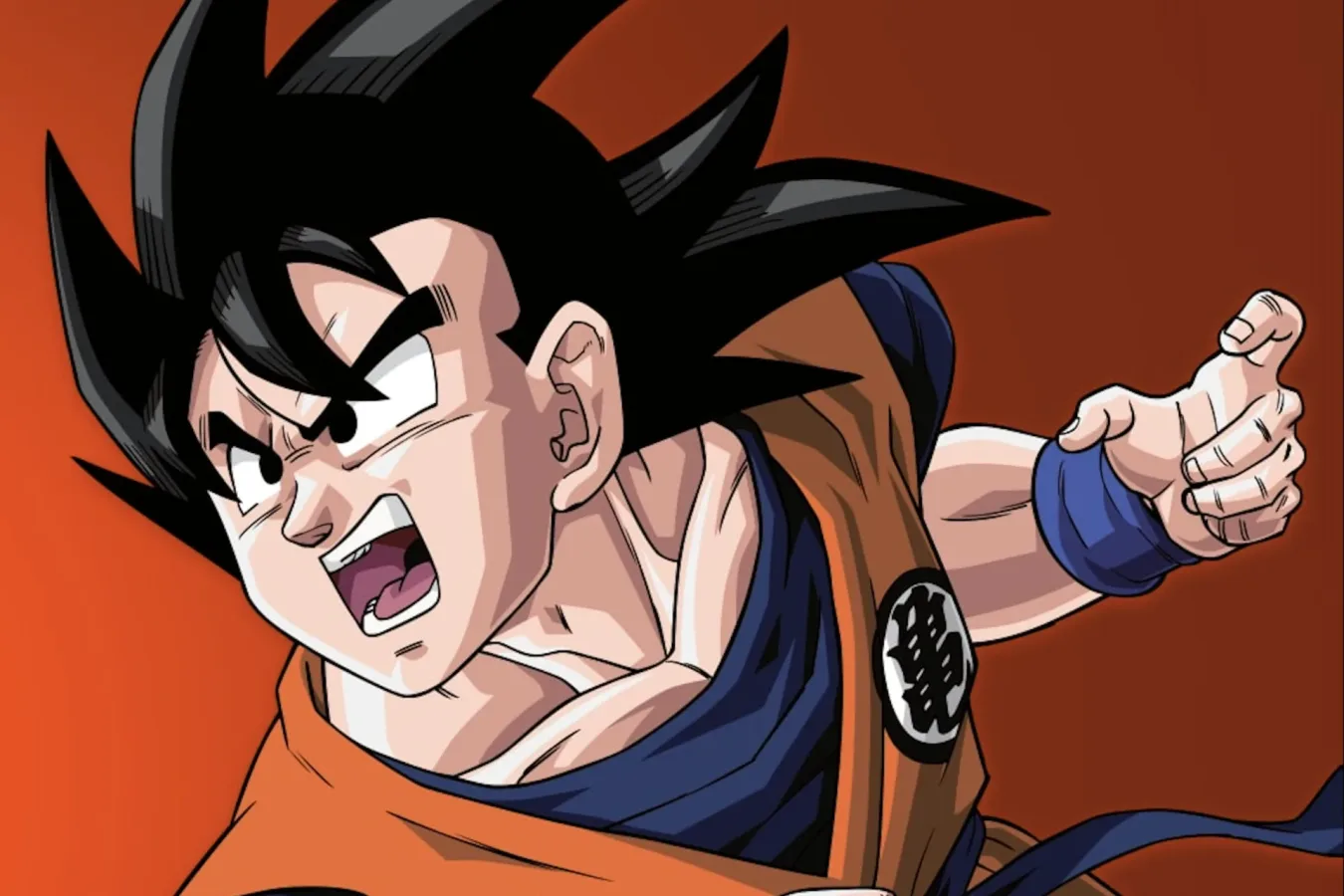
Masako Nozawa, the legendary performer most closely associated with Goku in the Dragon Ball franchise, has spoken out forcefully against the unauthorized replication of her voice through AI. Her comments arrived as the Japan Actors Union, or JAU, introduced a first set of guidelines intended to establish protections around AI-generated voice recordings and the use of performers' vocal data.
"I can't forgive them for using it without my permission," Nozawa said during a press conference covered by Japanese broadcaster NHK. "It makes me really angry, it's no different than theft."
Nozawa's position centers on an idea that has become fundamental to the wider debate over generative technology: a voice is not merely a sound that can be extracted, copied, and redistributed. It is part of the performer's work, identity, craft, and livelihood. "My voice is mine, as are my performances," she said, adding that anyone wishing to use them, even in a limited capacity, should ask permission first.
For useful background on this topic, read Clive Barker Says Hellraiser: Revival Pushed Further Than He Expected.
The actor also said that an AI version of her voice she had heard lacked "heart," underscoring the artistic concern behind the legal and economic arguments. For many performers, the question is not only whether a synthetic voice can resemble a real person's delivery. It is also whether the technology can capture the intent, experience, emotion, and choices that give a performance meaning in the first place.
New guidance focuses on consent at every stage
The JAU's guidelines address audio made with technology that reproduces actors' voices. Their scope includes voice synthesis as well as the use of recordings for deep learning, machine learning, and related AI processes.
The central principle is straightforward: companies seeking to replicate a performer's voice should obtain that performer's consent at every stage. That means a voice cannot be fed into a training system merely because recordings already exist in public broadcasts, games, anime, advertisements, or online clips. If an AI developer wants to use an actor's vocal performance as training material, the actor's permission is required.
The guidance also treats approved AI-generated use of a voice as a form of performance. Under that framework, performers should receive payment in the form of salaries, royalties, or both when their authorized synthetic voice is used. This is particularly significant for voice actors whose work can be reused at scale once a model has been trained.
Without protections like those proposed by the union, a single session of recorded dialogue could potentially be transformed into a resource that generates countless new lines without the actor's involvement. That possibility raises difficult questions for game localization, live-service titles, anime productions, dubbed releases, virtual assistants, advertising, and social media content. A performer could be hired once, then find that future work associated with their voice has been automated away.
The JAU represents around 2,600 actors and voice actors. Its guidelines are among the earliest efforts in Japan to set out a dedicated approach to generative AI voice recordings, placing the union's recommendations at an important moment for the country's entertainment industries.
Why the issue matters deeply to games and anime
Voice performers are essential to the identity of major game and anime characters. In many cases, a distinctive voice becomes inseparable from a role over years or even decades. Fans recognize a returning performer immediately, and developers often rely on that familiarity to establish continuity between sequels, adaptations, crossover games, animated projects, and promotional appearances.
That connection can make unauthorized cloning especially damaging. A synthetic imitation may lead audiences to believe that an actor endorsed, performed, or was paid for material they had no connection to. It can also be used in ways that undermine the actor's reputation, including fabricated dialogue, misleading videos, scams, or content that clashes with the tone of the franchise they are known for.
For performers such as Nozawa, whose work has shaped one of anime and gaming's most internationally recognizable heroes, the concern carries added weight. Goku has appeared across a vast range of animated series, films, games, merchandise campaigns, and other media. The character's Japanese voice is a core part of that legacy, not an interchangeable technical asset.
AI voice generation is also advancing in ways that make misuse easier to spread. A convincing sample can be posted, copied, edited, and reuploaded rapidly, particularly on social platforms. The speed and scale of that distribution can make it difficult for actors to identify every unauthorized use or to pursue remedies before misleading material has already reached a large audience.
Japanese actors have been organizing against voice misuse
The new JAU guidance did not emerge in a vacuum. Japanese voice actors have been publicly challenging unauthorized AI replication for several years. In 2024, a group of performers established an organization focused on protesting AI voice misuse, pointing in particular to the limited copyright protections available for voices themselves.
That distinction remains a major complication. Traditional copyright law can protect many recorded works, scripts, and creative expressions, but legal treatment of a person's individual vocal identity can be less direct. As AI systems become more capable of producing soundalike performances, actors and unions are pushing for rules that recognize the value of voice likeness, consent, and ongoing compensation.
Kenjiro Tsuda, known for roles in properties including Attack on Titan, Chainsaw Man, and Yu-Gi-Oh!, has also confronted the problem publicly. Tsuda brought legal action involving TikTok over the spread of videos that used his voice. The case was dismissed after the videos were removed, but the dispute illustrated how quickly an actor's voice can be incorporated into user-created material and how uncertain the available remedies can be.
Not every performer rejects AI under every conceivable condition. Some actors have supported systems that would allow private, licensed voice replication. That distinction is crucial. The growing argument is not necessarily that synthetic voice tools can never be used, but that use must be negotiated rather than assumed. Consent, clear limits, control over context, and fair payment are the standards performers want applied.
Such an approach could leave room for carefully managed uses while rejecting the notion that studios, AI companies, or online users can train on an actor's voice and create new performances without approval. It could also give actors more agency in deciding whether their voices are used for accessibility tools, archival projects, limited promotional material, personal applications, or other purposes.
A signal during Japan's broader AI policy debate
The union's announcement comes while Japan is facing wider questions about generative AI, including copyright infringement and cyberattacks. The technology has been embraced enthusiastically in some parts of the country, but that acceptance has not removed concerns from creative professionals whose images, writing, art, and voices can be incorporated into AI systems.
In that context, the JAU's guidance serves as both a practical proposal and a statement of principle. It asserts that voice actors should be participants in decisions about AI, rather than people whose work is harvested after the fact. The recommendation to seek consent at every stage is particularly broad, because it applies not only to the public release of generated audio but also to the earlier process of building the system that can produce it.
Whether these guidelines become standard practice will depend on adoption by production companies, technology firms, agencies, and other employers. They are not the same as national legislation, and they do not by themselves resolve every legal uncertainty surrounding AI training. Still, guidance from a union representing thousands of performers can influence contracts, negotiations, production policies, and public expectations.
The debate will matter beyond Japan as well. Game development and anime production are global industries, and performances frequently move across borders through localization, streaming, mobile games, international marketing, and fan communities. Standards developed for Japanese performers may inform discussions elsewhere, especially as unions and actors in multiple countries seek stronger control over digital replicas.
Human performance remains the central issue
At the heart of Nozawa's remarks is a point that reaches beyond any one franchise or technology company. A voice performance is more than a collection of audio patterns. It reflects timing, interpretation, memory, physical expression, professional skill, and a human relationship with a character and audience.
AI can imitate the surface of that work, sometimes with startling accuracy. But the industry now has to decide who gets to authorize that imitation, who benefits from it, and what happens when a digital copy competes with the person whose work made it possible.
The Japan Actors Union's answer is built around consent and compensation. Nozawa's response is even more direct: using an actor's voice without permission is unacceptable. As generative AI becomes more embedded in entertainment production, that clash between technological capability and performer rights will only become more consequential for games, anime, and the people who bring their most beloved characters to life.
Community
Discussion
Start the conversation.
No comments have been posted yet.