

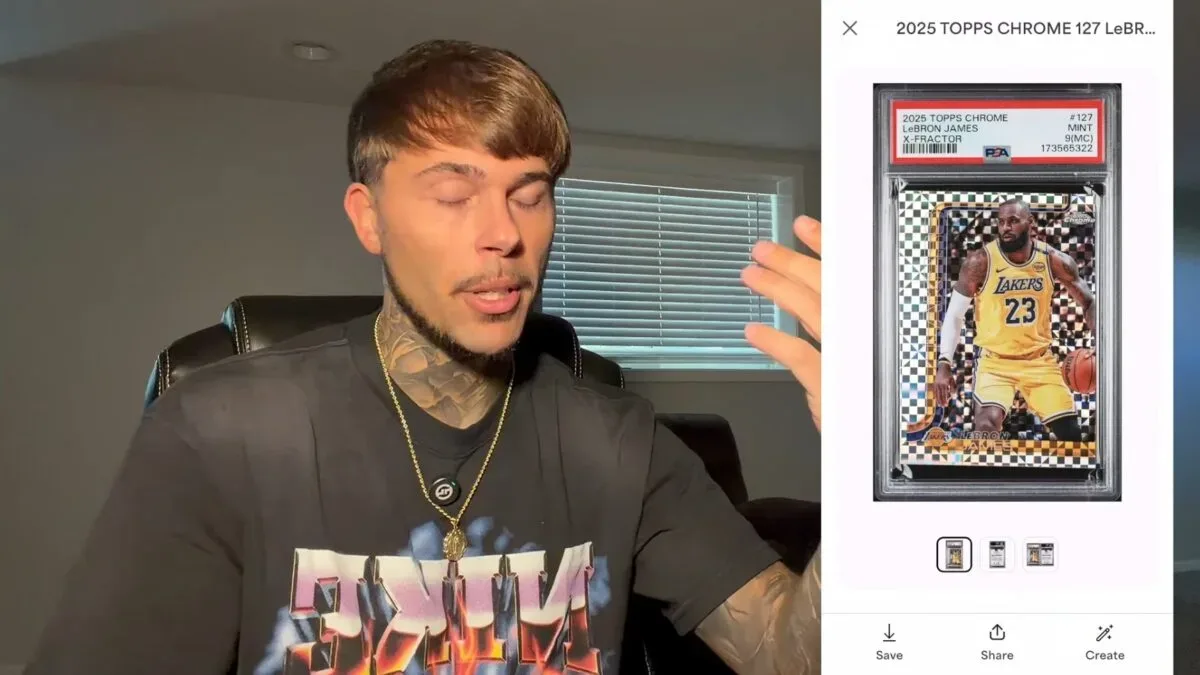
A card collector known as Sky-B says a major PSA submission containing roughly $100,000 worth of cards was stolen after a third-party shipping vehicle was burglarized following its departure from the grading company's Southern California facility. The loss is not simply a matter of replacing a few collectibles. For Sky-B, the shipment represented more than two years of hunting, buying, evaluating, and preparing cards for grading.
The incident is a sobering reminder of the risk that sits behind the booming market for trading cards. Pokémon, sports cards, One Piece, Magic: The Gathering, and other collectibles have become increasingly valuable, while professional grading has become a central part of how collectors establish condition and potential resale value. That process requires collectors to place often-irreplaceable cards in the hands of shippers, grading companies, and insurers. When something goes wrong between those steps, even a strong insurance policy can leave collectors arguing over what their cards were actually worth.
A devastating update after a major grading submission
Sky-B shared the news with followers after receiving an email from PSA stating that a FedEx truck leaving the company's facility had been burglarized. The collector's order was reportedly among those affected by the theft. PSA said that the items were not in its possession when the burglary occurred, but indicated that it would work with the affected customer to resolve the situation.
Embedded X/Twitter post
Embedded X/Twitter post
Sky-B had submitted a broad collection for grading and estimated its value at $100,000. The collector said approximately $8,000 had been spent on grading fees alone. The cards were insured for as much as $156,000, but the key challenge now is likely to be determining fair market value on an item-by-item basis rather than simply relying on the amount paid for insurance.
For useful background on this topic, read Masako Nozawa Condemns Unauthorized AI Voice Use as Japan Actors Union Sets New Guidance.
That distinction matters greatly in the high-end card market. A card's worth can vary depending on condition, scarcity, current demand, serial number, player performance, recent sales, and the ultimate grade it receives. Since the stolen cards were being sent for grading, many may not have had their final PSA grades at the time they disappeared. A collector can believe a raw card was likely to earn a PSA 10, but an insurance settlement may require evidence beyond an expected grade and an optimistic projection.
Projected top grades complicate the value question
In a video discussing the incident, Sky-B reviewed several of the more valuable cards from the missing submission and explained what they could have been worth at high grades. Among them was a Tyrese Maxey card that Sky-B estimated could carry a PSA 10 value of $1,911. Another was a Caleb Williams card estimated at around $1,500 in PSA 10 condition.
Those examples illustrate why the situation is especially painful for collectors sending cards to a grading service. Grading is meant to establish a card's condition, encapsulate it in a protective holder, and provide a trusted certification that can make it easier to sell. Yet the period before the grade is finalized can be full of uncertainty. The card may be worth one amount as a raw copy, another as a PSA 9, and considerably more as a PSA 10.
PSA told Sky-B that compensation would be handled under its terms and conditions, based on fair market value up to the Maximum Insured Value, or MIV, selected for each item. The company said it would contact the collector again to begin that process while it works with local law enforcement in an attempt to recover the stolen property.
Sky-B has expressed concern that the settlement process could produce values below what the cards might have commanded after receiving strong grades. The collector also questioned whether PSA would fully account for cards where grading fees may not have reflected the highest possible value tier. That is a familiar anxiety in collectibles insurance: owners may insure an object for a substantial amount, only to discover that proving the precise value after a loss is its own difficult task.
Other collectors report missing rare cards
The shipment theft may have affected more than one major collection. Other collectors have publicly suggested that their cards were in the burglarized vehicle, including a reported Smaug the Magnificent card and a PSA 10 Zoro card from One Piece. The latter is particularly notable because highly sought-after, authenticated anime and trading-card-game collectibles can command significant premiums.
There has been speculation that the total value of the stolen cards could exceed $1 million, though the full value of the haul has not been confirmed. Until investigators identify the full shipment and recover or account for its contents, any total remains uncertain. Even so, the apparent number of rare and serialized cards involved gives the theft a potentially wide impact across several collecting communities.
Rare cards can be difficult to sell openly once their serial numbers, certification numbers, or identifiable characteristics are known. That does not erase the damage to the owners, but it can improve the odds that suspicious listings are flagged. A thief attempting to move distinctive collectibles through established marketplaces, card shows, or reputable dealers risks attracting attention from buyers who recognize the item or notice that it has been reported stolen.
PSA says certificates have been deactivated
PSA said it is aware of the theft involving a third-party shipping vehicle carrying PSA-graded items and is cooperating with law enforcement and the carrier while the investigation continues. The company also said it has deactivated certificates connected to the stolen cards and notified marketplace partners to watch for rare and serialized items.
Certificate deactivation is an important protective measure in the graded-card ecosystem. PSA's certification information is frequently used by buyers to verify that a card was graded and to check its associated details. Marking certificates tied to stolen cards can make it harder to present those items as ordinary, cleanly transferable collectibles. It also gives prospective buyers, dealers, auction businesses, and marketplaces a reason to investigate before completing a sale.
Still, deactivation cannot fully restore what was lost. Some cards may have immense personal value beyond their market price, especially if they were pulled by the owner, acquired after a long search, or selected as part of a carefully built set. In Sky-B's case, the emotional cost is tied directly to the time spent putting the collection together, as well as the money used to acquire the cards and submit them for grading.
"Honestly, that's what hurts the most, outside of obviously being absolutely financially destroyed here," Sky-B said. "I am currently out all of the money that it cost to acquire these cards, I'm out all the PSA grading fees, and I don't have and I probably will never see any of these cards in person."
Why shipping remains the hobby's most stressful step
The theft highlights a vulnerability that collectors have discussed for years. Grading is often marketed as a way to protect a card and support its value, but submitting cards means sending them through a chain of custody that can include packaging, carrier facilities, trucks, receiving departments, grading operations, and return shipping. Each handoff is necessary, and each introduces another point where delay, loss, damage, or theft can occur.
For most lower-value submissions, that risk is easier to accept. The calculation changes dramatically when a package contains five-figure or six-figure collections. Collectors must decide not only how much coverage to select, but how carefully to document every card before shipping it. Photographs of front and back surfaces, serial numbers, receipts, prior sales data, submission forms, and package drop-off records can all become critical if a claim has to be made.
It is also worth remembering that insurance limits are not automatic guarantees of a preferred payout. A maximum insured value establishes a ceiling, while a claim can still turn on supporting documentation and the interpretation of fair market value. For cards whose value is tied to an anticipated grade, owners may face an even more complicated discussion over whether the appropriate valuation is raw, estimated, or based on comparable graded sales.
What happens next
PSA says affected customers have been contacted directly and that compensation arrangements are underway based on fair market value. The company has also stressed that it understands many collectors view their cards as more than financial assets. Meanwhile, investigators and the shipping carrier will be tasked with tracing the stolen items and determining whether they can be recovered before they are dispersed through the secondary market.
For Sky-B and other potentially affected collectors, the immediate focus will likely be documentation, claims, and the difficult task of assigning a defensible value to cards that may never receive the grades their owners expected. The theft has already become a worst-case scenario for the hobby: a prized collection leaves home in hopes of returning protected and authenticated, only to vanish before that process can be completed.
Collectors watching the case will be looking for two outcomes. The first is whether law enforcement can recover the cards before they are sold. The second is whether the compensation process adequately reflects both the documented value of the missing items and the unusual uncertainty created when a grading submission disappears in transit. Until then, the incident stands as a costly warning about the risks behind one of modern card collecting's most common practices.
Community
Discussion
Start the conversation.
No comments have been posted yet.