

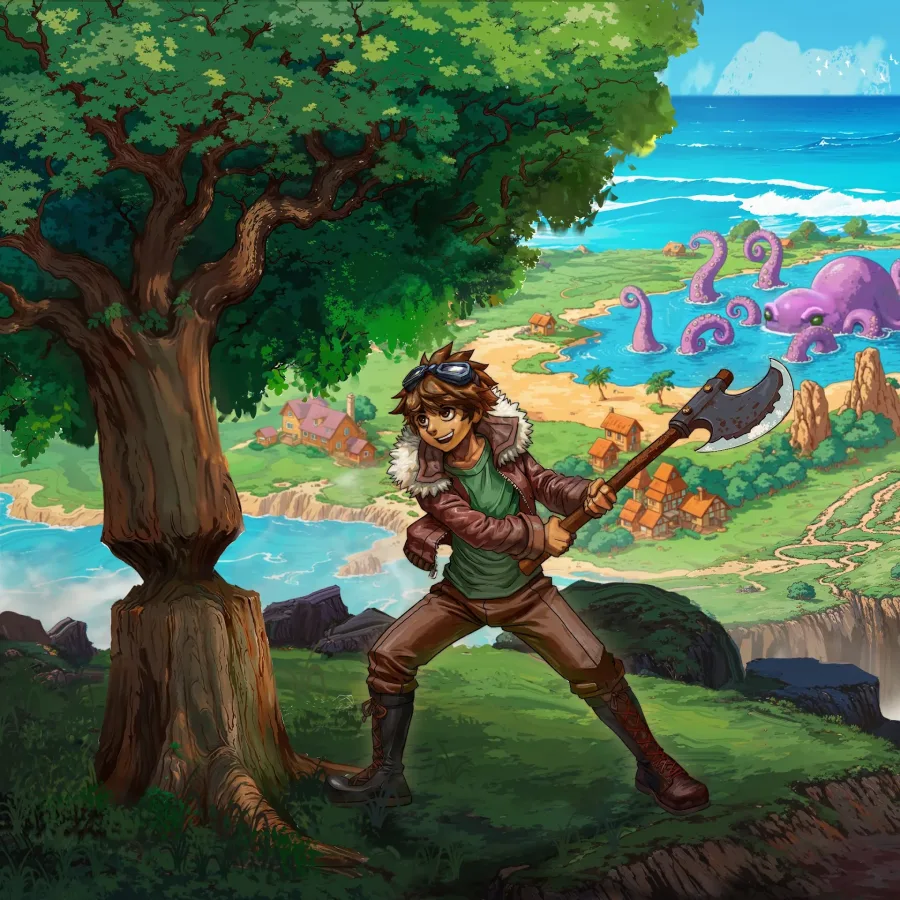
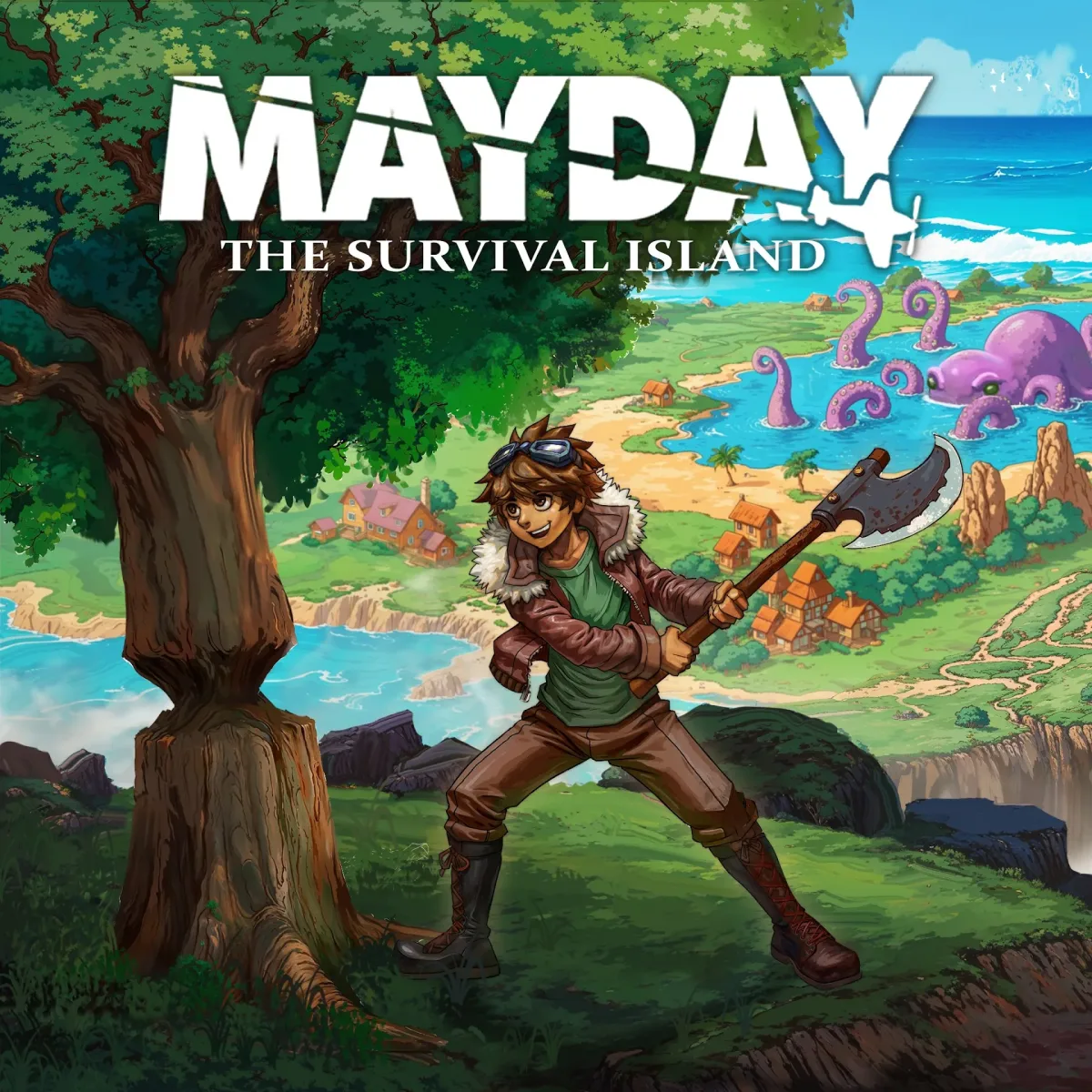
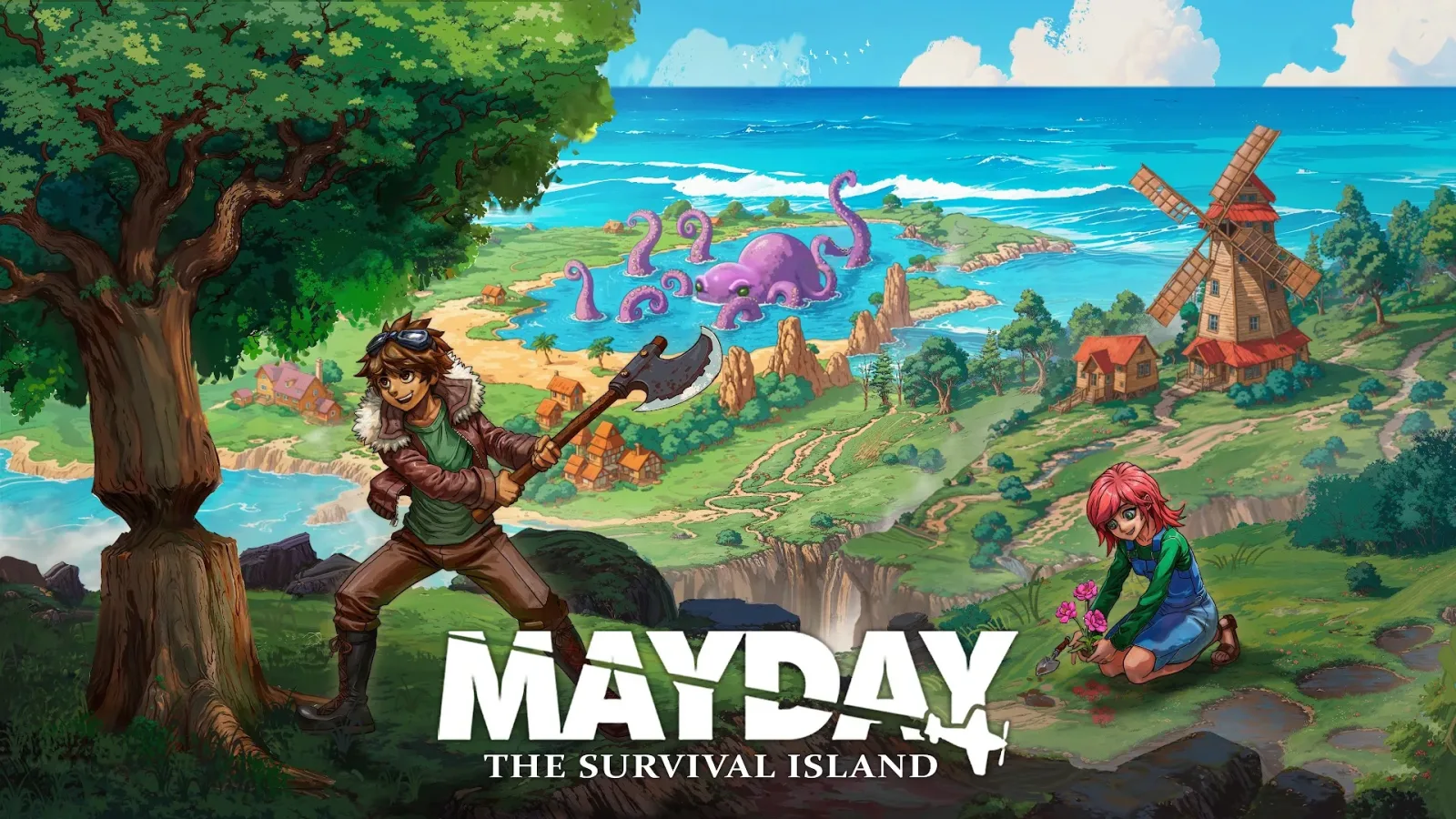
Mayday: The Survival Island is now available on Steam, inviting players to survive after a crash leaves them stranded amid a sprawling, hand-drawn archipelago. Developed by the three-person Brazilian team at Pequi Studios, the game combines familiar resource-driven survival mechanics with farming, animal care, home decoration, sailing and a mystery threaded through 24 separate islands.
Rather than dropping players into a procedurally assembled wilderness, Mayday presents an authored chain of islands with their own environments, resource supplies and points of interest. The premise begins at the shoreline, where survivors must make practical use of whatever has washed ashore before expanding into a more established homestead and eventually pushing farther into the archipelago.
The Steam release is priced at USD $13.99, with a limited-time launch promotion reducing that price by 20%. Mayday: The Survival Island is also available through the indie.io store.
A survival game built around the first week
Mayday's early progression is intentionally rooted in immediate survival priorities. During the initial in-game week, players will need to hunt, fish, collect materials and begin putting together the foundations of shelter. That opening routine should be familiar to players who enjoy survival sandboxes: secure food, gather essentials, establish a safe place to rest and turn scattered supplies into tools that support longer expeditions.
For useful background on this topic, read Cyberpunk: Edgerunners Showrunner Leaves V Tease Open to Interpretation, Rejects a Single Canon Game Ending.
However, the game does not frame that first camp as a disposable stop on the way to larger adventures. Building a lasting home is a central part of the experience. As players accumulate resources and discover what the islands can provide, they can develop their plot with structures, furnishings and practical crafting spaces.
Its crafting and cooking options unfold through stations and recipes, creating a sense of gradual advancement rather than offering every possibility immediately. The approach gives gathering and travel a continued purpose, since finding new materials can contribute not only to better gear but also to a more capable, more comfortable settlement.
Comfort turns decoration into progression
One of Mayday: The Survival Island's defining systems is called Comfort. Players can improve this value by placing elements such as walls, floors, furniture and decorations around their home. In many survival games, these additions are largely aesthetic: satisfying for players who enjoy building, but separate from the mechanics that determine whether a character can endure harsher conditions.
For another perspective on this story, read Mayday: The Survival Island Reaches Steam With a Hand-Drawn 24-Island Survival Sandbox.
Mayday takes a different path by tying home design directly to survival advantages. Increasing Comfort can raise health capacity and slow energy depletion, making an attractive and thoughtfully equipped home mechanically useful. A player deciding whether to spend precious supplies on a chair, decorative object or a better interior layout is therefore making a progression decision as well as a visual one.
That connection may appeal to players who want more from a base than storage boxes and crafting benches. It also establishes a clear balance between two tempting goals: invest in security and quality of life at home, or take more risks by heading outward in search of rare resources and answers.
Farming, herding and self-sufficiency
Homesteading extends beyond construction. Players can plant crops, transforming parts of the island into productive farmland as they move past their earliest scavenging needs. Animals can also be raised and herded, including sheep and buffalo. These systems position the game's settlement-building as more than a short-term survival measure, encouraging players to establish routines and develop a sustainable life on the islands.
Cooking is another piece of that loop. Ingredients gathered through fishing, hunting, agriculture and exploration can feed into recipes as the appropriate tools and stations become available. Together, farming, animal care and food preparation make the archipelago feel designed for long-term inhabitation, even while its ruins and strange symbols suggest that it has never been an ordinary place to live.
Players who prefer a patient, domestic style of survival can focus on strengthening their homestead and broadening the resources it produces. Those more interested in danger and discovery can use the same systems as preparation for venturing into remote areas. The game's structure leaves room for either approach rather than demanding a single route through its content.
Twenty-four authored islands to explore
The world of Mayday consists of 24 hand-drawn islands. Each is individually made rather than procedurally generated, and the islands are stocked differently in terms of resources and biome types. This means sailing is not simply a way to see a new vista; it is necessary for locating materials unavailable on a player's current island.
Among the environments players can encounter are mist-covered swamps, stark bleached beaches, cemeteries and ancient ruins. The varied locations provide a visual change from the home island while reinforcing the sense that the archipelago contains a history worth uncovering. Traveling beyond familiar shores is expected to be an important part of expansion, whether the goal is crafting, farming, combat preparation or solving the larger mystery.
The decision to hand-draw the full island chain may be especially meaningful for players who value recognizable places and purposeful layouts. Instead of an endlessly changing world, Mayday offers a finite group of locations that can be learned, revisited and connected to the resources or unanswered questions they contain.
Sailing links those spaces together. A trip to another island can begin as a search for a missing crafting ingredient, then become an opportunity to find a new biome, investigate a structure or bring home materials for an improved base. The travel loop gives the archipelago scale while maintaining an ongoing relationship between exploration and homestead development.
Symbols, totems and a deeper mystery
Survival is only one side of Mayday: The Survival Island. Repeated symbols, magical totems and old ruins are scattered through the world, pointing toward secrets beneath the everyday demands of food, shelter and supplies. The game encourages players to choose their priorities: they can spend time enlarging and decorating their home, or they can pursue the clues that lead into the archipelago's stranger side.
Combat is part of that investigative journey, as is potion brewing. Those systems give players tools for confronting threats and engaging with the more supernatural elements implied by the islands' carved imagery and ruins. Their presence also broadens the experience beyond a peaceful building game, though players are not forced to treat mystery-solving as the only meaningful objective.
This balance between comfort and curiosity appears to be at the heart of Mayday. A well-stocked farm and carefully furnished home offer measurable benefits, but unexplored shores may hold the materials and knowledge needed to progress further. Players can decide when a camp feels secure enough to leave behind and when a discovery is worth interrupting a productive day of fishing, gathering or construction.
Built by a small Brazilian studio
Pequi Studios is based in Goiânia, Brazil, and consists of three developers. The team created each of the game's islands by hand during production and conducted local playtests with game development students. That small-team background fits a project focused on detailed, illustrated spaces rather than a massive procedural map.
The hand-drawn art direction gives Mayday a distinct identity within a genre often associated with rugged realism or randomly generated landscapes. It also supports the game's premise of exploring a specific place with an established atmosphere: beaches, swamps, graveyards and ruins can feel like parts of one mysterious world rather than interchangeable survival zones.
Steam features and language support
The Steam version includes Steam Achievements, Steam Cloud support and full controller support. It supports ten languages:
- English
- Portuguese
- French
- Italian
- German
- Spanish
- Japanese
- Korean
- Russian
- Simplified Chinese
For players looking for a survival game that treats a home as a source of genuine gameplay power rather than a purely decorative project, Mayday: The Survival Island offers a focused new option. Its 24-island setting combines the dependable rhythms of hunting, fishing, gathering and crafting with crops, livestock, sailing, combat and supernatural investigation. Whether players build out a cozy homestead first or launch into the unknown in search of ruins and totems, the island chain is designed to support both paths.
Community
Discussion
Start the conversation.
No comments have been posted yet.