

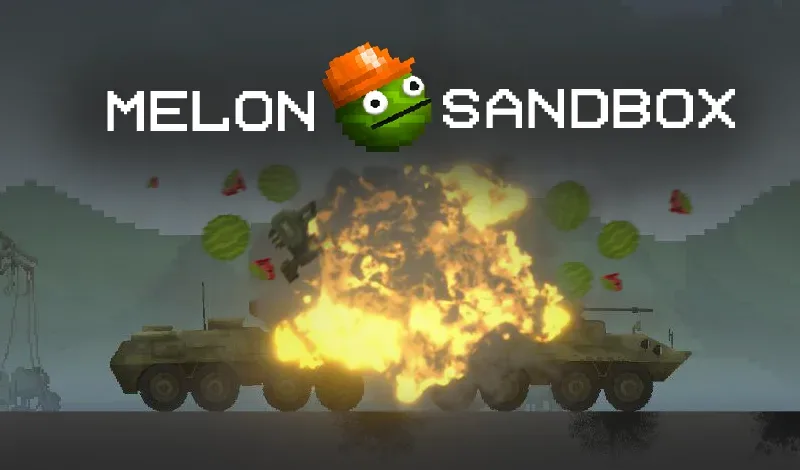
Melon Sandbox has expanded its chaos-filled physics playground with a major cooperative multiplayer update. Released by PlayDucky on September 21, 2026, the update allows as many as four players to occupy the same map at once, turning the game's construction tools, destructible experiments, vehicles, weapons, and ragdolls into shared real-time activities.
The new mode is available now across iOS, Android, and browser versions of the free-to-download sandbox. Its central idea is straightforward: rather than building a bizarre machine or staging a large-scale ragdoll test alone, players can now work together in one session. That means a group can divide up the tasks involved in making an elaborate device, coordinate a stunt, or simply create as much unpredictable mayhem as possible together.
Multiplayer is a notable addition for a game built around player-led experimentation. Melon Sandbox does not push users toward one prescribed objective or a fixed sequence of missions. Instead, it supplies objects, environments, tools, and physics interactions, then leaves the purpose of each session to the people playing. Bringing four participants into that format could make even basic experiments more social, while offering more hands for creators who want to assemble larger and more complicated setups.
Four players can share the same physics playground
PlayDucky says the cooperative mode supports up to four players on a single map. The game's real-time physics systems operate across the participating players, so interactions are designed to be seen and experienced by the group rather than existing as isolated individual actions.
For useful background on this topic, read Lemonade Apocalypse Mixes Business Sim Ambition With Climate Control and Political Power.
In practical terms, that opens the door to collaborative construction. One player might position structural pieces while another brings in vehicles or moving components. A third player could prepare environmental hazards, with a fourth testing whether the finished contraption works as intended. As with many physics sandboxes, however, a carefully planned creation can quickly become an accident waiting to happen. The same tools can be used for precision-building or for intentionally uncontrolled experiments.
Ragdoll interactions remain at the center of the game's appeal. Players can use the sandbox's realistic physics framework to arrange scenarios and then watch their setups play out. Cooperative play gives those scenarios a new audience and a new set of active participants: friends can trigger events together, coordinate separate roles, or react in the moment when a device behaves very differently from the plan.
The update also makes casual sessions easier to imagine. A group does not need to spend its time on a single ambitious machine. Players can instead explore a map, pile objects into a vehicle, test weapons and explosives, set up impromptu challenges, or take turns introducing an increasingly absurd new rule to the session. The open-ended nature of the game means that cooperation can be as organized or as chaotic as the group wants.
For another perspective on this story, read Melon Sandbox Multiplayer Update Lets Four Players Build Chaos Together.
Lua scripting can now meet collaboration
The multiplayer release builds on an earlier addition: Lua scripting. Melon Sandbox includes a Lua Chip that enables players to alter objects through code, giving creators another layer of control beyond placing items manually in the world.
That matters because scripted objects can potentially support scenarios that would be difficult to create through simple placement alone. Code can be used to modify behavior, while the sandbox's broader toolset supplies the physical components and settings in which those objects operate. With multiplayer now in place, creators can pair scripting work with teammates handling design, testing, staging, and live experimentation.
PlayDucky is positioning that combination as a route to more elaborate shared scenarios. A player with experience using Lua can focus on programming the desired object behavior, while other participants build the surrounding apparatus or test how the script performs under different conditions. It is a potentially useful division of labor in a game where experimentation often involves repeated adjustments and unexpected results.
There is also room for players to use scripting less formally. Rather than treating every session as a polished creator project, groups can use the Lua Chip as another part of their toy box. The addition of code does not replace the accessible appeal of dragging in an object and seeing what happens; it broadens the possibilities for users who want to go further.
A broad toolset for destructive and creative experiments
Melon Sandbox's core experience remains focused on freely manipulating a sizeable collection of interactive objects. The game features firearms, melee weapons, explosives, vehicles, and materials that players can combine in custom arrangements. The tools can be used to make functional-looking devices, test physics interactions, or cause immediate destruction.
Its ragdolls can be subjected to an array of hazards and contraptions. Players are able to build mechanisms intended to stab, crush, burn, or vaporize them, alongside other experiments involving the game's weapons and environmental dangers. The presentation is rooted in sandbox experimentation rather than a conventional campaign structure, with the player deciding how detailed, destructive, or inventive each setup becomes.
Vehicles offer another way to introduce momentum and movement into a scenario. They can be used as part of a carefully arranged construction, a crash test, or a rapid means of moving people and objects around a map. In a four-player game, vehicles may also become a natural focal point for cooperative play, whether the goal is transporting materials or seeing how long a plan stays under control once everyone starts adding obstacles.
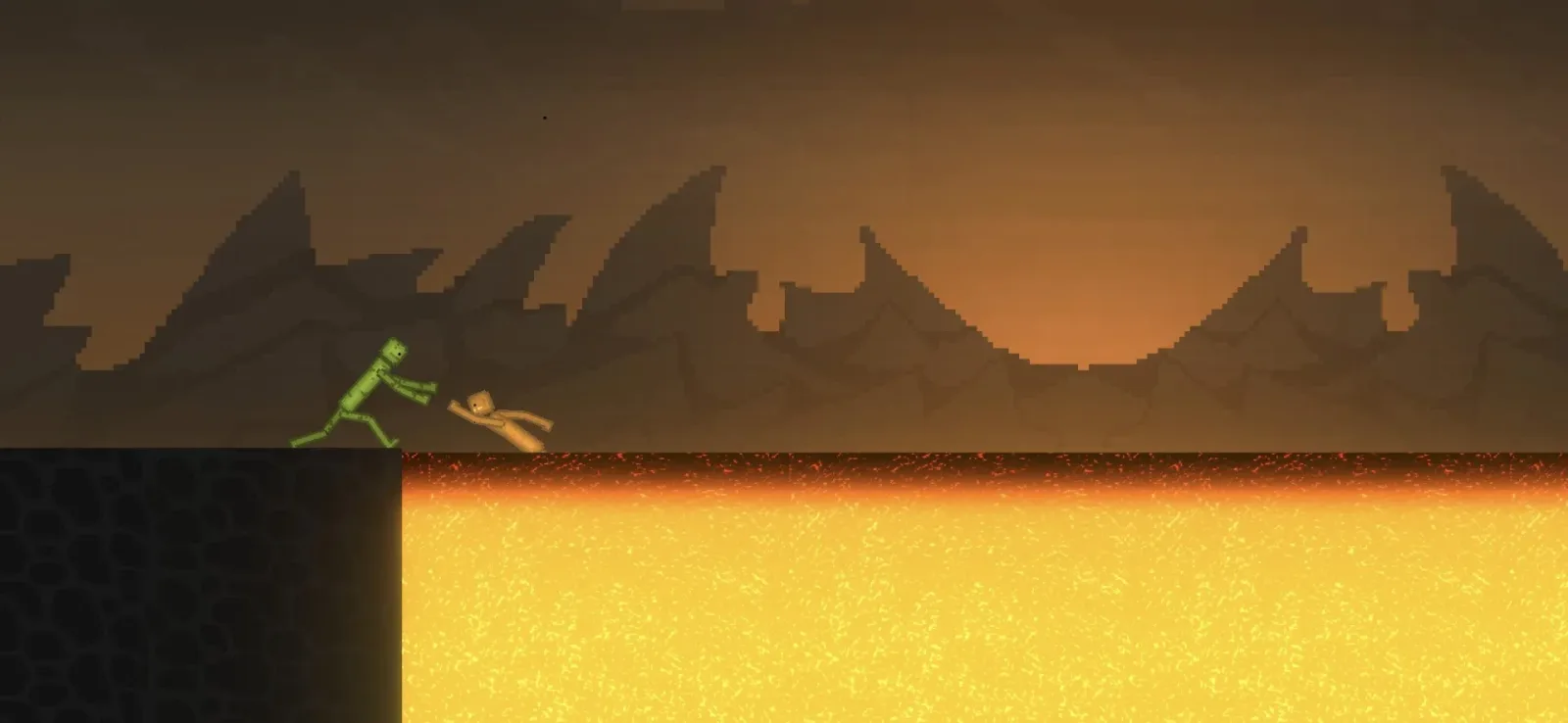
The game's maps provide varied places for these activities. Available environments include cities, acid pits, lava-filled areas, and underwater locations. Each setting can change the character of an experiment, whether a player wants a more conventional urban backdrop, a hazardous industrial-feeling zone, or an environment defined by water and altered movement. With multiple people present, those spaces can support both collaborative builds and more spontaneous group sessions.
The Editor and storefront extend the community side
Beyond the objects already available in the sandbox, Melon Sandbox includes an in-game Editor for user-generated creations. The Editor lets players build custom gameplay experiences and share what they make with others, giving the community a role in expanding the game beyond its default maps and tools.
That creator focus is particularly relevant now that cooperative play is available. A custom experience can be designed with more than one person in mind, whether that means creating a space for friends to build together or arranging a physics challenge that depends on several participants performing different jobs. The announcement does not detail specific multiplayer creation templates, but the overlap between an Editor, scripting, and four-player shared maps suggests a wider range of user-made possibilities.
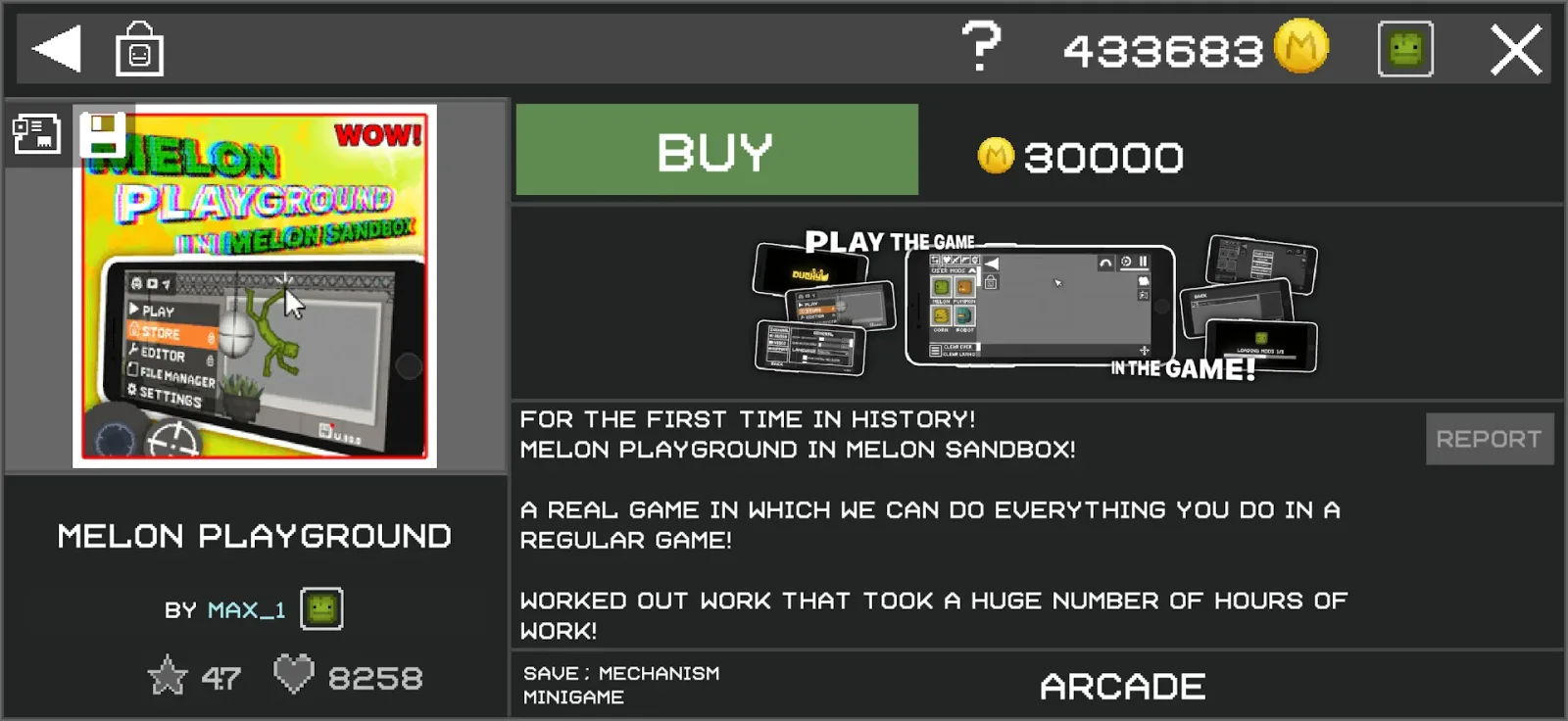
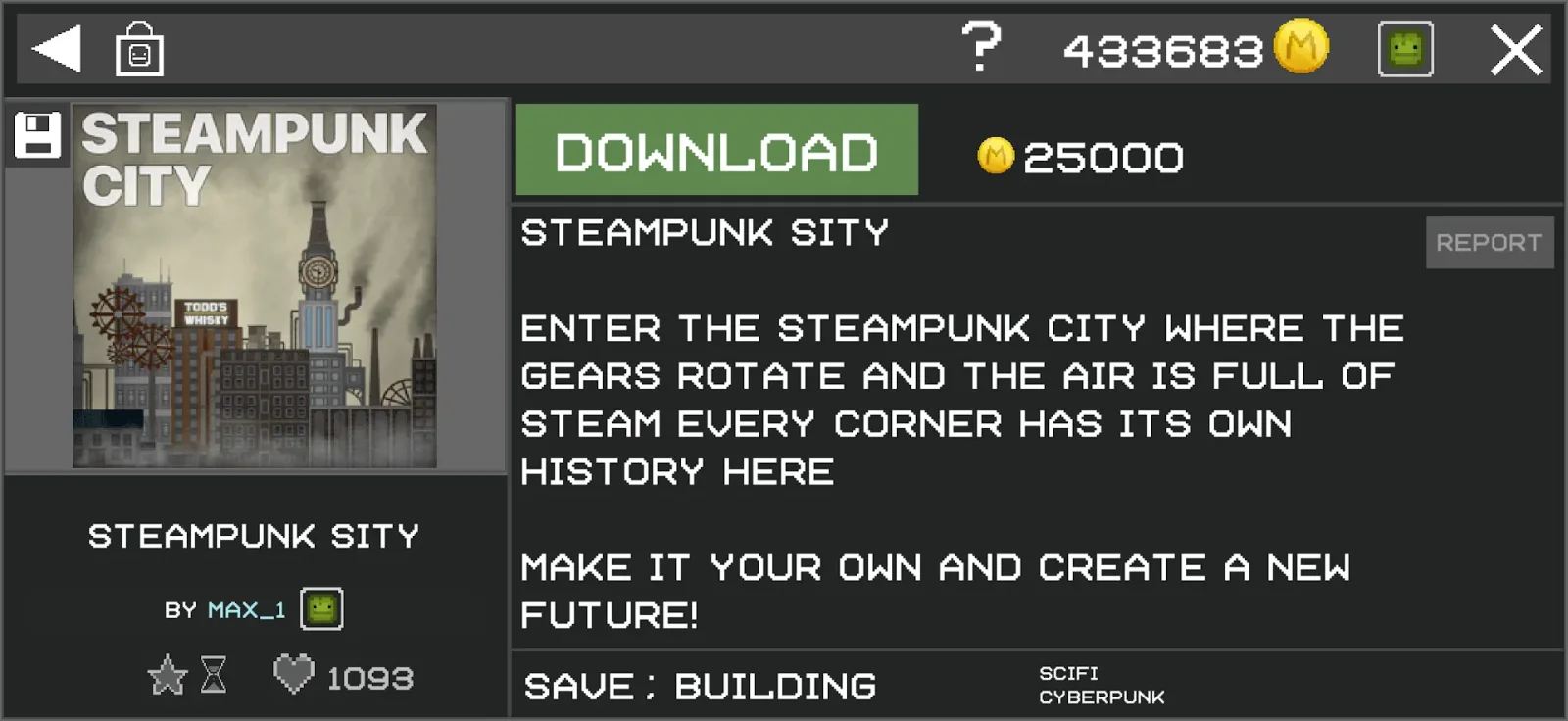
Creations can be uploaded to and purchased through the game's in-game storefront. This gives creators a route to distribute their work within the Melon Sandbox ecosystem, while allowing players to seek out new experiences made by other users. As with the Editor itself, multiplayer could make community creations more appealing for groups looking for something beyond a blank map and a collection of objects.
The storefront component also underscores how much the game relies on ongoing activity from its players. A sandbox can remain interesting through the variety of tools available at launch, but user-made scenarios, scripts, devices, and maps can offer a steady source of fresh ideas. Cooperative multiplayer adds a social reason to revisit those creations with friends.
Available now on mobile and browser
The cooperative multiplayer update is live now for Melon Sandbox on iOS, Android, and browser. The game is free to download, and the new mode supports groups of up to four players in the same map.
For existing players, the update adds a major new way to use familiar systems. Solo experimentation, custom devices, dangerous maps, weapons, vehicles, ragdolls, and Lua-driven objects are no longer limited to one person's session. For newcomers, the ability to join friends may provide an easy entry point into a game whose greatest strength is its lack of a single "correct" way to play.
Whether players choose to construct carefully engineered machines, create a scripted shared scenario, explore environments together, or immediately fill a map with explosive objects, Melon Sandbox's latest update shifts the emphasis from private experimentation to collective invention. In a physics sandbox where accidents are often as entertaining as success, adding more players means adding more possibilities for both.



Community
Discussion
Start the conversation.
No comments have been posted yet.