

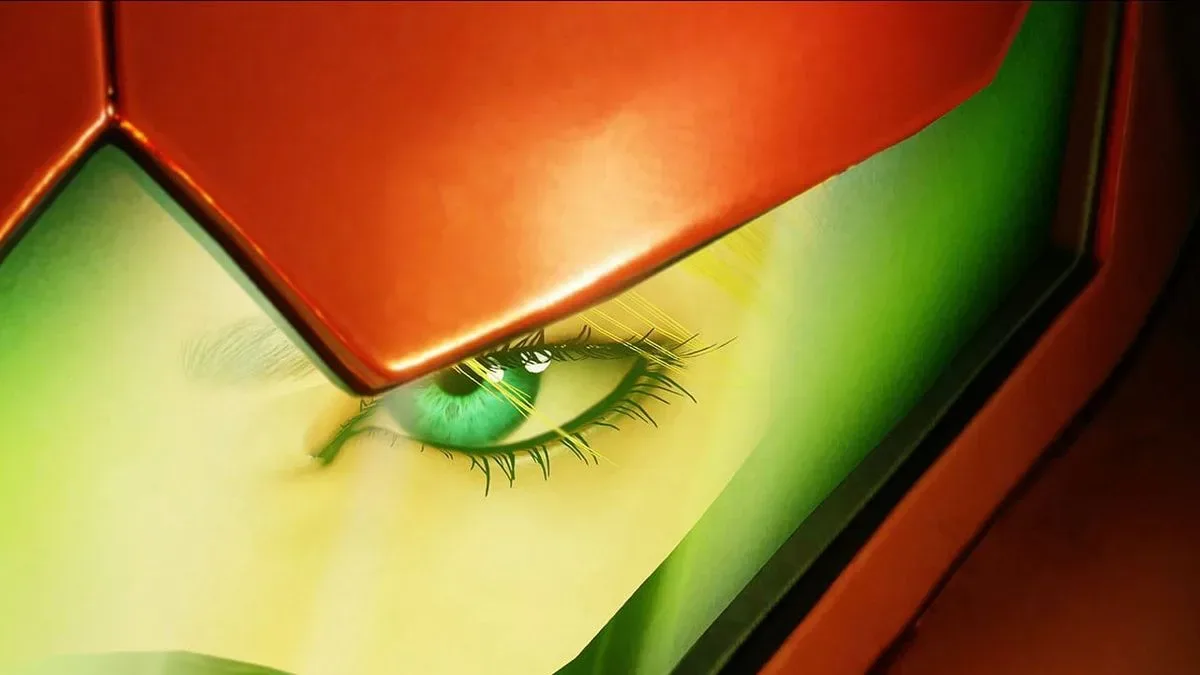
Samus Aran is heading into a far more brutal-looking mission in Metroid Ravenous, a newly revealed 2D side-scrolling entry that frames Nintendo's legendary bounty hunter against a hostile, mysterious threat. Planned to launch on January 28, the game appears to retain the exploration-and-combat fundamentals associated with classic Metroid while adopting an unusually grim survival premise.
Its early material establishes that tone quickly. Samus is presented with a stark choice: survive by taking what she needs from her enemies. The idea is a notable shift in emphasis for a character normally defined by her high-tech arsenal, isolation on alien worlds, and determination under pressure. In Ravenous, that determination seems to be paired with an explicit need to drain or absorb energy during battle.
That concept could give this adventure a distinct identity within the series' 2D lineage. Metroid has long used upgrades, Energy Tanks, missiles, environmental hazards, and punishing bosses to create tension. Ravenous appears to add a more immediate layer to that formula, suggesting that Samus' power may come at a cost--or at least require direct interaction with the enemies she faces.
A familiar format with a harsher mood
Metroid Ravenous is described as the latest 2D side-scroller in the franchise. That places it in the tradition of the original Metroid, Super Metroid, Metroid Fusion, Zero Mission, Samus Returns, and Metroid Dread: games built around traversing dangerous interconnected spaces, finding upgrades, uncovering routes, and returning to earlier areas with new abilities.
For useful background on this topic, read Resident Evil 2, 3 and 4 Remakes Are Headed to Nintendo Switch 2.
While the format is familiar, Ravenous looks determined to make a different first impression. Rather than focusing solely on the wonder of a newly discovered alien planet, the footage and scenes discussed so far put the spotlight on threat, pursuit, and Samus' refusal to stop fighting even when she appears overwhelmed. The atmosphere is less about a routine expedition and more about making it home from somewhere that wants to consume her.
That darker presentation suits Metroid's history surprisingly well. The series has always carried a current of science-fiction horror beneath its platforming and action. Lone research stations, abandoned ruins, parasitic organisms, biological experiments, and vast stretches of silence have all helped define the games. Ravenous seems to be bringing those undertones closer to the surface, with its language and apparent mechanics making survival itself a central part of Samus' mission.
Energy-draining abilities could define the action
One of the most interesting details is the suggestion that new abilities drain Samus' energy. In the footage, she is seen using powers that seem connected to the need to feed from enemies, though the precise rules of that system have not been detailed. It is therefore unclear whether this is a constantly active mechanic, a situational combat option, a story-specific power, or something that works alongside the traditional health and item systems.
Whatever form it takes, the idea has obvious potential in a Metroid game. The best upgrades in the series do more than increase damage; they transform how players move through rooms, confront enemies, and interpret environments. A new energy-based ability could affect offensive play, defensive decision-making, traversal puzzles, or boss encounters. It could also force players to weigh aggression against caution, especially if using a powerful move leaves Samus vulnerable.
Metroid games are at their strongest when their worlds make every newly acquired tool feel meaningful. A beam upgrade can open sealed doors. A suit can make an inhospitable region survivable. A movement skill can turn a previously unreachable ledge into the next route forward. Ravenous could extend that design philosophy by making enemy encounters a source of essential energy, not simply obstacles standing between Samus and the next objective.
There is also a thematic fit between the proposed mechanic and the game's title. "Ravenous" points to hunger, desperation, and an instinct to endure. If Samus must draw strength from the enemies hunting her, then combat could reinforce the game's unsettling world rather than exist only as a means to clear a path.
Cinematics appear to add momentum without abandoning 2D
Although Ravenous is a 2D side-scroller, it reportedly includes scenes that reach beyond a strictly side-on presentation. Samus is shown charging directly toward enemies in moments that appear more cinematic, while cutscenes are set to play a prominent role in sustaining the pace of the adventure.
This approach could provide a useful bridge between the deliberate exploration of traditional 2D Metroid and the more cinematic flair associated with modern action games. Metroid Dread demonstrated how dynamic animation and swift encounters can make a side-scrolling adventure feel urgent without losing the clarity needed for precise movement. Ravenous seems positioned to pursue a similarly dramatic style, with more emphasis on close-up storytelling and high-energy transitions.
That does not necessarily mean the game is abandoning the quiet, exploratory side of Metroid. The genre works because it balances tension with discovery. Players need moments to study their surroundings, test a new power, notice suspicious walls, and slowly map out a path through an unfamiliar setting. The promise of more elaborate cinematic scenes may simply mean Ravenous aims to make its major story beats and confrontations feel larger than life.
The early glimpses have also drawn attention for the quality of their cutscenes. Strong presentation could be especially important for this story, since the game's survival-focused setup seems to place Samus under more visible emotional and physical pressure than usual. She is traditionally a character who communicates through action, and Ravenous appears to be leaning into that strength: showing her fight through impossible circumstances rather than stopping to overexplain them.
A mysterious enemy and an imposing new weapon
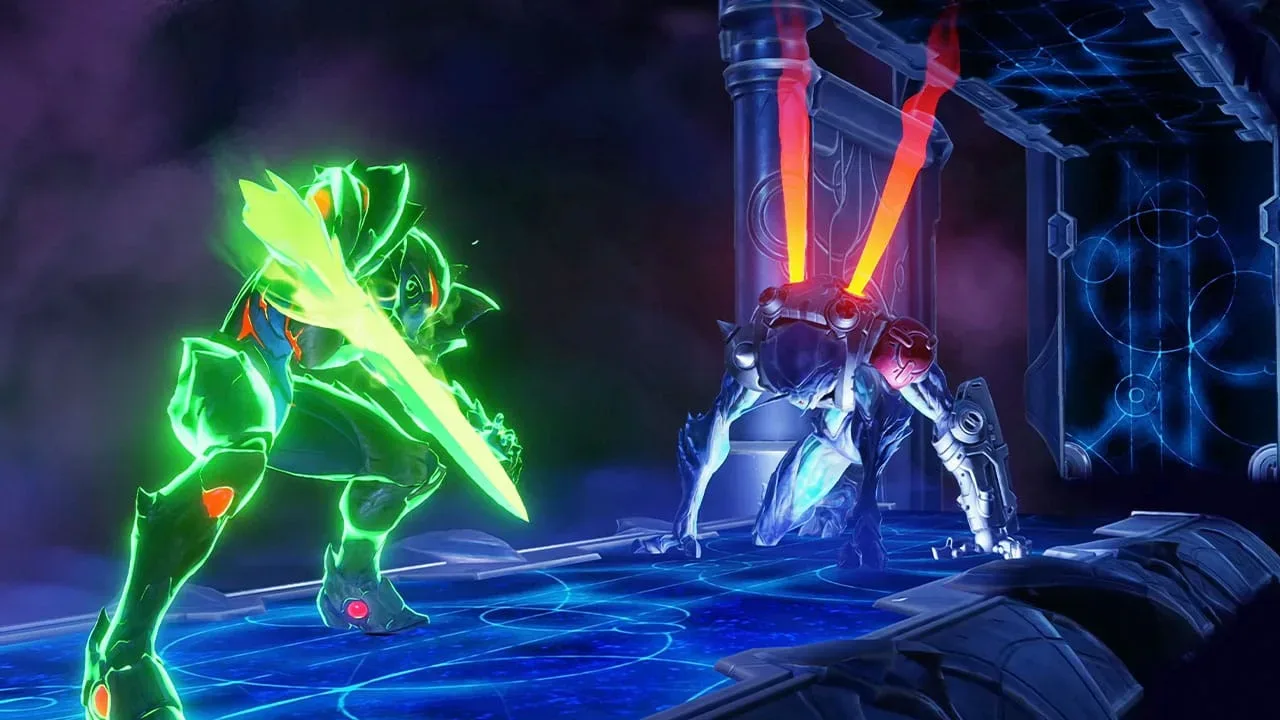
The revealed material features strange adversaries with a cybernetic appearance. Their design has been compared to a technological take on Raiden from Mortal Kombat, an observation that points to the sharp, intimidating silhouette of these opponents rather than confirming any connection between the franchises.
These enemies seem capable of placing Samus in immediate danger, even appearing to strike her down before she returns to the fight. That moment reinforces the central promise of Ravenous: whatever happens to Samus, she keeps moving. The character's resilience has always been one of Metroid's defining qualities, but the new game seems eager to show it in a particularly direct and forceful way.
Samus also appears to have a massive blade mounted on her arm. Details on the weapon have not yet been provided, including whether it is a permanent part of her kit, a temporary upgrade, or a specialized move. Still, its presence raises intriguing questions about how close-quarters combat may fit into the game. Samus has often relied on her Arm Cannon, missiles, bombs, and beam-based upgrades, so a prominent blade could signal a more physical and aggressive combat option.
It would be premature to assume exactly how this weapon works, but it is easy to see why it stands out. A large arm blade fits the hostile energy of Ravenous, particularly if Samus is being pushed into direct confrontations rather than simply firing from a distance. It could also give the game's boss battles and cinematic sequences a more visceral visual identity.
What Ravenous could mean for longtime Metroid fans
The Metroid series has successfully supported multiple perspectives and styles over the years. The first-person Metroid Prime games are celebrated for their immersive worlds and lonely atmosphere, while the 2D games offer concentrated exploration, sharp movement, and a satisfying sense of progression. Ravenous is firmly on the side-scrolling branch, but its apparent use of cinematic camera work may help it appeal to players who enjoy the spectacle and environmental scale of the 3D entries as well.
For longtime fans of the 2D games, the most important question will be whether the core loop remains intact. The early signs are encouraging in that regard: Samus is exploring, battling unusual alien forces, gaining access to new-looking powers, and confronting an environment that feels actively dangerous. Those ingredients are fundamental to Metroid, even if the tone has become more openly severe.
For newcomers, Ravenous may offer an immediate and compelling hook. Samus is an iconic hero, but this game's premise communicates stakes without requiring a deep knowledge of previous events. She is trapped in danger, outnumbered by unfamiliar enemies, and determined to get home. That is a simple setup with plenty of room for mystery.
January 28 is the date to watch
Metroid Ravenous is currently slated for January 28. Much remains unknown, including the full structure of its new energy-draining abilities, the nature of its cybernetic enemies, and the role of Samus' blade-like arm weapon. Yet the material shown so far has already established a clear direction: this is a 2D Metroid game that wants its fights to feel desperate, its cinematics to feel intense, and its world to feel dangerous from the moment Samus enters it.
That combination of classic side-scrolling design and a more savage survival tone gives Ravenous a strong early identity. Samus has faced countless alien terrors before, but this mission appears to ask a more unsettling question: how much will she have to take from her enemies to make it out alive?
Community
Discussion
Start the conversation.
No comments have been posted yet.