

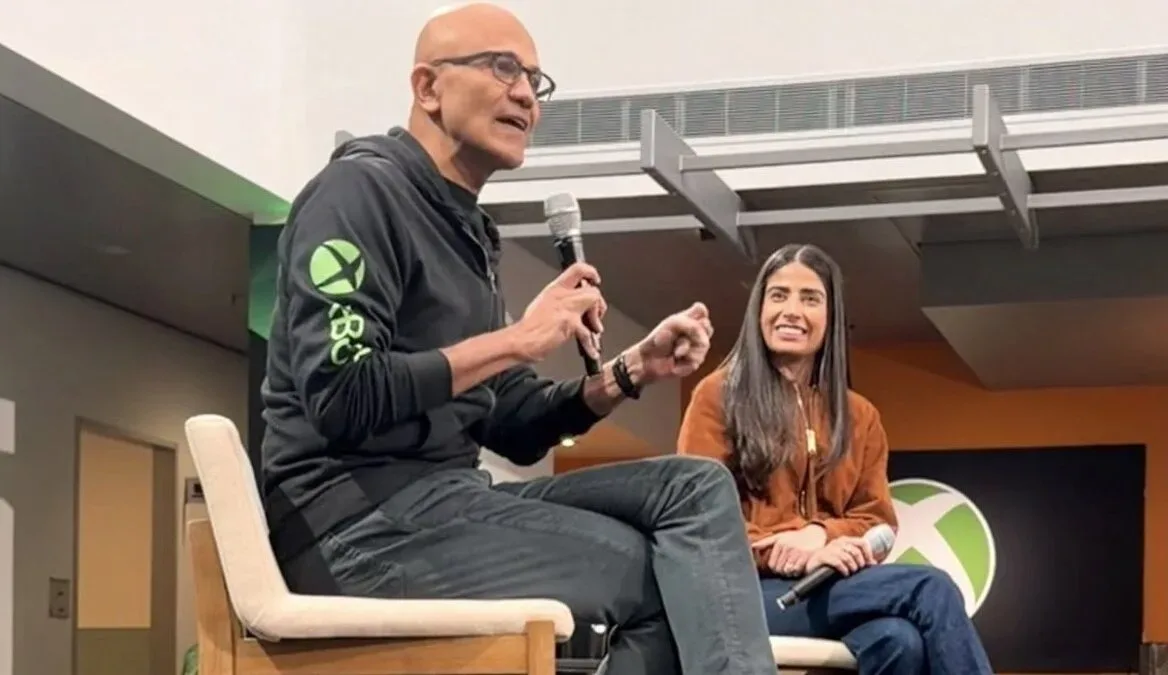
Microsoft CEO Satya Nadella has offered a clear endorsement of the ongoing restructuring at Xbox, describing the work being carried out under new Xbox CEO Asha Sharma as necessary "streamlining" while the gaming division pursues growth in the next fiscal year.
The comments arrive at a difficult moment for Xbox employees and the wider game industry. More than 1,600 Xbox staff members have reportedly lost their jobs during 2026, with plans said to include a further 1,600 cuts before Microsoft's fiscal year concludes. The changes are part of what has been characterized as a broader reset for the Xbox organization, one that has also involved studio divestments, internal team shifts, and the movement of major franchises. Halo, for example, has been moved under Activision.
Speaking on an episode of the Sources Podcast with Alex Heath, Nadella said he remains highly optimistic about the games, studios, and intellectual property now inside Microsoft. His remarks put particular emphasis on the company's ability to turn that portfolio into future releases, even as the organization responsible for making and supporting those games becomes smaller.
"I feel fantastic about the IP we have right now," Nadella said. "If I look at the studios, the IP portfolio we have, and our ability to then take that and produce great games going forward, I feel fantastic."
For useful background on this topic, read Nippon Ichi CEO Says AI Research Must Put Game Quality Before Speed.
Xbox's reset centers on growth and a leaner organization
Nadella's confidence in Microsoft's catalogue is not especially surprising. The company owns a vast range of recognizable series and development teams after years of acquisitions and expansion. Its gaming holdings include Xbox Game Studios, Bethesda, and Activision Blizzard, giving it franchises that span console blockbusters, PC staples, mobile hits, legacy properties, and live-service games.
But the current Xbox strategy is not simply about owning more game brands. It is also about finding a business model that Microsoft believes can grow sustainably across PC and Xbox hardware. Nadella framed that objective as Microsoft's long-running purpose in gaming: to operate both as a publisher and as a platform holder, while reaching a greater number of players.
"There's some amount of streamlining the team is doing, and Asha is doing, which is great to see," Nadella said. "And then we have to invent the right sustainable business model that allows us to deliver gaming to more and more people."
He added that Xbox has set an expectation of growth in the next fiscal year and that Sharma's team is executing against that plan. Nadella also said the organization needs to continue producing strong games during the transition.
For Microsoft, "streamlining" appears to encompass far more than routine operational changes. The reset has reportedly brought job losses, shifts in ownership or responsibility for studios, and franchise reorganization. Such measures may reduce overlapping work and administrative expense, but they also raise obvious questions about how a division can maintain a reliable release pipeline, retain institutional knowledge, and support players across its existing games while cutting thousands of positions.
A large portfolio does not remove the execution challenge
Microsoft's game catalogue is unquestionably substantial, and Nadella's description of the IP portfolio points to the core advantage Xbox believes it possesses. The company has properties with decades of history, teams spread across multiple regions, and access to publishing resources that few competitors can match. It also has the ability to release games on PC and Xbox while connecting them through services, subscriptions, cloud infrastructure, and a broader Microsoft account ecosystem.
Still, owning a major catalogue is only one part of succeeding in games. Every franchise needs a clear plan, sufficient creative leadership, stable production staffing, quality assurance, marketing, and post-launch support. That is especially true when a publisher's strategy calls for serving audiences across more than one platform or business model.
The transition of Halo to Activision illustrates the scale of the organizational changes underway. Halo remains one of the most closely identified Xbox franchises, so shifting it within Microsoft's larger gaming structure is a meaningful statement about how the company intends to arrange its resources. The move may give the series access to different operational experience and production support, but it also places another legacy Xbox property into an evolving corporate structure during an already disruptive period.
For employees, the language of efficiency and streamlining can feel far removed from the immediate impact of layoffs. Nadella's comments focused on strategic upside, growth, and Microsoft's capabilities; they did not include a direct expression of sympathy for affected workers or detail how teams will be supported through the reduction process.
Sharma's target is exceptionally ambitious
The reset is tied to an enormous audience objective. Sharma's stated ambition is for Xbox to entertain more than one billion people every day. That is a striking target even for Microsoft, a company with global consumer products, enterprise software, cloud operations, and one of the industry's largest gaming portfolios.
Xbox reported 500 million monthly users across all of its platforms in 2025. Monthly users and daily users are not comparable measures, and the difference is central to understanding the scale of the goal. Reaching one billion people each day would require not only dramatic expansion beyond current engagement levels, but also sustained habits among players spread across different devices, regions, and kinds of games.
Microsoft's vision likely depends on more than console ownership. Nadella specifically described a desire to be a publisher and a platform provider across PCs and Xbox consoles. That wording reinforces the company's long-running move toward a broader definition of Xbox, one in which the brand is tied to software, services, communities, and devices rather than being limited to a single piece of hardware.
Even so, the hardware side remains important. Xbox consoles remain a central way many players access Microsoft's games and services, and the company is competing in a market where exclusive releases, ecosystem features, performance expectations, pricing, and retail visibility can all shape consumer decisions. Microsoft no longer publicly shares Xbox console sales figures, making it more difficult to measure the hardware business against rivals using official unit totals.
The tension between expansion and cuts
The biggest question hanging over the reset is whether Xbox can simultaneously become more efficient, make more money, release more compelling games, and reach a vastly larger audience with fewer employees and fewer studios. Corporate restructures are often presented as a way to sharpen focus, eliminate duplication, and direct investment toward the most promising projects. In creative industries, however, cuts can also delay games, strain remaining teams, and remove the people whose experience helps projects survive difficult development cycles.
There is also a human cost that cannot be separated from the numbers. Each reported job cut represents developers, artists, producers, support staff, testers, and other specialists facing disruption in an industry that has already experienced years of severe layoffs. The scale discussed for Xbox in 2026 makes the reset a major event not just for Microsoft's internal structure but for the talent market across games.
Nadella's remarks show that Microsoft leadership sees the current disruption as part of a deliberate plan rather than a retreat from gaming. He presented Xbox's intellectual property as a point of strength and expressed approval for Sharma's restructuring work. The desired result is a more sustainable business capable of publishing games and operating platforms for an expanding global audience.
Whether that result materializes will depend on execution. Microsoft will need to show that its reorganized studios can deliver games that players want, that its platform strategy has a clear value proposition on PC and Xbox, and that growth can be achieved without further damaging the creative capacity needed to sustain its biggest franchises.
For now, the company's leadership is signaling confidence. Employees affected by the cuts, and players watching what becomes of Xbox's studios and series, will be looking for evidence that this promised growth plan produces more than corporate optimism.
Community
Discussion
Start the conversation.
No comments have been posted yet.