

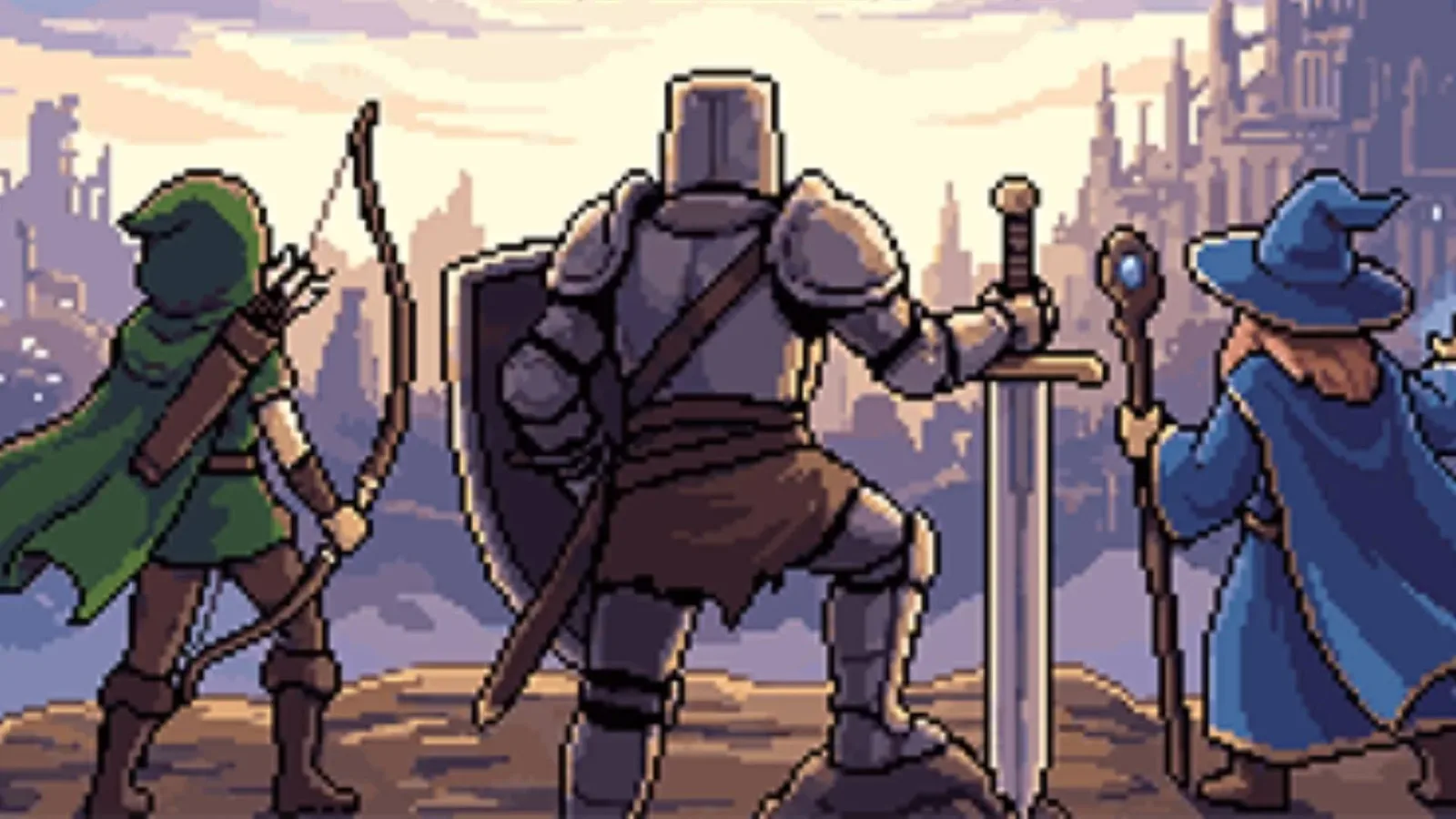
Slotbound, a roguelike auto-battling defense game built by solo developer Optima Arch, has made an unusually strong start on Steam. The developer says the game generated nearly $1.33 million in gross revenue during its first week, while sales cleared 200,000 copies within six days of its November 13 launch.
The early results are particularly notable because Slotbound is Optima Arch's first released game and was developed over a little more than a year. It is also a project whose creator has openly described it as AI-assisted, including disclosed use of generative AI in parts of the coding, visual, and promotional workflow. That transparency has not prevented the game from finding a sizeable audience so far, though the subject remains a contentious one across the games industry and among players.
How Slotbound plays
Slotbound combines roguelike progression with an auto-battling defense format and a central slot-machine mechanic. Players pull a lever to summon units, assembling an army that can withstand incoming threats. Items can alter the odds behind the machine, giving players ways to steer their builds toward particular outcomes rather than relying only on chance.
Embedded X/Twitter post
That setup puts the game in a growing collection of strategy experiences that turn familiar systems into the foundation for repeatable roguelike runs. The random nature of each pull creates uncertainty, while the available modifiers and items allow players to build around synergies and manipulate the risk. Success depends on recognizing which units, effects, and probability adjustments can work together as a run develops.
For useful background on this topic, read Miyazaki's Old Zelda Comments Show Why Dark Souls Never Chased the Same Path.
It is a concise premise, but one that appears to have connected with Steam users. Slotbound has accumulated a 91% Very Positive review rating following its debut. Positive player reception alongside substantial sales has helped give the game's launch momentum during its first week on the store.
A first project with major early revenue
Optima Arch shared the financial milestone in a social-media post, saying Slotbound had reached nearly $1.33 million in gross Steam revenue during its first seven days. The developer also posted a screenshot covering earnings and player statistics, while explaining that the speed of the launch left little time to absorb the scale of the response.
"My first game, Slotbound has made nearly $1.33 million in gross revenue in just its first week on Steam!" Optima Arch said. "I've barely had time to process any of this between fixing bugs and pushing updates."
The distinction that the figure is gross is important. Gross revenue is not the same as the amount ultimately retained by a developer after platform fees, taxes, refunds, and other costs. Still, nearly $1.33 million in gross revenue is a major opening-week result for a debut title made by one person.
Optima Arch said development began alone just over a year before launch. The developer thanked players for supporting the game and said that work would continue, emphasizing that there were still improvements to make. That focus on bug fixes and updates is unsurprising for a roguelike driven by balance, repeatability, and the interplay of systems. A small change to a unit, item, or probability-altering effect can have significant consequences for how a run feels.
The game has therefore arrived not merely as a finished release, but as an ongoing project likely to be shaped by player feedback and continued patches. Its early sales also give the solo creator a substantial foundation from which to support that work.
Generative AI was disclosed before launch
Slotbound's commercial performance has attracted attention partly because Optima Arch did not conceal generative AI use. Months before release, the developer described the game as an AI-assisted project and explained that a nontraditional game-development background had led them to use AI tools to bring a game concept into a playable form.
In that earlier explanation, Optima Arch said AI had been involved throughout the project, especially in coding and elements of the visual workflow. At the same time, the developer stressed that the bulk of creating the game still involved conventional design and production tasks: building systems, testing versions, fixing bugs, reworking balance, cutting ideas that did not work, and rebuilding mechanics until they felt satisfying.
Steam's AI disclosure for Slotbound similarly states that various visual assets and promotional materials were created with the assistance of generative AI tools. It adds that AI-generated material was reviewed, refined, and integrated by the developer to maintain consistency with the intended artistic direction and quality standards.
That disclosure does not settle the broader arguments surrounding AI in creative work. Instead, Slotbound has become another example of how complicated the conversation can be. Some players and creators object to generative AI on principle, citing concerns that range from training data and ownership to labor, artistic authorship, quality control, and the possibility of reducing opportunities for human artists and developers. Others see the tools as potentially useful for individuals or small teams that lack extensive technical and production resources.
Slotbound's creator has framed the tools as assistance rather than a replacement for the development work required to make a game function. The game's first-week performance suggests that, at least among its initial Steam audience, the disclosed use has not created a barrier large enough to stop major sales or a strongly positive review aggregate.
Success does not end the AI debate
Generative AI remains one of the most divisive topics in game development. Its use can bring immediate scrutiny even when it concerns only specific assets or a limited stage of production. Studios have faced backlash after AI-generated material appeared in released games, while developers working on successful multiplayer projects have also received criticism when prior AI use became public after launch.
In some cases, disputed material has been removed through patches. In others, companies have indicated that they expect to use AI more extensively across future development pipelines. These different responses show that there is no single industry-wide standard for how the technology should be used, disclosed, or evaluated by players.
For Steam in particular, AI disclosures provide buyers with information, but disclosure alone does not guarantee approval or rejection. Players may judge a game primarily on its mechanics, value, visual presentation, updates, and reviews. Others may decide that the presence of generative AI is enough to avoid a purchase regardless of the final product. Both responses are visible in the wider conversation around AI-made or AI-assisted content.
Slotbound is a useful illustration of that divide because its disclosure was public before the game reached its commercial breakthrough. Rather than being revealed after release, the use of AI was part of the context surrounding the game ahead of launch. Its sales figures do not mean the debate has faded; they show that a transparent AI disclosure and considerable market success can exist at the same time.
What the launch means for solo developers
The biggest takeaway from Slotbound's opening week may be the continuing potential for a focused indie idea to break through on PC. The game does not rely on a vast open world, blockbuster production scale, or a large studio's established franchise. Its hook is direct: transform slot-machine randomness into a strategic army-building loop, then give players enough tools to influence the odds and experiment with builds.
That clarity matters in a crowded market. A game still needs to be found, understood, and enjoyed, but a premise that players can quickly explain can help it spread. The 91% Very Positive Steam rating indicates that many early buyers believe Slotbound delivers on that premise, while more than 200,000 copies sold in less than a week demonstrates that the concept reached far beyond a small niche audience.
It would be premature to draw universal conclusions from one hit. Solo development remains difficult, and AI tools do not remove the demanding work of designing, testing, polishing, marketing, supporting, and updating a game. Optima Arch's own account reinforces that point: even with AI assistance, the project required sustained iteration, balance adjustments, bug fixing, and decisions about which ideas were worth keeping.
For now, Slotbound stands as a breakout debut with an impressive first-week result. The next question is whether Optima Arch can sustain that momentum through updates and continued community support. With hundreds of thousands of early sales, a Very Positive user rating, and a developer already focused on improvements, the roguelike auto-battler has established a strong starting position on Steam.
Community
Discussion
Start the conversation.
No comments have been posted yet.