

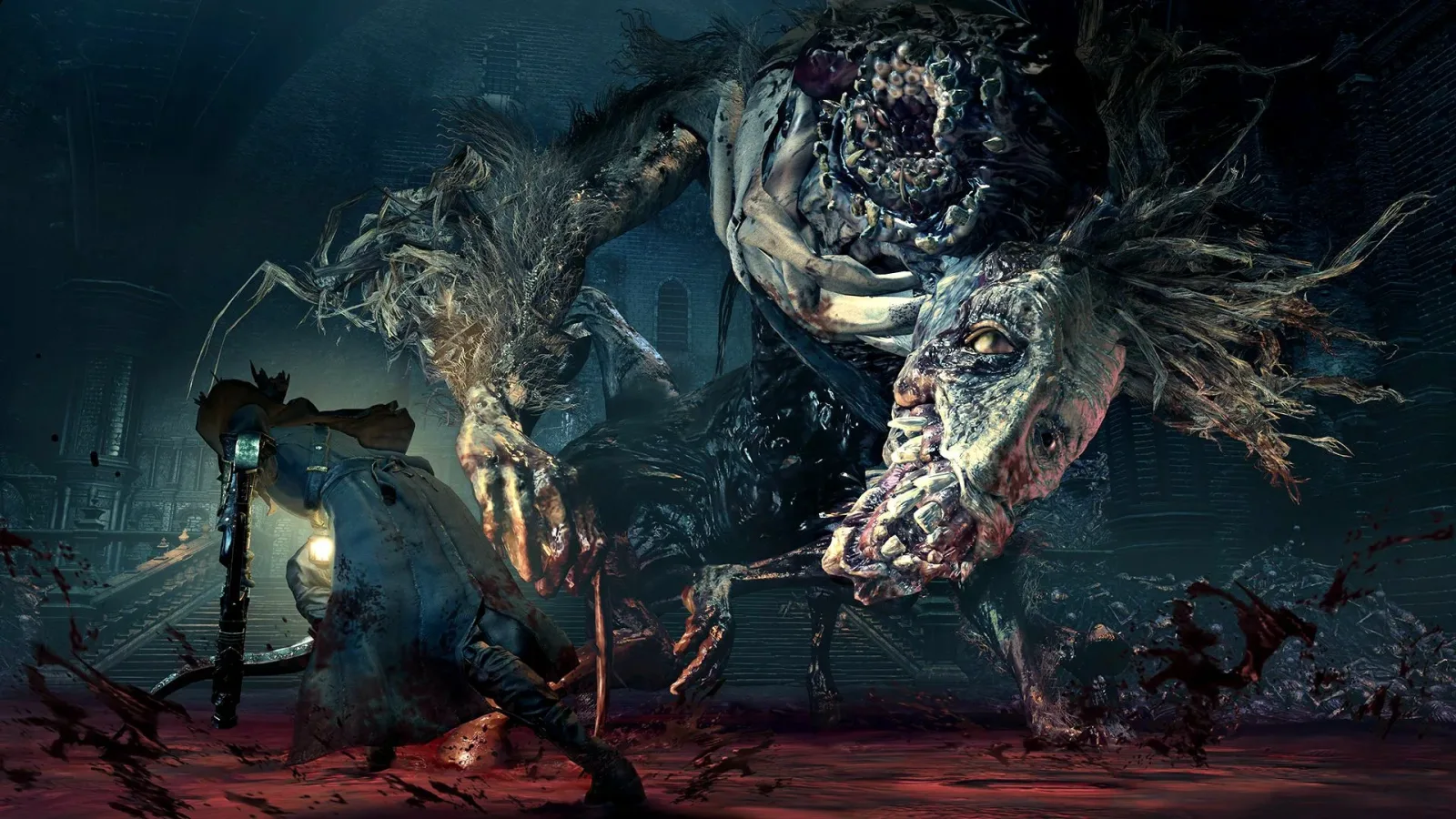
Hidetaka Miyazaki's rise from game director to president of FromSoftware gave the creator of Demon's Souls, Dark Souls, Bloodborne, Sekiro: Shadows Die Twice, and Elden Ring a great deal more than an executive title. It also placed him in rooms with leaders from other companies, exposing him to personalities and situations outside the ordinary routine of game development. In a revealing comment made after his 2014 promotion, Miyazaki said that some of those encounters have found their way, at least in spirit, into the enemies seen throughout FromSoftware's games.
"Now I'm president, I get to meet a lot of other company presidents," Miyazaki said in an interview with The Guardian following the launch of Bloodborne. "They're such weird people. I'm fascinated by them. I use some of them as enemy characters in our games."
The remark is clearly playful, but it is also unusually specific. It fits with the long-running impression that Miyazaki's games are built from an enormous range of impressions: myths, history, architecture, literature, personal anxieties, visual art, and the unsettling behavior of people. In that context, encounters with prominent executives need not mean that a particular boss is a direct parody of a real individual. Instead, a peculiar posture, presence, habit, or atmosphere could become one more small thread in the fabric of a creature's design.
A New View From the Presidency
Miyazaki became FromSoftware's president in 2014, shortly before Bloodborne arrived. That appointment came after he had already made an enormous creative mark on the studio through the Souls series, but the role changed the range of experiences available to him. He explained that the position had taken him to places he otherwise would not have visited and allowed him to see different things. For a creator who draws heavily from observation, that added perspective mattered.
For useful background on this topic, read Let's Build a Dungeon Locks In February 11, 2027 Early Access Launch.
Leadership roles can seem distant from the day-to-day work of designing levels, writing item descriptions, or deciding how a boss should move. Yet Miyazaki's comments suggest that the separation is not absolute. Even executive responsibilities can feed the creative process. A meeting can provide a memorable face, an unnerving mood, a social ritual, or a strange contradiction. Those elements can then be transformed beyond recognition into the language of a dark fantasy game.
That is a particularly fitting idea for FromSoftware. The studio's most memorable enemies rarely feel like simple obstacles placed between the player and a reward. They tend to carry visual storytelling in their bodies, environments, attacks, and names. A knight may be hollowed out by duty. A grotesque beast may still inspire sympathy. A towering demigod can be horrifying, tragic, absurd, and majestic all at once. The possibility that real-world encounters with unusual executives might contribute to that creative stew is funny, but it is not difficult to imagine.
Not Just an Industry In-Joke
It would be a mistake, however, to take Miyazaki's quip as confirmation that FromSoftware is secretly filling its games with one-to-one caricatures of business leaders. The company's work has consistently aimed for something more emotionally layered than a passing joke. Its monsters and bosses may be strange, sometimes comical, and often grotesque, but they are generally rooted in the history and themes of their respective worlds.
Dark Souls offers a useful example. Its decaying kingdoms, failed heroes, and warped creatures all reinforce a world caught in cycles of fire, darkness, ambition, and collapse. Bloodborne turns its enemy designs into an escalating expression of disease, obsession, forbidden knowledge, and cosmic terror. Sekiro uses supernatural opponents alongside warriors and corrupted figures to explore immortality and the consequences of pursuing it. In Elden Ring, the elaborate forms of demigods, monsters, and champions are inseparable from a shattered order and the often painful legacies of family, faith, and power.
Within those games, an amusing real-world observation can be a spark rather than the final destination. A designer may notice something unnerving in a person's expression or manner, then combine it with lore, animation, costuming, mythology, and gameplay needs. By the time the concept reaches players, it has become a self-contained part of a larger fantasy world.
That distinction matters because FromSoftware's enemy design has endured precisely because it does not rely on players recognizing a contemporary reference. A player can feel dread, curiosity, revulsion, or pity when confronting one of its creatures without knowing anything about the people who may have informed its earliest concept. The emotional effect stands on its own.
The Beauty of Ruin and Horror
Miyazaki's past comments on the Undead Dragon in Dark Souls demonstrate how seriously he approaches that emotional effect. While discussing the creature's design, he famously asked his team to convey the "deep sorrow" of a magnificent beast condemned to a slow, perhaps endless, ruin. That direction goes well beyond constructing an intimidating enemy silhouette. It asks artists and designers to communicate a lost grandeur, giving players a reason to feel something more complicated than triumph when they encounter the monster.
Years later, Miyazaki expanded on that philosophy in comments to PC Gamer. He described his goal as depicting something beautiful, while emphasizing that beauty does not have to be physically pleasing or conventionally charming. It can be found in an inner quality that enables the audience to empathize more deeply with a character or creature.
That approach has become one of the defining strengths of FromSoftware's games. A ruined dragon, disfigured knight, grieving ruler, or malformed god can possess a kind of beauty because the design communicates vulnerability, history, purpose, or loss. The player may be required to defeat that being, but the game often encourages them to wonder what happened to it first.
The executive-inspiration comment becomes more interesting when placed alongside this philosophy. Miyazaki did not say that he uses corporate figures merely as punchlines. His fascination appears to be with their weirdness: the peculiar humanity that makes a person memorable. In the hands of FromSoftware's artists, that kind of observation could help create an enemy who feels specific rather than generic. Even the most outlandish monster benefits from the sense that some recognizable emotion or uncomfortable behavior exists beneath the scales, armor, fur, or cosmic anatomy.
Why Fans Will Keep Guessing
Of course, the statement is almost guaranteed to invite speculation. FromSoftware communities have spent years examining character designs, item descriptions, environmental details, and unused material for hidden meanings. The prospect that some bosses might contain traces of real industry personalities is the kind of mischievous possibility that fans will enjoy debating.
There is no reason to assume those guesses will ever lead to definitive answers. Miyazaki did not identify any particular executive or enemy, and there is no indication that players should view the studio's games as a coded guide to the business world. Trying to assign every towering monstrosity or grotesque noble to a named individual would likely miss the point of how collaborative game development works. Enemy concepts pass through writers, concept artists, modelers, animators, combat designers, sound teams, and many other contributors before reaching the final game.
Still, the comment offers a valuable glimpse into Miyazaki's creative mindset. It reinforces the idea that inspiration is not limited to obvious genre sources. A role that might appear to pull a director away from creativity can instead open unexpected doors. Business meetings may not sound like fertile ground for dark fantasy, but for someone inclined to observe the strange details of human behavior, they can become another source of material.
From Observation to Nightmare
FromSoftware's catalog has repeatedly shown how effective that process can be. Its worlds turn fragments of recognizable reality into nightmares and legends: the burden of leadership becomes monstrous royalty, religious devotion becomes physical transformation, illness becomes a citywide curse, and the pursuit of immortality becomes a source of decay. The company's enemies resonate because they are not random collections of spikes and claws. They are expressions of the worlds around them and, often, distorted reflections of human desires.
Miyazaki's humorous observation about fellow presidents does not change that larger truth. If anything, it highlights it. Inspiration can begin with something as mundane as an unusual conversation in a corporate setting, but it is then filtered through a creative philosophy concerned with melancholy, ambiguity, fear, and unexpected beauty.
Players may never know whether any particular FromSoftware boss owes a tiny detail to an executive encounter. What is clear is that Miyazaki sees value in experiences beyond the studio walls. His presidency gave him a different vantage point on the industry, and he appears willing to use every odd, fascinating piece of it. For fans of FromSoftware's worlds, that may be a reassuring thought: even the strangest meeting can potentially become part of the next unforgettable nightmare.
Community
Discussion
Start the conversation.
No comments have been posted yet.