

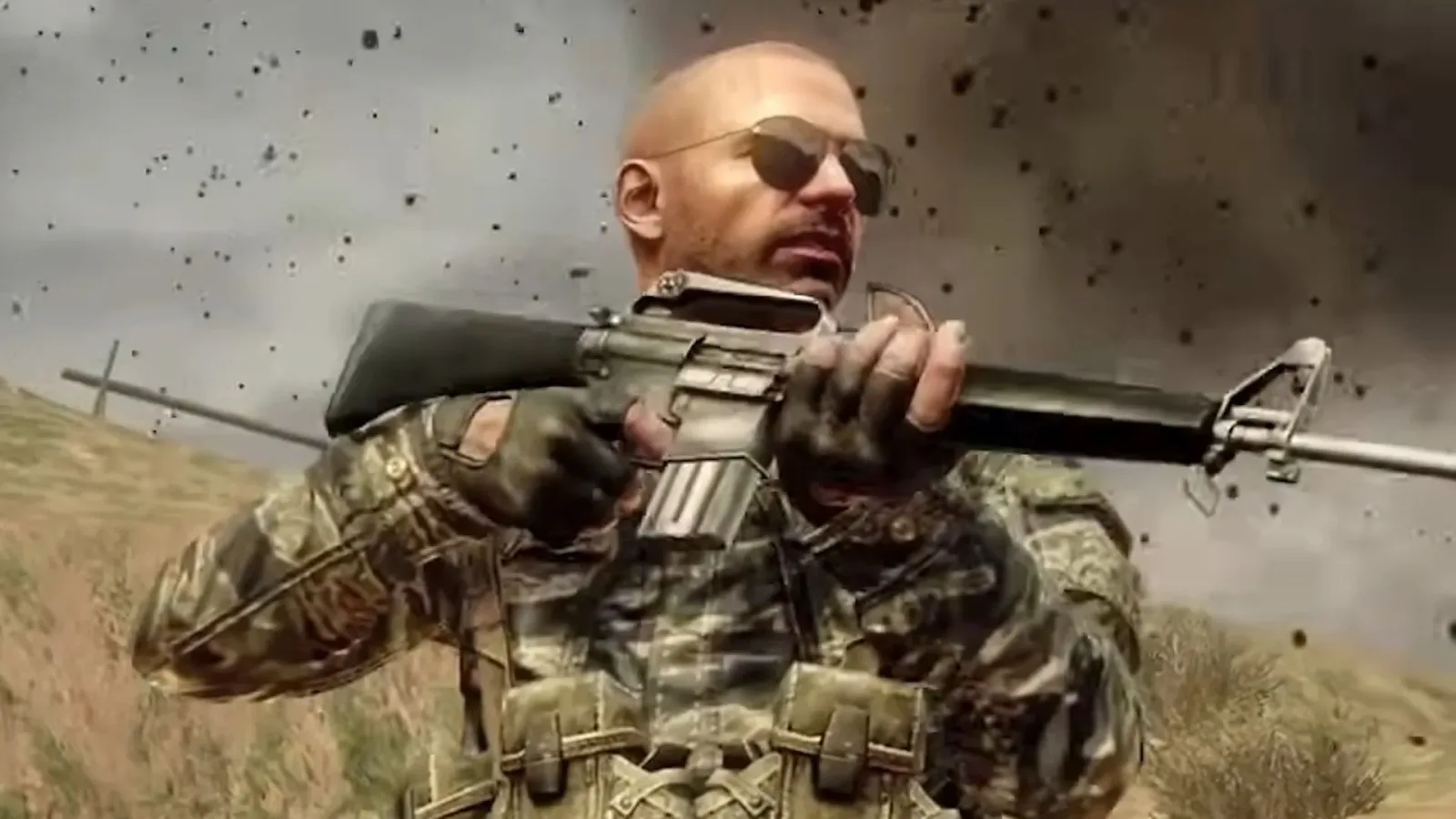
Call of Duty's future may be looking to its past. The unexpectedly strong performance of Call of Duty: Black Ops and Call of Duty: Black Ops 2 ports on PlayStation 4 and PlayStation 5 has convinced Activision that players are eager to revisit the series' more social, straightforward heyday. That lesson is now being applied to Call of Duty: Modern Warfare 4, while also shaping the thinking behind later entries.
Activision chief marketing officer Tyler Bahl said the company expected the two Black Ops releases to be successful, but did not anticipate the scale of their reception. The response, he suggested, uncovered considerable demand from players who wanted to return to the feeling of getting online with friends, playing for an evening, and enjoying a familiar multiplayer experience without the pressure of constantly chasing the newest thing.
"We are definitely leaning into the nostalgia of playing with your friends," Bahl said. "The Black Ops ports were huge successes. We thought they would do well; we didn't think they would do that well."
That result matters beyond a pair of older games becoming newly accessible on current PlayStation hardware. Call of Duty has spent years expanding, iterating, and competing across a rapidly shifting shooter market. A major audience response to older Black Ops games can be read as a reminder that technical progress, seasonal updates, and new modes are not the only things players value. For a substantial portion of the community, the appeal is rooted in shared routines, recognizable maps and mechanics, and the memories attached to playing with a regular group.
For useful background on this topic, read Stranger Than Heaven Trailer Sends Makoto Daito to 1915 Kokura With Snoop Dogg's Orpheus.
Black Ops ports revealed a demand Activision did not fully expect
The PS4 and PS5 releases of Black Ops and Black Ops 2 generated positive attention earlier in the year, even as the industry has seen an increasing number of remasters, remakes, re-releases, and surprise launches. Analysts indicated that the games appeared regularly near the top of sales charts. Activision has not publicly shared specific sales figures, but Bahl's comments make clear that the internal expectations were surpassed by a meaningful margin.
That distinction is important. Publishers often recognize the commercial value of nostalgia, particularly for a long-running series with the cultural footprint of Call of Duty. A legacy port can reach returning veterans, curious newcomers, and players who missed an earlier generation. But there is a difference between a reliable catalog release and one that signals a broader shift in audience sentiment. Activision's reaction suggests these Black Ops ports fell into the latter category.
Bahl characterized the interest as "pent-up demand" for the "good old days" of playing with friends on a Friday night. The phrase is not merely about older guns, maps, or visual styles. It points toward the social atmosphere associated with classic Call of Duty multiplayer: friends gathering in parties, moving from match to match, and turning a competitive shooter into a recurring social space.
That experience is difficult to reduce to one feature. It comes from the combination of familiar pacing, accessible multiplayer sessions, recognizable progression, and the sense that the game can be enjoyed casually as well as competitively. The popularity of the Black Ops ports indicates that this combination remains powerful, even after years of annual releases and evolving live-service expectations.
Modern Warfare 4 is taking lessons from classic Call of Duty
Activision is not presenting Modern Warfare 4 as a simple attempt to recreate old games. Instead, Bahl said the company has studied what made the Black Ops ports resonate and is bringing those lessons into the new release. He also indicated that the strategy will extend to future Call of Duty projects.
"But you can see that pent-up demand of being able to get back to the good old days of playing with your friends on a Friday night and having fun," Bahl said. "Modern Warfare 4 does that. We took a lot of learnings from [those ports] and are starting to apply them to not only this game, but future games."
For players, that statement sets an expectation rather than providing a detailed feature list. It does not confirm precisely which mechanics, systems, playlists, maps, or progression ideas may reflect the company's findings. Still, the direction is notable: Modern Warfare 4 is being framed in part around reconnecting players with a style of Call of Duty that feels communal, approachable, and rooted in the series' history.
There is a natural tension in that approach. Call of Duty cannot simply stand still. Each installment arrives in a marketplace that expects advancement, content support, and reasons to move on from previous games. Yet the Black Ops response has apparently reinforced the idea that innovation works best when it does not discard the qualities that made many players invest in the franchise in the first place.
In practice, a nostalgia-informed Modern Warfare 4 could mean a stronger emphasis on the social rhythm of multiplayer, a clearer understanding of what longtime players want from match-to-match play, or design choices that restore a particular sense of familiarity. Until more specifics are shared, those possibilities remain open. The confirmed takeaway is broader: Activision sees the success of the older Black Ops titles as useful guidance, not as a one-off commercial anomaly.
Matchmaking changes also pointed toward older Call of Duty values
The ports were not the only sign that Activision had begun reassessing what players appreciated about earlier games. Around the same period, the developers adjusted Call of Duty: Black Ops 7 matchmaking to more closely resemble the approach used by successful predecessors. That move added weight to the idea that the company was listening to feedback tied to older Call of Duty experiences.
Matchmaking can dramatically shape how a multiplayer game feels, even when its maps, weapons, and modes remain unchanged. It affects the level and consistency of competition, the likelihood of relaxed sessions with friends, and whether every match feels like a high-pressure test. For a franchise as large and as scrutinized as Call of Duty, changes in this area tend to carry outsized importance.
Connecting the Black Ops port performance with Black Ops 7 matchmaking changes and the positioning of Modern Warfare 4 suggests a larger pattern. Activision appears to be examining not just which old games players remember fondly, but why their time with those games felt different. The result may not be a full retreat from contemporary design, but it could lead to more deliberate choices about preserving familiar Call of Duty strengths.
Innovation remains essential as the shooter market changes
Even with nostalgia playing a larger role, Bahl emphasized that Call of Duty still has to evolve. He said audience feedback points toward players wanting games that are new, improved, or simply different. That is a significant balancing act for a franchise whose annual cycle has long been both a commercial advantage and a challenge.
"Where we go with future games, we have to innovate," Bahl said. "What we heard from the audience is they want new or better or different. The landscape is changing right under our feet."
His comments reflect the speed of the current market, where new games can be created and gain attention quickly, while player habits and tastes can shift just as fast. Call of Duty is no longer operating in a space where brand recognition alone settles the contest. Its audience has more options, and competitors are capable of generating significant momentum.
The pressure has become more visible as Call of Duty sales have gradually declined over the years. In 2026, the newest Battlefield became the year's best-selling shooter, ending a position of dominance Call of Duty had held for a long time. That does not erase Call of Duty's enormous reach or the value of its legacy, but it does underline why the company is looking carefully at what its players are asking for.
For Activision, the answer does not seem to be nostalgia alone. A legacy-minded approach can reconnect with former players and reward the existing community, but it must coexist with ideas that keep the franchise competitive in a changing environment. Bahl's description of the strategy suggests that the company wants both: the warmth and accessibility associated with classic nights of Call of Duty, plus new reasons for players to stay engaged.
A clearer message for longtime players
The success of Black Ops 1 and Black Ops 2 on PS4 and PS5 has given Activision a tangible signal from its audience. Players did not simply welcome the chance to revisit two older releases; their enthusiasm demonstrated that parts of Call of Duty's past remain central to what they want from its future.
Modern Warfare 4 is now positioned as an early test of how effectively the publisher can translate that message into a new game. The challenge will be to capture the social ease and recognizable appeal that players associate with earlier Call of Duty eras without treating nostalgia as a substitute for meaningful progress.
If Activision gets that balance right, the Black Ops ports may be remembered as more than successful returns. They could become the releases that clarified a new direction for Call of Duty: one that understands why players loved gathering with friends in the first place, while acknowledging that the next era of shooters demands more than a trip down memory lane.
Community
Discussion
Start the conversation.
No comments have been posted yet.