


MXGP 26, the official game of the FIM Motocross World Championship, has launched worldwide for PC, PlayStation 5 and Xbox Series X|S. Developed by Artefacts Studio and published by NACON, the new motocross simulation is built around the complete official 2026 season, including licensed bikes, riders and championship locations.
The release is positioned as a substantial technical rebuild rather than a small seasonal refresh. Development took place across two years, with the team replacing the previous technology with Unreal Engine 5, reworking the riding model, and making the changing condition of a motocross circuit central to every race. The result aims to capture an essential part of the sport: a course does not stay the same from the opening gate drop to the final lap.
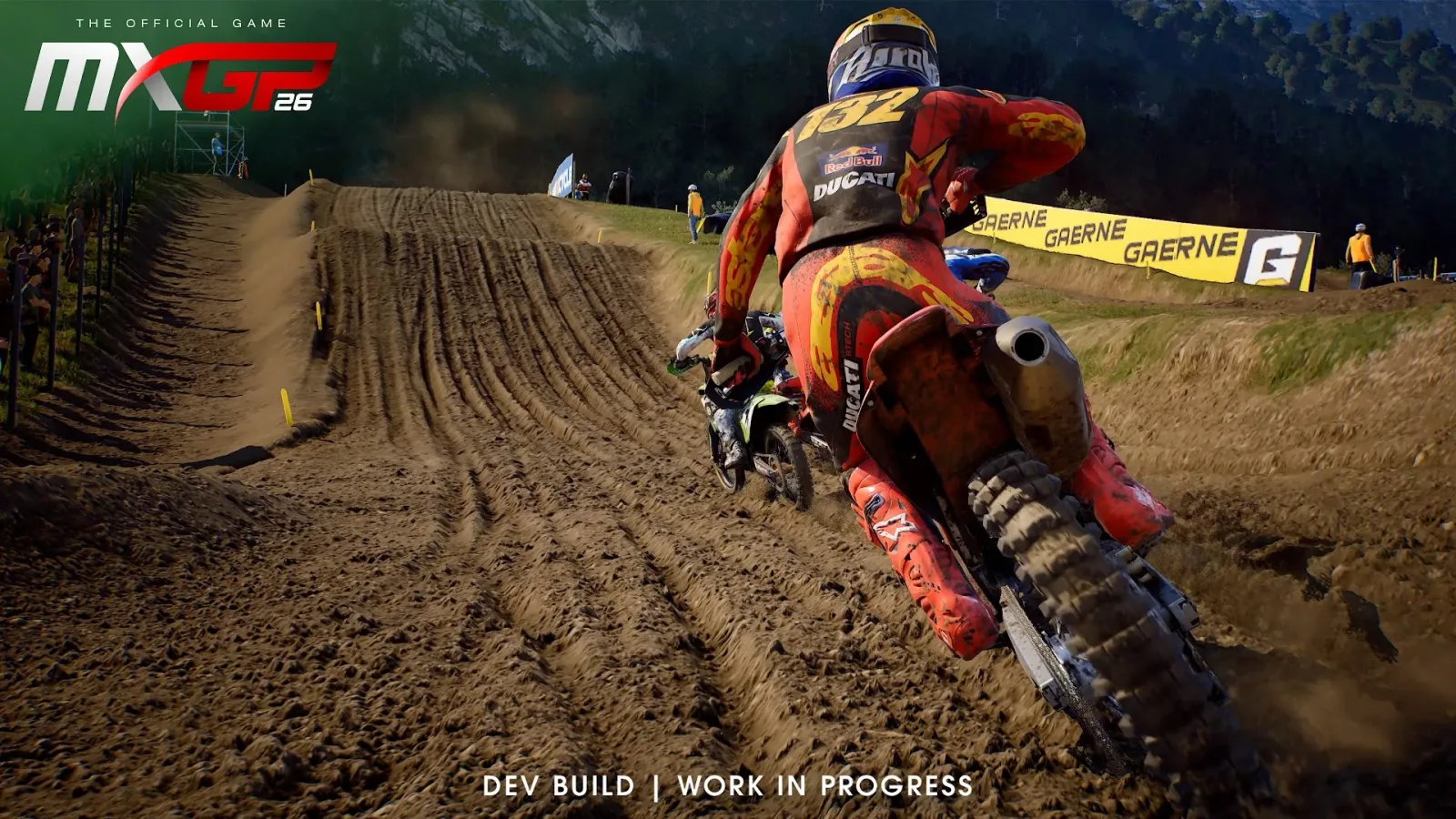
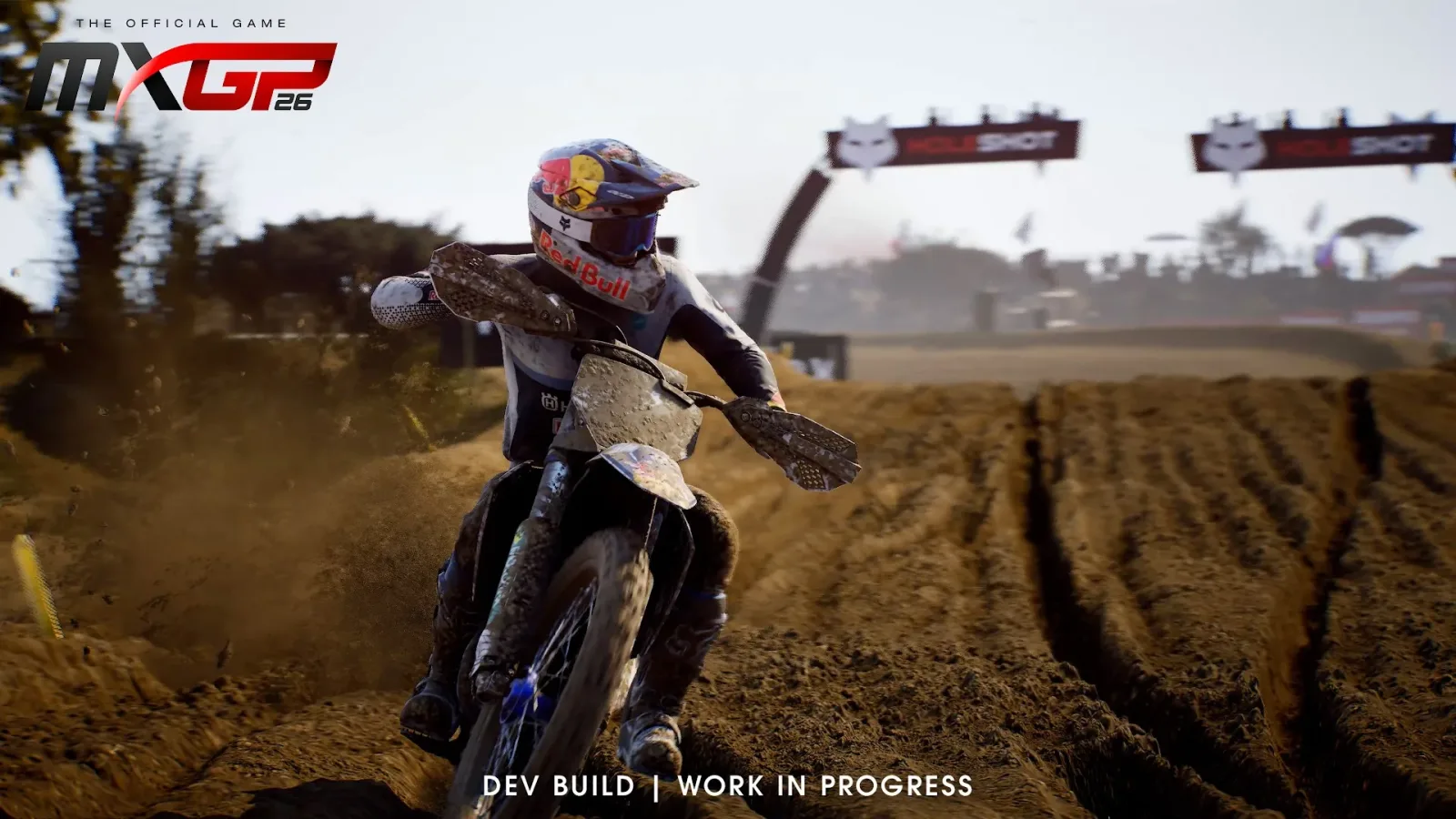
MXGP 26 is targeting 60 frames per second on its available platforms. Its headline feature is called Dynamic Deformation, a system designed to let repeated bike passages carve lasting ruts into the terrain. Those marks are not merely visual details. They are intended to change available racing lines and force riders to react as a circuit becomes more heavily used.
A motocross circuit that evolves during the race
Track deterioration is a defining feature of real motocross. A line that is clean at the start can become awkward, uneven or deeply grooved after a pack of riders has attacked it for several laps. MXGP 26 brings that concept into its races through persistent terrain changes. Riders can dig into the dirt over time, altering the surface encountered by everyone else on the track.
For useful background on this topic, read Sonic's Fortnite Debut Draws 1.5 Billion Rings and 14 Million Eggman Defeats in One Weekend.
That should make line selection a more meaningful part of a race. The fastest route early on may not remain the best option once ruts develop, while a section that initially seems less attractive could offer a more stable alternative later. This creates a changing relationship between racing speed, control and risk. A player who knows a circuit will still need to account for what has happened on the circuit during the current event.
The feature also gives the game's official venues an additional layer beyond their layouts and scenery. Instead of functioning as static arenas, they are meant to record the effect of the action taking place on them. For a discipline where loose surfaces and increasingly rough landings shape how riders approach a race, that is a significant design focus.
Rebuilt riding physics and rider movement
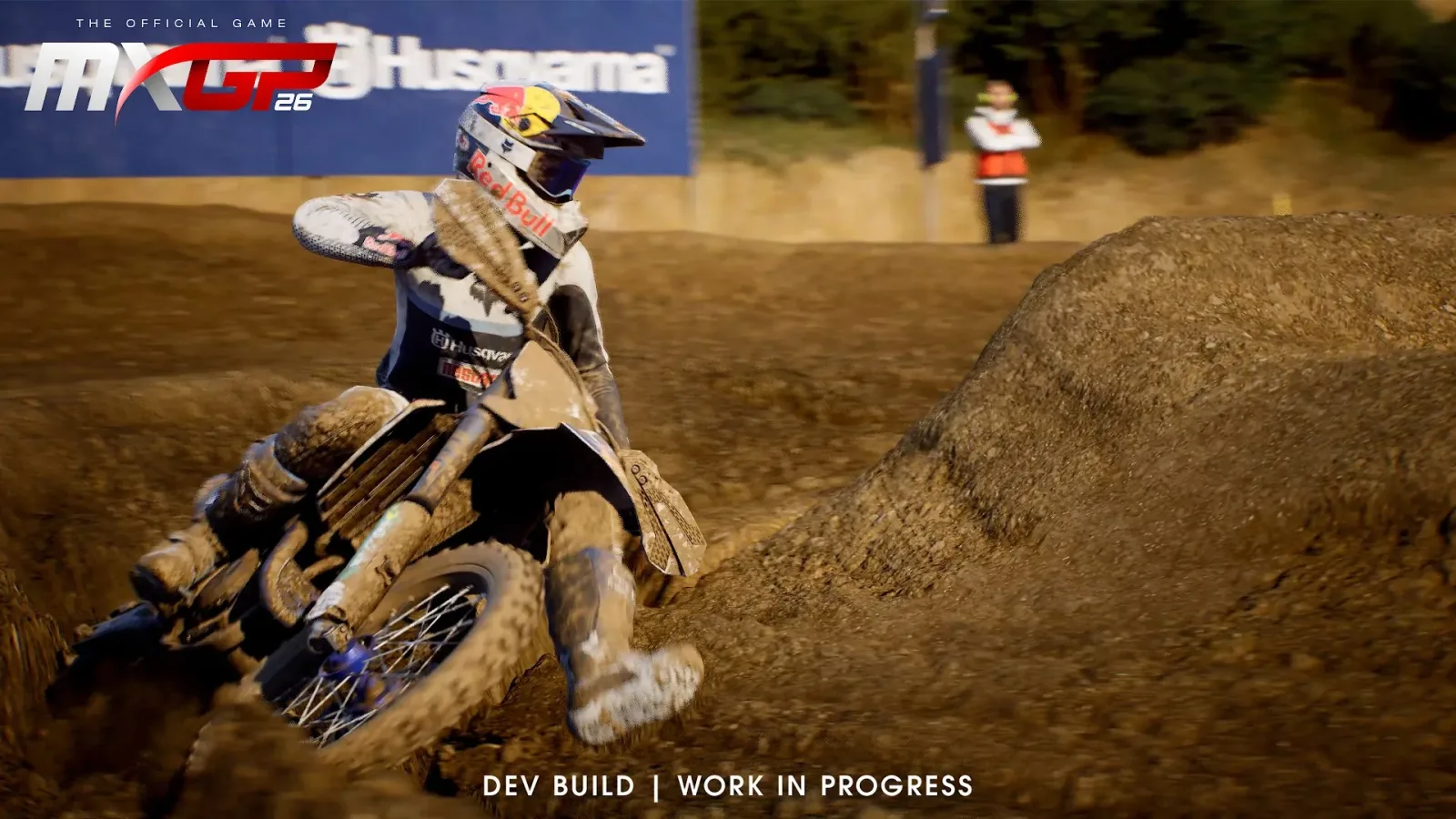
Artefacts Studio has also completely redesigned the riding physics for MXGP 26. The new system places particular emphasis on weight transfer management and dynamic rider kinematics. In practical terms, the way a rider's body and motorcycle respond to braking, acceleration, jumps and uneven ground is intended to play a more active role in the handling model.
For another perspective on this story, read MXGP 26 Launches on PC, PS5 and Xbox Series X|S.
Motocross games need to balance the machine itself with the rider positioned above it. Controlling a bike across unstable terrain is not only about steering toward the next corner; it is also about managing momentum, stability and the changing forces created by bumps, landings and ruts. MXGP 26's redesigned approach is built to reflect that interaction more closely.
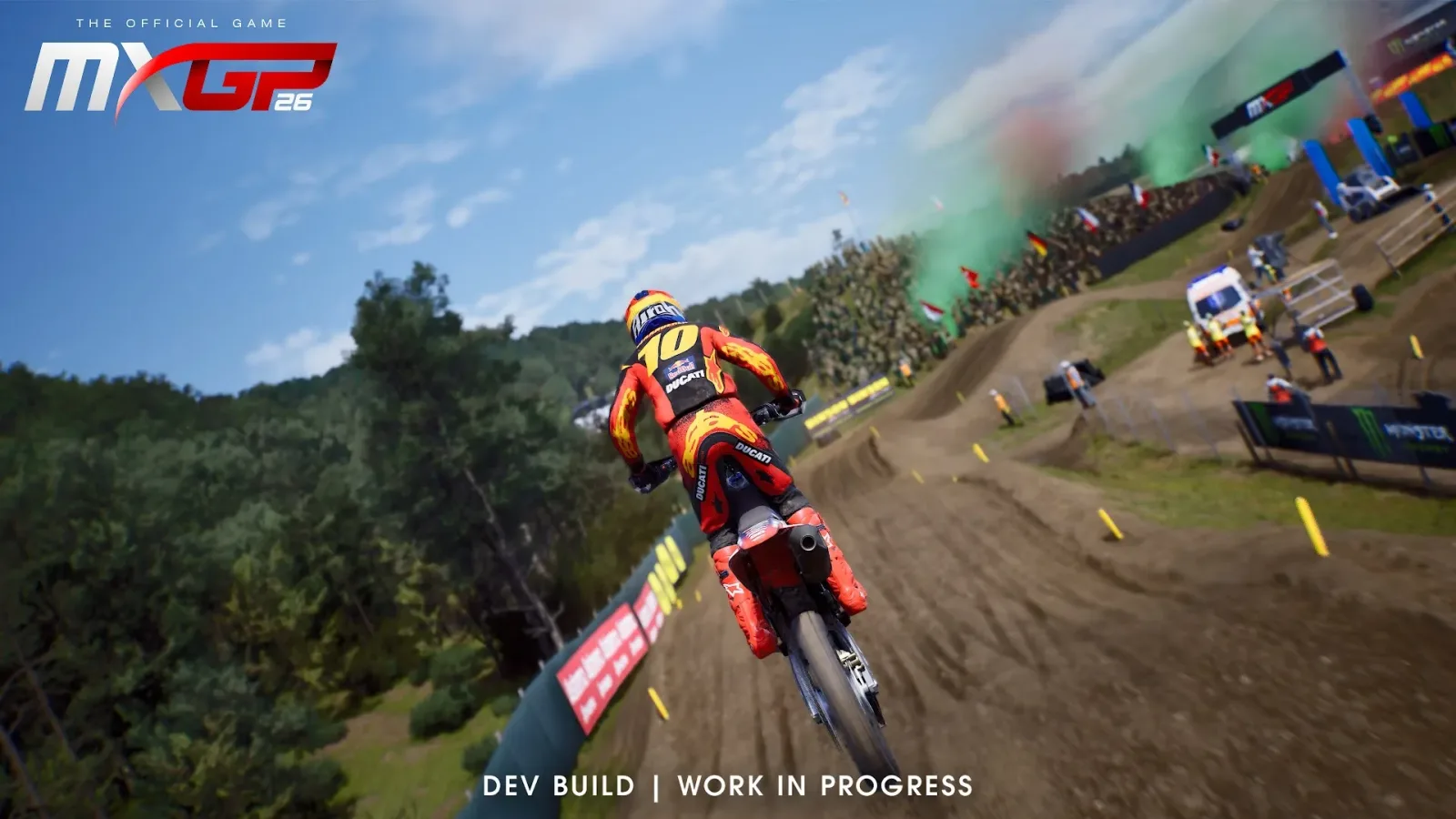
The game highlights its helmet camera as a particularly immersive way to experience that work. This perspective puts players closer to the rider's viewpoint, where the changing terrain, narrow race lines and abrupt elevation changes can feel more immediate. It may be especially suited to players who want to focus on the sense of speed and the physical challenge presented by the circuit, while other camera options can remain useful for reading the wider track and nearby competitors.
Combined with the Dynamic Deformation system, the revised physics suggest that consistency will matter as much as raw pace. A quick lap is valuable, but keeping control while the surface changes could be equally important across a full Grand Prix or Championship event.
The complete 2026 championship season
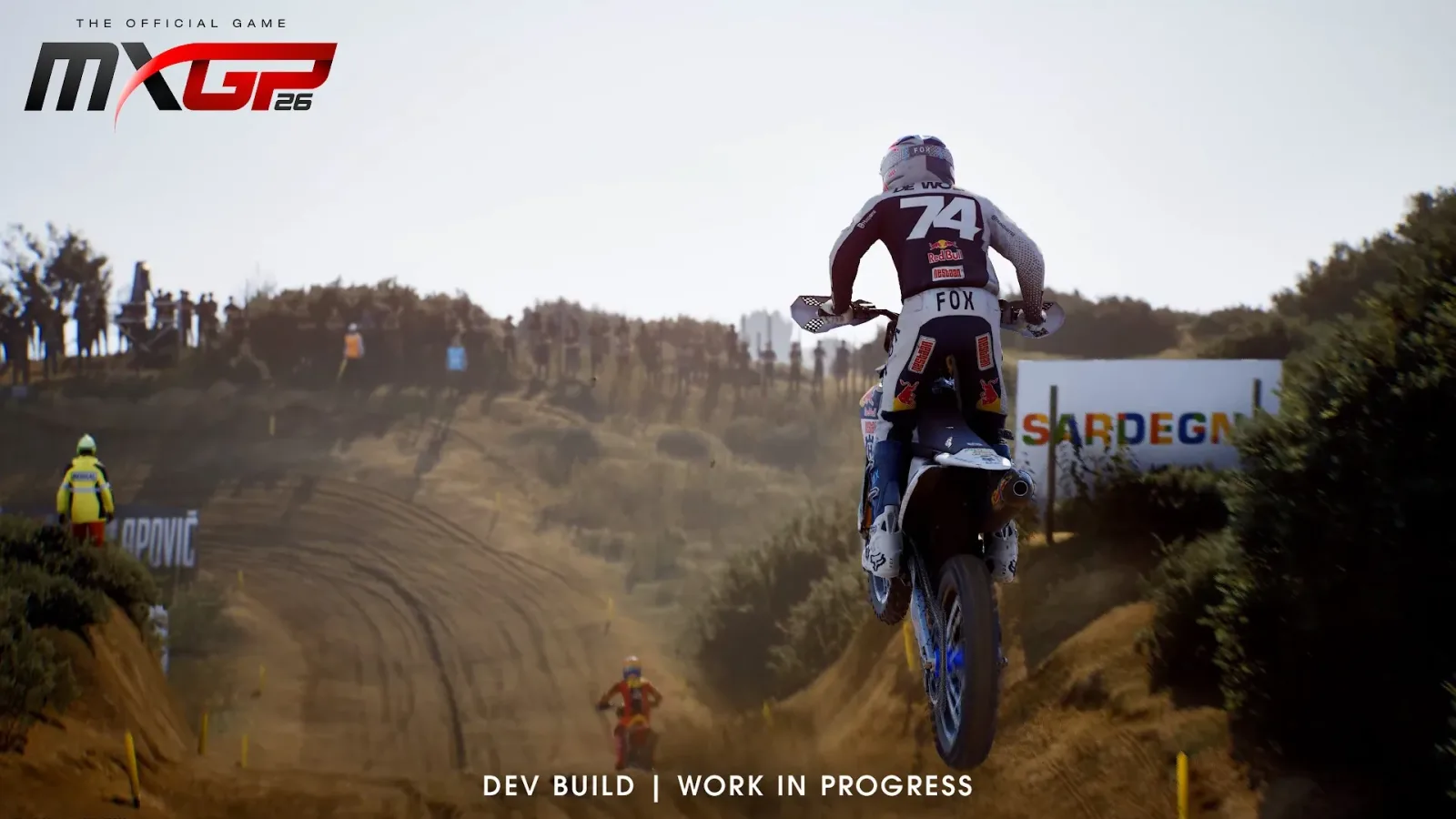
MXGP 26 includes the full official 2026 season, with 16 official bikes representing manufacturers including KTM, Yamaha, Honda, Kawasaki, Husqvarna, GasGas, Triumph, Fantic and Beta. The game also features riders from the MXGP and MX2 classes, with Romain Febvre, Jeffrey Herlings and Kay de Wolf among the named competitors.
The licensed season extends to 19 international championship tracks. Among the locations specifically included are Riola Sardo, Pietramurata and Bariloche. These circuits provide the core places for players to test the game's evolving-surface technology, with each location bringing its own setting and layout to the calendar.
Official representation remains a key attraction for motorsport games, and motocross is no exception. The inclusion of real manufacturers, riders and venues gives players a route into the season's established identities, whether they want to select a favorite bike, race alongside familiar names, or work through a calendar of recognized championship rounds.
With both MXGP and MX2 riders represented, MXGP 26 also reflects the two categories at the heart of the championship. The game does not present the season as a generic collection of off-road races; it is built around the official championship framework and the people, machinery and circuits associated with it.
Race, practice and compete online
MXGP 26 offers several ways to play depending on whether players want a single event, a longer season or open practice time. Its instant options include Grand Prix and Time Attack. Grand Prix is suited to jumping into a race event, while Time Attack gives players an opportunity to concentrate on improving individual laps and learning the details of a course.
For a more extended campaign, the game includes a full Championship mode. That mode lets players take on the structure of the season rather than treating each race as an isolated contest. With 19 championship tracks available, it provides an avenue for those who want to engage with the official calendar over a series of rounds.
Online multiplayer supports up to 10 players. Competitive multiplayer should be a natural fit for the new terrain systems, since every racer contributes to the condition of the circuit. In a full online group, a preferred corner line can become increasingly difficult as multiple riders repeatedly use it, potentially creating new overtaking opportunities or punishing a rider who refuses to adapt.
Outside formal events, players can head to The Compound, a multi-square-kilometre open-world training area. The space is designed for practice and exploration, offering a less structured environment than the championship tracks. It gives players somewhere to become familiar with handling, experiment with the physics system and spend time riding without the immediate demands of a race weekend.
Fox Holeshot Edition launches alongside the standard game
Alongside the main release, MXGP 26 has a Deluxe Fox Holeshot Edition. This edition includes five exclusive Fox liveries as well as full access to MXGP TV. No additional details about separate content plans or future releases have been announced here, but the Deluxe edition is available at launch with those listed extras.
The name is fitting for a sport where the first run into the opening corner can set the tone for an entire race. In MXGP 26, however, the challenge is not limited to getting a strong start. As laps pass and the dirt changes under the bikes, maintaining that advantage may demand a different kind of precision.
MXGP 26 availability
MXGP 26 is available now worldwide on PC, PlayStation 5 and Xbox Series X|S. Its combination of official 2026 championship content, 16 licensed bikes, 19 tracks, redesigned rider-and-bike physics, dynamic terrain deformation and multiple solo and multiplayer modes gives motocross fans a new official way to tackle the season.
For players most interested in simulation detail, the most important element will likely be how the evolving circuits and revised handling work together over a full event. The surface beneath the wheels is no longer intended to be a passive backdrop. In MXGP 26, it is part of the race itself.

Community
Discussion
Start the conversation.
No comments have been posted yet.