

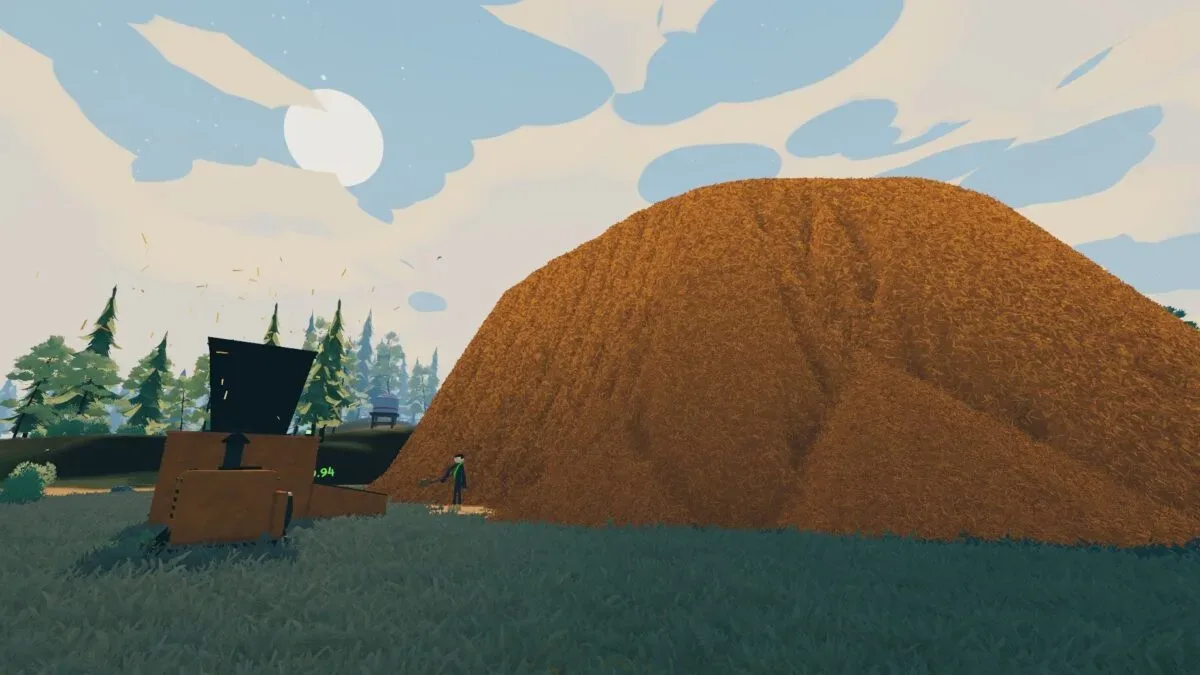
The unusually crowded Steam rush around Needle In A Haystack Simulator has produced an especially strange new dispute: the developers behind one clone of the viral sorting game say that another clone copied their work.
NoGlyph, the developer of the Steam game Needle In A Haystack, has accused Little Field Studios' newly released A Game About Needle In A Haystack of incorporating code from NoGlyph's project. The allegation is notable not merely because both games follow in the footsteps of Studio Bitdot's original haystack title, but because NoGlyph claims the newer release retained highly specific technical remnants from its game, including identically named classes, matching methods, and error messages that allegedly reference files not present in the accused game.
It is a dispute built on layers of imitation, but it also points to a bigger concern for independent developers: the prospect that games can be reproduced, modified, and republished at remarkable speed with AI-assisted tools and little meaningful barrier to entry.
Embedded X/Twitter post
Embedded X/Twitter post
A crowded field after a viral hit
Studio Bitdot's Needle In A Haystack Simulator drew widespread attention in August after clips of its incremental sorting premise circulated across social media. The simple, oddly compelling concept centers on the task suggested by its name: methodically working through an enormous haystack in search of a needle. Its visibility was quickly followed by a flood of similarly named Steam releases.
For useful background on this topic, read Resident Evil Fan Project Reimagines Cregger's Film as a PS1-Style Survival Horror Game.
By mid-October, at least 14 apparent clones of the original concept were available on Steam. Their names have varied only slightly, with releases including titles such as A Needle In a Haystack and Story of The Needle In a Haystack. The rapid appearance of these games made the situation an obvious example of how quickly a small viral success can attract copycats, even when the original game is itself built around a straightforward idea.
NoGlyph's Needle In A Haystack arrived on Steam on September 29. Little Field Studios' A Game About Needle In A Haystack followed on October 16. One day later, on October 17, NoGlyph publicly outlined its concerns about the newer game's files.
NoGlyph's own release is still a clone of Studio Bitdot's game in the broader creative sense. However, the team's complaint is not simply that another developer made a similarly themed needle-searching game. The allegation instead focuses on the apparent reuse of implementation-level work from NoGlyph's specific version.
The technical details behind NoGlyph's claim
In its Steam post, NoGlyph said it examined files associated with A Game About Needle In A Haystack and found 13 classes that allegedly matched its own class names. The developer further stated that more than half of the functions in that portion of the code matched exactly.
Perhaps the most unusual detail is NoGlyph's claim that some of its error messages remain intact in the other game, word for word. The team highlighted one error that it says points to a shader from NoGlyph's own project--a shader that does not exist in Little Field Studios' release.
"When we looked through [A Game About Needle In A Haystack's] files, we found 13 of our classes inside it with the exact same names," NoGlyph wrote in its Steam statement.
Comments from NoGlyph lead developer Jahvin added a more precise figure. Jahvin said that the allegedly copied material includes 39 same-named methods that are "byte-for-byte identical." If accurate, that would go considerably beyond two games independently arriving at similar logic for a simple gameplay loop. Identical naming conventions, exact method matches, and references to an unrelated project asset could all be indicators that material was transferred from one project into another rather than recreated from scratch.
At the time of the allegation, the information publicly described by NoGlyph was its own analysis of the game files. The claims have not, based on the available details, been independently adjudicated through a court case or a public platform enforcement decision. Little Field Studios' response was not included in the material surrounding NoGlyph's statement.
Why AI-assisted copying is part of the conversation
NoGlyph did not explicitly label Little Field Studios' release as AI-generated or "vibe-coded" in its Steam post. Even so, the specific kind of code overlap described by Jahvin has fueled discussion of AI-assisted decompilation and replication.
In broad terms, decompilation involves turning a compiled program back into a readable approximation of its source code. It is not a perfect reversal process, and software licenses, copyright questions, technical protections, and local laws can all affect how such activity is treated. But AI tools can potentially make the output easier to interpret, reorganize, or convert into something usable within a new project. A developer could theoretically use an AI assistant to explain recovered code, rebuild portions of a program, rename components, or generate replacement structures around copied material.
The concern is not limited to whether an AI model writes every line. In practice, a person can use automated tools to accelerate the copying process while still making selective edits, adding new assets, or changing a game's presentation. That can make questionable projects faster to produce and potentially harder for small teams to track down before they reach storefronts.
For NoGlyph, the alleged presence of its own error messages may be especially important. Error strings can reveal the history of a project in ways that visual similarities cannot. A game can share a premise, genre, interface conventions, or even familiar mechanics with another title without necessarily sharing its code. But a message tied to a shader absent from the new project may be harder to explain as mere coincidence.
Community reaction is divided
The dispute has not generated universal sympathy for NoGlyph. Some Steam users have characterized the situation as karma, arguing that NoGlyph was already trying to benefit from the attention around Studio Bitdot's original game. That reaction reflects a common view in clone-heavy spaces: developers who imitate a breakout success may find it difficult to draw a clear moral line when they become targets of imitation themselves.
Yet the distinction between copying an accessible premise and allegedly copying specific code remains significant. Game ideas, basic rules, and genres have historically been difficult to monopolize. Countless games can ask players to sort objects, search environments, solve puzzles, or chase incremental progress. Directly taking another developer's code, project structures, written messages, or proprietary assets is a different category of accusation.
That difference matters even in situations where the original creative relationship is messy. A clone maker can still create original code, art, tools, and systems while pursuing a derivative concept. Conversely, a game that changes a title, swaps artwork, and follows a trend may still face serious scrutiny if it contains copied implementation material from a competitor.
The growing pressure on indie developers
The haystack dispute arrives amid broader anxiety over how quickly AI tools could enable game imitation. One recent example involved the upcoming indie game Escape the Walls, which was reportedly recreated on Roblox within 24 hours after footage was shown publicly. The creator of that Roblox version openly credited Claude for doing the work, claiming to have largely watched as the tool handled it.
Another team, Alliance Arts, cancelled plans to release a Steam demo for Drunken Goddess Reflux. The company expressed concern that putting a demo out before launch could make it easier for imitators to quickly reproduce the game's presentation and gameplay through AI-assisted processes.
These situations create an uncomfortable calculation for smaller studios. Demos, trailers, festival builds, early-access launches, and public development updates are among the best ways to build interest in a game. They let players offer feedback, give creators a chance to prove that a project exists, and help a team attract wishlists before release. But every public build and video also offers more reference material for opportunistic imitators.
Large publishers may have dedicated legal teams, established platform contacts, and the resources to investigate suspected infringement. Independent teams often do not. Even when they believe a game has copied their work, gathering evidence, contacting storefronts, issuing takedown demands, and pursuing legal action can take time and money that a small studio simply does not have.
A bizarre case with serious implications
There is undeniable absurdity in a clone of a viral game accusing another clone of copying it. The nearly identical titles alone make the story difficult to follow. But beneath that irony is a practical issue that reaches far beyond haystacks and needles.
As development tools become more accessible and AI systems become more capable of interpreting code and recreating visible designs, creators may face more disputes over where inspiration ends and appropriation begins. The answer cannot be that no one is allowed to build on popular genres or make games with similar concepts. Competition and iteration are fundamental to games. The issue is whether competitors are making their own work or simply harvesting someone else's.
NoGlyph's allegations against A Game About Needle In A Haystack have put that question in unusually stark terms. If the claimed identical methods and lingering error messages are borne out, the case would illustrate how a project can carry technical fingerprints from the game it allegedly copied. For indie developers watching from the sidelines, it is another reminder that the cost of showing work early may be changing--and that the tools used to make games faster can also make copying them faster.
Community
Discussion
Start the conversation.
No comments have been posted yet.