

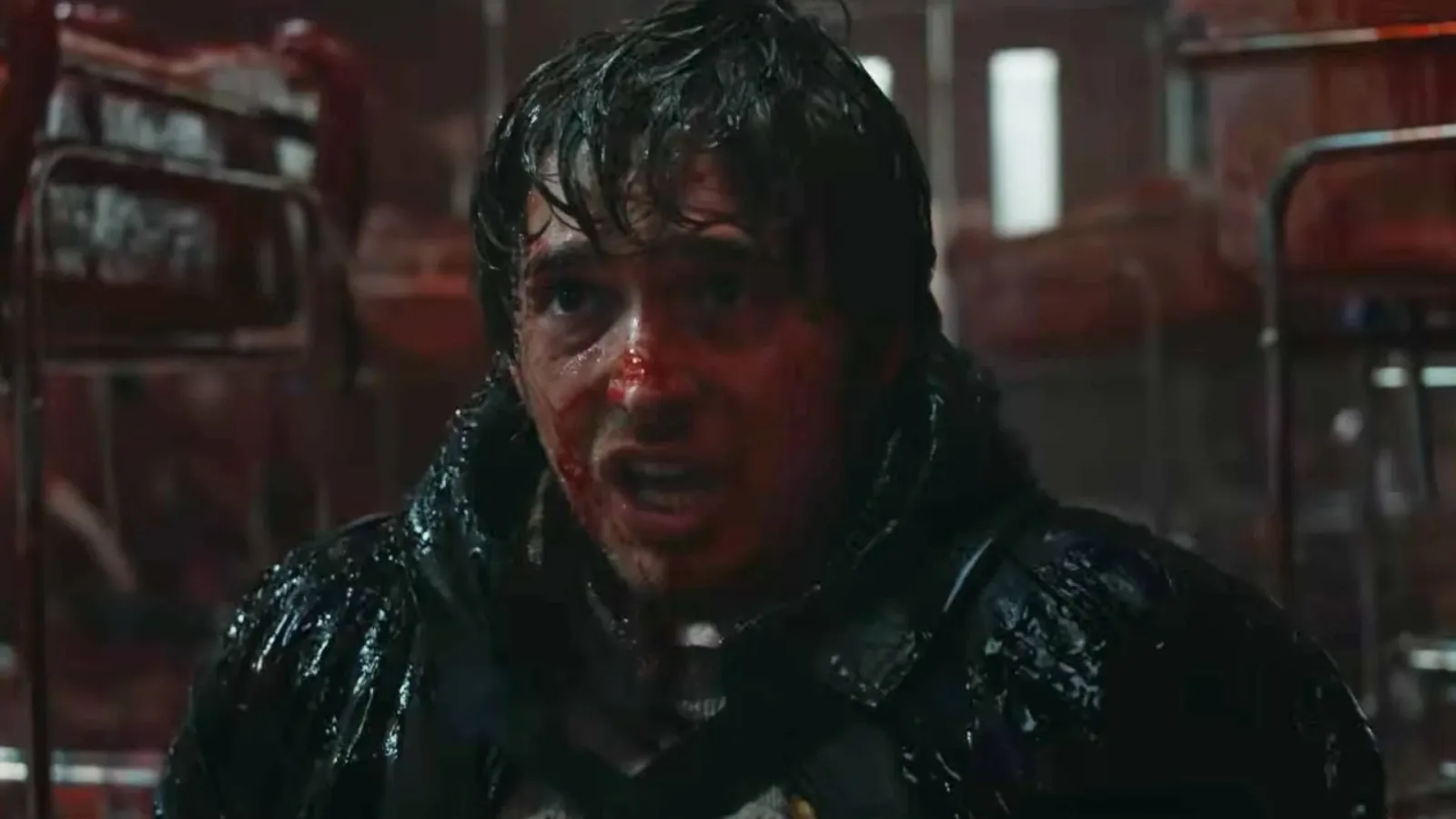
A new Resident Evil fan project is taking an unusual route through the franchise's many adaptations. Rather than revisiting one of Capcom's games directly, developer Julian Zamora, who also posts as chicanogoth on Instagram, is building a game inspired by Zach Cregger's recent Resident Evil film. The result is effectively an adaptation of an adaptation: a survival-horror game translating a cinematic interpretation of Resident Evil back into interactive form.
Currently referred to as Resident Evil: The Movie The Game, the project channels the visual language and tension-building methods of the original PlayStation-era entries. Its early footage presents fixed camera angles, deliberately restricted sightlines and a low-fidelity horror atmosphere reminiscent of the series' formative years. While the work is still in development and its eventual availability has not been announced, the initial glimpse gives the project a clear identity: this is not simply a movie scene recreated in a modern action-game format.
A familiar scene rebuilt for survival horror
The showcased sequence draws from an early moment in Cregger's film. Bryan, played in the movie by Austin Abrams, seeks shelter in a barn situated far from help while dealing with a snowstorm and an infected killer dog. Zamora's game version recreates the essential scenario, placing the player near the barn as the dog gives chase.
That setup is especially suited to Resident Evil's older design traditions. A barn in a storm is a naturally claustrophobic space even before a hostile creature enters the picture. Add the uncertainty of where the animal is, what route it may take, and whether the player can safely reach shelter, and the sequence becomes a compact survival-horror encounter rather than merely a direct scene-by-scene recreation.
For useful background on this topic, read Dan Houser Says Red Dead Redemption and Bully Both Came Close to Never Happening.
The footage appears to represent work from an early stage, but it communicates the central idea effectively. The barn remains in view as a visual destination, while the pursuing dog supplies immediate pressure. It is a simple arrangement, though one that plays into a classic horror-game principle: players do not need to see every threat for a situation to feel dangerous. In fact, seeing less is often the point.
Fixed cameras remain a powerful horror tool
Fixed camera angles were once a technical and stylistic hallmark of the earliest Resident Evil games. They enabled carefully composed scenes and helped developers use pre-rendered backdrops, but their most lasting effect was on suspense. A fixed perspective can conceal a corridor, deny the player a clear view of an approaching enemy, or frame an ordinary doorway in a way that makes it feel ominous.
Zamora's project embraces that approach. Instead of handing players a fully controllable camera that can scan every corner, it uses selected viewpoints to determine what is visible and what stays out of frame. That decision immediately connects the fan game to classic survival horror, including the original PlayStation Resident Evil titles.
It also makes sense for an adaptation of a film. Cinema relies on composition, editing and controlled perspective to guide viewers through a scene. Fixed-camera game design can produce a comparable feeling without eliminating player agency. The player still chooses where to move and how to respond, but the creator determines the image presented at each moment. In a horror setting, that blend can make a player feel involved while still being manipulated by the framing.
Modern Resident Evil games have frequently favored closer, more flexible camera perspectives, whether through over-the-shoulder action or first-person immersion. Those formats can be extremely effective, but they produce a different kind of fear. The older style is more theatrical and more withholding. It turns level geography into part of the scare, since players may need to advance toward spaces they cannot properly inspect.
Built in Godot, with a Code: Veronica-like look
Resident Evil: The Movie The Game is being made with Godot. Zamora has said they are still working out how to achieve the pre-rendered, flat environmental look associated with the PlayStation-era games. As a result, the current presentation is leaning closer to Resident Evil Code: Veronica, an observation Zamora has embraced rather than treated as a setback.
That distinction is important. The earliest Resident Evil games used carefully prepared backgrounds, with character models and interactive elements layered into those scenes. Code: Veronica, meanwhile, moved toward more fully polygonal environments while retaining many of the series' traditional fixed-angle sensibilities. A Godot project using real-time 3D spaces can therefore evoke the latter particularly well, especially when its camera placement, movement and overall pacing favor classic survival horror.
For a fan project, that is a practical and creatively appealing direction. Perfectly reproducing every visual trick of a 1990s console game is not necessary to capture the mood players associate with that era. A limited field of view, stark architecture, isolated locations and threatening enemy encounters can communicate the same design lineage. The project's early barn scene already points toward that balance: it is recognizably rooted in old-school Resident Evil without needing to be an exact technical imitation of any one game.
Zamora has expressed enthusiasm about sharing more progress soon. Beyond the initial scene, however, there are no confirmed details on the project's scope, additional locations, playable characters, mechanics, release plans or platforms. As with many fan-made works, the concept and prototype are the clearest available indicators of what it aims to become.
A film success that is already inspiring new fan work
Cregger's Resident Evil reboot has proven to be a major box-office success, surpassing the gross of his previous horror hit, Weapons. Its reception has also highlighted the film's combination of horror and comedy, with praise for how it approaches material that has long crossed between games, movies and broader genre culture.
That response helps explain why a fan developer would be drawn to reinterpret the movie so quickly. Resident Evil has always been unusually adaptable because its fundamentals work in multiple forms: isolated protagonists, dangerous outbreaks, bizarre creatures, tense exploration and moments of dark absurdity. The franchise can support bombastic action, slow dread, puzzle-solving, body horror and campy spectacle, often in the same story.
A film adaptation can emphasize some of those qualities while reducing the role of player interaction. A fan game such as this one can reverse that process, restoring uncertainty through movement, enemy pursuit and environmental navigation. The barn sequence demonstrates how that translation may work. On screen, Bryan's predicament is experienced through performance and editing. In a game, the player is asked to survive it, potentially turning a familiar scene into a more personal source of panic.
The appeal of a deliberately smaller Resident Evil experience
Fan projects frequently stand out not because they attempt to rival a large commercial release in scale, but because they focus intently on one particular version of a series. Zamora's game is appealing for precisely that reason. It does not appear to be chasing the size, production values or combat scope of a contemporary Resident Evil release. Instead, it is concentrating on the atmosphere of a particular movie and filtering it through a specific era of game design.
That makes the fixed cameras more than a nostalgic flourish. They establish the game's point of view. A player who knows modern third-person horror games may expect to keep an enemy in sight while running. In a fixed-camera pursuit, the threat can vanish as soon as the perspective changes, forcing the player to move with incomplete information. The next camera angle might reveal safety, a dead end, or the creature already much closer than expected.
Similarly, the snowbound barn setting carries the potential for a concentrated, almost stage-like encounter. It has the kind of limited geography that can make classic survival horror memorable: a place that seems understandable at first glance but becomes increasingly stressful when escape routes, enemy behavior and camera framing start working against the player.
What comes next remains open
For now, Resident Evil: The Movie The Game remains an in-progress fan production with only a small portion of its intended experience publicly shown. There is no confirmed timetable, no announced release platform and no indication of how extensively it will adapt Cregger's film. Its current state should therefore be viewed as a promising concept and an early development effort rather than a finished game with established features.
Still, the project has already found a compelling angle. Resident Evil has spent decades changing shape across sequels, remakes, films and other media, but its older survival-horror grammar remains instantly recognizable. By applying fixed camera angles and a Code: Veronica-like 3D feel to a recent movie scenario, Zamora is exploring a version of the franchise that feels both new and strangely familiar.
Whether the completed fan game remains a short recreation or grows into something broader, its premise captures a durable truth about Resident Evil: a locked-down perspective, a lonely building and an unseen monster can still do a great deal of work.
Community
Discussion
Start the conversation.
No comments have been posted yet.