

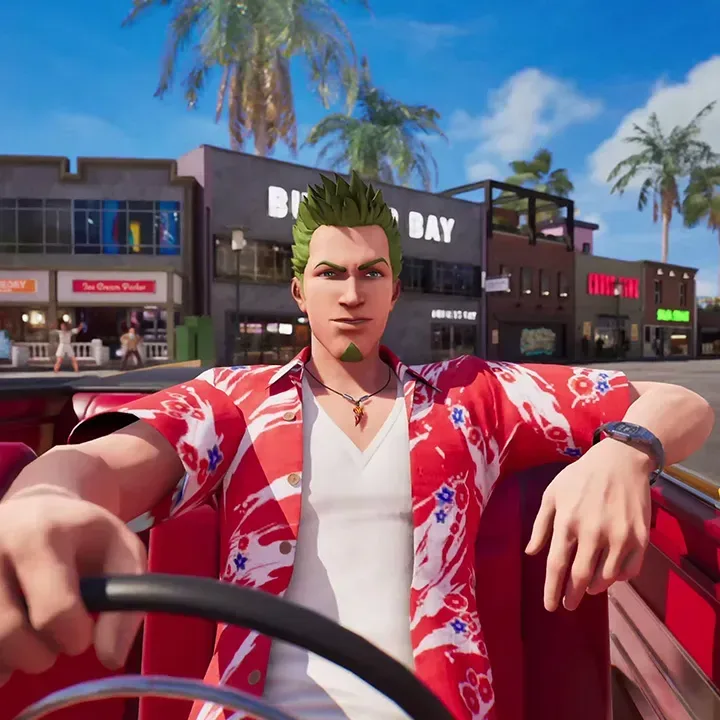
Netflix is expanding its Sega game adaptation plans with three projects that could scarcely be more different in tone: a live-action Crazy Taxi comedy film, a new animated Sonic series aimed at upper pre-school viewers, and a live-action crime movie based on RGG Studio's forthcoming Stranger Than Heaven.
The trio gives Sega's catalogue an unusually broad screen presence. Crazy Taxi represents the company's Dreamcast-era arcade energy, Sonic remains one of gaming's most recognisable family characters, and Stranger Than Heaven is a new property from the studio behind Like a Dragon and Yakuza. Netflix has not announced release dates for any of the three productions, and many key details remain under wraps.
What has been established is that the projects will not share one formula. The proposed Crazy Taxi movie is being positioned as a live-action comedy. The Sonic series will be a high-energy children's animation with an emotional foundation. Stranger Than Heaven, meanwhile, is being developed as a live-action crime story set against a changing early 20th-century Japan.
Crazy Taxi heads toward a live-action comedy
The first of the newly announced Sega adaptations is Crazy Taxi, built around a game series whose appeal was always immediate: get passengers to their destination fast, take wild shortcuts, cause spectacular collateral damage, and keep the momentum going before the clock runs out. The concept is naturally suited to action, but Netflix and Sega are specifically framing the film as a comedy.
For useful background on this topic, read Rayman Legends Retold Delayed to December as Ubisoft Adds More Polish Time.
Dan Gregor and Doug Mand are writing the movie. The pair previously worked on the 2025 reboot of The Naked Gun, making their involvement a notable clue to the potential comedic direction. A property like Crazy Taxi is remembered not simply for driving but for exaggerated chaos, a loud arcade personality, and the pleasure of treating an ordinary city commute as an increasingly absurd stunt sequence. A comedy approach could preserve that spirit without trying to turn the game's score-chasing structure into a conventional dramatic plot.
Neal H. Moritz, Toby Ascher, and Toru Nakahara are attached as producers. All three are producers on the Sonic screen franchise, giving the new film a creative connection to Sega adaptations that have already found a substantial mainstream audience.
"This film is for anyone who's spent hours behind the wheel of a yellow cab on their Dreamcast, with the music cranked up, smashing through everything in sight just to make the next fare," Moritz and Ascher said.
That statement points directly at the version of Crazy Taxi that long-time players remember: the yellow cab, the pressure of the next fare, and the gleeful destruction that comes from prioritising speed over sensible driving. It also suggests that nostalgia will be an important ingredient, though there is no word yet on casting, story specifics, setting, or how closely the movie will draw from any individual entry in the series.
For Sega, the project is also an opportunity to revisit a property that has remained culturally familiar well beyond its original arcade and Dreamcast heyday. Its basic idea remains easy to understand in seconds, while its personality is distinct enough to separate it from more grounded car-chase movies. The challenge will be turning that instantly recognisable arcade rush into a feature-length story without sanding away the game's reckless charm.
A new Sonic show is being built for younger viewers
Netflix is also developing a new Sonic animated series with Carlos Stevens and Sega head producer Toru Nakahara. Rather than continuing in precisely the same lane as the streamer's existing Sonic animation, the new show is intended for an upper pre-school audience.
The description promises Sonic and his friends as heroes in a "high-voltage" comedic series that is still emotionally grounded. The target audience may be young, but the stated ambition is not to make the characters entirely soft or passive. The series is being designed for children looking for a bit of edge, attitude, and the feeling that Sonic's group is their own ideal crew of friends.
That positioning fits the flexibility Sonic has shown across games, films, and television. The character can support broad physical comedy and colourful adventure, but he also carries an identity rooted in confidence, speed, and rebellious cool. For a pre-school-oriented series, balancing those traits will be central. The language around the show indicates an attempt to retain Sonic's distinctive swagger while presenting stories and emotional stakes accessible to a younger audience.
Nakahara offered a concise preview of the intended mood, telling viewers to expect something "cute yet cool" from the Sonic project. That phrase captures the difficult balance the series is likely aiming for: approachable character designs and child-friendly comedy on one side, with enough style and attitude on the other to feel recognisably Sonic.
Netflix already has three seasons of Sonic Prime available exclusively on the service. The newly announced production therefore expands Sonic's footprint on the platform rather than replacing an absence. It also demonstrates how Sega's mascot can be tailored for separate audiences. The existing screen franchise has reached viewers through different formats and age ranges; this new animated effort is designed to welcome especially young fans into that world.
Stranger Than Heaven brings RGG Studio's new world to live action
The third announcement may be the most intriguing because its game has not yet been released. Stranger Than Heaven comes from RGG Studio, the developer known for the Like a Dragon/Yakuza series, and Netflix plans to adapt the new world into a live-action crime film.
The game's premise places its story in early 20th-century Japan. It follows a foreigner who rises from being a destitute outsider to becoming a feared yakuza figure and eventually an entertainment tycoon. The setting is one of national change, while the protagonist's ascent raises questions about empire-building, honour, and betrayal.
Netflix has described the adaptation as a way to view this epic setting and franchise through a new lens. Beyond that, specifics have not been disclosed. There is no announced cast, filmmaker, production schedule, or explanation of whether the movie will directly retell the game's story, explore another period or character, or take a more complementary approach. Since the game itself has yet to launch, the film's relationship to the eventual interactive release is an especially notable unknown.
Nakahara characterised the planned result as a "badass action drama," an indication that this will occupy the furthest possible tonal distance from the child-focused Sonic animation and the comic mayhem of Crazy Taxi. RGG Studio's name will naturally lead many fans to expect a world of criminal ambition, heightened personalities, and interpersonal conflict, but the announced premise makes clear that Stranger Than Heaven has its own historical setting and identity.
Adapting an unreleased game is a bold move. It enables the film and game to establish the setting in parallel, potentially reaching audiences who might never encounter the interactive version first. At the same time, it means Netflix is asking viewers to invest in a brand new fictional world rather than one supported by decades of recognisable characters and iconography. The strength of the period setting and the central rise-to-power narrative could be crucial in making that leap.
Three eras of Sega, three very different adaptation strategies
Brandon Riegg, Netflix's vice president of nonfiction and transmedia, said great games bring together beloved characters, recognisable worlds, and passionate fan communities. He described the three projects as an opportunity to work across three very different periods of Sega's history while both celebrating what fans value and introducing the properties to new audiences.
That distinction is important. Crazy Taxi is rooted in an era when arcade design, immediate spectacle, and replayability were the main draw. Sonic is a long-running icon whose core audience continually renews itself. Stranger Than Heaven is a prospective new franchise from a studio with an established following but a setting that audiences are only beginning to discover. Treating all three as if they require the same kind of adaptation would make little sense.
Shuji Utsumi, Sega's president and COO, said Sega is proud to see Netflix apply its storytelling craft to Sonic, Crazy Taxi, and Stranger Than Heaven. He stressed that each game's fans deserve stories that respect the qualities making those titles special, and called the announcements only the start of what these properties can become.
The wider context is Netflix's continued investment in video game-based programming. Its upcoming and continuing slate includes a live-action Assassin's Creed series, a live-action Gears of War film, animated projects based on Minecraft, Magic: The Gathering, and Clash of Clans, plus an Overcooked competition series. Further seasons are planned for Cyberpunk: Edgerunners and Splinter Cell: Deathwatch, while Devil May Cry is set to conclude with a third season. Blizzard also recently announced a Diablo animated series for Netflix, with discussions continuing around possible Overwatch and Warcraft adaptations.
For now, Sega fans have three projects at very different stages to watch. Crazy Taxi has writers and producers attached, the new Sonic series has its audience and creative direction identified, and Stranger Than Heaven has a broad premise and genre attached to its live-action interpretation. None has a release window yet, but together they signal a substantial effort to bring Sega's past, present, and future to the screen.
Community
Discussion
Start the conversation.
No comments have been posted yet.