

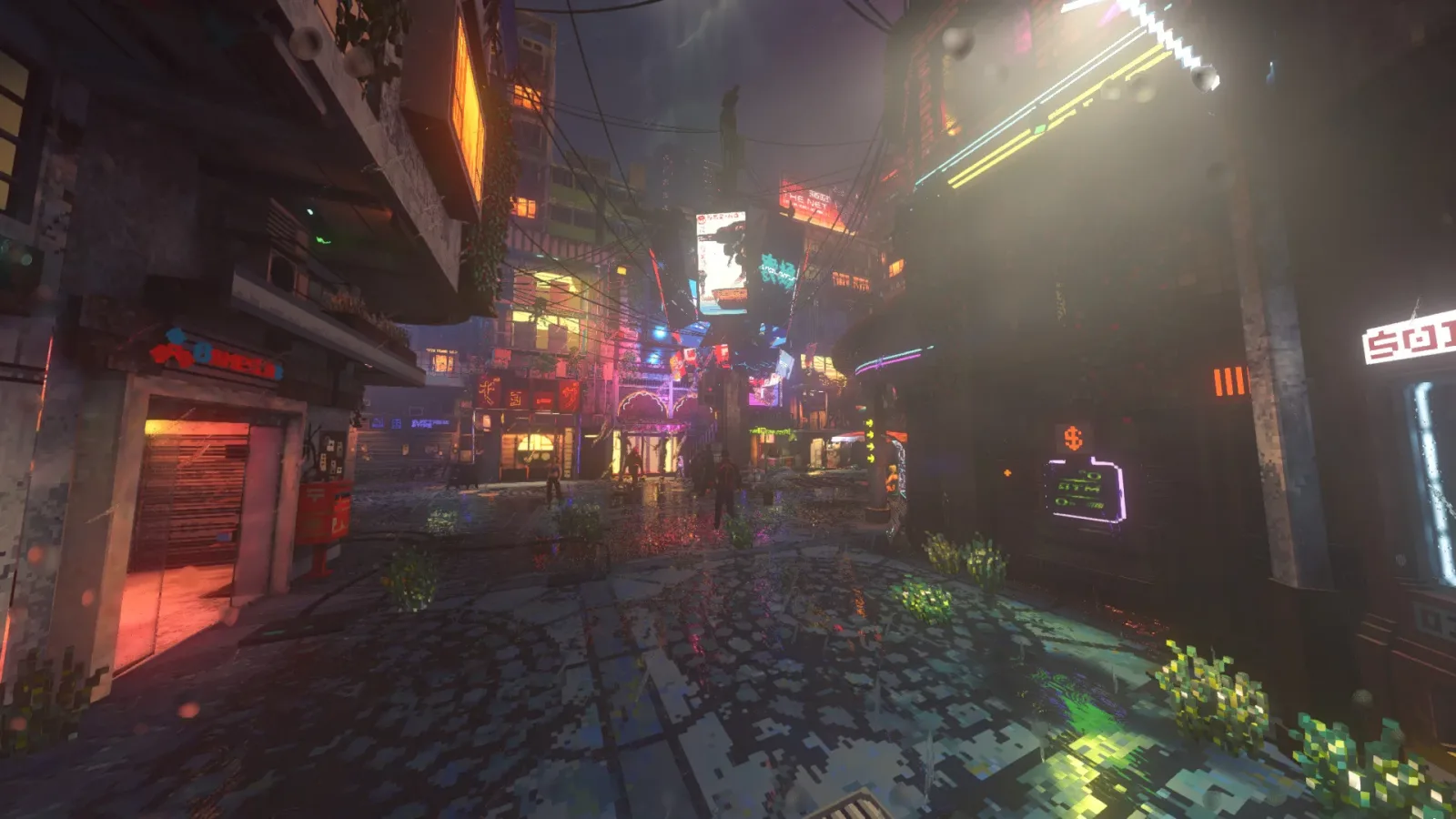
Nivalis Nights makes an immediate visual impression. Waking in a high-rise apartment above the city of Nivalis means looking out over a dense cyberpunk skyline lit by multicolored neon, with rain crawling down the glass and carrying those reflections across the room. It is a striking introduction to ION LANDS' latest project, a restaurant-management and life-simulation game set in the same grimy science-fiction universe as Cloudpunk.
The beauty is paired with a city that has plenty of reasons to be uneasy. Nivalis is defined by megacorporate control, automated security, enforced curfews, debt, and a murder investigation. It also has residents capable of delivering threats involving something called "Go Fuck Yourself Pie." That mix of dour corporate dystopia and absurd everyday character humor gives the setting a potentially memorable identity. There is a lot here to like in its premise: a player trying to build a restaurant business while navigating a dangerous, rainy vertical city is a strong foundation for a sim.
But the first several hours can feel as though the game is determined to introduce every piece of that foundation before players have had time to stand on any of it. Nivalis Nights has ambition to spare, from restaurant ownership and cooking to gardening, boating, relationships, side activities, story quests, and a larger progression structure involving numerous businesses. The challenge is not a shortage of things to do. It is that the game appears eager to make all of those things happen at once.
A remarkable city meets an awkward interface presence
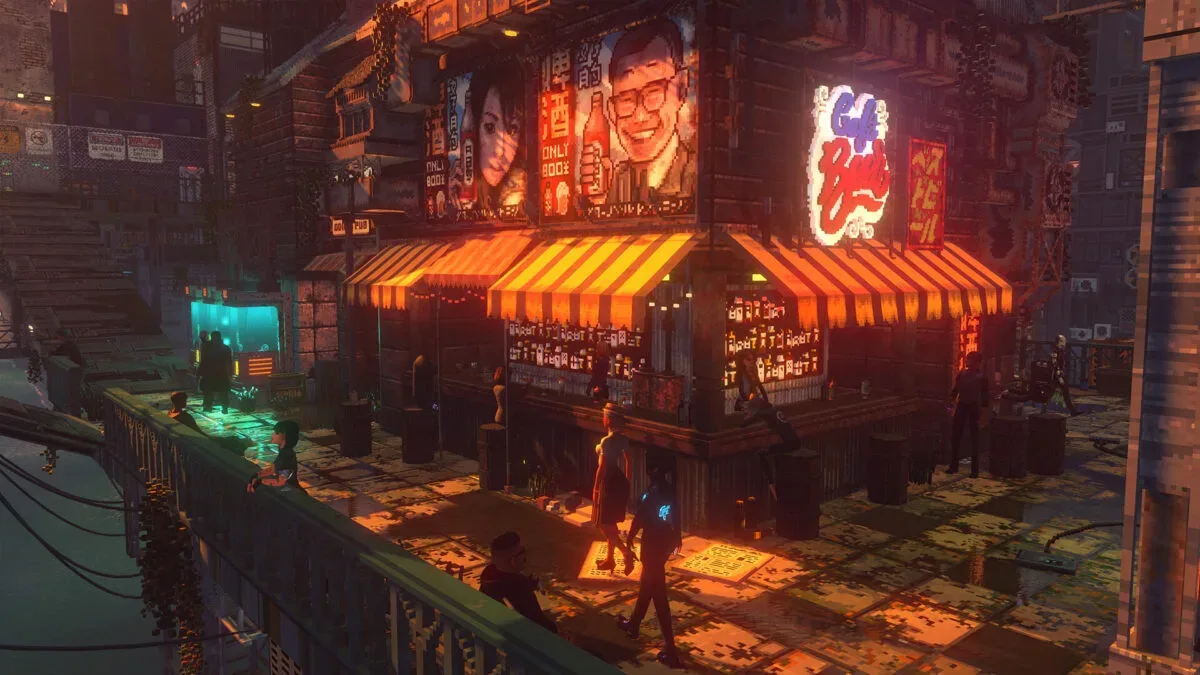
The city itself remains the clearest success. Nivalis' voxel-built environments have a distinctive, carefully constructed atmosphere. Neon signage glows against rainfall, interiors and streets suggest a lived-in metropolis, and the sense of looking down over a futuristic urban sprawl from a private apartment is immediately effective. It is a world that invites players to wander, take in the scenery, and imagine the routines of its inhabitants.
For useful background on this topic, read GTA 6 Launch Could Turn November 19 Into a Major Day Off for Fans.
That mood can be interrupted frequently by Ava, an automaton who exists in the protagonist's mind and serves as a tutorial guide and recurring conversational presence. Ava does not simply deliver a small notification while the player continues moving. Her dialogue can take over the screen and stop progress entirely. On a trip to buy ingredients or complete a task, the interruption can arrive without warning and halt the player in place until the conversation is finished.
Guidance is important in a game with this many systems, particularly during an opening that introduces restaurant operations, the city's social structure, and an assortment of narrative threads. Still, the delivery has a cost. Repeated full-screen interruptions make it difficult to build momentum, especially when the player is already trying to remember several active objectives. A less intrusive communication method could have retained Ava's role while allowing Nivalis' streets and routines to breathe.
Style clashes when the characters arrive
The visual appeal of the city also makes one stylistic mismatch more noticeable. Much of Nivalis is built through attractive voxel art, while many of its characters use comparatively conventional three-dimensional models. The result can create a disconnect: the architecture, weather, lighting, and skyline have a strong visual personality, but the people occupying that space do not always look like they belong to the same world.
The character models have a somewhat toy-like, broadly stylized quality that does not match the mood established by the environment. Clothing choices can further add to that unevenness. This matters because, despite the restaurant-management framing, the opening leans heavily into conversations, visual-novel-like dialogue, and fetch quests. Players spend substantial time looking at these residents as story scenes unfold.
There is a hint of a different, more cohesive approach in the game's pixel-art character portraits. Those portraits are excellent, delivering expressive and stylish depictions that fit the world far better. They simply do not appear often enough to define the experience. Since Nivalis Nights includes a romance system, the character presentation carries even more weight. Players are being asked not only to interact with the city's residents but potentially to form closer bonds with them. The early presentation may make that invitation harder to accept for some.
The restaurant work has satisfying ingredients
When Nivalis Nights focuses on operating a restaurant, it shows considerable promise. The number of ingredients available is unexpectedly broad, and there is a solid selection of recipes in which to use them. Unlocking new dishes and upgrades provides a gratifying sense of forward motion. Building up a menu, obtaining supplies, and seeing a business improve are reliable pleasures of the management-sim genre, and the game has the raw material for that loop.
Its cooking interactions are less consistently engaging. Helping employees can mean watching the same food-processor animation play again and again. In a genre where repetitive work needs to feel tactile or varied, that can make active participation feel flatter than it should. Other restaurant-focused games have used minigames and different task structures to make food preparation a more lively part of the day-to-day routine. Here, the core restaurant loop is enjoyable, but it could use more moments that ask the player to do something interesting rather than observe a familiar process repeat.
The bigger problem is the speed at which the game expands beyond the first restaurant. Just as the basic rhythm of operating that initial location begins to settle in, the player is directed toward purchasing a second business. That can happen while the first restaurant is barely profitable, customer ratings are still modest, and the venue itself remains very small. It is an odd escalation point: rather than letting success at one location feel earned, the game pushes outward before the player has had a chance to enjoy growing inward.
The main story is said to run for around 20 hours and includes 14 businesses to own. That scale explains the urge to keep progression moving, but it also raises a concern. If the opening's pace represents the broader structure, there may be limited time to develop an attachment to any individual restaurant. A business sim is often at its best when players can recognize how far a single space has come. Rushing from venue to venue may make each one feel more like a requirement than a home.
Too many unlocks, too little room to absorb them
The overloaded pacing extends beyond restaurants. Quests can pile up while other quests are already in progress, creating a growing task list that takes up a notable part of the interface. New errands and plot threads arrive rapidly enough that it becomes difficult to identify what deserves immediate attention and what can wait. A larger quest log is not inherently a problem, but it needs clear organization and a progression rhythm that does not make every new assignment feel like another interruption.
Major systems also arrive in quick succession. The greenhouse is unlocked, then a boat follows almost immediately. Both are the sort of additions that could support several hours of discovery on their own. Gardening can reshape ingredient gathering and planning; a boat can open new routes and change how a city is explored. Instead, their close placement means neither gets much space to feel transformative. The game hands over another present before the previous one has been opened properly.
That sensation defines the early impression of Nivalis Nights. The game has so many concepts that it seems worried players will miss something if they are not shown everything quickly. Yet discovery works better when it comes with time for experimentation. A slower rollout could make each new feature feel exciting rather than merely another icon, objective, or responsibility.
A strong premise that needs confidence in its own pace
There are encouraging elements throughout Nivalis Nights. Its world is gorgeous, its cyberpunk premise is compelling, much of the voice acting lands well, and the restaurant systems have a rewarding backbone. The game is clearly trying to combine a large number of ideas instead of settling for a narrow restaurant-management experience. That scope is admirable, especially in a setting with so much visual character.
However, the opening would benefit from more restraint. Ava's frequent screen-stopping tutorial moments, the rapidly expanding quest list, the fast track to a second restaurant, and quick-fire feature unlocks all contribute to an experience that feels compressed. The individual systems may have potential, but potential needs room to develop.
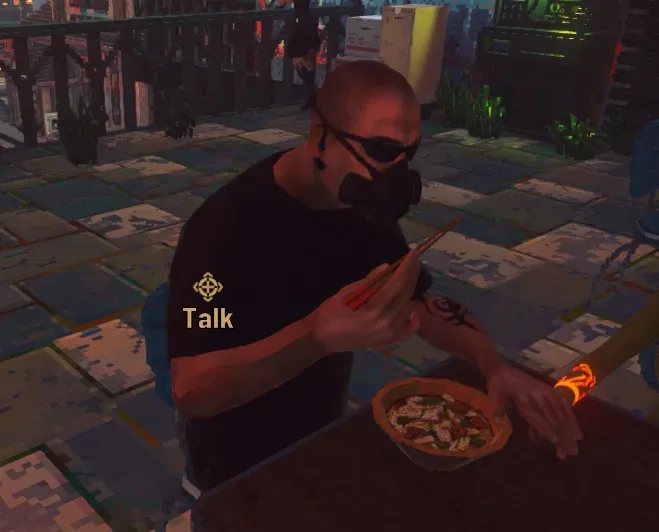
Even small details capture the unevenness. One early restaurant customer can sit down wearing a bulky mask, order a meal, and attempt to eat without ever taking the mask off. It is a funny animation oversight, but it also accidentally summarizes the problem with the opening hours. Nivalis Nights appears to have a meal worth savoring in front of it. It simply moves so quickly that players may not get the chance to properly taste it.
For players drawn to cyberpunk cityscapes and management games, Nivalis Nights is still an intriguing prospect because the fundamentals are there. The question is whether its later hours can slow down enough to let its restaurant ambitions, social systems, and wonderfully rain-soaked city find a more natural rhythm.
Community
Discussion
Start the conversation.
No comments have been posted yet.