

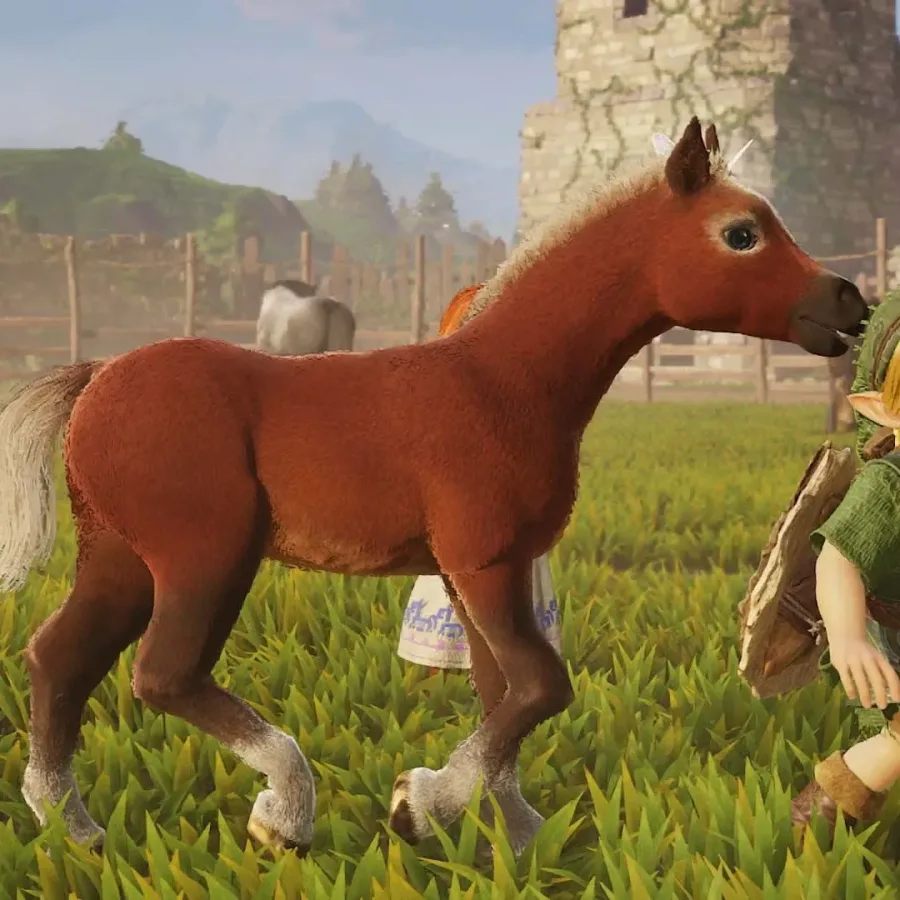
The arrival of unofficial PC methods for The Legend of Zelda: Ocarina of Time remake has rapidly turned into one of gaming's biggest legal flashpoints. Within days of the remake's release, players had found multiple ways to run it on computers, including conventional emulation and recompilation-oriented tools intended to make the game run natively on PC rather than simulate Switch 2 hardware.
That speed is notable on its own. Enthusiast projects, emulators, and reverse-engineering communities have long followed major console releases, but the current crop of tools has drawn particular attention because their development was reportedly assisted by AI. That has helped fuel a broader wave of unofficial "native" PC projects, though the quality, legitimacy, and security of those efforts vary dramatically.
For Nintendo, the issue is especially sensitive. The company has a lengthy history of aggressive intellectual-property enforcement, and it has already taken successful action against emulator projects. It also began pursuing Switch 2 emulator-related material earlier in the month. Yet the appearance of a PC-compatible Ocarina of Time remake does not automatically make every involved emulator, recompilation utility, or user legally liable. The answer may depend much more on how a specific tool was built, what it contains, and whether it circumvents Nintendo's technical protections.
How the PC methods are being presented
The projects circulating around the remake generally say users must provide their own game files. In that framing, the downloadable software is not a complete playable copy of Nintendo's game; it is a program that requires a user to bring the required data separately.
For useful background on this topic, read GTA 6's 30fps Target Makes Technical Sense on PS5 and Xbox Series X, Analyst Says.
That distinction is central to the legal debate. An emulator can be described as software designed to reproduce the behavior of a game console. A recompilation or decompilation-based project may take a different technical route, seeking to translate or rebuild software behavior so it can execute on a different platform. In practical terms, both can allow a game to appear on PC, but their implementation matters enormously.
One recently prominent emulator is called Lichii. Alongside it, decompilation teams have been associated with tools and workflows that let people attempt to play the remake away from its intended hardware. Unofficial multiplayer functionality has also appeared shortly after the game's PC scene emerged, amplifying the visibility of the projects and making a response from Nintendo more likely.
Still, claims that a program requires a legally obtained copy of a game do not resolve every issue. They may help distinguish the tool from a direct distribution of copyrighted game content, but they do not answer questions about encryption, digital rights management, copied assets, console keys, contract terms, or the origin of the code used to create the tool.
Emulators are not automatically illegal
Kirk Sigmon, founding partner at KellDann Law, argued that an emulator standing alone can occupy a relatively favorable position under the law. He pointed to a 2000 case in which Sony unsuccessfully sued the creator of an original PlayStation emulator. That litigation is frequently cited in discussions of whether independently developed console emulation and reverse engineering can be lawful.
Sigmon's view is that a program built independently, without Nintendo content or improperly obtained trade secrets, could be difficult to stop simply because it is capable of running games. He suggested that even AI-assisted development would not itself decide the issue. The important questions would be whether the development process avoided protected Nintendo material and whether the finished software carefully excludes Nintendo intellectual property.
Zohaib Hashim, CEO of Blackmont Legal, similarly said the mere development and supply of emulator software does not necessarily amount to copyright infringement. His assessment also rests on established case law that has recognized emulation as a category of software that can be legal under certain circumstances.
This is why the current situation is not as simple as Nintendo issuing a complaint and automatically ending every project. A console maker's rights in its games and systems are substantial, but general-purpose software is not necessarily unlawful merely because somebody could use it to access copyrighted games.
The DMCA may be Nintendo's stronger route
Michael Dilworth, managing partner at Dilworth IP LLC, emphasized that emulation itself is only one part of the analysis. In the United States, the Digital Millennium Copyright Act, or DMCA, can create separate problems where software bypasses technological protections or is distributed for that purpose.
That distinction has real relevance to Nintendo's past enforcement. Nintendo's case against Yuzu developer Tropic Haze LLC focused heavily on decryption and the use of cryptographic keys derived from Nintendo Switch systems. The dispute ended in 2024 with a settlement that included a $2.4 million payment to Nintendo and the shutdown of Yuzu, but it did not go through a full trial. As a result, it did not establish a blanket rule declaring all video game emulators illegal.
Instead, the Yuzu matter underlined Nintendo's ability to make a targeted anti-circumvention argument. If a new project bypasses access controls, uses protected keys, or distributes functionality directly tied to defeating Nintendo's safeguards, that could give the company a considerably stronger claim than one based only on the existence of emulation.
Sigmon noted that it remains unclear whether Nintendo could make exactly the same case against the tools being used with the Ocarina of Time remake. He observed that large language model tools may make it easier to develop emulators without accessing trade secrets or independently circumventing protections. He also said his understanding was that current Switch 2 game ROMs circulating online are already decrypted. If a tool only runs previously decrypted material and does not perform the circumvention itself, its legal position could differ from the one faced by Tropic Haze.
That is not a declaration of safety. It is a reminder that technical details can decide the outcome. How the software accesses files, whether it contains or depends on keys, and whether the developers' work is genuinely independent could all become crucial evidence.
The Yuzu connection could still matter
Dilworth also raised another potential complication: some newer projects, including Lichii, are built on work associated with Yuzu. Reusing Yuzu-derived code does not automatically make a successor project unlawful. However, Nintendo could examine whether that inherited code includes the very functionality that was challenged in its earlier action.
Because the Yuzu case was settled rather than adjudicated at trial, it leaves room for arguments on both sides. A new project could contend that it has changed its technical design or removed problematic components. Nintendo, in turn, could argue that any retained mechanisms remain tied to prohibited circumvention. The answer would require close inspection rather than assumptions based on a project's name or its ability to launch a game.
That uncertainty is why Lichii and comparable efforts have reason to be cautious even if their developers believe they have avoided including Nintendo-owned files. Legal risk in this space is not limited to whether a tool contains a game ROM. It can arise from the path used to get that ROM running.
Buying the game does not settle the user question
The discussion becomes even less settled when it shifts from tool creators to players. Many users may assume that purchasing a physical or digital copy grants them broad freedom to use it however they choose. Legal experts interviewed on the matter warned that ownership of a copy is not the entire story.
Hashim argued that circumventing DRM protections can itself be infringing, with no obvious permitted purpose for decompiling code to play the game through an unofficial PC route. He also said a user could violate Nintendo's end-user license agreement or terms of service, potentially allowing Nintendo to revoke the license it granted.
Marcus Denning, principal and senior lawyer at MK Law, made a related point: having a legitimate copy does not necessarily authorize a player to bypass the console's security measures. Copyright issues surrounding copying and distribution are one category of concern; bypassing technical access controls may trigger separate provisions. Whether users later share the game files can add still more exposure.
Sigmon took a more skeptical view of relying on Nintendo's EULA alone. He described it as contractual language that Nintendo would still need to enforce in court or arbitration, with practical hurdles along the way. A person might acquire a Switch 2 for research or reverse-engineering purposes without ever accepting the relevant agreement, for example.
In short, a user's purchase may be relevant, but it is not a universal defense. The manner in which game data is obtained, decrypted, copied, and executed can matter as much as the receipt.
Videos and tutorials may become another battleground
Nintendo has already begun removing videos showing the remake's PC port from YouTube through copyright claims. That enforcement suggests the company is unlikely to ignore the surge of interest, even before any larger court action is filed.
Instructions create a related but distinct question. Sigmon's position is that a creator could, in theory, publish a video demonstrating how they made a legally purchased game playable on PC. Dilworth cautioned, however, that explanatory discussion is not always the same as distributing instructions or tools specifically designed to defeat technological protections. A tutorial that crosses into active circumvention assistance may invite more serious DMCA concerns.
For now, Nintendo appears to have several possible pressure points: copyright claims against videos, scrutiny of assets or branding used by projects, trade-secret allegations if evidence supports them, contract enforcement, and anti-circumvention claims. None guarantees a clean or immediate victory, but each can be disruptive and expensive for a small development team.
A fast-moving scene with no easy conclusion
Nintendo is widely expected to challenge the projects in some form, particularly given how quickly the Ocarina of Time remake has become playable on PC and how visible the unofficial multiplayer activity has become. Early access on computers could affect the game's commercial targets, while public demonstrations make it harder for Nintendo to leave the situation unanswered.
Yet removing a program, a video, or a repository is not the same thing as erasing the underlying knowledge. Once tools and technical methods spread through online communities, legal action may slow distribution without fully returning the situation to where it was before launch.
The ultimate dispute will likely come down to specifics rather than broad slogans about whether emulators are good or bad. Emulation may be legal in principle. Decryption, DRM circumvention, copied keys, retained Yuzu functionality, Nintendo assets, and the distribution of game files can each change the analysis. That makes this an unusually important test for the new generation of AI-assisted reverse-engineering projects--and another likely chapter in Nintendo's long-running campaign to control where and how its games can be played.
Community
Discussion
Start the conversation.
No comments have been posted yet.