

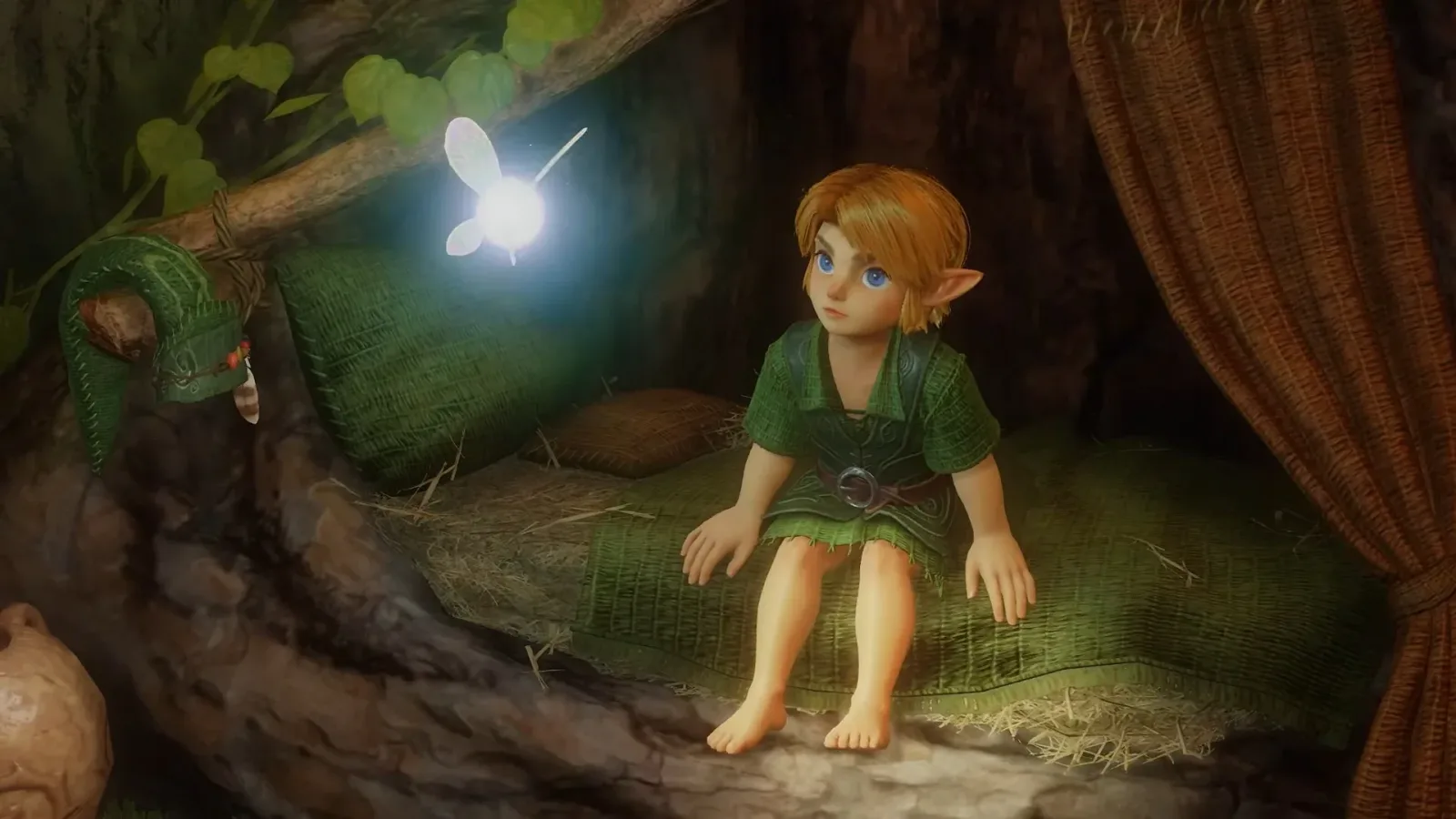
Nintendo's upcoming The Legend of Zelda: Ocarina of Time remake is not simply revisiting the Nintendo 64 classic with refreshed visuals. A new developer discussion indicates that the project is also putting considerable effort into preserving the game's distinctive audio identity--right down to recreating old sound textures, recording a real ocarina, expanding environmental ambience, and casting voices to match the feeling of the original.
One detail from that casting process has drawn particular attention. Nintendo confirmed that one performer selected for the remake's Japanese voice cast had voiced the same character in the 1998 Nintendo 64 release. The development team did not know that connection when it made the choice.
The revelation comes with an important caveat: Nintendo has not identified the actor or character involved. Fans have speculated that Kaori Mizuhashi, the original Japanese voice of Navi, may be returning for the remake. The company has not confirmed that specific claim, even as it has confirmed that at least one returning original performer exists somewhere within the Japanese cast.
Still, the story says a great deal about the approach behind the remake. Rather than leaning on names, nostalgia, or an automatic invitation for previous cast members, Nintendo says it held auditions without showing the actors' names to those making the final decisions. The goal was to find performances that could recreate the sound and atmosphere players associate with the original game.
For useful background on this topic, read Eiji Aonuma Revisits Ocarina of Time's Water Temple With Long-Overdue Changes.
A return chosen by performance, not recognition
Series producer Eiji Aonuma explained that the Japanese audition process deliberately withheld performers' identities. That meant the team was evaluating the sound of each audition rather than an actor's reputation or prior association with the role. Only after the selection did the developers learn that one of their picks had played the same part in the Nintendo 64 version.
For a remake of a game as foundational as Ocarina of Time, that is an especially notable outcome. The original was released nearly three decades before this new casting process. Voice performances in the game were often brief and stylized, but they remain deeply tied to its characters and to the memorable sounds players recall from their first journey through Hyrule.
A blind audition can be a useful way to balance reverence for the past with the needs of a new production. It protects against casting somebody merely because they are familiar, while also allowing an original actor to return if their present-day performance remains the strongest fit. In this case, Nintendo's selection process apparently led back to a veteran of the original game naturally.
The identity of the actor is still officially unannounced, so it would be premature to treat fan theories as settled fact. Mizuhashi's possible involvement has become a focus because listeners believe they recognize her as Navi in the Japanese remake footage or audio. However, Nintendo's comments leave open the possibility that Aonuma was referring to another character and another returning member of the Nintendo 64 cast.
That uncertainty will likely continue until Nintendo provides a complete cast listing or directly addresses the speculation. What is clear is that at least one casting decision created an unexpected bridge between the original release and its remake.
Rebuilding an iconic soundscape
The casting discussion was part of a broader look at the remake's sound and music. Sound director and music lead Masato Ohashi described an ambitious audio production that adds new music for many of the game's newly created cutscenes. In total, the remake contains more than 150 background music pieces.
That scale suggests the team is treating music as more than a preservation project. Ocarina of Time is inseparable from its score, from the calm melody of Link's home to the musical themes associated with Hyrule Field, dungeons, villages, and the magical songs Link learns on his ocarina. New scenes naturally require new compositions, but the remake's challenge is ensuring those additions feel compatible with a soundtrack that remains one of the most recognizable in game history.
Ohashi said some tracks combine a live full orchestra with sounds recreated from the original Nintendo 64 version. Nintendo did not simply take the old hardware's final audio output and insert it into the new game. Instead, the team used the original Nintendo 64 sound sources as references, then faithfully rebuilt some of those sounds for the remake.
That distinction may sound technical, but it matters for a project attempting to connect different generations of hardware and audio technology. Nintendo 64 music and sound effects were shaped by the console's particular tools, compression, processing, and limitations. Reusing old output wholesale could clash with a modern arrangement or a higher-fidelity mix. Recreating selected elements offers more control while retaining a connection to the original sound palette.
Nintendo presented the music from Link's house as an example of this approach. The stated intention is to evoke memories of the 1998 game while creating something that could only be achieved through a fresh production. It is a philosophy that aligns with the remake's broader task: make the world sound richer and more expansive without losing the qualities that made it immediately recognizable.
More ambience, a real ocarina, and surround support
Beyond orchestral music and familiar synthetic textures, the remake is adding subtle environmental layers to make Hyrule feel more alive. Ohashi pointed to details such as leaves moving in the wind and water running over rocks. These are the kinds of sounds players may not consciously isolate while exploring, yet they can greatly change how convincing a place feels.
The original game created a powerful sense of location with comparatively limited technology. Kokiri Forest, for example, used music, looping environmental effects, and carefully placed audio cues to suggest a sheltered woodland full of life. Modern hardware allows a remake to present that space with more depth, but the developers still need to avoid burying its memorable musical identity under constant noise.
The ocarina itself is another key area where the team is chasing a more tactile sound. Nintendo says the songs performed in the game were recorded using a real ocarina. This should allow players to hear the natural breath and texture of the instrument rather than only a clean, abstracted digital note.
That choice is fitting given the central role the instrument plays in the adventure. In Ocarina of Time, melodies are not background decoration. They are tools for changing time, opening paths, communicating with allies, and reshaping the world. Giving those notes the slight breathiness and physical character of a real performance could make Link's musical actions feel more grounded while maintaining the fantasy of the original.
The remake also supports 5.1-channel surround sound. Nintendo says players can use headphones connected to a Nintendo Switch 2 system to experience the fuller ambient presentation even without a home theater setup. Locations including Kokiri Forest are specifically intended to benefit from that added dimensionality.
For players who remember navigating Hyrule primarily through the sound of an enemy, a nearby character, water, wind, or music drifting through an area, the expanded mix could be one of the remake's most meaningful upgrades. Visual overhauls are easy to notice immediately; a carefully built soundscape can be just as important to making a familiar world feel newly present.
Authenticity without simply preserving everything unchanged
Nintendo's comments outline a remake strategy centered on interpretation rather than straightforward duplication. The team is creating new cutscene music, building new ambient layers, mixing orchestral recordings with recreated legacy-style sounds, and auditioning actors for performances that capture the old game's feeling. Those are all choices that acknowledge an exact copy would not necessarily be the best way to honor a work from the Nintendo 64 era.
The surprise casting result is perhaps the clearest illustration of that philosophy. The developers did not begin with the premise that a returning performer had to be included. They also did not reject the past in favor of an entirely new cast. They listened for the right voice, and one original actor emerged as the selection.
Whether that performer proves to be Mizuhashi or somebody else, the circumstance is a compelling reminder of how enduring the original game's creative contributions have been. A voice that helped define a character in 1998 may still be capable of delivering the quality and tone Nintendo wants from the remake today.
Until Nintendo shares the full Japanese cast, fans will continue scrutinizing the available material and debating who has returned. But the confirmed blind-audition story already gives the remake an unusual connection to its predecessor--one discovered only after the developers had made their decision.
Community
Discussion
Start the conversation.
No comments have been posted yet.