

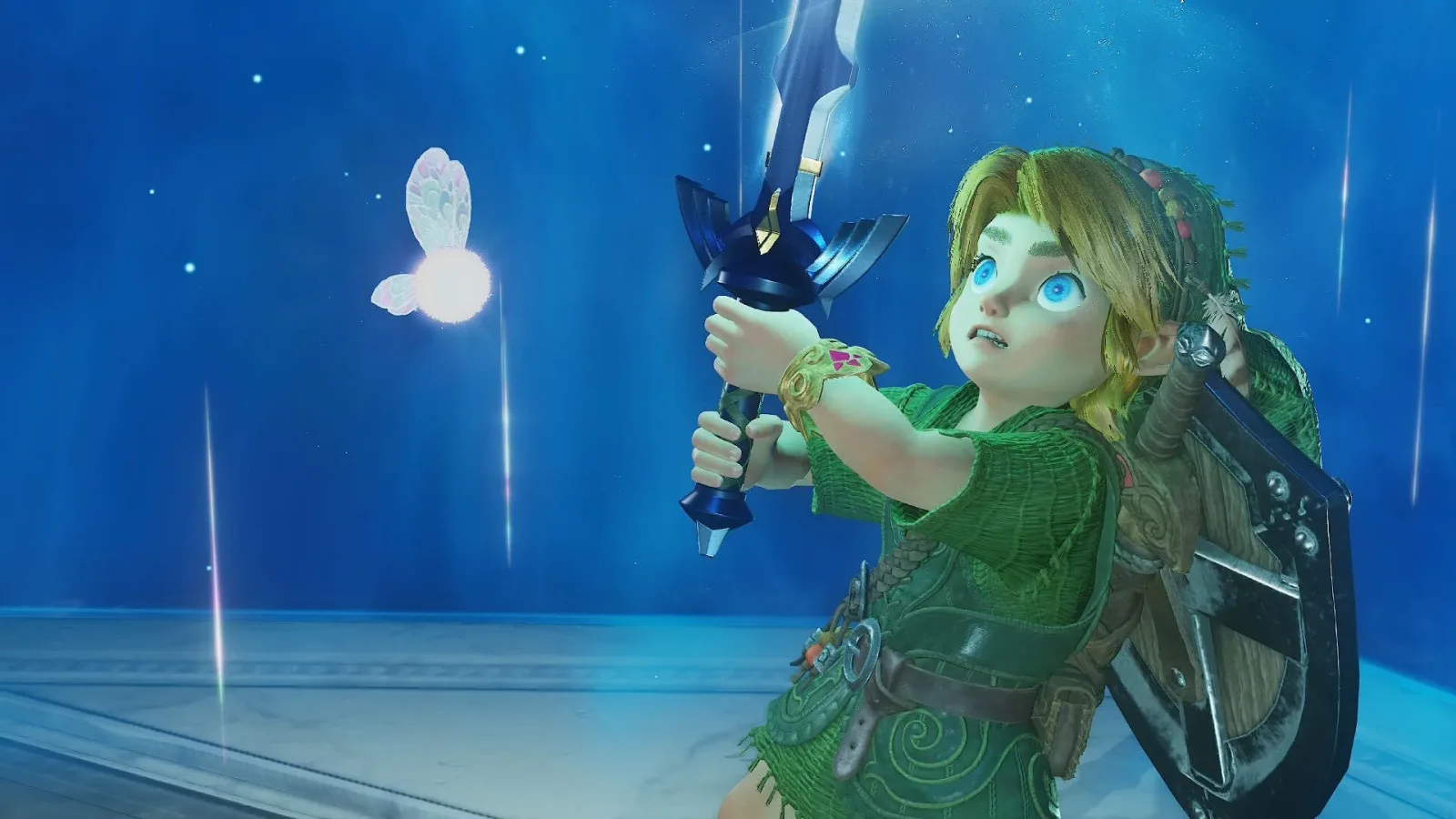
The Legend of Zelda: Ocarina of Time can feel remarkably small when viewed through the lens of modern games. Its Hyrule is compact, its routes are familiar, and its progression tends to point players toward a clear next destination. Yet that compactness is exactly why revisiting Nintendo's 1998 classic can be such a relief after years spent in the enormous, systems-heavy worlds of Breath of the Wild and Tears of the Kingdom.
For players returning to Ocarina of Time in 2026, including those fitting in sessions on a Nintendo Switch 2 while waiting for the next major releases, the contrast is immediate. A typical play session can have a satisfying shape: enter a temple, gain an item, solve a sequence of puzzles, defeat a boss, and emerge with a clear sense that the adventure moved forward. That cadence is not necessarily better than the freedom offered by newer Zelda games. But it is a form of satisfaction that the series has largely set aside for nearly a decade.
Modern Zelda has expanded dramatically. The latest open-world entries ask players not just to follow an adventure, but to inhabit a wilderness. They encourage experimentation, improvisation, resource gathering, cooking, climbing, gliding, construction, and detours taken simply because something intriguing appeared on the horizon. Those games remain filled with the strange characters, secrets, puzzles, and adventurous energy that define the franchise. Their success is not an accident, and their design innovations have earned their place.
Still, replaying Ocarina of Time makes a persuasive case for a different kind of Zelda: one built around momentum rather than endurance.
For useful background on this topic, read PlayStation 2 Still Leads All Console Sales, but Switch Is Closing In.
A game that respects the short session
Time is often the deciding factor in what makes a game stick. For a goal-oriented player, the pleasure of play comes from getting closer to a story beat, a dungeon conclusion, a quest resolution, or a meaningful new ability. Open-world games can provide all of those things, but they can also place a substantial amount of travel, preparation, and incidental activity between the player and the goal.
Ocarina of Time is designed around a more concentrated loop. Its overworld connects major regions, but usually does not demand an extended expedition before the next purposeful activity begins. The road from one landmark to another may still contain enemies, side activities, and bits of atmosphere, yet it rarely becomes the main event. The game gets the player back to puzzle-solving, dungeon navigation, story progression, and item-driven discovery quickly.
That creates a particularly appealing rhythm for someone playing in brief bursts. Completing one dungeon--or even making clear progress through part of one--feels substantial. The player is not left wondering whether they spent an evening gathering supplies, replacing damaged equipment, or merely crossing a large landscape. There is a visible chain of accomplishments: a locked door opened, a new room understood, an item acquired, a boss defeated, and a new chapter of the journey unlocked.
Even the game's straightforwardness contributes to that momentum. Nintendo has made the experience more approachable over the years through numerous small conveniences and adjustments, and Ocarina of Time can be noticeably easier than many modern action-adventure games. But challenge alone is not what makes progress meaningful. The pleasure lies in how cleanly its obstacles communicate what they require and how reliably each solved problem leads to another.
The appeal of dependable tools
One of the sharpest differences between Ocarina of Time and the recent open-world Zelda games is the relationship players have with their equipment. In the newer adventures, weapons are deliberately temporary. Their durability systems push players to adapt, experiment, and avoid becoming overly attached to a single sword, spear, or club. In Tears of the Kingdom, fusion further turns weapon construction into an ongoing creative process.
That approach supports the newer games' broader survival and experimentation themes. A player is meant to work with what the world provides. Finding the right material, combining objects in an unexpected way, or making do with a nearly broken weapon can become part of a memorable story. The friction is intentional.
But friction can also be tiring. Ocarina of Time offers a more permanent relationship with its tools. When Link earns the Hookshot, Bow, Megaton Hammer, or other signature dungeon item, the reward is not merely useful for a few encounters. It becomes a stable part of the player's vocabulary. The question is not whether an item will survive the trip; it is where that item can now be used.
That distinction matters because it lets puzzle-solving take center stage. The player can focus on recognizing a target for the Hookshot, noticing an eye switch, finding the right place to use a newly acquired tool, or understanding how a temple's rooms interlock. The game is still asking for observation and problem-solving, but it is not also asking the player to monitor whether a favorite weapon will break before the destination is reached.
For some players, that certainty is liberating. The adventure feels less like managing an expedition and more like moving through an elaborate series of toy-box puzzles. Every important tool has a clear identity, and every new capability opens a fresh layer of interaction with Hyrule.
Traversal is not neutral
The conversation around open worlds often treats travel as an inherent virtue. A large map can convey scale, foster wonder, and create the possibility of chance discoveries. But travel is only enjoyable when the act of moving through a world is engaging enough to justify the time it takes.
Games with exceptional traversal systems understand this well. The Infamous series, for example, makes movement part of the fantasy through superpowered mobility and environmental interaction. In other cases, a setting can carry the trip on its own: the atmosphere of Cyberpunk 2077's Night City can make riding through its streets worthwhile even when there is no urgent objective at the end of the route.
Horses and cars, by themselves, do not always solve the problem. For a player who wants to pursue story and quests efficiently, a large map can become a barrier if crossing it repeatedly feels like downtime. Breath of the Wild and Tears of the Kingdom work hard to make their traversal meaningful. Climbing, gliding, weather, physics interactions, shrines, towers, and unexpected encounters can transform a simple journey into an adventure of its own.
Yet those same systems can create a feeling of resistance. Weather can interrupt a climb. Terrain can dictate a route. Consumables and gear can become considerations before a long trek. The world's demands are part of its identity, but they also mean that simply reaching an intended objective may require attention and preparation.
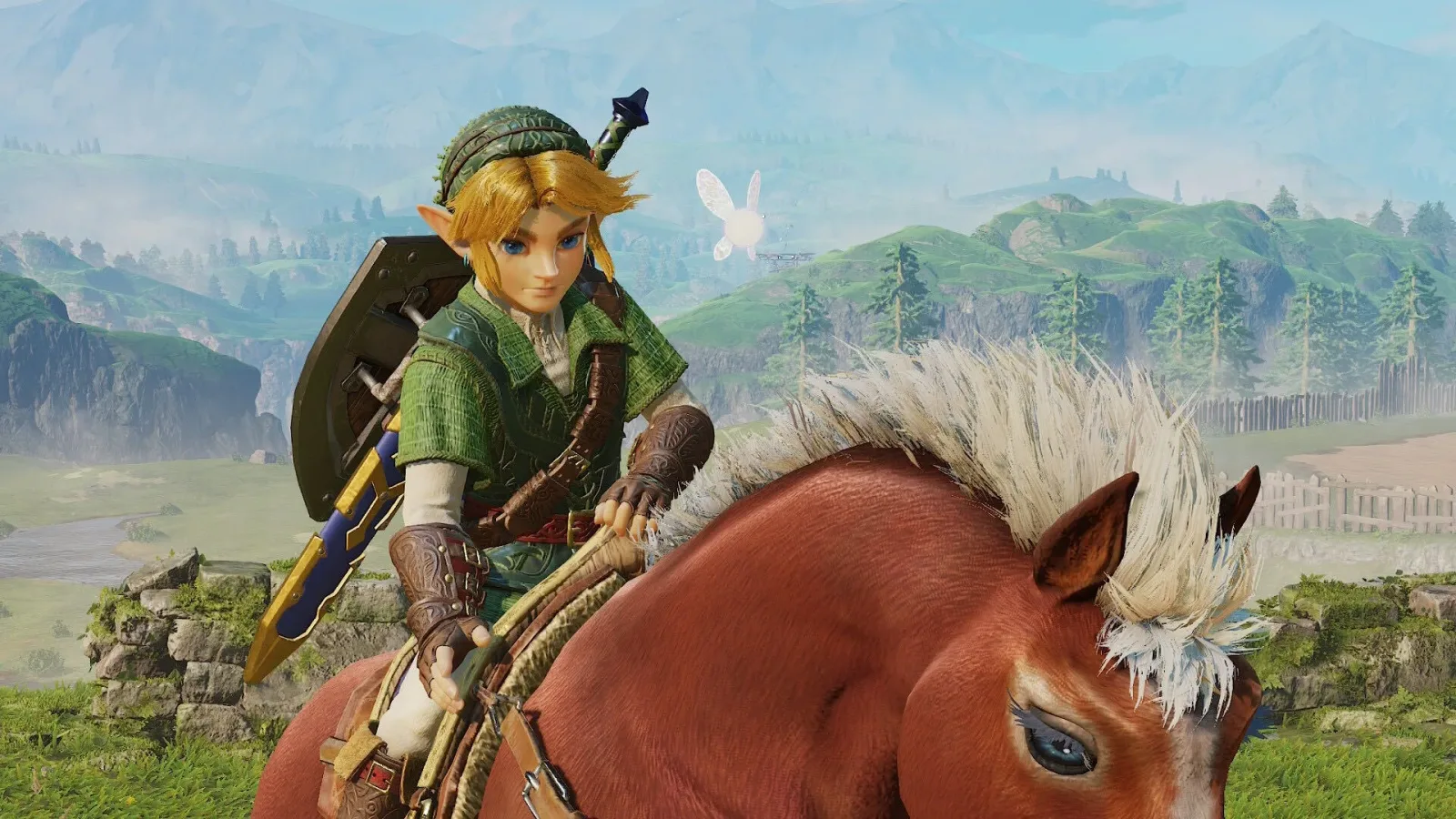
Ocarina of Time rarely asks players to negotiate the landscape on that level. Hyrule Field acts as connective tissue rather than a survival space. It provides scale and a sense of place without routinely turning every outing into a logistical challenge. That is a dated design in some respects, but it is also an efficient one.
Two valuable visions of Zelda
There is no need to frame this as an argument that Zelda should abandon everything it has learned since 2017. Breath of the Wild and Tears of the Kingdom are impressive reinventions that found new possibilities in a long-running series. Their shrines deliver inventive puzzles, their worlds reward curiosity, and their systems produce moments that could not happen in the more tightly authored structure of Ocarina of Time.
At the same time, the older game demonstrates that freedom is not the only path to player expression or immersion. A carefully paced sequence of dungeons can be immersive. A dependable inventory can be exciting. A clear objective can feel welcoming rather than restrictive. And a game that lets players reach its best puzzles quickly can be every bit as memorable as one that lets them wander for hours.
The top-down Zelda games have often preserved parts of that focused structure, particularly the entries that followed the original game's more opaque and open-ended approach. But Ocarina of Time occupies a distinct place. Its targeting, swordplay, and three-dimensional dungeon spaces established a blueprint for 3D Zelda that remains immediately readable. It captures the feeling of guiding Link through a handcrafted adventure without the additional demands of modern open-world survival mechanics.
Nintendo may never fully return to the exact structure of Ocarina of Time, and there is little reason to expect the series to simply retreat from the ideas that made its latest games so influential. Still, revisiting the older adventure is a useful reminder that a smaller scope is not a lesser one. Sometimes the most satisfying journey is the one that hands over the right tools, presents a clever puzzle, and lets the player get on with the joy of solving it.

Community
Discussion
Start the conversation.
No comments have been posted yet.