

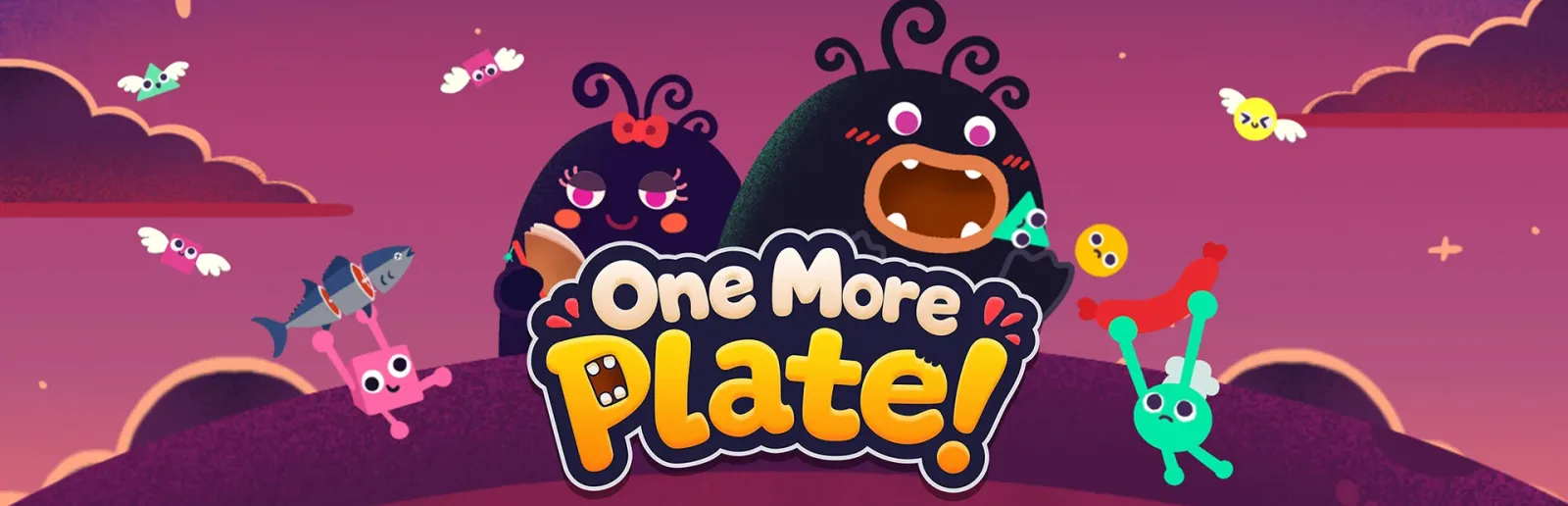
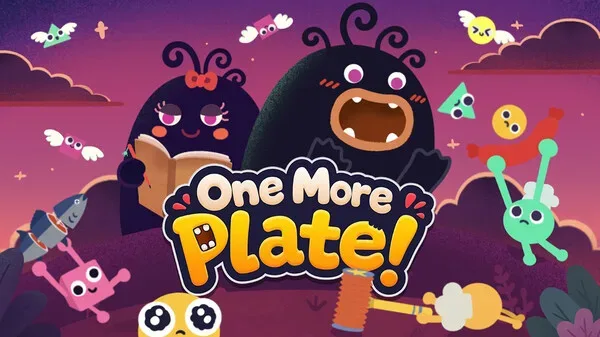
One More Plate!, a colourful physics-based game about satisfying the enormous appetites of invading monsters, is set to launch on Steam on November 10, 2026. Developed by Okawari!, the game turns the familiar pressure of filling food orders into a gleefully unruly challenge built around balancing, bouncing, flinging, and improvising with a collection of increasingly peculiar tools.
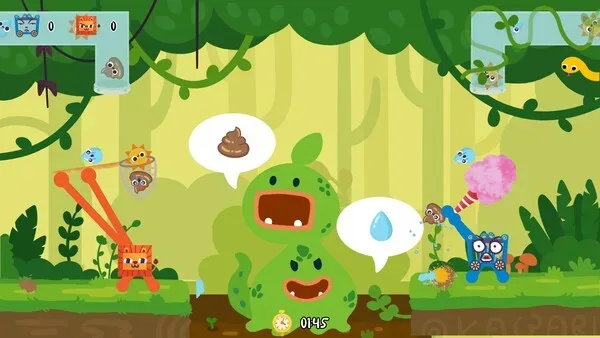
Its central problem is straightforward: giant hungry monsters have made themselves at home, and players need to give them the food they request. Making that happen is intended to be considerably less straightforward. Orders change, the physics can send carefully planned meals in unexpected directions, and the available equipment ranges from conventional kitchen items to far more absurd objects. One More Plate! is designed around the comedy and tension that emerge when a simple task becomes difficult to control.
The game will be playable alone, with another player in couch co-op, or remotely through Steam Remote Play. The Remote Play option means two players can share the experience while only one owns a copy of the game, making it a potentially convenient fit for cooperative sessions without requiring a second purchase.
A kitchen invaded by giant appetites
One More Plate! frames its action around an unusual domestic crisis. Rather than dealing with customers at a counter or preparing dishes in a conventional restaurant, players are faced with monsters that have invaded their home and expect to be fed. The task is not merely to place the correct item on a plate. Players will need to manage physical objects and guide them toward the monsters' changing demands.
For useful background on this topic, read Encryption Brings Psychological Horror to the Ancient Depths of Matera in 2027.
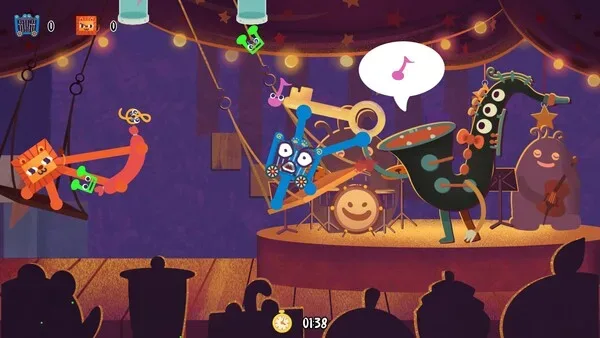
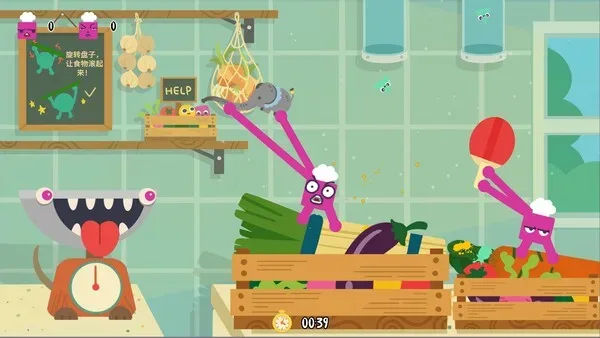
That premise gives the game room to make food preparation feel more like a toy-box challenge than a simulation. Shapes can be balanced, thrown, and bounced, with the unpredictable properties of the game's physics forming a key part of the experience. A well-aimed launch may solve an order quickly, while a small mistake could send an ingredient away from its intended destination. The resulting play appears to place equal importance on planning and reacting when a plan falls apart.
Physics-driven games often create memorable moments because the outcome is not always perfectly controlled. One More Plate! embraces that idea rather than treating it as a failure state to eliminate. Its "wayward" physics engine is part of the intended challenge, asking players to work around movement, momentum, awkward angles, and the potential for objects to behave in unexpected ways.
For solo players, this should mean taking full responsibility for every successful meal and every spectacular mishap. In co-op, the same systems can turn coordination into its own challenge. One person may be positioning an object while the other prepares the next move, and both players will need to adapt when a bounce or fling does not go as expected. The appeal of this kind of cooperative design is often found in those recoveries: a near-disaster can become a solution if the team reacts quickly enough.
For another perspective on this story, read One More Plate! Will Serve Physics-Fuelled Monster Meals on Steam This November.
From ladles to legendary swords
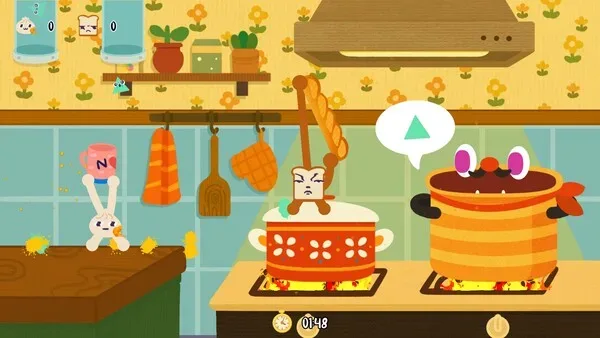
The utensil selection is one of the clearest signs that One More Plate! is not aiming for ordinary kitchen action. Players will have access to items including ladles and croissants, alongside giant legendary swords. This unusual mix suggests that the game's tools are not restricted by practical culinary logic. Instead, they appear to be chosen for the different ways they can interact with food, surfaces, momentum, and the game's playful physics systems.
A ladle naturally evokes scooping or carrying, but a croissant used as a utensil points toward a much sillier kind of experimentation. The presence of a giant legendary sword pushes that tone further, turning a traditionally heroic fantasy object into another potential instrument for meal delivery. The contrast is central to the game's personality: a small-scale home kitchen is transformed into a chaotic arena where almost anything might become useful.
That arsenal could also encourage players to approach orders in different ways rather than relying on one safe routine. A tool that works well for gently balancing an item may be poor at launching it across a room, while something oversized may create opportunities and problems in equal measure. The game's changing orders should keep those decisions active, requiring players to assess what is needed and how best to make it happen under the conditions presented.
Although the goal is feeding monsters, One More Plate! appears to use that objective as a foundation for light-hearted physical problem-solving. The food, utensils, and creatures all support the same loop: identify the request, manipulate the relevant objects, and cope with the unpredictable consequences of every movement.
Solo, couch co-op, and Remote Play options
One More Plate! will offer three ways to play at launch. The solo mode gives players a chance to tackle the game's shifting meal demands independently. This may appeal to those who enjoy mastering awkward controls and building familiarity with systems through repeated attempts, especially when success depends on finding a reliable way to handle an unruly object.
Couch co-op is likely to be especially suited to the game's chaotic tone. Shared-screen cooperative games can turn a simple objective into a conversation between players: who is handling the current order, who is reaching for the next tool, and who is responsible when a carefully placed item suddenly goes flying? A physics-heavy format can reward communication, but it can also create the sort of accidents that make a local multiplayer session entertaining even when things go wrong.
Steam Remote Play expands that co-op option beyond players sharing the same room. Only one copy is needed for a friend to join, lowering one barrier for anyone who wants to tackle the monster-feeding mayhem as a pair. As with any game built around quick reactions and coordinated movement, the experience will likely depend on players adapting to one another's habits as much as adapting to the game's physics.
The combination of solo and cooperative play gives One More Plate! flexibility without changing its core goal. Whether played as a personal score-chasing and problem-solving exercise or as a collaborative kitchen catastrophe, the objective remains the same: deliver what the monsters want before the situation becomes even more ridiculous.
Demo plans ahead of Steam Next Fest
Players will have an opportunity to try an updated playable demo before Steam Next Fest. The demo should offer an early look at the game's blend of monster orders, object manipulation, and exaggerated utensils ahead of the full Steam release. No further details about the demo's exact availability window or content have been announced.
An updated demo can be particularly useful for a game whose appeal rests heavily on how it feels in motion. Descriptions can explain that objects are balanced, bounced, and flung, but a hands-on version will give players a chance to see how the controls, physical interactions, and cooperative potential come together. It should also help establish the rhythm of the game's changing requests and the degree to which experimentation is encouraged.
A new trailer for One More Plate! was shown during the Galaxies Showcase, and the game is also due to be featured in The MIX Fall Game Showcase. Those appearances arrive as the game moves toward its November launch, giving the project additional visibility before players can get their hands on the updated demo.
A November date for a deliberately messy meal
One More Plate! is scheduled to arrive on Steam for PC on November 10, 2026. At present, Steam is the only announced platform. The game's unusual combination of hungry house-invading monsters, ever-changing orders, loose physics, and impractical kitchen equipment positions it as a deliberately chaotic take on cooperative food preparation.
Its concept is easy to understand, but its systems promise to make every delivery more complicated than it initially appears. Players may have the right food and the right tool, yet still need to contend with balance, trajectories, accidental collisions, and the possibility that a supposedly helpful legendary sword makes matters far worse. For fans of playful physics games and couch co-op challenges, that is likely to be exactly the point.
With its updated demo planned ahead of Steam Next Fest and its full release locked in for November 10, One More Plate! is preparing to serve a home invasion where the only sensible response is to keep the monsters fed.
Community
Discussion
Start the conversation.
No comments have been posted yet.