


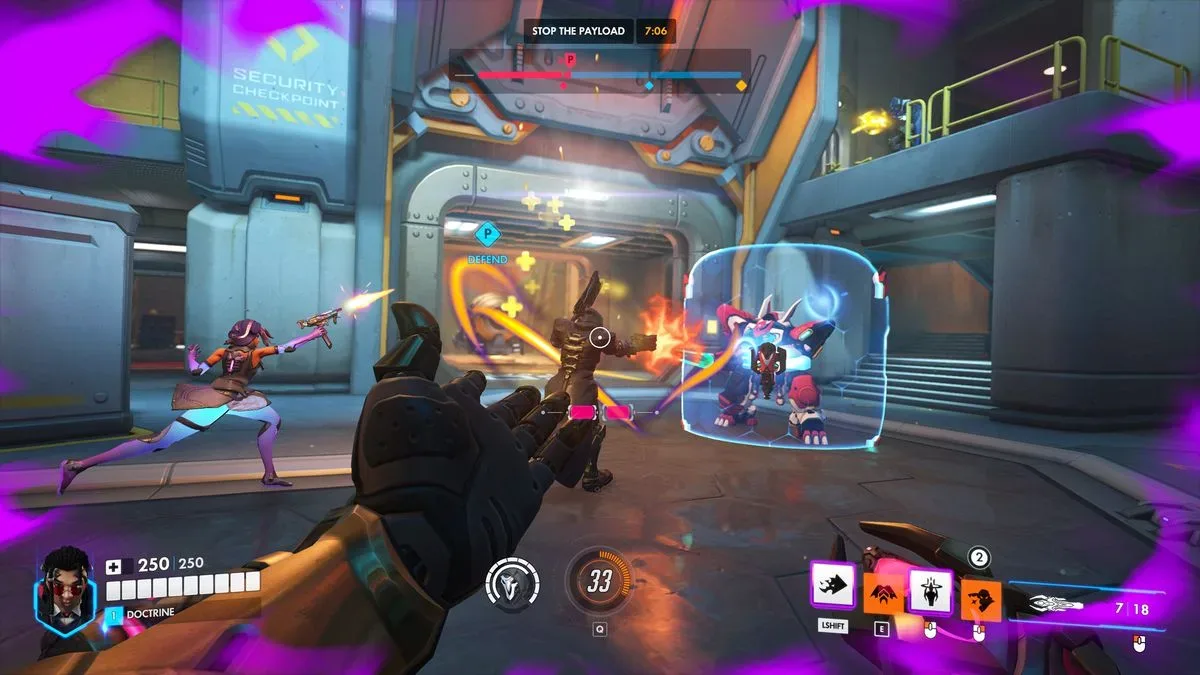
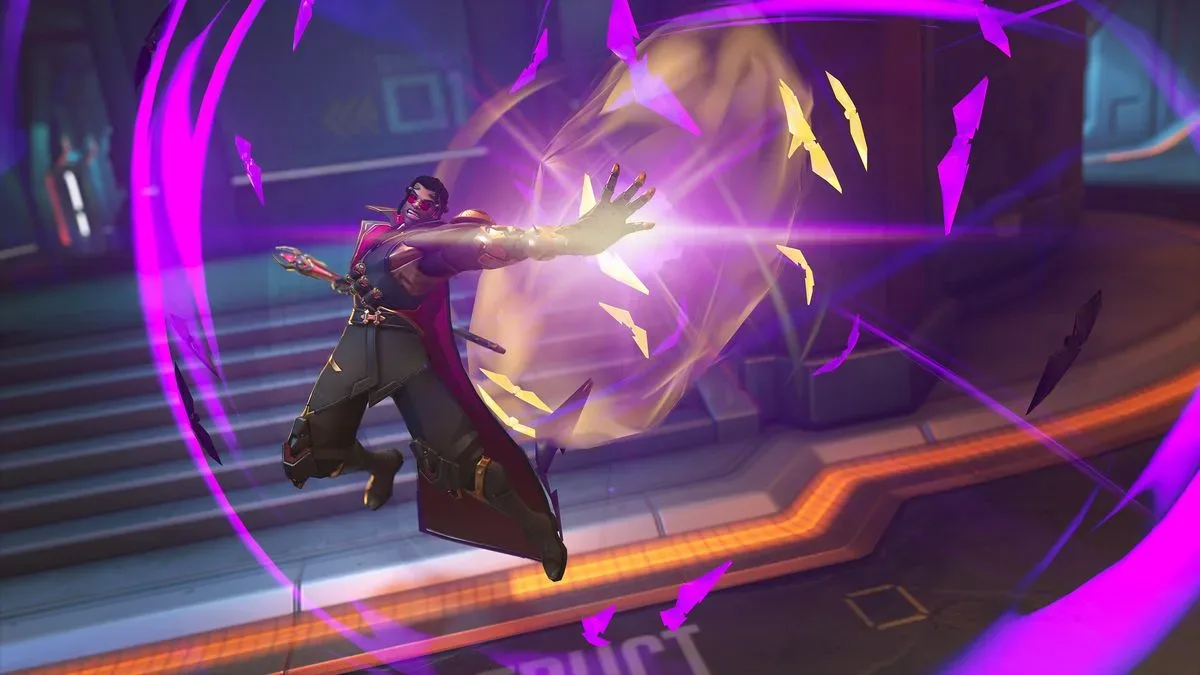
Overwatch's next support hero, Doctrine, is due to join the roster on October 6, and early play sessions at BlizzCon 2026 suggest he may arrive as one of the game's most flexible healers yet. The vampire-themed character combines ranged damage, drone-based support tools, burst movement, flight access, and an Ultimate that can simultaneously pressure opponents and sustain allies. That breadth has already raised a familiar question for competitive players: will Doctrine need to be toned down shortly after launch?
New heroes always create uncertainty in a team shooter built around counters, compositions, maps, and rapidly changing player knowledge. A character can look oppressive before the community learns how to challenge them, or conversely appear modest until dedicated players discover powerful interactions. Doctrine appears likely to inspire both reactions. His basic abilities are reportedly intuitive enough to generate immediate value in Quick Play, while the deeper parts of his kit leave room for substantial mastery.
That combination is important. A support who feels useful in their first few matches can be welcoming to newcomers, but a support with mobility, reliable damage, adaptable engagement ranges, and potent team utility can become especially difficult to contain once experienced players optimize their decision-making. Game director Aaron Keller has acknowledged Doctrine's flexibility and expects the hero to be strong enough to find a place in the evolving meta, even if the team has not yet identified exactly which existing heroes or pairings he will displace.
A Support With Few Obvious Limitations
Doctrine's early appeal comes from how many jobs he appears able to perform during a fight. His primary ranged attack gives him a way to contribute damage without needing to stand directly beside his teammates. That alone distinguishes supports who can merely survive from supports who actively help force eliminations. In Overwatch, even modest, consistent pressure from a support can change the rhythm of an engagement by making enemy positioning more dangerous and forcing healing resources away from frontline allies.
For useful background on this topic, read LG TV Privacy Claims Spark DIY Hardware Removal Video From OLED Owner.
He also has drones that provide healing and speed-oriented support. Mobility buffs can be exceptionally valuable because they do more than increase travel speed: they can help an ally escape a collapsing fight, reach cover, pursue a weakened target, rotate through a dangerous sightline, or take high ground before an opponent can react. When that utility is paired with healing, Doctrine may be able to influence both a team's survival and its ability to initiate fights.
Then there is Infuse, an ability central to Doctrine's identity. It enhances the hero's movement options, including access to flight, and modifies both his rush and drone abilities. This means that Doctrine's opponents may have trouble reading what he can do at any given moment. A hero who can suddenly retreat, reach elevated positions, shift into a new angle, or alter the function of key support tools creates a persistent threat of the unexpected.
That unpredictability grows further through a perk that substantially lowers the cooldowns connected to Infuse's damage and healing effects. Cooldown reduction is often one of the most consequential forms of power in a hero shooter, since it can turn a powerful situational option into a repeated part of a player's regular combat loop. If Doctrine can cycle his enhanced tools frequently, opponents may have less time to exploit the moments when he is supposed to be vulnerable.
On paper, there are few immediately apparent gaps in this package. Doctrine can damage at range, support teammates, move quickly, access vertical space, and influence engagements from flexible distances. That does not automatically mean he will be overpowered, but it does explain why players are already watching his launch balance closely.
Deliverance Could Become the Biggest Talking Point
Doctrine's Ultimate, Deliverance, may be the part of his kit most likely to draw attention after October 6. The ability applies a significant health-point debuff to enemies while also healing Doctrine's own team. An Ultimate that combines offensive weakening with defensive restoration can swing a team fight in two directions at once. Enemies become easier to remove, while allies gain more room to stay active and capitalize on the opening.
In coordinated play, that sort of effect could be particularly dangerous. A team that recognizes the cue for Deliverance may be able to commit aggressively knowing the opposing side is weakened while its own health is being reinforced. Even if the Ultimate does not directly guarantee eliminations, it can heavily influence which side gets to claim space, use cooldowns confidently, or force the other group into retreat.
The strength of Deliverance will ultimately depend on details that only sustained live play can reveal. Its duration, targeting rules, counterplay opportunities, charge rate, and interaction with other Ultimates will all matter. But the core design is clearly powerful enough that it is reasonable to expect close observation in the opening weeks. Balance changes to a new hero's signature Ultimate are common when real match data exposes a stronger-than-expected impact.
Keller Sees Flexibility, but Also a Demanding Aim Requirement
Keller agreed that Doctrine has considerable flexibility, highlighting the hero's ability to move in and out of danger and reach high ground by using Infuse with his dash. Still, he identified a meaningful limitation: Doctrine requires strong aim.
That distinction may be the primary reason the design team believes the character can avoid becoming universally dominant. A support can have exceptional tools, but those tools are less valuable if a player cannot consistently land the shots needed to apply pressure or secure value. Precision requirements often create a natural separation between a hero's performance in casual matches and their performance in high-level competition.
Doctrine may therefore have an unusual progression curve. Players can gain a baseline level of usefulness through drones, movement, and basic healing contributions, but extracting his maximum value may require refined mechanical accuracy alongside smart timing. Knowing when to activate Infuse, whether to use it for an escape or a proactive position, how to manage altered abilities, and when to commit Deliverance are strategic decisions that could separate competent Doctrine players from exceptional ones.
Keller said the team is not yet certain who Doctrine will replace or which exact synergies will prove best. That uncertainty is normal before a hero enters the full live environment. Internal testing can involve a great many games, but it cannot fully reproduce the scale, creativity, specialized teamwork, and constant experimentation of a worldwide player base. Even extensive developer testing includes only a limited group of people playing across different skill levels.
What Keller does expect is that Doctrine will be versatile and sufficiently powerful to enter the meta. The unanswered question is whether he becomes a specialized pick, a frequently used high-rank staple, or an almost universal support selection.
A Different Launch Concern Than Jetpack Cat
The development team is also hoping Doctrine avoids the kind of broad early dominance associated with Jetpack Cat's launch. Keller's comments frame Doctrine as a hero with both a high skill cap and meaningful strategic demands, rather than a character whose value is effortless in every situation.
That is a crucial goal for long-term balance. If a new support is too easy to use and too effective in nearly every composition, the immediate result can be a distorted meta where teams feel compelled to run that hero simply because the alternative is giving up too much power. In those cases, early balance adjustments become hard to avoid.
Doctrine's skill requirements may provide some protection against that outcome. Aim-intensive heroes tend to have a more variable impact from match to match, especially across the full range of player skill. A player with poor accuracy may still benefit from Doctrine's utility, but they may not generate the same level of offensive threat as someone capable of consistently converting ranged pressure into eliminations.
At the same time, this is exactly why Doctrine could become frightening in expert hands. A mechanically gifted player who also understands support positioning, cooldown tracking, high-ground control, and team-fight tempo may be able to make use of every part of his toolkit. Flight and enhanced movement can make him hard to pin down. Drones can sustain or accelerate allies. Damage can supplement a team's finishing power. Deliverance can reshape a decisive engagement. In the right hands, those elements could add up to a hero with answers for a remarkable number of situations.
Balance Will Depend on Live Data, Not First Impressions Alone
It is tempting to declare a nerf inevitable whenever a new hero feels immediately strong, particularly when early users find success before they have fully learned the character. But first impressions are not a balance verdict. Players will discover counters, map-specific weaknesses, compositions that deny Doctrine space, and matchups that punish his positioning. The community may also find that certain parts of his kit are much more important than others.
Still, Doctrine has all the traits that typically make a launch hero worth monitoring: standout mobility, multiple utility options, respectable damage potential, a powerful Ultimate, and a design that rewards increasing mastery. If his apparent lack of obvious weaknesses remains true once he enters Competitive play, a first balance update may indeed be on the horizon.
For now, the more interesting prospect is what Doctrine may do to support gameplay itself. He looks positioned to reward players who want to make proactive plays rather than simply react to incoming damage. The hero's success may rest on a constant series of choices: heal or pressure, retreat or take height, preserve Infuse or spend it for a sudden angle, and hold Deliverance for safety or use it to force a winning push.
Those decisions should make Doctrine one of Overwatch's most closely examined additions when he joins the roster on October 6. Whether he becomes a balanced high-skill favorite or the next target for a swift nerf, he is already shaping up to be a major factor in the game's next meta conversation.
Community
Discussion
Start the conversation.
No comments have been posted yet.