

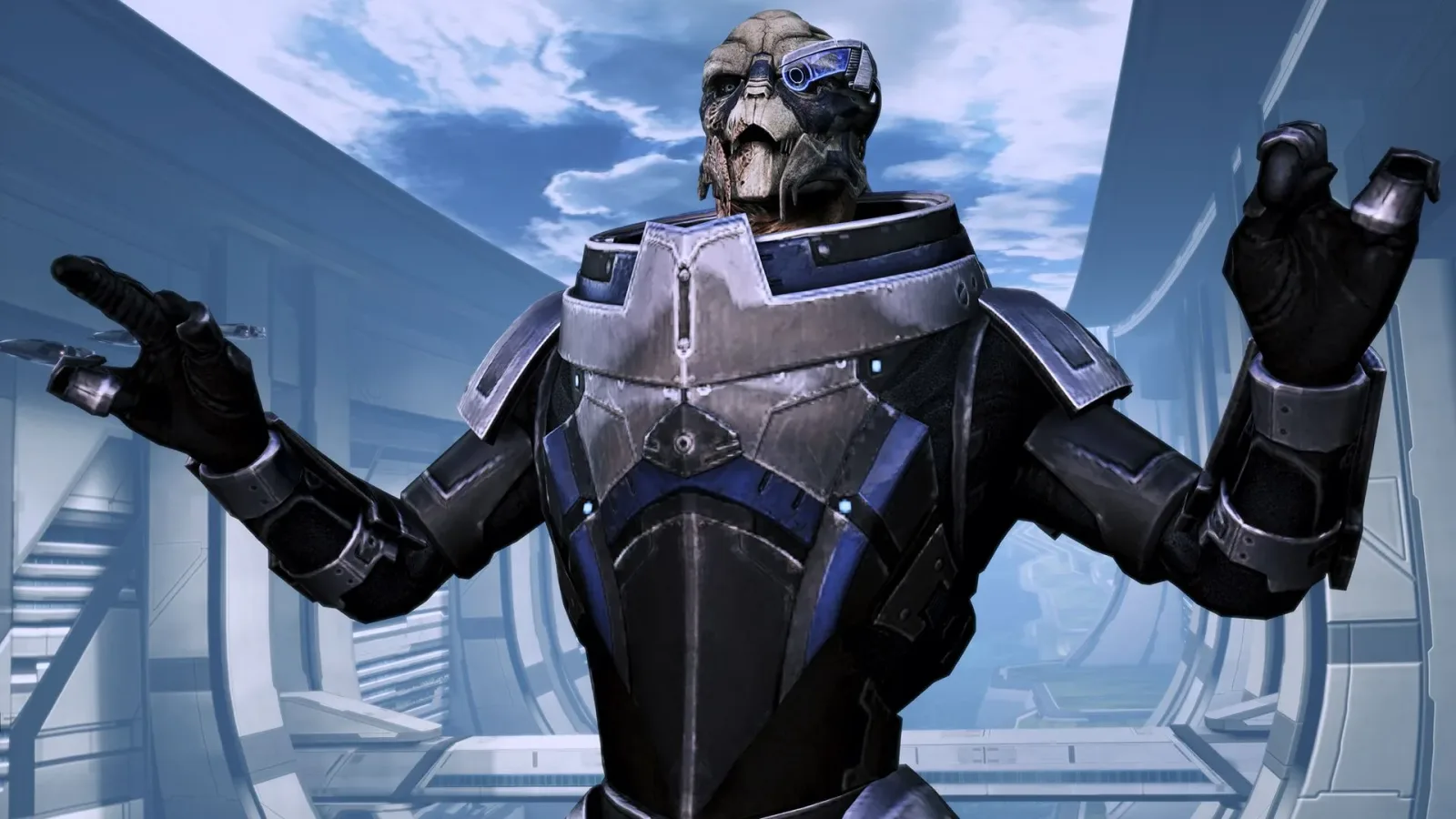
In the wake of reports that EA is shutting down BioWare, some Mass Effect fans have begun looking for an unlikely rescuer for the long-running science-fiction RPG series: Pocketpair, the developer behind Palworld.
The idea has gained traction through direct messages and social-media replies sent to Pocketpair staff, with fans suggesting that the Japanese studio should purchase the Mass Effect intellectual property and continue work on the next game. John "Bucky" Buckley, Pocketpair's head of communications and publishing, has responded to the calls with a reality check: acquiring a game franchise, particularly one as large and established as Mass Effect, is not as easy as fans may hope.
Buckley said that Pocketpair regularly receives requests of this kind after cancellations and studio closures. He described a familiar pattern in which players initially ask a successful company to buy a dormant or endangered property, only for those messages to eventually become accusations that the company should have acted because it supposedly has the money to do so.
Embedded X/Twitter post
That conversation has now reached Mass Effect. When asked specifically about the response following the BioWare news, Buckley said he had received close to 30 direct messages or emails in a single day asking Pocketpair to buy the franchise. His reaction underscores the scale of the fan concern, but it does not suggest that Pocketpair is pursuing a deal.
For useful background on this topic, read Modern Warfare 4 DMZ Update Lets Players Reclaim Enemy UAV Towers.
Why Buying Mass Effect Would Be a Major Undertaking
Fans understandably tend to see a beloved series as something that can be handed from one studio to another if the original developer can no longer continue its work. The business side is considerably more difficult. Mass Effect is not simply a name that can be picked up off a shelf. It is a major EA-owned property with nearly two decades of history, multiple games, expanded lore, technology considerations, publishing arrangements, and substantial commercial value.
An acquisition would first require EA to be interested in selling. There is no indication that EA is open to selling Mass Effect, and a studio closure would not automatically mean that the publisher intends to part with the series. Publishers often retain ownership of their best-known brands even if a particular internal team closes or projects change direction. An IP can be revisited later by a different developer, adapted into another form of media, licensed, remastered, or simply held for future use.
Even if EA were willing to discuss a sale, the potential price could be difficult for almost any independent developer to justify. Buckley pointed out that the amount sought for an IP can be wildly out of proportion with the value a buyer expects to recover. A famous franchise brings name recognition, but it also brings expectations, risks, and the cost of building a project capable of meeting the standards set by earlier entries.
That last point is especially important with Mass Effect. The series is remembered for its cinematic presentation, party members, player choices, branching relationships, galaxy-spanning setting, and large-scale storytelling. Making a sequel that satisfies a devoted audience would require a sizable team with experience in narrative role-playing design, animation, combat, cinematics, quality assurance, production management, and platform support. Purchasing the name would only be the beginning; developing a credible new entry would be a separate, expensive challenge.
Pocketpair's Success Does Not Make It an Automatic Fit
Pocketpair has attracted enormous attention since the breakout success of Palworld, an open-world survival game built around creature collecting, crafting, exploration, and combat. The company has also announced spin-offs connected to that universe, suggesting it has ambitions to build beyond one initial hit. That visibility has made Pocketpair an easy target for wishful-thinking proposals from players who want a well-funded, growing developer to step in when another studio is in trouble.
But commercial success in one genre does not automatically translate into the ability, desire, or organizational structure needed to make a huge choice-driven RPG. Palworld and Mass Effect have very different foundations. One emphasizes survival systems and sandbox play; the other is associated with authored characters, cinematic conversations, moral decisions, elaborate worldbuilding, and a tightly presented campaign.
That does not mean a studio can never broaden its creative range. The games industry is full of teams that have successfully changed genres or expanded into new types of projects. Still, moving into a series with the legacy of Mass Effect would be more than a normal shift in scope. It would place Pocketpair under intense scrutiny from longtime fans, especially after years of debate over the direction of the franchise and its future.
Buckley's own joking preference for Jade Empire also highlights how speculative the entire discussion remains. The comment was not an announcement, a tease, or evidence that Pocketpair is seeking any EA property. It was a light response within a broader explanation of why fans should not assume that a company can, or should, buy every IP they want to see revived.
What BioWare's Reported Closure Means for the Next Game
The concern behind these messages is easy to understand. BioWare built its reputation through role-playing games including Mass Effect, Dragon Age, and earlier titles that helped define the genre for many players. A new Mass Effect was said to be deep in development before the reported shutdown, leaving fans worried that the project's work, staff expertise, and momentum may be lost.
For many people, the fear is not limited to whether another game will ever be made. It is also about whether the specific people who understood the series, its characters, and its design goals will be able to finish what they started. The development of a sequel is built on more than a setting bible or a collection of concepts. It depends on institutional knowledge, creative leadership, production pipelines, and relationships among teams that have spent years shaping a project.
A different studio could potentially make another Mass Effect in the future, but it would not automatically be the same game that BioWare had been developing. That distinction helps explain why the fan response has moved quickly from disappointment to proposals for rescues, purchases, and outside intervention. Those suggestions are attempts to preserve a future that players feel was suddenly put at risk.
One of the leads associated with Mass Effect 5 has acknowledged the outpouring of support following the closure news, saying it means a great deal to the team. They also found a little humor amid the uncertainty, joking that they will no longer need to call in sick when Grand Theft Auto 6 launches. The comment reflects a difficult moment for people whose work and careers have been affected, while also showing how game developers often lean on community goodwill and humor during upheaval.
A Franchise Cannot Be Saved by a Purchase Alone
The calls for Pocketpair to buy Mass Effect come from genuine affection for the series, but they also reveal a common misconception about ownership. A sale, even if it were possible, would not instantly restore the development team or guarantee a sequel that honors the original trilogy. It would raise a new set of questions: Who would lead the project? Which staff would be available? What engine and tools would be used? Would the buyer have the financial capacity for years of development? Could it deliver a game that feels worthy of the property?
There is also a broader lesson in Buckley's response. Players often see a successful studio and assume that money is the only barrier between a favorite franchise and revival. In reality, IP negotiations can involve valuation disagreements, legal complications, strategic priorities, brand protections, and long-term publishing plans. The buyer and seller both need to believe the deal makes sense, and that is before a single new scene, mission, character, or line of dialogue is produced.
For now, there is no announced Pocketpair acquisition, no sign that EA plans to sell Mass Effect, and no confirmed path for the series beyond the uncertainty surrounding BioWare. The messages directed at Pocketpair are best understood as an expression of how strongly fans want the franchise protected rather than evidence of an imminent business move.
It is natural to search for a savior when a beloved studio faces closure. Yet the legacy of Mass Effect deserves more than a rushed handoff driven by online desperation. If the series does return, players will want a team with the time, talent, resources, and understanding required to make a meaningful successor. Until there is concrete news, revisiting the existing trilogy may be the clearest way for fans to celebrate the galaxy BioWare created--and to remember why the prospect of an unfinished future has sparked such a passionate reaction.
Community
Discussion
Start the conversation.
No comments have been posted yet.