

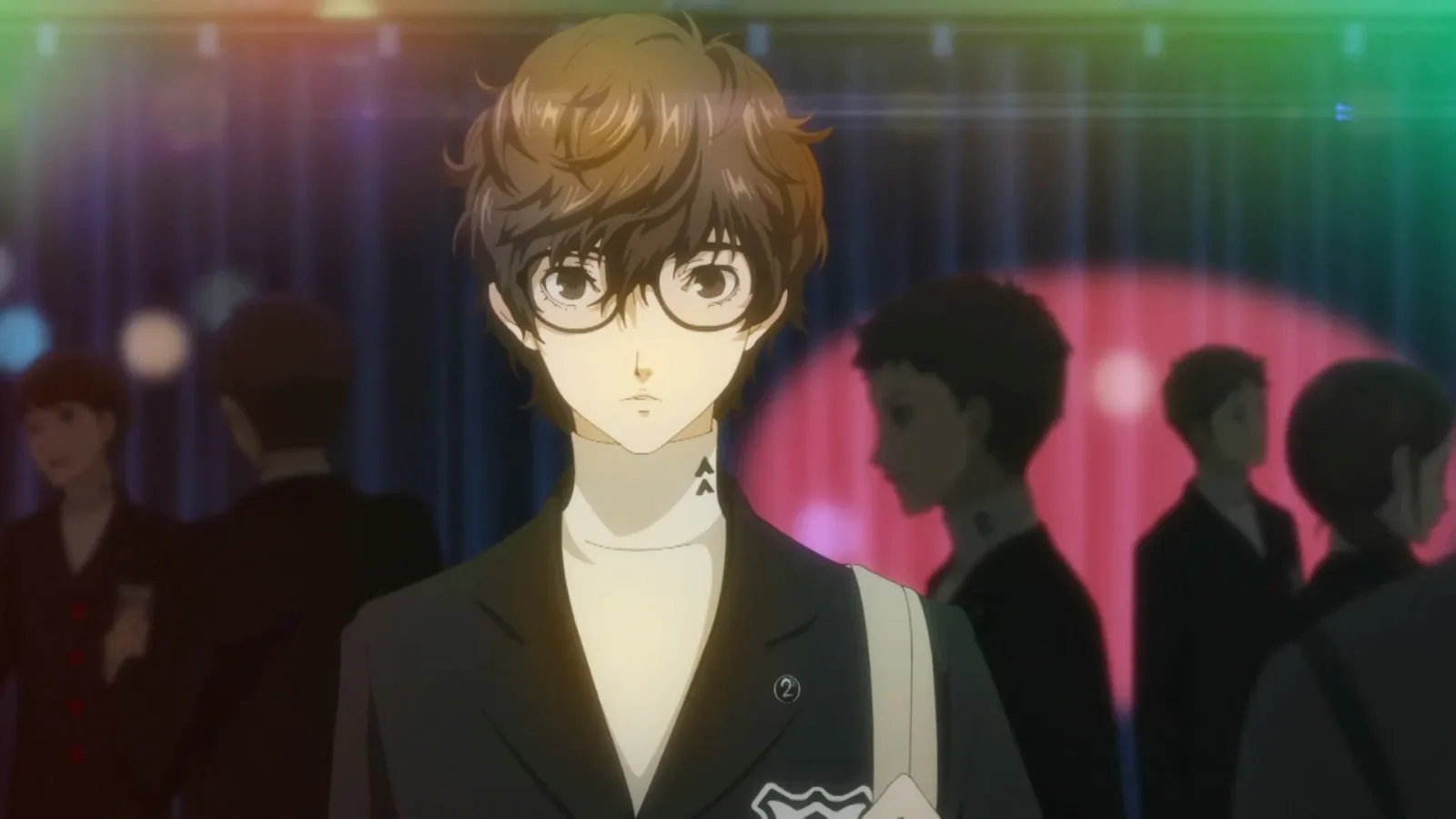
Persona fans have grown accustomed to patience. The gap between the original Japanese launch of Persona 5 in 2016 and the still-awaited arrival of Persona 6 has become one of the defining realities around Atlus' role-playing series. In that period, players have received expanded editions, remasters, remakes, crossover projects, rhythm games, fighting games and other spin-offs. Persona Studio also delivered the separate fantasy RPG Metaphor: ReFantazio. But an entirely new numbered Persona entry has remained elusive.
There is reason to believe the next wait may be less punishing. Persona producer Waku Wada has said that Persona 6 is not being treated as the final destination for the team's planning. Instead, the studio is trying to create a development structure that will allow the series to move forward more efficiently once the next mainline game is complete.
The important caveat is that this is an ambition rather than a release commitment. There is still no announced launch date for Persona 6, and Wada did not attach a specific timetable to Persona 7. Still, his comments point to a deliberate effort to avoid repeating a development cycle in which fans have to spend roughly a decade waiting for the next numbered chapter.
A franchise shaped by long gaps
The modern Persona audience has seen the series grow enormously since the release of Persona 3 in 2006. That game helped establish many of the traits now strongly associated with the franchise: stylish presentation, a school-year structure, social relationships that feed directly into combat growth, dungeon exploration, psychological themes and a carefully curated musical identity.
For useful background on this topic, read Danganronpa and Paranormasight Producers Debate Whether Game Streaming Needs Limits.
Wada reflected on the difficult circumstances surrounding that turning point. The games industry was facing a downturn, while Atlus itself was in a challenging financial position. The pressure was felt across development, with the sense that a commercial failure could seriously threaten the team's ability to continue making games.
Earlier Atlus projects had earned loyalty through distinctive, often sharper-edged creative ideas, supported by a dedicated audience. Yet the changing business environment meant that a committed niche alone was no longer viewed as enough. Persona 3 had to reach beyond that established base without discarding the identity that made the series meaningful in the first place.
The answer was not to chase the industry's push toward visual realism. Instead, Persona leaned more heavily into anime-inspired expression, bold graphic design and the psychological concepts that had been present in its earlier work. It also placed those ideas within a more immediately approachable setting. The result gave the series a foundation it could expand upon rather than replace with each installment.
Persona 4 built on that groundwork a few years later, and Persona 5, followed by its expanded Royal version, helped turn the franchise into a much larger global phenomenon. The present challenge for Persona Studio is therefore very different from the one faced during Persona 3. It is no longer simply about securing survival or proving that the format can find an audience. It is about sustaining a major series without allowing its scale and expectations to make new installments impossibly slow to produce.
Reusable work could change the rhythm
Wada's explanation for how Persona Studio hopes to improve the situation centers on collaboration and reuse. Rather than rebuilding every component from the ground up for each major game, the team is working toward systems and processes that can carry forward into later projects. That approach can apply to far more than technology alone. Development tools, internal workflows, production knowledge and shared documentation can all reduce unnecessary reinvention.
For a series as elaborate as Persona, that could be especially significant. Numbered entries are not merely new stories with new casts. They require distinct settings, long scripts, relationship systems, combat design, social simulation, dungeon content, user-interface work, music, animation and a stylized presentation that needs to feel fresh while still recognizably Persona. Any effort to retain useful foundations could allow the studio to spend more of its time on the parts that truly need to be new.
Wada also described an effort to consolidate expertise from experienced staff alongside information about the series that may not be readily remembered internally. Long-running franchises can accumulate a surprising amount of institutional knowledge: why certain systems function as they do, which details matter to the audience, what past entries established and where fans may spot continuity mistakes that developers have overlooked.
That does not mean future Persona games will simply recycle old ideas. In fact, Wada emphasized the need to keep considering concepts and story directions capable of meeting fan expectations as the franchise becomes larger. The goal appears to be a more reliable production framework, not a formula that eliminates creative change.
For players, the ideal outcome would be a balance between consistency and reinvention. Persona has always evolved across its major installments, whether through a new town, city, school environment, visual motif, central mystery or approach to character bonds. Faster production will matter only if each new game still feels like a meaningful event rather than a hurried repetition of the previous one.
PC releases helped expand Persona's reach
The series' recent growth has also been tied to broader availability. Wada identified the worldwide Steam release of Persona 4 Golden in 2020 as a major milestone. The PC version arrived with support for multiple languages and passed one million copies sold within its first year, demonstrating the scale of demand outside Persona's traditional release patterns.
That result helped encourage further PC plans, including bringing Persona 5 to Steam and placing more emphasis on simultaneous worldwide launches. For a franchise that spent years tied closely to individual hardware generations and staggered regional schedules, the change has been substantial. A worldwide audience can now engage with Persona releases and re-releases much closer together, rather than waiting through lengthy localization or platform delays.
The success of those releases also helps explain why the development question carries extra weight today. Persona is no longer serving only a long-standing core audience that has learned to tolerate unpredictable gaps. It is now a global property with a much larger group of players waiting for the next mainline announcement. The more the series expands, the more difficult it becomes for the studio to disappear for another ten years between numbered installments.
At the same time, Persona has become broader than the games themselves. Concerts, remakes and other projects have helped maintain the brand's visibility during the long interval after Persona 5. These releases can give fans material to enjoy while a full sequel is in production, though they are not a complete substitute for the excitement surrounding a genuinely new mainline entry.
What this means for Persona 6 and Persona 7
There is no indication that Persona Studio intends to rush Persona 6 out merely to end the current wait. The comments instead suggest that the studio wants the work done for the next game to make future production more sustainable. If that strategy succeeds, Persona 6 could become the starting point for a more efficient era rather than another isolated project followed by years of rebuilding.
That distinction matters. Major Japanese RPGs are increasingly expensive and complicated to make, particularly when they are expected to offer the length, polish and visual flair associated with a series like Persona. A shorter gap does not necessarily mean a quick turnaround by ordinary standards. It means the team may be better equipped to avoid losing time to duplicated work and fragmented knowledge.
Fans should therefore read Wada's remarks as a statement of direction, not confirmation of an imminent Persona 7. The immediate mystery remains Persona 6: its setting, characters, platforms, gameplay changes and release window have yet to be formally detailed. Until those answers arrive, the promise of a less distant seventh installment is a welcome but necessarily long-term piece of news.
Rumors have also circulated around a possible remake of the first Persona. Nothing in Wada's comments confirms such a project, so it should remain firmly in the realm of speculation. If it does exist, however, a remake could help give the community another way to revisit the series' history while awaiting the next fully new chapter.
For now, the clearest message is simple: Persona Studio recognizes that the decade-long space between major entries is not an ideal model for the future. By sharing knowledge more effectively, strengthening cooperation across teams and carrying reusable work from one project to the next, the studio hopes that the journey from Persona 6 to Persona 7 will be much shorter than the road that led here.
Community
Discussion
Start the conversation.
No comments have been posted yet.