

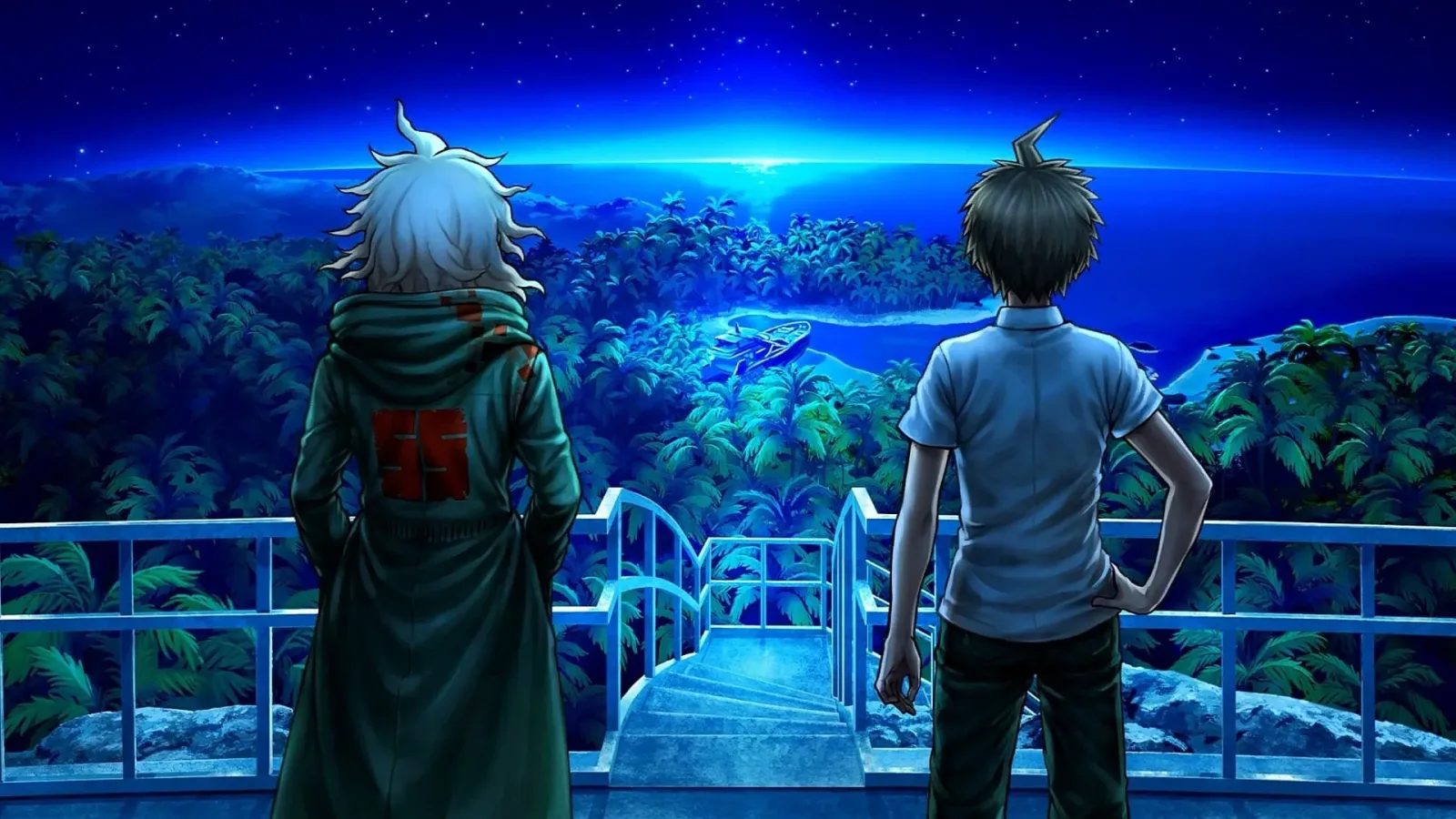
Game streaming is now deeply woven into how games are discovered, discussed, and sold. A major release can become a fixture on Twitch and YouTube within hours, while smaller projects can reach audiences far beyond their initial marketing budget when a popular creator decides to play them. In many parts of the industry, that relationship is no longer controversial. Publishers routinely send codes to creators, build campaigns around livestreams, and treat online video as a central part of launch strategy.
But for mystery games, visual novels, and other heavily story-driven experiences, the question remains more complicated: what happens when viewers can watch the entire game, including its ending, without ever buying it?
That issue was the focus of a discussion at the Japanese developer event CEDEC+Kyushu, where Danganronpa producer Shohei Sakakibara and Paranormasight producer Kazuma Oushu considered whether publishers should place restrictions on game broadcasts. Their conclusions were notably different. Sakakibara stressed that mystery games must protect the player's chance to discover the truth themselves, while Oushu argued that broad streaming exposure can create awareness and support a game long after release.
The exchange underlines a debate that has never fully disappeared, even as streaming has become a normal and often valuable part of the games business.
For useful background on this topic, read Samsung's 512GB P9 Express Card Is Down to $92 for Switch 2 Storage Expansion.
Why spoilers are different for mystery games
For Sakakibara, the central concern is straightforward: a murder mystery loses a fundamental part of its appeal once its answers are already known. The Danganronpa series is built around investigations, class trials, character deaths, and dramatic revelations. Much of the intended experience depends on players forming theories, questioning evidence, and discovering the culprit through play.
If someone enters that kind of game already knowing the major twists, Sakakibara's position is that the experience has been significantly diminished. In his view, restrictions are not simply a business tool designed to make viewers purchase a copy. They are also a means of preserving the work as an experience for potential players.
"If you find out who the culprit is beforehand, half the fun is gone," Sakakibara said. "Who would want to play a mystery when they already know the culprit? I absolutely don't want to take that experience away from players."
That perspective helps explain why games in this category have frequently come with detailed streaming rules in Japan. Publishers may allow broadcasts only through a defined chapter, prohibit uploading late-game scenes, require spoiler warnings, or block coverage of the ending altogether. The restrictions can be temporary, but they are sometimes maintained for years.
Story-heavy games are particularly vulnerable to this concern because their most important content is finite. A competitive multiplayer game can produce a new match every time. An open-world game may offer endless player-created chaos. A tightly authored mystery, however, generally has a set sequence of revelations. Once those are watched, the unknown cannot be restored.
Japan's more cautious streaming culture
The disagreement also needs to be viewed in the context of Japan's historically more restrictive approach to game broadcasts. Streaming and uploading game footage can technically involve copyright issues around a publisher's audiovisual work. While many companies around the world have chosen to tolerate, encourage, or actively support creator coverage, Japanese publishers have often taken a more formal approach through published guidelines and permissions.
These policies can define what content is permitted, which platforms may be used, whether monetization is allowed, and exactly how far into a game creators may go. Agency-affiliated streamers, including talent connected with groups such as Hololive, will often arrange permissions or licenses before playing particular titles on stream.
Danganronpa has been associated with spoiler-focused limits, while Atlus has also used notable restrictions for its story-driven releases. Streaming limitations around Persona 5 Royal, originally released in 2019, were not lifted until 2023. The rules can carry meaningful consequences in Japan, where videos that break publisher conditions may be removed and, in some circumstances, lead to legal action.
Nintendo also previously tried to impose stricter worldwide controls through its Nintendo Creators Program before moving away from that system. The broader direction of the industry has been toward greater creator freedom, but the continuing use of tailored rules for narrative games shows that publishers still see a difference between showing a game and showing all of a game.
Paranormasight presents the case for openness
Oushu offered the other side of the argument through the experience of Paranormasight: The Seven Mysteries of Honjo, Square Enix's 2023 mystery adventure and visual novel. The game did not allow creators to stream its final chapter at launch, but that limitation was removed in less than a month.
Rather than treating full playthroughs as a straightforward threat to sales, Oushu argued that people likely to buy the game may still do so even after its tricks have been revealed in a video. Viewers can be pulled in by its visual presentation, supernatural atmosphere, setting, characters, or unusual interactive structure. They may forget individual plot details over time while retaining the impression that the game was worth trying.
"The people who are going to buy the game will buy it even if all the tricks get revealed in a video," Oushu said.
His reasoning is especially focused on the long tail of a release. Not everyone who sees a game streamed buys it immediately. A viewer may add it to a mental list, wait for a sale, and return months later because they remember its world or style. In that scenario, streaming is less like a replacement for ownership and more like a powerful form of word-of-mouth advertising.
Oushu also suggested that overly restrictive policies can prevent the kind of discovery publishers need, especially when a game is a new property without a large existing audience. If potential fans cannot see enough of the title to understand what makes it distinctive, they may simply never notice it at all.
Exposure can extend beyond one game
The Paranormasight producer's argument goes beyond a single title's launch period. He noted that people who watched videos of the first game could later decide to play its more recently released sequel themselves, rather than watching a stream first. The first game's coverage may therefore help establish an audience that is willing to approach future entries spoiler-free.
That is an important consideration for niche series. A publisher may not only be measuring whether a stream converts into an immediate purchase of the game being shown. It may also be creating familiarity with a setting, developer, or genre that leads to future sales. For smaller projects, visibility can be difficult to buy through conventional advertising alone, while a memorable stream can introduce the game to a highly engaged audience.
Oushu's comments do not mean that spoilers have no effect. Instead, they suggest that the relationship between spoilers and sales is not simple enough to justify treating every full broadcast as harmful. Different viewers want different things. Some prefer to experience every twist directly; others enjoy watching a creator react and may later want to replay or explore the work on their own. Some will never become customers regardless of restrictions, but could still help spread awareness through conversation and clips.
A question without one universal answer
The two producers' positions may seem opposed, but both are rooted in practical concerns about how people encounter games. Sakakibara is concerned with the artistic and emotional value of an unspoiled mystery. Oushu is concerned with whether a game receives enough attention to find its audience. Both are reasonable priorities, and the balance may depend on the type of game involved.
A high-profile franchise with an established fanbase may have more room to limit late-game coverage while still reaching players. A brand-new visual novel with a modest marketing budget could benefit far more from creators being able to show its strongest material. A publisher might also choose a middle path: limit streams near launch, protect the finale for a short period, then relax the rules once early sales have passed.
Price is another factor acknowledged in the discussion. Relatively lower-priced games can make the purchase decision easier for viewers who have already watched some or all of a playthrough. For a player intrigued by a setting or eager to make their own choices, buying a shorter narrative game may still feel worthwhile even when the broad outline of its story is known.
The modern success of streaming makes it difficult to frame online broadcasts as inherently good or bad for games. Massive games can thrive through streamer attention, as demonstrated by the enduring online presence of Grand Theft Auto V and the enormous streaming visibility of Grand Theft Auto VI. Yet those games offer emergent play, multiplayer activity, and spectacle that differ greatly from a carefully constructed murder mystery.
For developers of narrative-focused games, the challenge is not whether streaming exists, but how to set boundaries that serve both the work and the audience. The CEDEC+Kyushu conversation shows that even creators working in closely related genres can reach very different answers. As publishers continue to refine their policies, the most effective approach may be one that recognizes the specific value each game asks players to protect--or invites them to share.
Community
Discussion
Start the conversation.
No comments have been posted yet.