

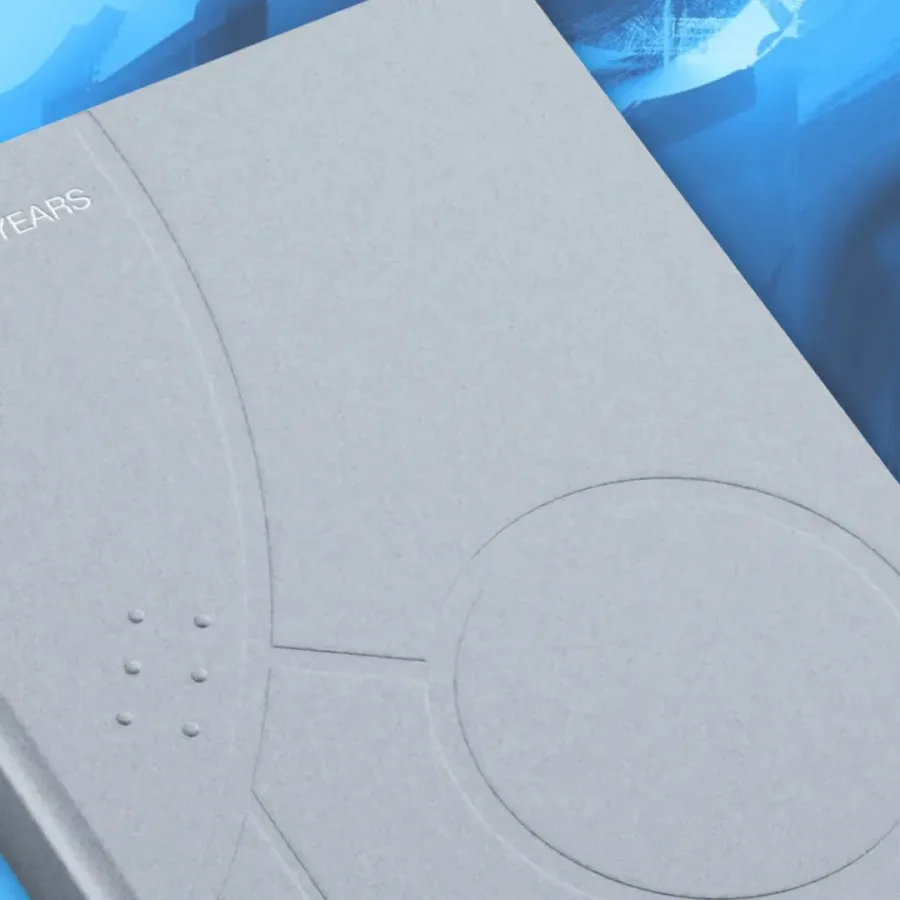
PlayStation is preparing to celebrate three decades of console history with a substantial new print release, but the announcement has landed in the middle of an increasingly heated debate about the future of physical games. PlayStation: The First 30 Years, a 400-page visual book covering Sony's gaming history, is now open for preorder and will ship in November. Its timing, however, has led many fans to focus less on the archival material inside and more on the fact that Sony is releasing an expensive physical collectible while moving toward ending disc production for PlayStation consoles in 2028.
The response has been particularly pointed across PlayStation's social media conversations. Fans have filled replies with variations on "No Disc, No Buy," questioning why a company that sees enough value in a premium physical book appears prepared to step away from physical game media. The book is intended as a celebration of the hardware, people, and design work that built the PlayStation brand, yet images of early consoles and controllers have also reminded players of an era when disc-based games were inseparable from that identity.
That tension is central to the reaction. For Sony, the upcoming book is a prestige item documenting a landmark history. For many players, it has become an accidental symbol of a contradiction: physical objects can still be desirable, collectable, and worth preserving, but the physical games that helped create PlayStation's legacy may become harder to buy on new hardware.
A premium physical chronicle of PlayStation history
PlayStation: The First 30 Years is a collaboration between PlayStation and Read-Only Memory, a UK publisher known for premium books about games, creative technology, and world-building. The project is positioned as an extensive visual record of Sony's console business, reaching back through the company's research and development archives to explore the making of the PlayStation family.
For useful background on this topic, read GTA 6 Could Require a 210GB Download on PS5, Unconfirmed Store Tracking Suggests.
The standard edition is listed at $125. A Deluxe Edition costs $325 and is limited to 1,994 copies, a number referencing the year the original PlayStation launched. Both editions are available exclusively through Read-Only Memory for preorder.
The 400-page book promises access to R&D prototypes, concept art, sketches, and development models that have not been broadly available before. It also includes perspectives from people who shaped PlayStation at pivotal points in its history. Among the featured figures are Ken Kutaragi, often called the "Father of PlayStation"; Teiyu Goto, the designer behind the original DualShock controller; and Yujin Morisawa, chief designer of the PlayStation 5.
Preview imagery offers a look at early controller concepts and prototype console designs. Those materials are exactly the kind of archival items likely to appeal to longtime PlayStation fans, hardware enthusiasts, and collectors. The book's visual focus also places the original PlayStation, PlayStation 2, PlayStation 3, PlayStation 4, and PlayStation 5 eras into a single physical record of the brand's evolution.
Yet several of the images making the rounds have an element that is impossible to miss in the current climate: disc drives. For an audience upset by Sony's stated plans to cut disc production, a retrospective filled with historic hardware that prominently uses optical media has added another layer to the discussion.
Why the format has become the story
The new book would ordinarily be a straightforward anniversary product. Large-format gaming histories, art books, and hardware retrospectives are familiar parts of collector culture. But PlayStation's announcement arrives after Sony said earlier this year that it will cut disc production for PlayStation consoles beginning in 2028.
That decision drew immediate criticism, and the reaction has not faded. In comments responding to PlayStation-related announcements, fans continue to raise concerns about discs, digital licensing, and whether purchases made through digital storefronts offer the same meaningful sense of ownership as a game bought on a disc.
As a result, the book has become more than a record of the past. Players are treating its physical form as evidence that tangible media retains cultural and personal value. A printed book can be displayed, lent to someone else, resold, kept indefinitely, and passed on. Supporters of physical games argue that discs offer many of those same benefits, even while acknowledging that modern games often require patches, online features, or additional downloads.
For collectors, the debate is not only about nostalgia. It is about having a durable copy, the ability to share or resell it, and a clearer relationship to the thing they paid for.
That is why the reaction has included more than simple disappointment. Some fans see the release as an example of Sony embracing physical media when it works as a high-margin collector product while retreating from it for the software people actually play. Others are simply frustrated that a book about the company's hardware heritage is arriving while the disc drive itself faces an uncertain role in PlayStation's future.
Ownership remains the biggest concern
The argument over discs is often reduced to a dispute between convenience and tradition, but fans' concerns go further than a preference for plastic cases on a shelf. Physical game ownership has practical uses that digital purchases do not always reproduce.
- Resale and trade-in value: A disc can usually be sold, traded, or gifted after purchase.
- Borrowing and sharing: Friends and family can lend physical games without transferring access to an account.
- Collections and preservation: Players can maintain libraries that are visible, personal, and not solely tied to a digital storefront.
- Storefront uncertainty: Digital availability can change due to licensing, delistings, account issues, or a platform holder's policies.
- Consumer choice: Many players want the option to decide between the ease of a download and the flexibility of a disc.
None of that means physical media is free of limitations. New releases can depend heavily on updates, multiplayer services can close, and some titles may not be fully usable from a disc alone. Digital storefronts also provide access, speed, and convenience that many players value. Still, critics of the planned disc-production cut argue that imperfections in the physical model are not a reason to eliminate it altogether.
For those players, the important word is choice. A console market with both disc-capable and digital-only options lets consumers choose how they buy games. A market that shifts entirely toward digital distribution gives publishers and platform holders much more control over access, pricing, availability, and the rules tied to an account-based purchase.
PlayStation figures reflect two very different views
Ken Kutaragi's inclusion in the anniversary book gives the current discussion an additional connection to PlayStation's origins. Kutaragi has recently supported the decision to cut disc production, while recognizing that physical discs have become a powerful stand-in for the broader idea of owning games. His view is that the shift is economically reasonable, a position that reflects the continued decline of physical disc sales.
That commercial reality is difficult to ignore. Digital sales have become a major part of the games business, and many players have already moved to downloading their purchases. Digital distribution avoids manufacturing and retail costs, allows games to be sold directly through platform storefronts, and makes it easy for users to buy and begin playing without leaving home.
But a business case does not automatically settle the consumer question. Former PlayStation boss Shawn Layden has been among the prominent industry voices challenging the implications of a fully digital direction. He has argued that if consumers cannot sell something, they do not truly own it, and has questioned what exactly is being purchased when resale and transfer rights disappear.
Those positions capture the divide. One side sees an industry adapting to purchasing habits and economic pressures. The other sees companies replacing ownership with revocable access, then asking players to accept that change as inevitable. PlayStation's anniversary book has put both ideas in the same frame: the company is preserving its past in a format designed to last, while players wonder how much control they will have over the games that define its next era.
An anniversary celebration with an unresolved future
There is no indication that online criticism has changed Sony's stated 2028 plan. It is also too early to know whether the backlash will affect sales of the book, future physical collectibles, digital game launches, or decisions surrounding PlayStation's next console generation. The volume of comments shows that the issue remains highly visible, but comment sections alone cannot determine how the broader market will behave.
What is clear is that PlayStation's past makes the debate especially resonant. Sony entered gaming with a disc-based console that helped redefine how games were made, sold, and experienced. Its hardware history includes iconic optical-media systems, from the original PlayStation and its CD-ROM library to the DVD-driven PlayStation 2 and Blu-ray era that followed. For many fans, those machines are not merely old electronics; they are the foundation of personal collections and decades of memories.
PlayStation: The First 30 Years looks set to be an attractive record of that legacy, particularly for those interested in prototypes, industrial design, and the people behind PlayStation hardware. But its physical existence has ensured that it will also be read through the lens of Sony's modern distribution strategy.
In that sense, the book is preserving more than concept sketches and console models. It is arriving at a moment when the meaning of collecting, buying, and owning games is being renegotiated. PlayStation can celebrate 30 years of hardware innovation in a hardcover volume, but the question many fans are asking is far more immediate: will they still be able to build physical PlayStation libraries in the years ahead?
Community
Discussion
Start the conversation.
No comments have been posted yet.