

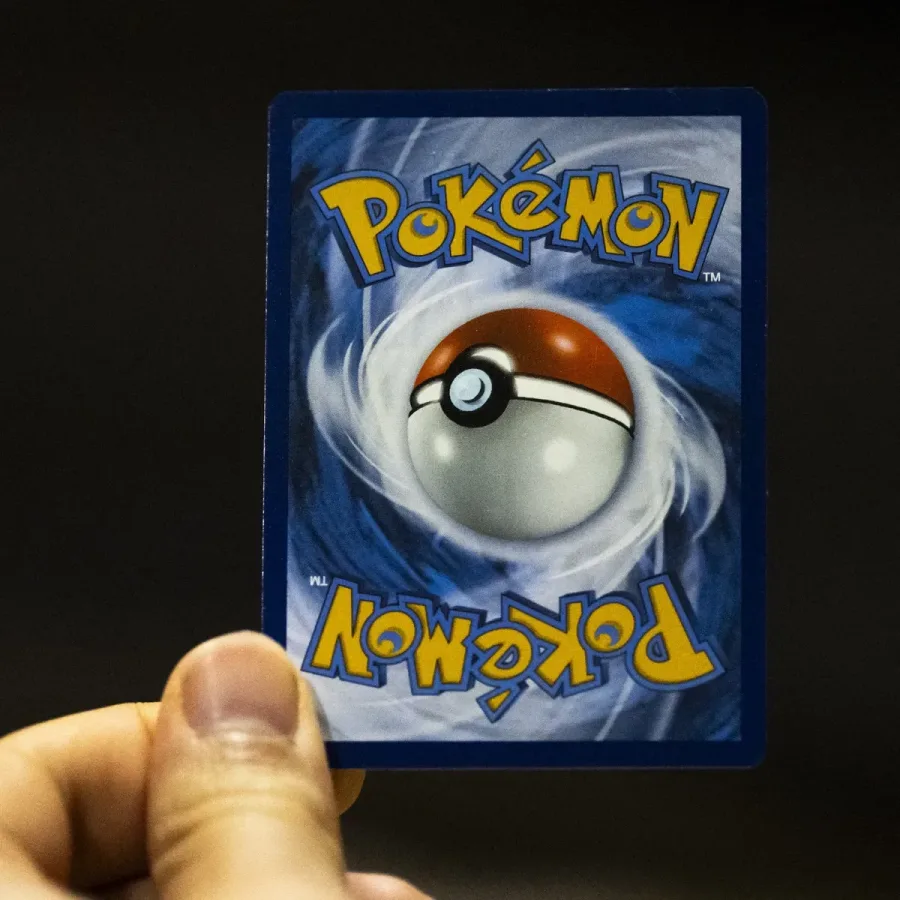
Could a carefully sleeved Charizard one day be worth more than the cash in a wallet? It is an extreme hypothetical, but gaming investor and major trading-card collector Pete Levin has made the case that Pokémon cards could become a practical global currency in the aftermath of a catastrophic worldwide collapse.
Levin, the founder of venture-capital firm Griffin Gaming Partners, has said he is convinced that Pokémon cards would take on that role if the world experienced an apocalypse. The argument is not simply that rare cards already sell for substantial sums. Instead, it rests on a combination of factors: Pokémon's extraordinary international recognition, a collectible market built over decades, independent authentication and grading, and a growing base of adults willing to spend heavily on objects tied to childhood hobbies.
It is, to be clear, speculation rather than a forecast backed by any real-world post-collapse precedent. A disaster severe enough to dismantle conventional financial systems would also create urgent questions around food, safety, energy, communications and transport. Still, Levin's comments highlight the unusual place the Pokémon Trading Card Game now occupies: it is both a mass-market game played by children and a global collectibles market where the rarest items can command enormous prices.
Why Pokémon cards, specifically?
Levin manages more than $1.6 billion in gaming assets and owns roughly 500,000 trading cards himself, so he has a clear personal connection to the category. His assessment is that Pokémon has characteristics that many other collectibles do not share at the same scale.
For useful background on this topic, read Metroid Ravenous Special Edition Sells Out Soon After Switch 2 Pre-Orders Open.
The franchise began in Japan and expanded internationally at remarkable speed during the late 1990s and early 2000s. Pokémon cards were familiar to a generation of players across North America, Europe, Asia and beyond. That matters to the currency thought experiment. A medium of exchange is more useful when many people recognize it, understand that others recognize it too, and can quickly distinguish broadly desirable items from ordinary ones.
Pokémon has endured through several cycles of intense popularity, quieter periods and renewed collector attention. Levin described the market's long-term trajectory as sharply upward after its low point. The broader trading-card market has benefited from that momentum, with Pokémon serving as one of its most visible and accessible entry points.
In a normal economy, a person can use money because institutions, laws and public confidence support it. In Levin's scenario, Pokémon cards would not replace those structures in any immediate or simple way. But his point is that a recognizable scarce object with a pre-existing market could retain barter value when more traditional systems were no longer functioning. A rare card would be easier to identify than many niche collectibles, and it could have appeal to potential traders in multiple countries.
Grading gives cards a shared language of condition
One of the central pillars of Levin's argument is the modern grading business. Companies such as PSA assess a card's condition, assign it a numerical grade and seal it in a tamper-resistant holder. That process does not set a guaranteed sale price, but it creates a standard vocabulary for collectors discussing condition and authenticity.
A card described as being in excellent shape can mean different things to different people. Centering, corners, surface wear, print defects and edge damage all affect desirability. Third-party grading attempts to turn those subjective judgments into a recognized scale. For collectors, it can reduce uncertainty when purchasing expensive cards from people they do not know in person.
That does not make every graded card equally liquid or valuable. The card's character, set, print run, cultural importance and current demand remain vital. Grading also has costs, turnaround times and its own debates over consistency. Yet in the context of Levin's claim, authentication offers something paper money, loose toys and many unverified collectibles may lack: a relatively clear way to communicate what an item is and what condition it is in.
The key distinction is between having a standardized collectible and having a functioning currency. Pokémon cards already possess the former in many cases. The latter would require people to agree that cards were useful for trade, that their authenticity could be checked, and that their value would remain meaningful from one exchange to the next. Levin believes the franchise's global familiarity gives it an advantage in that imagined situation.
The "kidult" market continues to reshape collectibles
Levin also pointed to the continued rise of adult consumers buying toys, games, vintage technology, comics and cards associated with their youth. Adults account for around 30% of worldwide toy sales, a figure that has been rising. This group is often described as the "kidult" audience: consumers with disposable income who are prepared to collect, display and revisit the media they loved when they were younger.
For Pokémon, that dynamic is especially powerful. Someone who opened booster packs during the franchise's earliest international boom may now have the money to chase cards they could not afford as a child. That nostalgia can support demand for vintage products, while active players and newer fans create demand for current sets. The result is a market with several overlapping audiences rather than one dependent entirely on tournament play or childhood purchases.
This intergenerational appeal is a major reason Pokémon cards are treated differently from many short-lived collectibles. A sealed product, a well-preserved vintage holographic card or a difficult promotional release may hold meaning for collectors even if it is not useful in the competitive card game. The value comes from scarcity and condition, but also from the story people attach to particular eras, characters and artwork.
A booming market has consequences for ordinary fans
Any claim that Pokémon cards could be an ideal survival-era asset will likely intensify the conversation around their perceived investment value. That is awkward timing for collectors and players already dealing with product scarcity, scalping and theft.
High-demand releases often disappear rapidly, leaving fans to face inflated resale prices or empty shelves. Retailers have tried different methods to curb opportunistic buying. In the United States, Target has begun cutting open some card boxes in an effort to discourage scalpers from treating sealed inventory as a quick resale opportunity.
Japan has seen its own measures. Some releases have been restricted to Japanese residents, while certain locations have introduced facial-recognition systems for adults and children to limit how many purchases an individual can make in a day. Such steps underline how difficult it has become to balance demand from genuine fans with demand from speculators seeking inventory to flip.
Cards have also become targets for thieves. Rare Pokémon singles can be small, portable and easy to identify, while sealed boxes can represent meaningful resale value. The more mainstream attention the hobby receives as an alternative asset class, the more it risks attracting people who see the cards primarily as inventory rather than game pieces or collectibles.
The Pokémon Company has printed at an enormous scale, producing 10 billion cards last year alone, but that has not fully solved the pressure around sought-after releases. Large overall production does not necessarily mean that every popular set, chase card or regional product remains easy to buy. Collectors care about particular expansions and specific cards, and demand can concentrate sharply around them.
Not every valuable card would work like money
Even within the playful premise of apocalypse currency, there are obvious complications. Most Pokémon cards are inexpensive. Many are printed in vast quantities, and even cards that once seemed special can lose value if demand moves elsewhere. The value of the market's most desirable cards is also tied to collectors, grading services, sales records, secure storage and communities able to trade information.
There is also a practical issue of divisibility. A highly valuable graded card may be a poor tool for small exchanges. Someone cannot easily hand over one rare card to buy a small amount of supplies and receive the equivalent of change. Lower-value cards could theoretically fill that role, but their prices are less stable and their desirability is far less universal.
Then there is preservation. Trading cards are vulnerable to moisture, heat, bending, dirt and theft. Plastic sleeves and graded cases help, but they do not make a card indestructible. In a severe crisis, necessities would understandably take priority over maintaining a pristine card collection.
Those caveats do not erase the core observation behind Levin's comments. Pokémon cards have evolved far beyond a schoolyard pastime. They are internationally recognized objects with organized pricing, authentication systems, passionate communities and a supply chain capable of printing billions of cards. Whether that makes them a plausible emergency currency is open to debate. What is much clearer is that the hobby's cultural and financial footprint is now too large to ignore.
Pokémon's next releases arrive amid continued demand
The continuing appetite for Pokémon products is likely to keep the debate over collecting versus investing alive. Mega Evolution's Delta Reign expansion is scheduled to launch in November, adding another high-profile release to a market where new products can become difficult to find quickly.
For players, the healthiest outcome remains simple: being able to buy cards to open, trade and play with at reasonable prices. For collectors, grading and careful preservation can help document condition and authenticity. For investors, the lesson is less certain. Historical growth and headline sales do not guarantee future results, and a collectible's market value depends on continued demand.
Levin's apocalypse scenario may be deliberately dramatic, but it reflects a genuine transformation in how many people view Pokémon cards. To some they are game components. To others they are art, nostalgia, cultural artifacts or speculative assets. In the most imaginative version of their future, they could even become a means of exchange. For now, they remain all of those things within a very active, sometimes chaotic and undeniably global hobby.
Community
Discussion
Start the conversation.
No comments have been posted yet.