

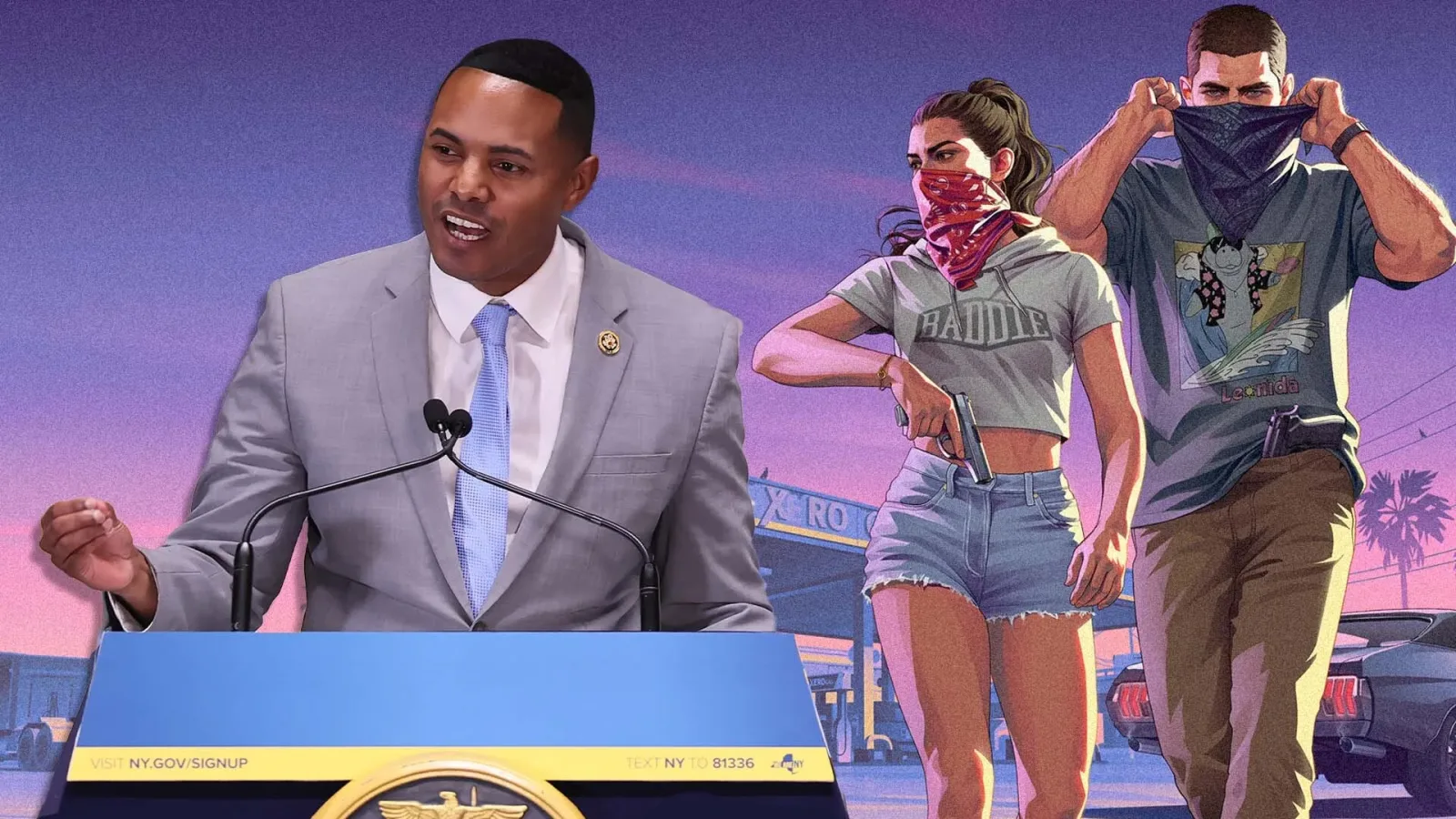
Buying a video game has become much more complicated than picking up a box, inserting a disc or cartridge, and keeping it on a shelf forever. In the modern market, a purchase may be tied to a digital storefront, an account, a license agreement, a publisher's servers, and a series of online services that can eventually disappear. A newly announced proposal from U.S. Representative Ritchie Torres seeks to confront that reality with a simple consumer-rights principle: players who pay for games should not lose them because a company later changes its plans.
Torres, the Democratic representative for New York's 15th congressional district since 2021, intends to introduce legislation called the Power To The Players Act. The proposal would direct the Federal Trade Commission to develop regulations intended to safeguard video game ownership rights. Its central targets are digital licenses that can be revoked or expire and games whose major functions become inaccessible after publishers shut down online servers.
"Consumers must have the right to own, the right to play, and the right to transfer the games they buy," Torres said in a statement announcing the effort. He argued that an item which disappears when a company ends support is not truly a purchase, but a rental presented as one.
What the proposed bill would try to change
The Power To The Players Act has not yet been formally introduced, so its final wording, scope, enforcement mechanisms, and exemptions remain unknown. Still, the initial outline describes two major objectives. First, companies selling digital games would need to provide players with rights beyond a revocable license that may cease to function at the publisher's discretion. Second, games with online functionality would need to include offline options that remain usable after the related servers are taken offline.
For useful background on this topic, read AI Coding Tools Are Forcing Game Makers to Rethink Security, Clones, and Creativity.
That second point matters because "online game" can mean very different things. Some games are designed around competitive multiplayer and live service systems, while others include lengthy single-player campaigns that nevertheless require a connection for authentication, progression, downloadable content, or access to certain modes. An effective preservation rule would have to address difficult questions: what qualifies as a meaningful offline mode, how much content must remain available, and what happens when a game relies on third-party technology or services that cannot simply be handed over to consumers.
Those details will be central if the legislation proceeds. The difference between an offline menu that launches and a version of a game that preserves its core experience could be enormous. Publishers may also argue that security, anti-cheat tools, licensed music, sports leagues, cloud features, and ongoing operating costs make a universal requirement impractical. Consumer advocates, meanwhile, are likely to argue that these complications should be considered before games are sold as permanent purchases rather than after players have paid for them.
NBA 2K25 illustrates the problem
The immediate example attached to the debate is NBA 2K25, one of the best-selling games in the United States during 2024. Players can put substantial money and hundreds of hours into the annual basketball series, particularly through its connected modes and virtual-currency-driven progression systems. Yet 2K Games has confirmed that NBA 2K25 will be removed from digital storefronts on October 30. Its online servers are then scheduled to go offline on January 1, 2027.
Once those servers close, many of the game's most popular modes will no longer be playable. For people who bought the game at full price, spent extra money on in-game purchases, or built long-running teams and characters, that creates a sharp disconnect between what "buying" a game sounds like and what it means in practice.
Server closures themselves are not new. They have affected games on PC, PlayStation, Xbox, Nintendo hardware, mobile devices, and older consoles for decades. What has changed is the scale of digital distribution and the degree to which features once stored locally are now managed by remote infrastructure. A physical disc can also become incomplete or unusable if it relies on mandatory patches, account checks, or online-only design. Digital ownership concerns therefore extend beyond whether players receive a plastic case.
A growing ownership and preservation movement
The proposed legislation arrives amid a broader push for stronger protections against games becoming inaccessible after commercial support ends. The Stop Killing Games advocacy movement has spent the past year calling attention to titles that can be rendered entirely unplayable when publishers pull the plug. Its broader message is not necessarily that companies must operate servers forever, but that customers should not be sold games that have no viable end-of-life plan.
The issue has also gained momentum as the industry continues moving toward all-digital distribution. Reports that Sony will end production of PlayStation discs for its next console generation have intensified concerns about a future in which physical media is no longer a practical fallback for many buyers. Players are also set to encounter a prominent version of that future when Grand Theft Auto 6 launches with a download code in a box rather than a playable disc. The game begins at $80, making the question of what buyers retain especially consequential.
A code in a retail box may resemble a traditional game purchase, but it ultimately directs ownership through a digital account and storefront ecosystem. If access depends on that ecosystem remaining available, collectors and preservation-minded players have less control than they did with many games of previous generations. That does not mean every physical release was permanent or self-contained, but it reflects a meaningful shift in who controls access after the transaction is complete.
From historical norm to digital rights
Torres describes his proposal not as a radical departure from how games have traditionally worked, but as a return to a longstanding expectation. Throughout the 1980s, 1990s, and much of the 2000s, consumers generally bought a game and retained the ability to play it as long as their hardware and copy still functioned. A cartridge could be traded, loaned, resold, or revisited years later without requiring the original publisher to maintain an authentication service.
That historical model was not flawless. Hardware fails, disc rot exists, batteries die, regional locks have caused headaches, and older games can be difficult to run on new devices. But the key distinction is that the continued ability to use a purchased game was often primarily in the owner's hands. Networked gaming has provided enormous benefits, including patches, cross-platform play, updates, cloud saves, and globally connected communities. It has also made access dependent on corporate systems that consumers cannot maintain themselves.
Torres has framed the issue as one of affordability as well as ownership. Families often save to purchase major releases, and the loss of a title can be especially frustrating when it happens only a few years after launch. The concern is magnified for games that encourage recurring purchases, whether through expansions, cosmetic items, season passes, or virtual currency. Players may be investing in a game world whose lifespan is decided unilaterally by the company that operates it.
A difficult road through Congress
The announcement is an early step, not a guarantee that new consumer protections will become law. The Power To The Players Act must first be formally introduced, then assigned through the committee process, debated, potentially revised, and passed by both chambers of Congress before reaching the president. Torres has not confirmed whether the bill will begin with co-sponsors or whether Republican members will support it.
That uncertainty is significant. Most proposed legislation never receives a full vote, and major game publishers would likely oppose rules limiting how they can license, sell, support, or retire digital products. Industry lobbying, disagreements over the FTC's authority, and technical arguments about live-service games could all shape the proposal's fate.
Even so, a congressional proposal focused specifically on game ownership is notable. Torres, who grew up with franchises including Grand Theft Auto, Resident Evil, and SOCOM, is 38 years old and substantially younger than the median House member. His familiarity with games does not settle the policy debate, but it may help bring an issue often dismissed as niche into a more recognizable consumer-protection conversation.
Games first, with possible wider consequences
The initial proposal is focused on video games rather than all digital media. That distinction is notable because consumers have also seen purchased films and other digital items removed from libraries. Torres has suggested that games warrant distinct attention because of the way people collect them, spend time in them, and invest financially in their ongoing ecosystems.
If the measure advanced successfully, however, it could establish an important model for wider digital ownership rights. The same underlying question applies to books, movies, music, software, and other downloads: when a store labels something a purchase, what ongoing access is the buyer actually entitled to receive?
For now, the Power To The Players Act remains a proposal with major questions ahead. But its arrival reflects a clear change in the conversation. Players are no longer only asking whether a game is good at launch. Increasingly, they are asking whether it will still exist for them after the publisher has moved on.
Community
Discussion
Start the conversation.
No comments have been posted yet.