

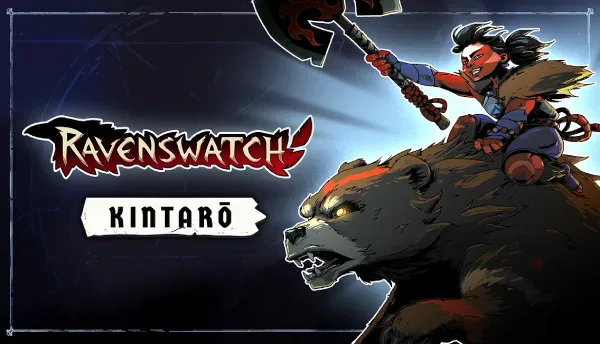
Ravenswatch has expanded its playable roster with the arrival of Kintaro, a new downloadable hero inspired by Japanese folklore. The character is available now alongside a substantial update that revisits the game's Talent system, making broad changes to the special abilities used by every hero.
Developed by Passtech Games and published by NACON, Ravenswatch is now offering the Kintaro DLC and the accompanying Talent rework on PC, Nintendo Switch, PlayStation 5, PlayStation 4, Xbox Series X|S, and Xbox One. The two releases arrive together on October 12, 2026, combining a new character for experienced teams to learn with systemic revisions intended to refresh existing builds.
Kintaro is the fourth additional playable character added after launch, following Merlin, Romeo, and Juliet. His arrival brings the total number of heroes available in Ravenswatch to 13. While the game's cast draws from an assortment of legends and storybook traditions, Kintaro gives players a fighter closely tied to a Japanese folk tale and built around a distinctive partnership with a bear named Kuma.
A powerful folkloric warrior enters the battle
Kintaro is described as the only hero without afflictions. Rather than being defined by a curse, tragedy, or other burden, he is presented as a fearless and immensely strong warrior whose focus is repelling the Nightmare invasion. That premise sets him apart from many fantasy action-game protagonists and gives the new hero a direct, forceful identity.
For useful background on this topic, read Mick Gordon Says He Would Return to Doom "In a Heartbeat" if Circumstances Align.
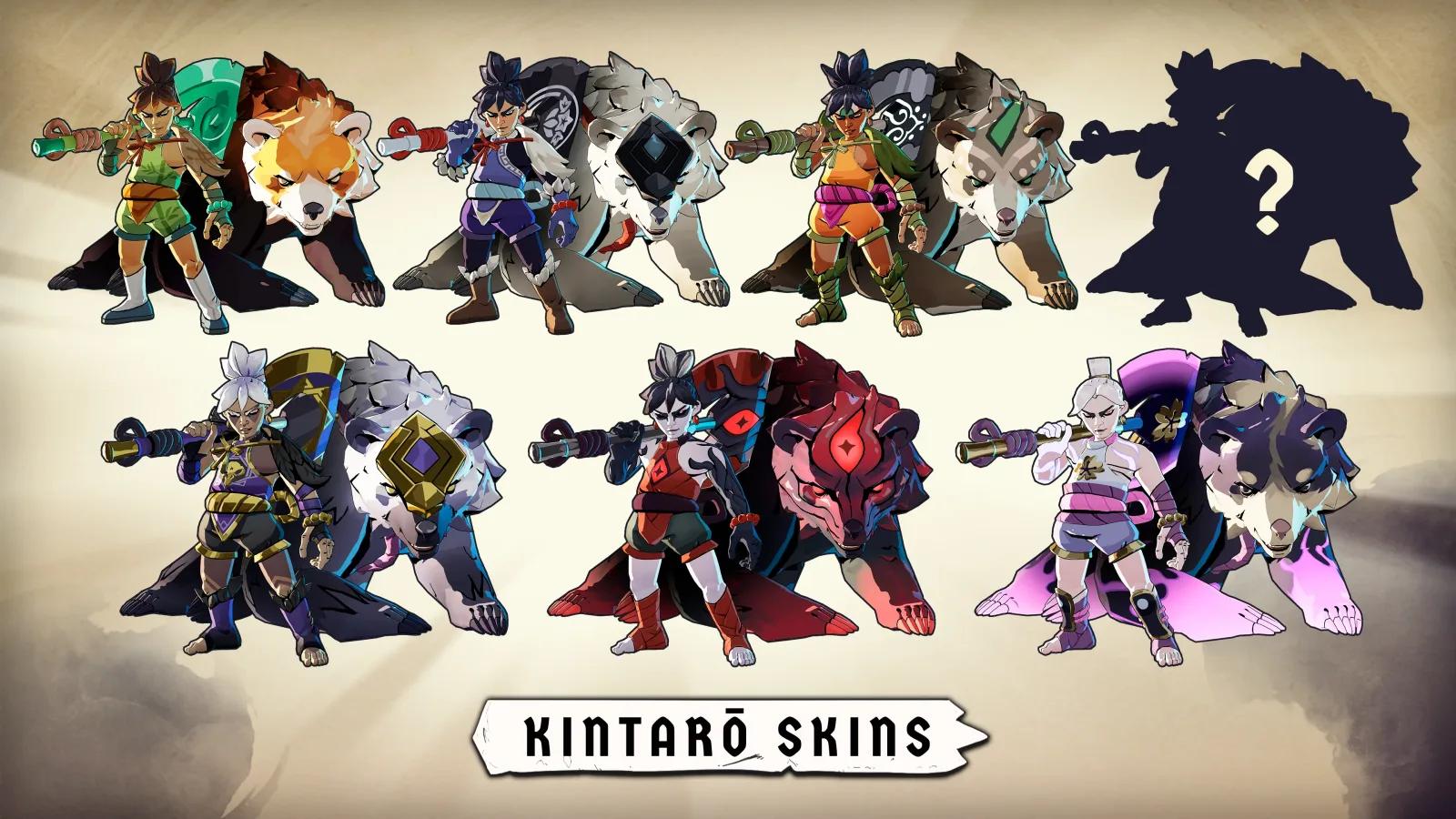
His fighting style centers on a gigantic axe and on Kuma, the carnivorous bear fighting at his side. The partnership is not merely visual: Kintaro has two different ability sets determined by whether he is riding Kuma or fighting on foot. This creates a character with a changing combat role, asking players to make use of both states rather than treating the bear as a simple companion attack.
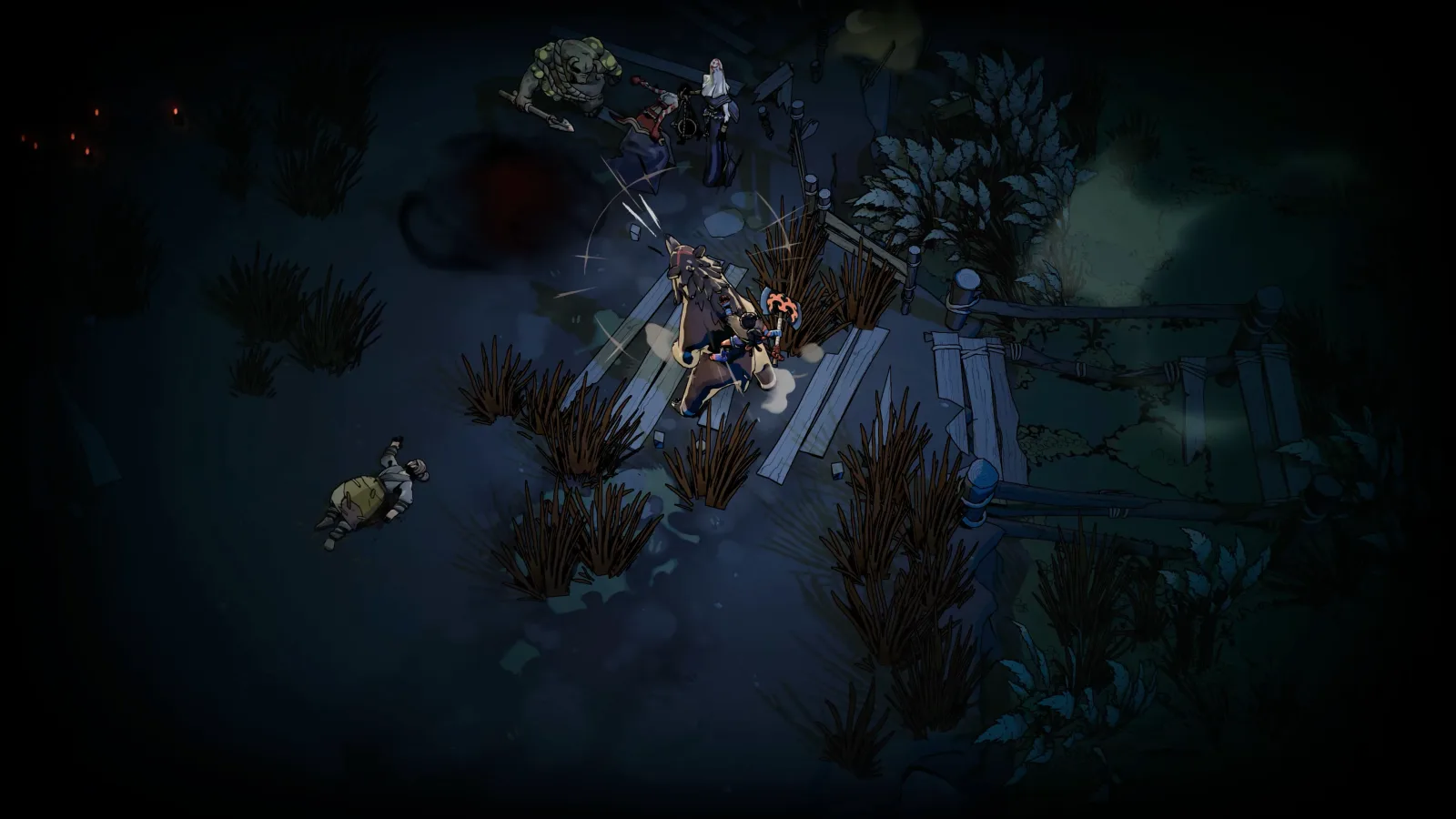
When mounted on Kuma, Kintaro can use claws to cut through Nightmares. On foot, he relies on his oversized axe and can unleash destructive combo attacks with Kuma's assistance. The contrast suggests a hero designed around adapting positioning and attacks as combat develops, with the mounted form supplying one kind of offense and the dismounted form providing another.
That dual-state approach should make Kintaro especially notable within Ravenswatch's top-down action structure. The game emphasizes runs in which players face escalating threats, develop a build over time, and coordinate in co-op. A character who can alternate between riding a beast and wielding an axe on the ground has the potential to offer a different rhythm from heroes whose kits operate in a single consistent stance.
For another perspective on this story, read Ravenswatch Adds Kintaro as a Sweeping Talent Rework Changes Every Hero.
The DLC also adds another option for parties working through the game's Nightmare-filled encounters. Ravenswatch supports online cross-play cooperative play for up to four people, so Kintaro's mix of axe strikes, claw attacks, and coordinated moves with Kuma can be incorporated into multiplayer groups across the supported PC and console versions.
Talents receive a game-wide overhaul
Kintaro's release is only one half of the October update. The larger accompanying change is a major rework of Talents, the special abilities that help define heroes and their possible builds during a run. The revision was shaped by community feedback and gameplay analysis, with the stated goal of reinvigorating the overall experience.
The changes are extensive rather than limited to a handful of balance adjustments. Existing Talents have been rebalanced, merged, added, or removed. Every hero has received revised active and passive abilities, meaning players returning to a familiar character should expect more than a few numerical changes. Their available choices and the ways those choices interact can now differ from prior versions.
For a roguelike action game, this kind of update can have a meaningful effect on the moment-to-moment decision making that drives repeat runs. Talents determine how a hero grows stronger, and changes to them can alter preferred combinations, combat priorities, and which upgrades appear most valuable for a particular group or difficulty setting. Revising both active and passive options across all heroes is therefore a broad mechanical refresh, not simply a tuning patch aimed at one outlier.
Players who have already settled into favorite strategies may need to revisit their usual choices. Talents that once occupied separate places in a build may have been merged, while removed Talents will no longer shape a run in the same way. Newly added options, meanwhile, may open combinations unavailable before the update. The full impact will depend on each hero's revised set, but the scope means the update reaches the entire roster, including Kintaro's new arrival.
The timing also makes sense as an invitation to return. A new hero gives players an obvious reason to begin fresh runs, while reworked Talent selections give established heroes new possibilities at the same time. Rather than separating the character addition from the mechanical work, the update delivers both changes together.
What Ravenswatch offers after the update
Ravenswatch is a top-down roguelike action game built around heroes confronting the Nightmare invasion. With Kintaro included, the game features 13 playable heroes. Its progression systems include more than 250 Talents and 50 magical items, leaving room for a wide variety of character setups across repeated attempts.
The game also includes four difficulty levels and custom game modes. Those options are important for a title whose core is replayability: groups can adjust the challenge while testing different characters, Talent paths, and item combinations. The addition of online cross-play co-op for up to four players further lets teams assemble across platforms rather than being limited to a single hardware ecosystem.
With so many Talents in the broader pool, a roster-wide rework is an especially significant undertaking. It affects not only character balance but the breadth of choices players see while developing their heroes. A revised active ability may change a combat pattern directly, while a modified passive Talent can shift how players evaluate items, positioning, or cooperation with allies. Merging and removing options can also make a hero's selection pool feel more focused, while added Talents can create new routes through it.
None of that means every build will immediately be obvious. In a roguelike, discovery is a central part of the appeal. The update gives returning players a reason to experiment instead of relying solely on knowledge built up before October 12. For newcomers, it establishes the current Talent lineup as the foundation for learning the game's heroes.
Kintaro and the rework are available now
The Kintaro DLC and the major Talent rework are live now for Ravenswatch on PC, Nintendo Switch, PlayStation 5, PlayStation 4, Xbox Series X|S, and Xbox One. Kintaro joins the original nine heroes and the previously released additional characters Merlin, Romeo, and Juliet.
For players interested in a new close-range combatant, Kintaro brings an axe, Kuma, and two combat states to the roster. For the wider Ravenswatch community, the more consequential long-term change may be the overhaul to Talents across every hero. Together, the DLC and update deliver both a new face in the fight against the Nightmares and a revised set of tools for the entire cast.
Community
Discussion
Start the conversation.
No comments have been posted yet.