

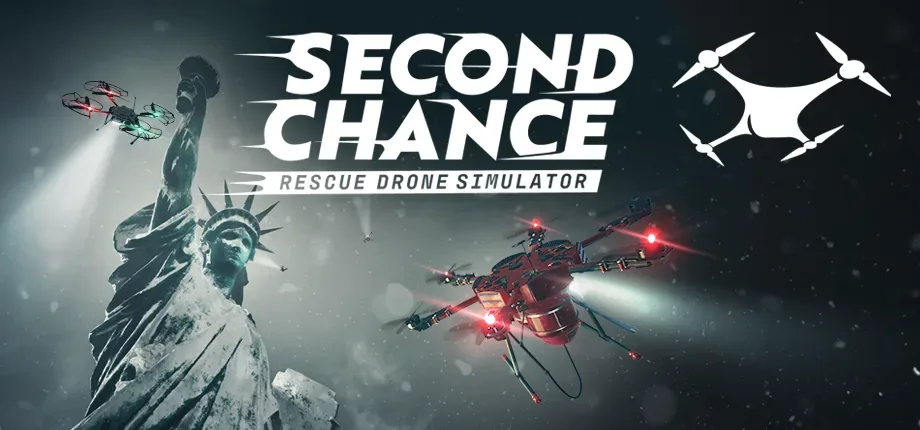
Rescue Drone Simulator: Second Chance is heading to PC, PlayStation 5, and Xbox Series X|S in Q1 2027. Developed by Anraga Studios with The Farm 51, the story-driven rescue action simulator puts players behind the controls of specialized unmanned aircraft during emergencies that are too dangerous, too remote, or too unstable for a conventional response.
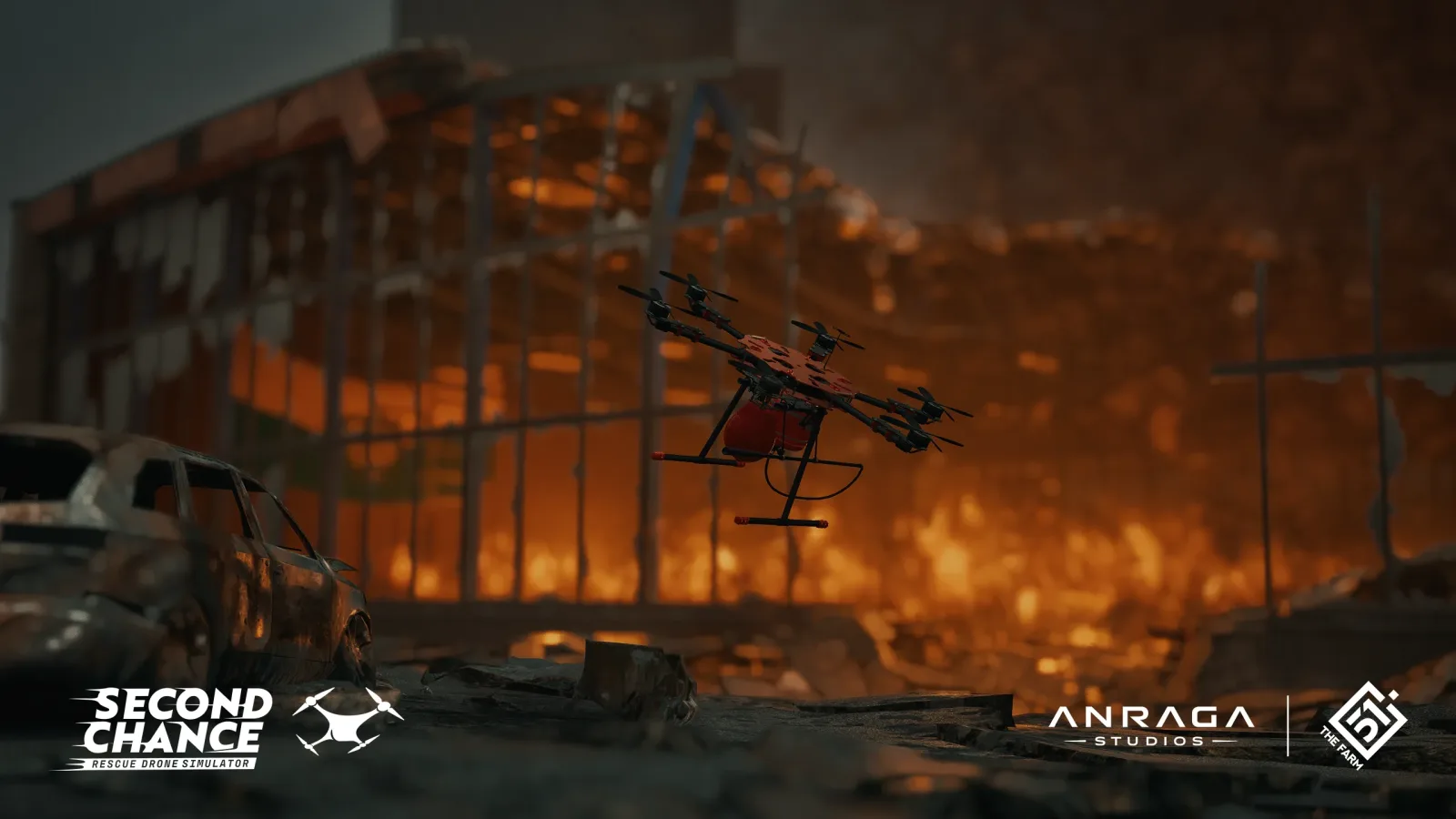
The premise is not simply about flying a camera-equipped drone over disaster scenes. Each operation is designed around assessing a worsening situation, selecting an appropriate machine, configuring it for the task, and making decisions under pressure. Fires, explosions, extreme weather, damaged infrastructure, missing-person searches, and natural disasters all form part of a campaign set in a plausible near-future world.
That campaign has a human angle behind its technological focus. The "Second Chance" in the title applies both to people who need saving and to the rescue team itself. Its specialists are people who can no longer carry out their old frontline jobs in the usual way because of accidents, illness, age, or traumatic experiences. Remote drone operations give them another means to contribute, allowing them to lead difficult interventions from a safer position while still reaching people in immediate danger.
A rescue simulator where the aircraft is part of the challenge
Rescue Drone Simulator: Second Chance presents its drones as physical machines rather than frictionless gadgets. Flight is influenced by mass, inertia, thrust, aerodynamics, battery life, weather conditions, and damage. Those factors should matter both in choosing a drone before deployment and in actively handling it once a mission begins.
For useful background on this topic, read Ratatan 1.0 Sets October Launch With Final Chapters and Orchestral Music.
Wind, for example, can force a drone off its intended line. Adding more equipment can affect its response and handling. A poor configuration choice in the workshop may leave a player with less flight time, weaker performance, or a machine that is ill-suited to the conditions waiting at the scene. That emphasis suggests missions will demand more than arriving at a waypoint as quickly as possible; a successful operation may depend on flying cautiously, preserving power, and accounting for the limits of the vehicle.
Players can choose between two flight-control models. Simulator mode is intended for people who want a closer approximation of drone piloting, with realistic stick mapping and more grounded flight physics. Arcade mode adds assistance, providing a more approachable route into the game for players who are less familiar with piloting UAVs or who prefer to focus on the rescue scenario itself.
Both controller and keyboard-and-mouse support are planned, alongside first-person and third-person camera options. Speed and wind indicators will also be available, an important feature in a game where changing conditions can have a direct impact on flight. The dual-model approach is notable because it attempts to serve two very different audiences: simulation-minded players looking for a deliberate control challenge, and players interested in an accessible emergency-response adventure.
For another perspective on this story, read Rescue Drone Simulator: Second Chance Targets Q1 2027 With Four Specialized UAVs and Dual Flight Models.
Four drones, four emergency roles
The game's fleet includes four distinct drone types, each equipped for a particular category of response. The choice of machine is intended to change how a mission unfolds, moving the gameplay beyond a single all-purpose flying platform.
- Rescue Drone: Built for locating and assisting people in distress. It can track cell signals, mark targets, and deliver medical kits.
- Firefighting Drone: Focused on suppressing flames, using a powder extinguisher or water balloons to tackle fires.
- Police Drone: Designed for high-risk interventions, with voice commands, smoke grenades, and a taser among its tools.
- Interceptor Drone: Intended to deal with hostile UAVs by intercepting and neutralizing them with a net launcher.
These roles point toward a broad range of objectives. A search-and-rescue scenario may involve following a cell signal through difficult terrain and getting medical supplies to a stranded person. A fire response could become a balancing act between maneuverability, payload, and a spreading blaze. Meanwhile, the Interceptor Drone introduces the possibility of aerial threats, expanding the game's disasters beyond environmental hazards and accidents.
The Police Drone's equipment also indicates that some missions will concern crowd control or dangerous public situations rather than rescue alone. The game's framing remains centered on emergency operations, but it is clear that the campaign will include scenarios where a quick tactical response is needed to prevent a crisis from becoming worse.
Workshop upgrades will affect performance in the field
Between operations, players will return to a workshop to modify and improve their drone fleet. Available components include motors, propellers, batteries, arms, wiring, and cooling systems. These are not described as purely cosmetic alterations. Each can influence practical characteristics including speed, thrust, flight duration, durability, and the overall feel of a drone in the air.
This system may be one of the game's most important links between its simulation and campaign elements. A stronger motor could potentially improve thrust, while a battery choice may favor extended flight time. Other changes may be better suited to durability or specific weather conditions. Because extra weight and setup decisions affect handling, upgrades appear likely to involve trade-offs instead of a simple march toward universally better parts.
That creates an appealing tension for a rescue game: the player is not only responsible for making good decisions once an incident is underway, but also for ensuring the team has prepared responsibly before it begins. The most expensive or powerful component may not necessarily be the best selection for every assignment. A compact configuration for a difficult search could ask for something different from a tougher setup needed near an industrial accident.
A larger crisis unfolds across four acts
The story campaign is expected to take roughly 10 to 15 hours to complete and is divided into four acts. It begins with individual rescue operations, but the separate incidents gradually build toward a broader crisis. Climate anomalies, escalating disasters, and failures in critical infrastructure are set to become increasingly connected as the campaign develops.
The narrative is written by Artur Fojcik, Game Director at The Farm 51. While the announcement does not detail every character or plot development, the rescue team's personal histories will be central to the larger theme. These are trained people who have been pushed away from the jobs that defined them, only to find another path into lifesaving work through technology.
That concept gives the simulator a potentially more personal focus than a sequence of disconnected emergency missions. The drone is the primary tool, but it is also the bridge between a team's past and its future. The campaign's escalating world events can therefore operate alongside a more intimate story about capability, recovery, and finding a renewed purpose after life-changing circumstances.
Mission locations will range across forest trails, coastlines, city centers, and industrial districts. Weather is expected to be more than visual atmosphere. Changing conditions, including winter weather, can alter how an operation plays out. In a game built around flight physics, this could make each environment demand different planning and piloting discipline. A route that is safe in clear conditions may be considerably more hazardous during strong winds or winter weather.
Near-future technology with an analog character
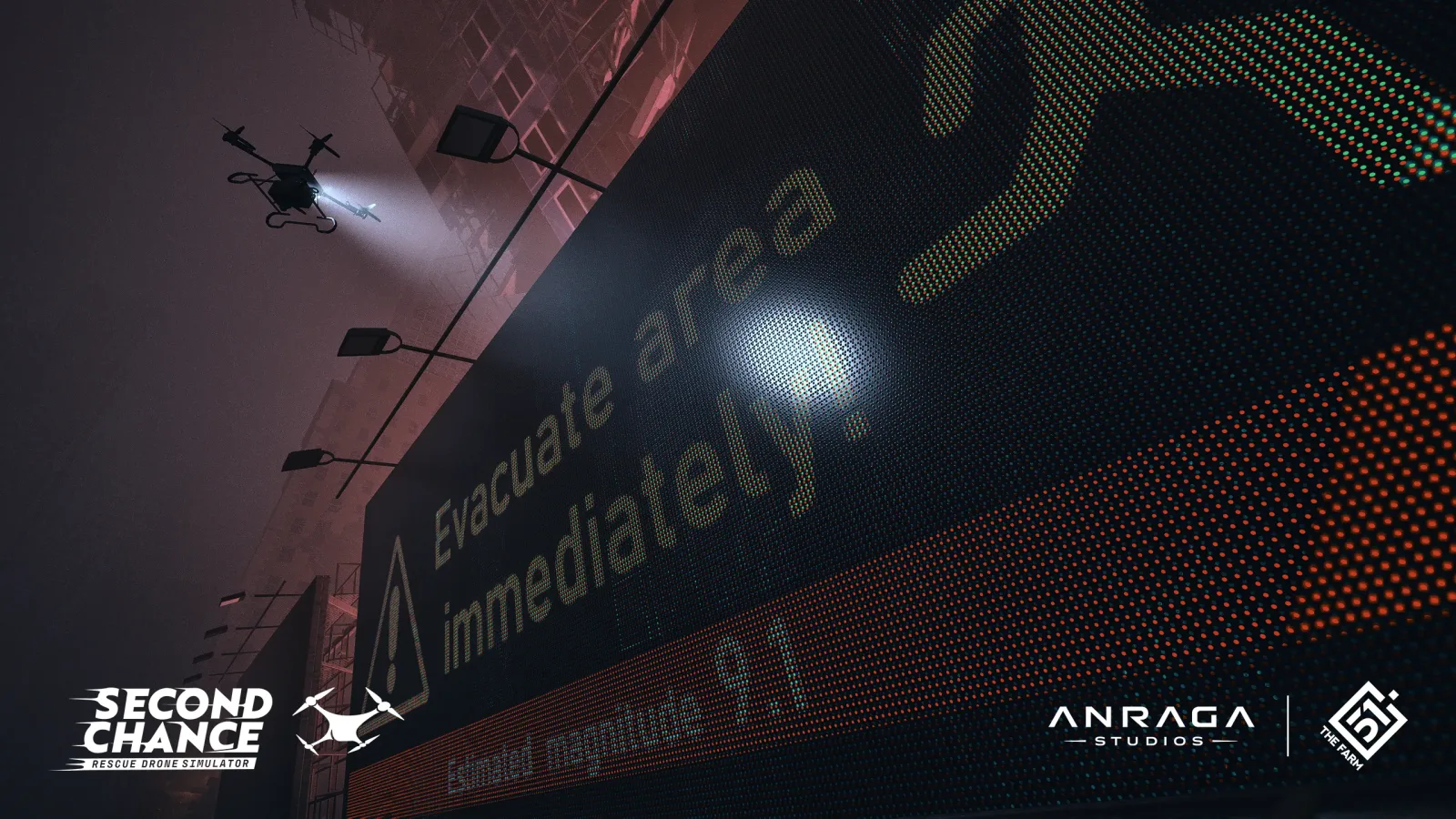
Rather than imagining a glossy science-fiction future full of abstract interfaces, Rescue Drone Simulator: Second Chance aims for a believable world with what the developers call an analog soul. Its technology is meant to feel tangible and functional: industrial environments, analog electronics, physical control panels, and equipment made to withstand real use are key parts of the intended style.
Art direction is led by Wojciech Pazdur of The Farm 51, who is also composing the soundtrack. The music draws inspiration from the sounds of the 1980s and 1990s, matching the project's blend of future-facing drone technology and tactile, older-feeling equipment. It is a visual and audio approach that could help distinguish the game from cleaner, more sterile depictions of emergency technology.
The emphasis on physical machinery also fits the design of the drones themselves. When players must consider damage, batteries, weight, wind, and repairs, a control panel full of switches and a workshop full of replaceable parts make thematic sense. The game appears to want players to see the aircraft as vital working tools, not magical devices that erase risk.
PC, PS5, and Xbox Series X|S release planned
Rescue Drone Simulator: Second Chance is planned for a simultaneous Q1 2027 launch on PC via Steam, PlayStation 5, and Xbox Series X|S. No specific release date has been announced. The game has been revealed with its first trailer, giving players an early look at its rescue-focused premise, varied environments, and drone-centered action.
Its combination of campaign storytelling, configurable equipment, specialized UAV roles, and optional simulation-style controls sets it apart from a conventional vehicle game. Whether players choose the assisted Arcade model or commit to the more demanding Simulator setting, the central idea remains the same: emergencies are unpredictable, the machines have limitations, and good preparation can matter just as much as steady hands in the air.
For players interested in rescue games with a technical edge, Rescue Drone Simulator: Second Chance is positioning its drone fleet as more than transportation. Every aircraft is a tool with strengths, vulnerabilities, and a specific purpose--and every launch could represent an opportunity to give someone, including the people operating from afar, another chance.
Community
Discussion
Start the conversation.
No comments have been posted yet.