

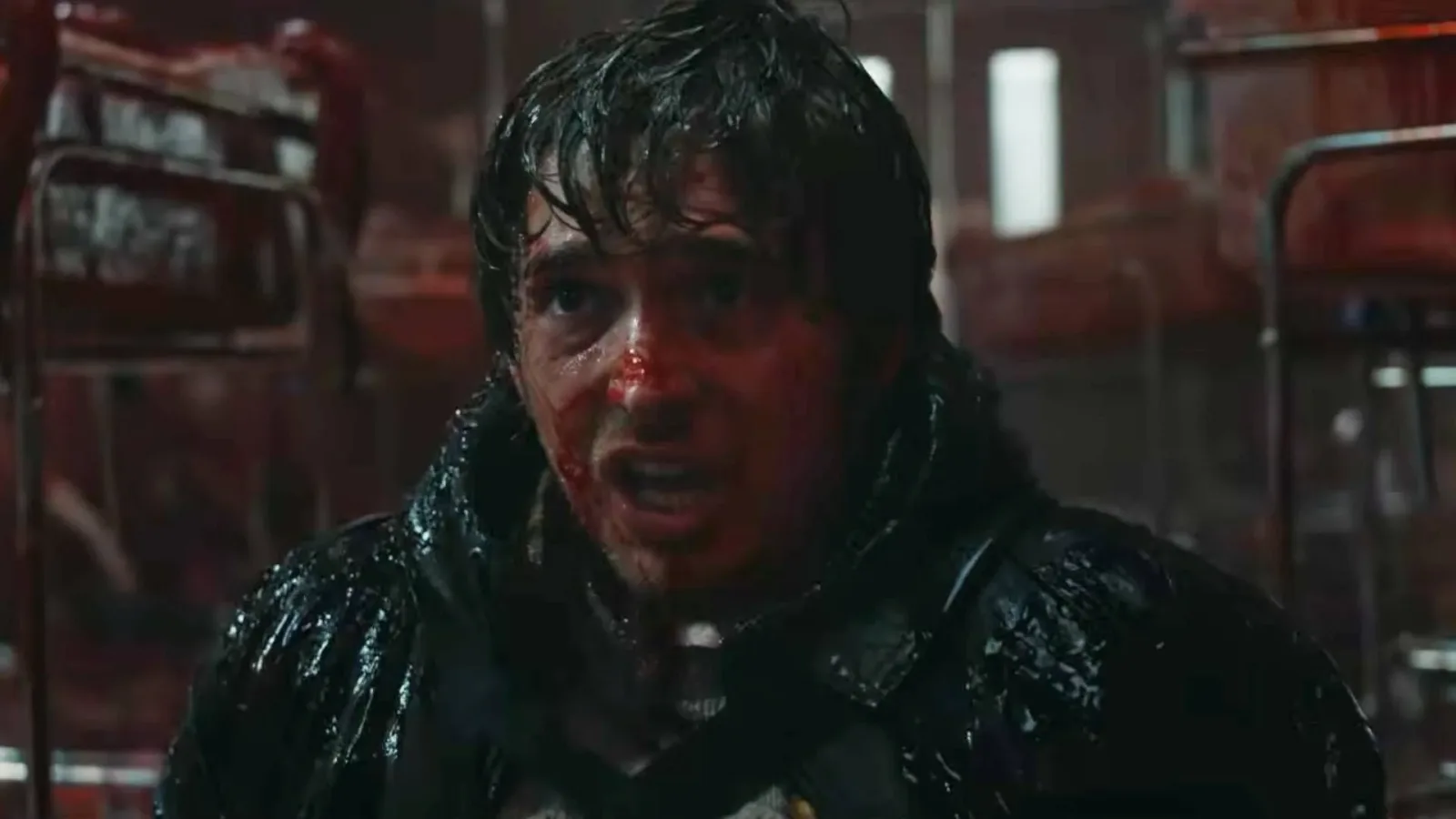
Zach Cregger may be preparing to bring Resident Evil back to movie theaters, but one of the franchise's most memorable game scares still managed to overwhelm him completely. Speaking during a special Q&A event tied to the forthcoming film, Cregger recalled playing Resident Evil: Village in virtual reality and reaching the point where the game's gigantic, malformed baby creature begins stalking the player through the darkness.
According to the director, it was not merely a memorable scare. It was intense enough that he had to stop playing and step away. Cregger said that, despite being an adult who generally does not "nope out" of frightening experiences, the sequence pushed him into what he described as a "full-blown panic attack." For anyone who has made it through House Beneviento in Capcom's 2021 survival-horror game, that reaction is likely to sound extremely familiar.
A Resident Evil: Village nightmare made more immediate in VR
Cregger described his experience with the eighth mainline Resident Evil game during an event where attendees were shown the first 30 minutes of his upcoming movie. He specifically pointed to the game's dollhouse section, its basement operating-table imagery, the narrow passages, and the moment the huge baby gives chase.
The creature is among the most talked-about enemies in modern Resident Evil, even though it appears during a comparatively contained part of the game. Rather than relying on a conventional combat encounter, the sequence strips back many of the player's familiar tools and turns the environment itself into a source of fear. Players must navigate confined, dimly lit corridors while trying to avoid an enemy that is enormous, grotesque, and terrifyingly close.
Cregger's account underlines why the moment has had such staying power. The giant infant does not need elaborate exposition to create dread. Its warped appearance, the way it advances through the house, and its unnerving vocalizations are enough. The monster repeatedly produces distorted childlike sounds, including "mama" and "dada," making an already disturbing design even more uncomfortable.
In VR, that discomfort can become considerably more immediate. Cregger explained that the experience of having the monster effectively behind him in virtual reality, accompanied by its frightening sounds, was what finally forced him to remove the headset. He said he had to pause, get some candy, and regroup before trying to continue.
"I'm gonna take a break," Cregger recalled telling himself after taking off the headset. "I'm gonna go eat some candy or something. And then I'm gonna come back and try this again."
That is a striking admission from a filmmaker now overseeing one of horror gaming's biggest film adaptations. It also suggests that Cregger's appreciation for the series is rooted in the player's perspective as much as its larger mythology. He is not discussing the franchise from a distance; he has experienced one of its nastiest modern scares in an especially immersive format.
House Beneviento remains one of the series' standout horror locations
Resident Evil: Village is often remembered for the contrast between its major locations. The game moves through a snow-covered village and introduces flamboyant villains, action-heavy encounters, and lavish gothic spaces. Yet for many players, House Beneviento is the area that lingers longest. It is a deliberate change of pace, built around vulnerability, sound design, and escalating unease rather than firepower.
The giant baby sequence has become a natural shorthand for that chapter's impact. It is an encounter that plays on a primal fear of being chased, while adding a deliberately upsetting visual concept: a huge deformed fetus crawling through a dark, restricted space. The setting denies the player a sense of control, which is particularly potent in a series where resource management and weapons are often central to surviving danger.
VR changes the physical relationship between player and game. In a traditional display setup, a player can still look away, sit back, or maintain some awareness of the room around them. A headset narrows that distance. Cregger's story about playing in his garage, only to find himself overwhelmed by the creature's approach and sounds, speaks to the extra layer of vulnerability virtual reality can add to horror design.
It also helps explain why this section of Village remains a frequent topic among fans long after the game's release. Horror games are full of startling moments, but the most enduring ones tend to create a sustained feeling rather than depend solely on a sudden shock. House Beneviento's basement does exactly that: it makes the player anticipate the monster, hear it coming, and worry about every wrong turn.
What Cregger's game experience could mean for the movie
Based on the material shown in trailers, Cregger's upcoming Resident Evil film does not appear to include an obvious recreation of Village's giant baby monster. That does not mean the game's influence is absent. The promotional footage has featured first-person point-of-view imagery intended to evoke the sensation of playing the games, a choice that could help the movie capture some of the franchise's distinctive tension without directly adapting every creature or location.
The film stars Austin Abrams, known for Euphoria and Weapons, as a medical courier making a delivery to Raccoon City General Hospital. An outbreak forces the character into a fight for survival, placing the story in a setting that is immediately recognizable to followers of the long-running series. Zach Cherry, Kali Reis, and Paul Walter Hauser also star.
Cregger directs from a screenplay he wrote with Shay Hatten. The premise suggests a survival-focused story in which an ordinary job rapidly turns into a nightmare, an approach that fits the series' foundational interest in people trapped inside an escalating biological disaster. Raccoon City and its institutions have always carried enormous importance in Resident Evil, so a courier attempting to reach the city's general hospital creates a potentially useful route into the chaos.
There is still plenty that trailers cannot reveal about the film's specific monsters, characters, and connections to the games. Cregger's remarks do, however, offer a useful indication of the kind of horror he recognizes in Capcom's work. He did not focus on lore, spectacle, or nostalgia during the Q&A anecdote. Instead, he emphasized the bodily reaction created by sound, darkness, confinement, and the feeling that something awful is closing in.
Those are valuable ingredients for any Resident Evil adaptation. The franchise has always shifted between action, science-fiction absurdity, gothic imagery, and pure survival horror. Its most successful scares tend to put the audience or player in a compromised position, then force them to endure the uncertainty of what may be just outside their vision. Cregger's reaction to the baby monster demonstrates that he understands how severe that kind of tension can be when it works.
The challenge of translating player fear to cinema
Of course, a film cannot precisely duplicate the agency of a game. A player is responsible for moving through House Beneviento's hallways and deciding where to look, while a movie viewer follows the camera's path. The first-person shots glimpsed in the trailers may be one way for Cregger to bridge some of that gap, using camera placement to place viewers nearer to a character's danger.
But the important lesson from Village may be less about copying a single perspective and more about preserving emotional pressure. The giant baby was effective because it made players feel exposed. A new movie can pursue a similar effect through its own setting, pacing, sound, creature work, and point of view. There is no need for a literal monster-for-monster recreation if the result can convey the same sense of mounting panic.
Cregger's comments also carry a welcome degree of humility. Rather than presenting himself as someone immune to the games' scares, he openly described the moment that beat him. For a director taking on a property with a passionate audience, that candor may be reassuring. It suggests he knows that Resident Evil is not just a collection of iconic names and recognizable imagery; it is also a series capable of making even experienced horror fans take off a VR headset and recover before pressing on.
Resident Evil is scheduled to arrive in theaters on September 18. Until then, Cregger's VR story is a timely reminder that, whether players encounter it on a screen or through a headset, Resident Evil: Village's House Beneviento baby remains one of the franchise's most effective arguments for taking a short break before continuing.
Community
Discussion
Start the conversation.
No comments have been posted yet.